How to Make Homemade Pasta Without a Machine

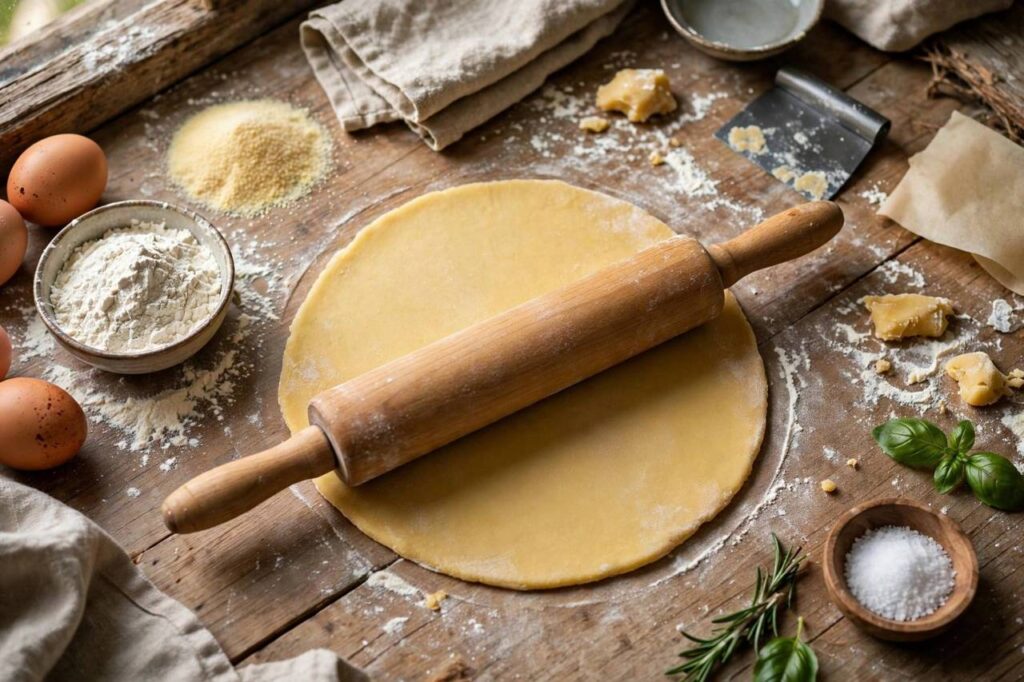
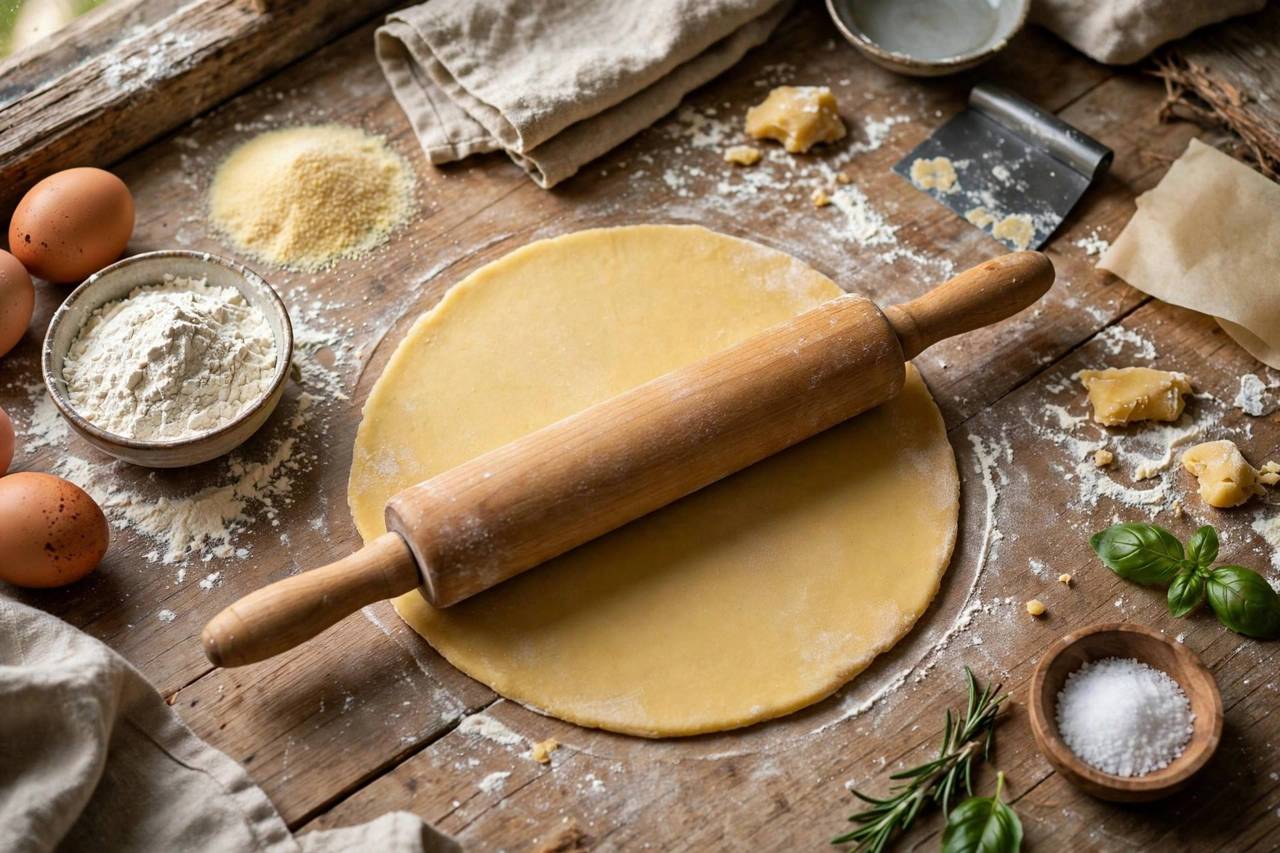
My grandmother never owned a pasta machine. She owned a wooden rolling pin worn smooth by decades of hands, a big wooden board, and the kind of confidence that comes from having made pasta ten thousand times. When people ask me how to make homemade pasta without a machine, I always think of her — because the truth is, for most of human history, every strand of pasta was made exactly this way: flour, eggs, hands, and patience. No gadgets required.
Hand-rolled pasta isn’t a compromise or a “rustic alternative.” In many ways it’s superior — the slightly uneven texture grabs sauce better than machine-perfect sheets, and the whole process takes less time than you’d think. From flour to plate in about an hour, most of it waiting. Here’s the complete method.
How to Make Homemade Pasta Without a Machine: The Dough
Everything starts with the dough, and the dough is almost embarrassingly simple. The classic ratio: 100 grams of flour per large egg, plus a pinch of salt. For two generous servings, that’s 200 grams of flour (about 1½ cups, though weighing is better) and 2 eggs. For four servings, double it. That’s the whole ingredient list.
Flour choice matters, but don’t overthink it. Italian “00” flour gives the silkiest, most tender pasta — it’s finely milled and worth seeking out. All-purpose flour works perfectly well and is what most home cooks use; the pasta will be slightly heartier, which is no tragedy. Some cooks swear by a blend of all-purpose and semolina for extra bite. Whatever you choose, the technique matters more than the flour.
Mound the flour on a clean work surface — a big wooden board or countertop — and make a wide well in the center, like a volcano. Crack the eggs into the well, add the pinch of salt, and beat the eggs gently with a fork, gradually pulling in flour from the inner walls. When it gets shaggy and hard to stir, ditch the fork and use your hands. Knead for 8–10 minutes: push, fold, turn. The dough will go from rough and crumbly to smooth and supple, with the texture of firm play-dough. If it’s sticky, dust lightly with flour; if it’s dry and cracking, wet your hands and keep kneading.
Then — and this is the step impatient cooks skip — wrap it tightly in plastic or a damp towel and rest it for at least 30 minutes at room temperature. Resting relaxes the gluten, which makes rolling dramatically easier. Skip the rest and you’ll fight the dough the whole way. Use the waiting time to make your sauce.
Rolling by Hand: The Real Technique
Unwrap your rested dough and cut it into quarters — working with smaller pieces is much easier than wrestling the whole mass. Keep the pieces you’re not using covered so they don’t dry out. Flatten one piece with your palm, dust lightly with flour, and start with the rolling pin.
Here’s the technique: roll from the center outward, rotating the dough a quarter turn every few rolls. This keeps it roughly circular and evenly thick. You’re aiming for thin — thinner than you think. Hold it up: you should be able to see the shadow of your hand through it. For most shapes, that’s about 1–2 millimeters. It takes a few minutes per piece, and your arms will notice, but there’s a rhythm to it that’s genuinely pleasant once you find it.
The most common mistake is rolling too thick, which gives you chewy, doughy pasta instead of silky strands. The second most common is not flouring enough between rolls, so the sheet sticks to itself when folded. Dust lightly but consistently — you can always shake off excess flour, but you can’t unstick a torn sheet.
If the dough springs back as you roll, it’s telling you the gluten is tense. Walk away for ten minutes and come back. The dough will have relaxed and will roll out obediently. Pasta-making rewards patience the way few kitchen tasks do.
Shaping: From Sheets to Supper
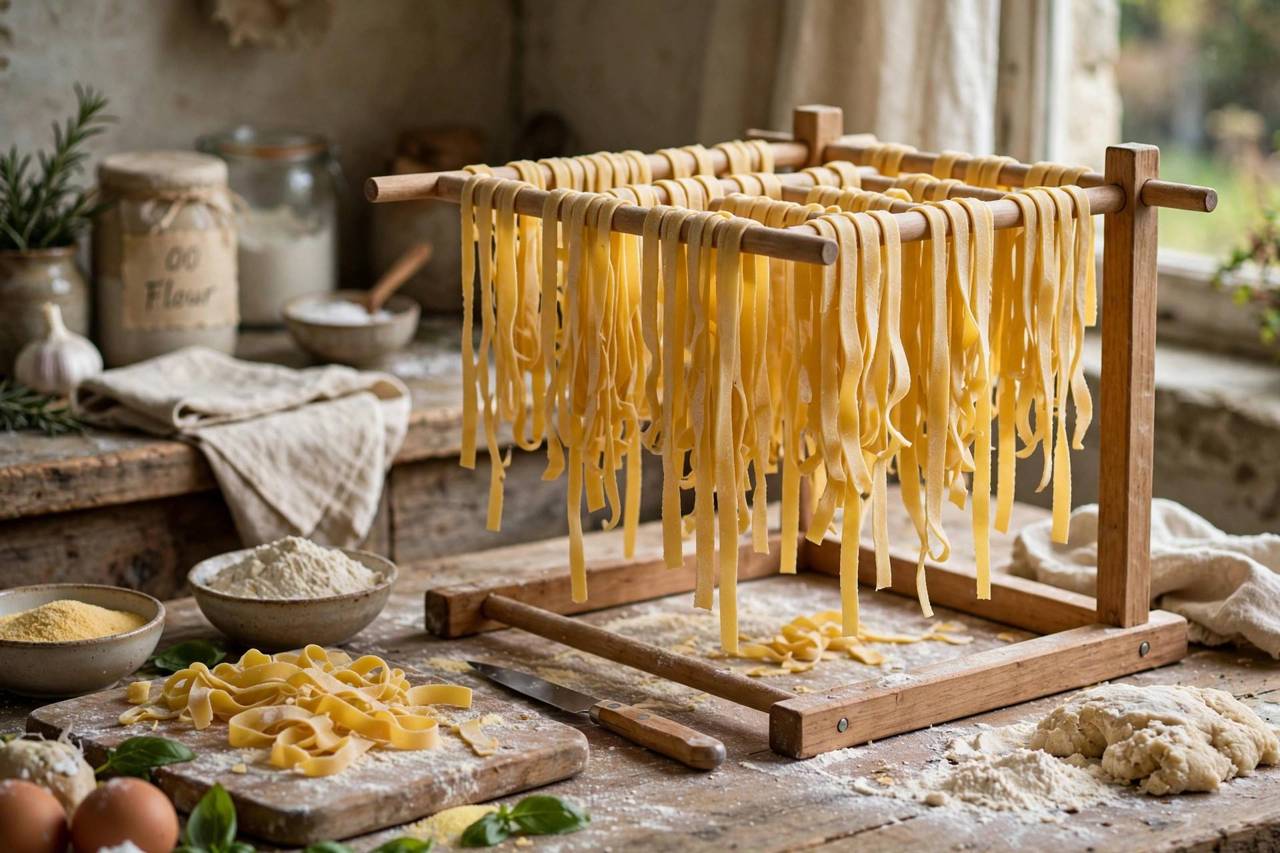
Once you have thin sheets, you have options. The easiest shapes need nothing but a knife:
Tagliatelle or fettuccine: Lightly flour the sheet, roll it up loosely like a scroll, and slice across the roll into ribbons — about 6–8mm wide for tagliatelle. Unfurl the ribbons and toss with a little flour or semolina so they don’t stick. Pappardelle: Same method, wider ribbons — about 2–3cm. Made for hearty sauces. Maltagliati (“badly cut”): The most forgiving shape in existence — just cut the sheet into rough diamonds or rectangles with no measuring. Irregular is the point. Farfalle: Cut small rectangles, pinch the center, and you have bow ties.
For filled pasta without special tools, try mezzalune (half-moons): cut circles with a glass rim, place a teaspoon of filling (ricotta and spinach is classic) on each, fold, and press the edges firmly, pushing out air pockets. Or make simple agnolotti: place small mounds of filling along a strip of dough, fold the strip over, press between the mounds, and cut into squares.
Whatever shape you cut, dust with flour or fine semolina and let the pieces rest on a floured tray or clean towel while you finish the batch. Fresh pasta can wait 20–30 minutes happily; longer than that, or in a humid kitchen, and pieces start sticking. If you need more time, a pasta drying rack — or clean broom handles balanced between chairs, the traditional way — buys you an hour or more.
Cooking Fresh Pasta: Less Time Than You Think
Fresh pasta cooks shockingly fast — 2 to 4 minutes, not the 10–12 of dried. Bring a large pot of water to a rolling boil and salt it generously; it should taste like the sea. This is your only chance to season the pasta itself, so don’t be shy.
Drop the pasta in, stir immediately to prevent sticking, and start tasting at 90 seconds. You’re looking for tender with the faintest bite — fresh pasta goes from perfect to mushy in under a minute, so stay close. Reserve a cup of the starchy pasta water before draining; it’s liquid gold for finishing sauces.
Here’s the professional move: drain the pasta a minute early and finish cooking it in the pan with the sauce, adding splashes of pasta water. The starch in the water emulsifies with the fat in the sauce, creating that glossy, restaurant-style coating that makes pasta taste like pasta instead of noodles with stuff on top. Toss vigorously for a minute, and serve immediately — fresh pasta waits for no one.
Sauces That Honor the Effort
After making pasta by hand, you want a sauce worthy of it — which usually means simple. Fresh pasta’s delicate texture shines with sauces that coat rather than bury: brown butter and sage, aglio e olio (garlic, olive oil, chili), a simple tomato sauce with basil, or cacio e pepe if you’re feeling brave.
The rule of thumb: the more delicate the pasta, the lighter the sauce. Your hand-cut tagliatelle wants a ragù or a mushroom cream; maltagliati loves a simple bean soup; mezzalune wants brown butter and nothing else. Heavy, chunky sauces belong with sturdy dried shapes; fresh pasta is about elegance.
And please — don’t drown it. In Italy, pasta is dressed, not sauced. Two or three tablespoons of sauce per serving, tossed to coat every strand, beats a ladle of sauce sitting on top. Your handmade pasta is the star; the sauce is the supporting actor.
Troubleshooting: When Things Go Wrong
Every pasta-maker hits the same few problems, and they’re all fixable. Dough too dry and cracking? You likely need more kneading rather than more egg — but if it’s genuinely crumbly after ten minutes, wet your hands and knead the moisture in, a little at a time. Adding a whole extra egg overshoots; damp hands don’t.
Dough too sticky? Dust with flour sparingly during kneading, but know that most stickiness resolves itself as the flour hydrates — give it the full ten minutes before declaring defeat. If your kitchen is very humid, start with slightly less egg (beat the eggs and hold back a tablespoon) and add as needed.
Sheets tearing when rolled thin? Usually under-rested gluten or an aggressive hand. Let it rest ten more minutes, roll more gently, and make sure you’re rotating the dough — rolling in one direction only creates weak spots. Small tears aren’t fatal anyway; patch them with a dab of water and keep going.
Pasta sticking together after cutting? More flour dusting between the cut ribbons, and don’t let cut pasta sit in a pile — spread it on a floured tray or hang it. Semolina flour is even better than all-purpose for dusting, since its coarse grains act like tiny ball bearings between strands.
Gummy, pasty texture after cooking? Three usual culprits: the pot wasn’t at a full rolling boil, you crowded too much pasta into too little water, or you overcooked it. Fresh pasta needs abundant, violently boiling, well-salted water and your full attention for those two to four minutes.
Frequently Asked Questions
Can you really make pasta without a machine?
Absolutely — a rolling pin, a knife, and your hands are all you need. People made pasta this way for centuries before machines existed, and hand-rolled pasta’s slightly uneven texture actually holds sauce better.
What flour is best for homemade pasta?
Italian “00” flour gives the silkiest results, but all-purpose flour works very well. A blend of all-purpose with some semolina adds extra bite. Technique matters more than the exact flour.
Why is my pasta dough tough to roll out?
Usually it hasn’t rested long enough — gluten needs at least 30 minutes to relax. If it springs back while rolling, cover it and walk away for ten minutes, then try again. Under-kneaded dough can also resist; it should be smooth and supple before resting.
How long does fresh homemade pasta last?
Cook it within a few hours for best results, or dry it completely on a rack (12–24 hours) and store airtight for weeks. You can also freeze fresh pasta on a floured tray, then bag it — cook straight from frozen, adding a minute to the time.
How thin should I roll pasta dough by hand?
Thinner than you think — about 1–2mm, thin enough to see the shadow of your hand through it. Too-thick pasta cooks up chewy and doughy instead of silky.