How to Cook Perfect Scrambled Eggs: The Foolproof Method

Here is a kitchen secret I will share with you like I would with a dear friend: scrambled eggs are the true test of a cook. Anyone can follow a complicated recipe, but making eggs that are creamy, fluffy, and deeply flavorful takes real technique. The good news? It is a technique you can learn in one morning. Once you know how to cook perfect scrambled eggs, you will never go back to the dry, rubbery kind again.
What Makes Scrambled Eggs “Perfect”?
Before we touch a pan, let us agree on the goal. Perfect scrambled eggs are soft and creamy, with large, pillowy curds that glisten just slightly. They should be seasoned all the way through, cooked gently, and served the moment they are done. What they should never be: browned, watery, or bouncy like a rubber ball.
There are two beloved styles, and neither is wrong. French-style eggs are ultra-creamy, almost custardy, stirred constantly over very low heat. American diner-style eggs have bigger, fluffier curds with a bit more structure. I will teach you a method that lands beautifully in between, and then show you how to push it toward either style.
The Ingredients (Simple Is Best)
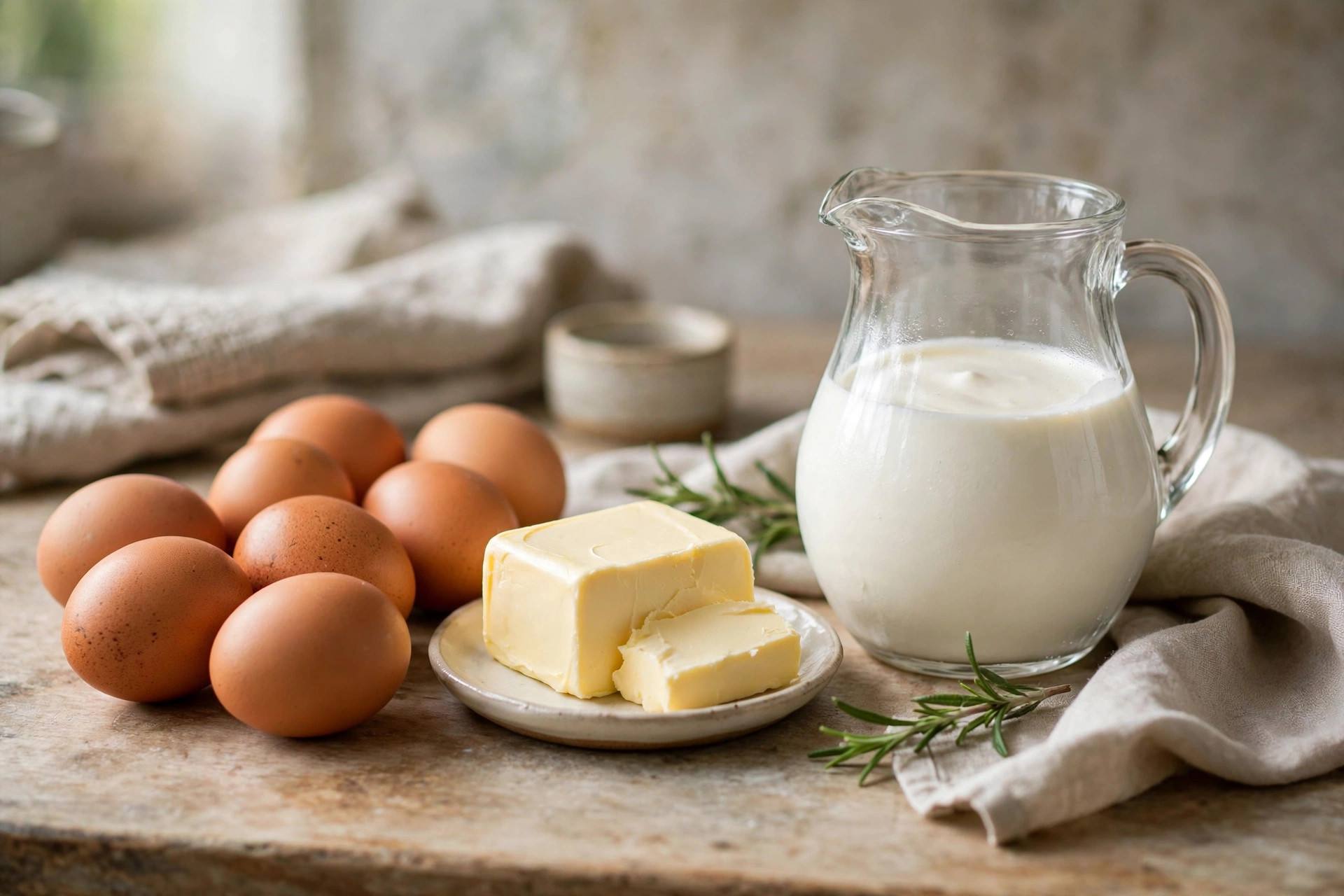
Great scrambled eggs need almost nothing, which means every ingredient counts:
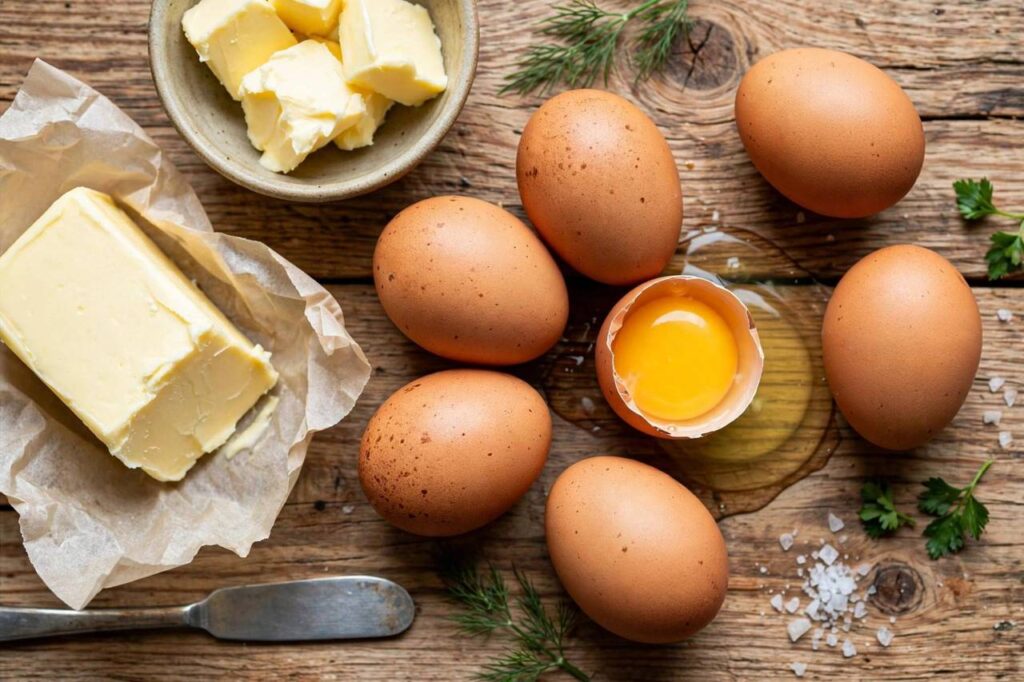
Eggs. The fresher the better. Use large eggs at room temperature if you can; cold eggs hit the pan and seize slightly. Three eggs per person is a generous serving, two for a lighter plate.
Fat. Butter is traditional and, in my kitchen, non-negotiable. A tablespoon per three eggs gives richness and prevents sticking. Olive oil works for a dairy-free version with a lovely peppery note.
Dairy (optional). A splash of cream or whole milk makes eggs richer; many chefs skip it entirely, arguing it dilutes flavor. Try it both ways and decide for yourself. A spoonful of creme fraiche stirred in at the end is pure luxury.
Salt and pepper. Salt the beaten eggs before cooking, not after. This is one of those small details that makes a real difference: salt breaks down the proteins slightly, giving you more tender curds. Freshly cracked black pepper at the end.
Equipment That Actually Matters
You do not need fancy gear, but the right pan changes everything. A nonstick skillet is the easiest path to success; an 8-inch pan for two to three eggs, 10-inch for more. A silicone spatula lets you push and fold gently without scratching. That is really it. A bowl and fork for beating are all the prep tools you need.
One thing to avoid: high-sided saucepans for beginners. They trap steam and make it hard to see what is happening. A wide, shallow skillet gives you control and visibility.
How to Cook Perfect Scrambled Eggs: Step by Step
Step 1: Beat the eggs well. Crack your eggs into a bowl and whisk with a fork until completely uniform, no streaks of white remaining. This takes about 30 seconds of real whisking. Uniform beaten eggs mean uniform curds. Add your salt now.
Step 2: Heat the pan gently. Place your skillet over medium-low heat and melt the butter until it foams but does not brown. The pan should be warm, not screaming hot. If the butter browns immediately, your heat is too high; start over. Patience here is everything.
Step 3: Pour and wait. Add the eggs and let them sit undisturbed for about 20 seconds, until the edges just begin to set. This brief rest is what creates those beautiful large curds.
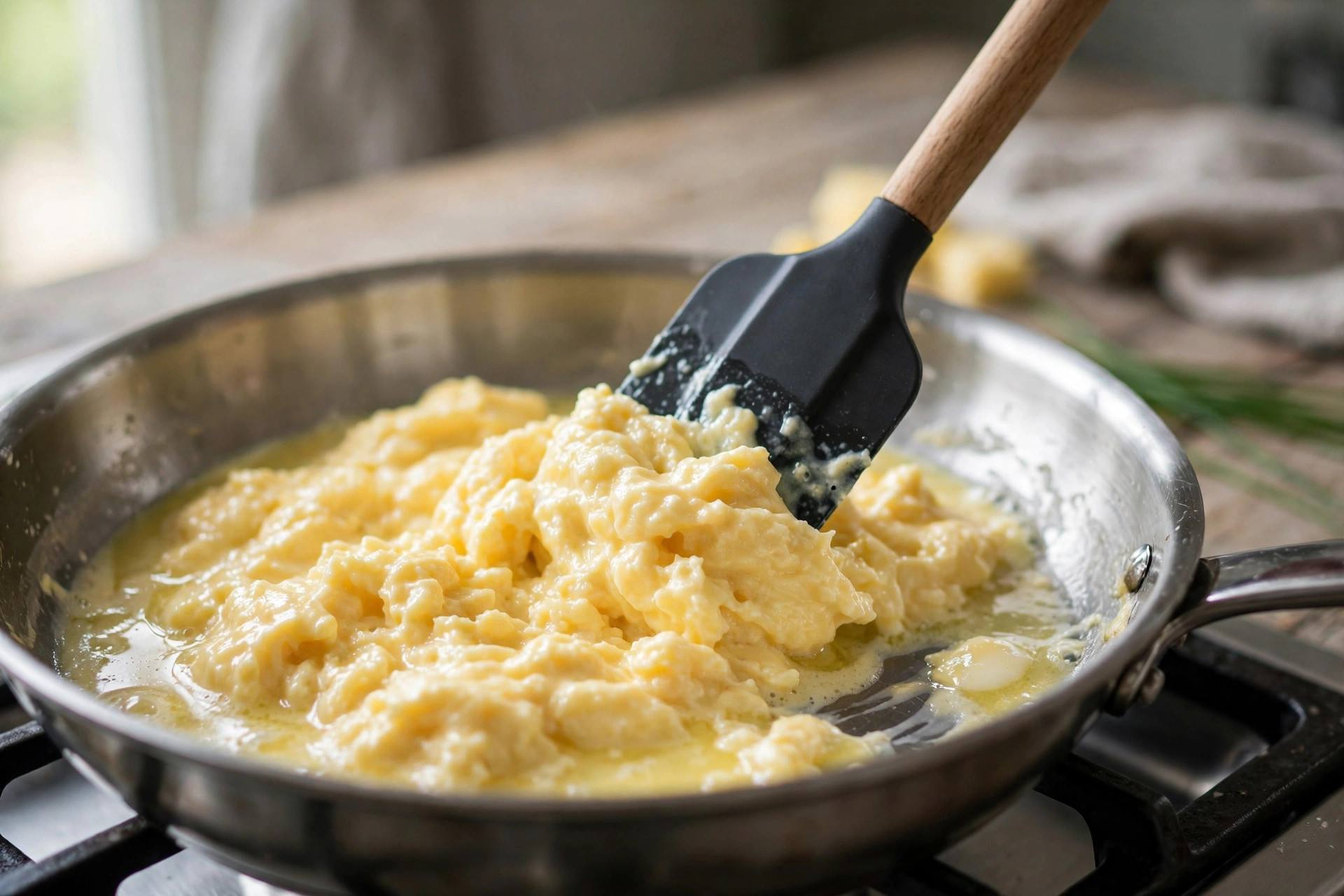
Step 4: Push, don’t stir. With your spatula, gently push the eggs from the edges toward the center, letting uncooked egg flow into the cleared space. Use slow, sweeping folds, not frantic stirring. Stirring breaks curds into sad little grains; folding builds pillowy layers.
Step 5: Take them off early. This is the most important step. Remove the pan from the heat when the eggs are about 90 percent set but still look slightly wet and glossy. Residual heat will finish the job in the next 30 seconds. Eggs continue cooking off the heat, and this carryover is what separates creamy from chalky.
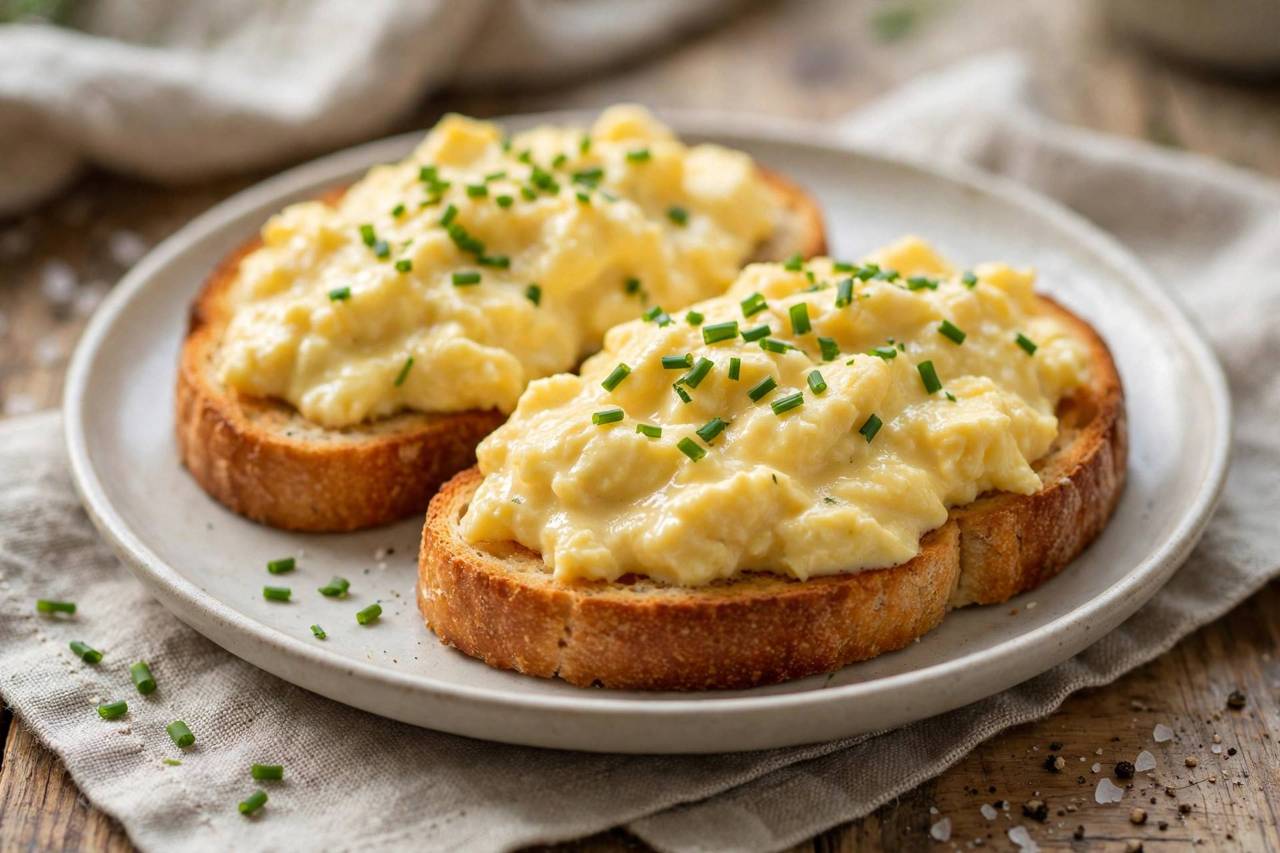
Step 6: Serve immediately. Scrambled eggs wait for no one. Plate them at once on warm plates. A shower of chives, a knob of butter melting on top, flaky sea salt, done.
5 Mistakes That Ruin Scrambled Eggs
Too much heat. The number one sin. High heat makes proteins seize and squeeze out water, giving you rubbery curds in a puddle. Medium-low is your friend.
Under-beating. Streaks of white in the bowl become streaks of white in the pan. Whisk until uniform.
Stirring instead of folding. Constant aggressive stirring shreds curds. Slow pushes and folds build them.
Cooking to “done” in the pan. If they look perfect in the pan, they will be overcooked on the plate. Always pull early.
Salting at the table only. Salt in the beaten eggs seasons throughout and tenderizes. A final pinch of flaky salt on top is garnish, not seasoning.
Delicious Variations to Try
Once you have the base method down, the variations are endless:
French-style ultra-creamy. Cook over the lowest possible heat, stirring almost constantly with a whisk, for up to 10 minutes. Finish with creme fraiche. Custardy heaven.
Cheesy eggs. Fold in grated cheddar, gruyere, or goat cheese during the last 30 seconds off the heat. The residual warmth melts it perfectly.
Herbed eggs. Chives, dill, tarragon, or parsley stirred in at the end. Fresh herbs lift the whole dish.
Spicy eggs. A pinch of chili flakes in the butter, or hot sauce and scallions on top. My personal weekend favorite.
Loaded breakfast plate. Serve over toasted sourdough with avocado, smoked salmon, or sauteed mushrooms. Scrambled eggs are a canvas.
Mastering a dish this fundamental builds real kitchen confidence. If you are ready to feed a crowd next, our guide on how to host a dinner party will take your new skills to the table, and learning what batch cooking is can make weekday breakfasts nearly effortless.
The Science: Why Low and Slow Wins
Understanding a little food science will make you a better egg cook forever, so here is what is actually happening in the pan. Egg proteins, mainly ovalbumin in the white and lipoproteins in the yolk, start out as tightly folded bundles floating in water. As heat rises, these proteins unfold and bond to each other, forming a network that traps water. That network is the curd you see.
Here is the critical part: the hotter and faster proteins bond, the tighter the network squeezes, and the more water it wrings out. That is why high-heat eggs turn rubbery and weep liquid onto the plate. Gentle heat lets proteins form a loose, delicate network that holds moisture instead of expelling it. Creamy eggs are not undercooked eggs; they are eggs whose protein network was built gently.
This also explains every rule in the method above. Salting early slightly weakens protein bonds before cooking, yielding tenderness. Resting the eggs 20 seconds after pouring lets curds set into large pieces rather than shredding. Folding instead of stirring preserves the network you are building. Pulling the pan early accounts for carryover cooking, because proteins keep bonding as long as residual heat remains.
Even the great French versus American debate is just protein science with cultural seasoning. French-style eggs, stirred constantly over minimal heat, form an ultra-fine network: custardy and spoonable. American diner eggs, cooked slightly hotter with less agitation, form larger, distinct curds with more chew. Same proteins, different architecture. Once you understand the mechanism, you can dial your eggs anywhere along that spectrum on purpose instead of by accident.
One more scientific nugget: that faint sulfur smell from overcooked eggs comes from iron in the yolk reacting with sulfur in the white at high heat, forming ferrous sulfide. It is harmless but it is also a reliable signal you went too hot. Your nose knows before your eyes do.
Egg Storage and Food Safety Basics
A quick word on keeping your star ingredient at its best. In the US, store eggs in the refrigerator, not on the counter, and keep them in their original carton rather than the fridge door, where temperatures fluctuate. The carton also protects them from absorbing odors from that leftover curry.
Freshness matters for scrambling because older eggs have thinner whites that make curds watery. The float test is your friend: place an egg in a bowl of water. If it sinks and lies flat, it is very fresh. If it stands upright, use it soon. If it floats, discard it. And once cooked, scrambled eggs should not sit at room temperature for more than two hours. Refrigerate leftovers promptly and eat within three to four days, reheating gently with a knob of butter to bring back some creaminess.
Key Takeaways
Perfect scrambled eggs come down to five things: well-beaten salted eggs, gentle medium-low heat, butter foaming but not browning, slow folding instead of stirring, and pulling the pan early while the eggs still look slightly wet. Avoid high heat, under-beating, and cooking to “done” in the pan. Master this one humble dish and you will cook with more confidence every single morning.
FAQ
Should you add milk to scrambled eggs?
It is optional. A splash of milk or cream makes eggs slightly richer and softer, but many chefs skip it, saying it dilutes the egg flavor. Try both and see which you prefer.
Why are my scrambled eggs rubbery?
Almost always too much heat, overcooking, or both. Cook on medium-low, fold gently instead of stirring aggressively, and remove the pan while the eggs still look slightly wet.
When should you salt scrambled eggs?
Salt the beaten eggs before cooking. Salting early seasons the eggs throughout and helps produce more tender curds. Add a final pinch of flaky salt on top when serving.
How do you keep scrambled eggs from sticking?
Use a nonstick skillet, enough butter to coat the surface, and gentle heat. A silicone spatula helps you fold without scraping aggressively.
Can you reheat scrambled eggs?
You can, gently, but they are never as good as fresh. If you must, warm them low and slow with a tiny bit of butter. They are best eaten the moment they leave the pan.