How to Make Perfect Scrambled Eggs Every Time

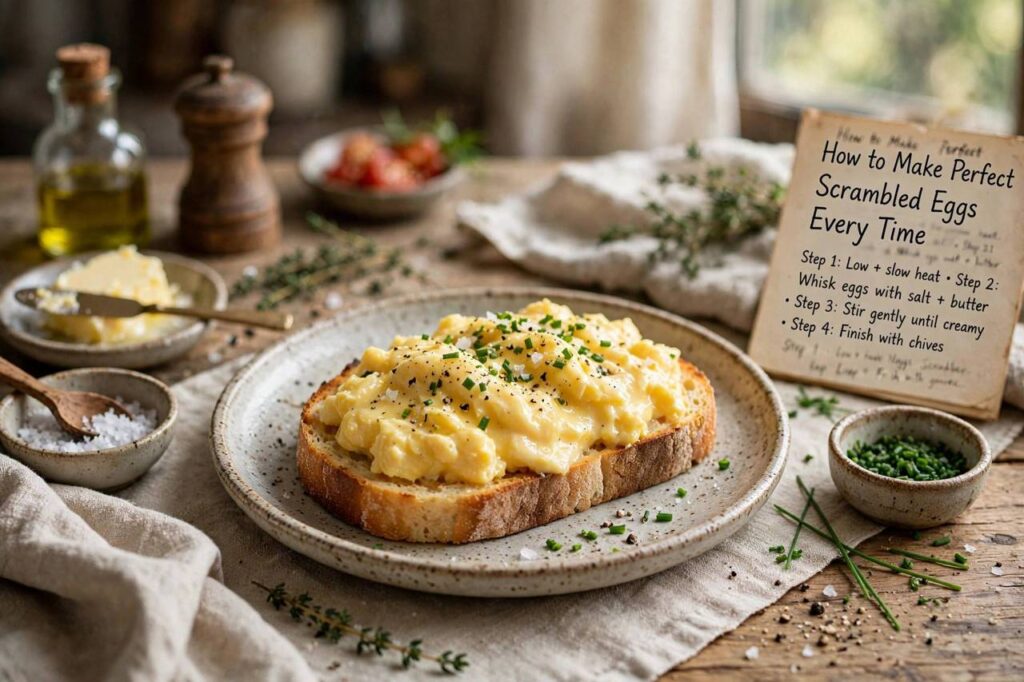
Scrambled eggs are the first thing most of us learn to cook and the last thing most of us learn to cook well. There is a particular sadness to a plate of dry, rubbery eggs, because the ingredients cost almost nothing and the whole thing takes five minutes. Learning how to make perfect scrambled eggs comes down to three things: gentle heat, constant attention, and taking them off the stove before they look done.
My grandmother made the creamiest scrambled eggs I have ever tasted, and her secret was patience, not technique. She never rushed them, never walked away, and never served them a minute late. Everything below follows her philosophy. Whether you like your eggs soft and custardy or firm and fluffy, the method adapts, because the principles are the same.
Start With Good Eggs and the Right Pan
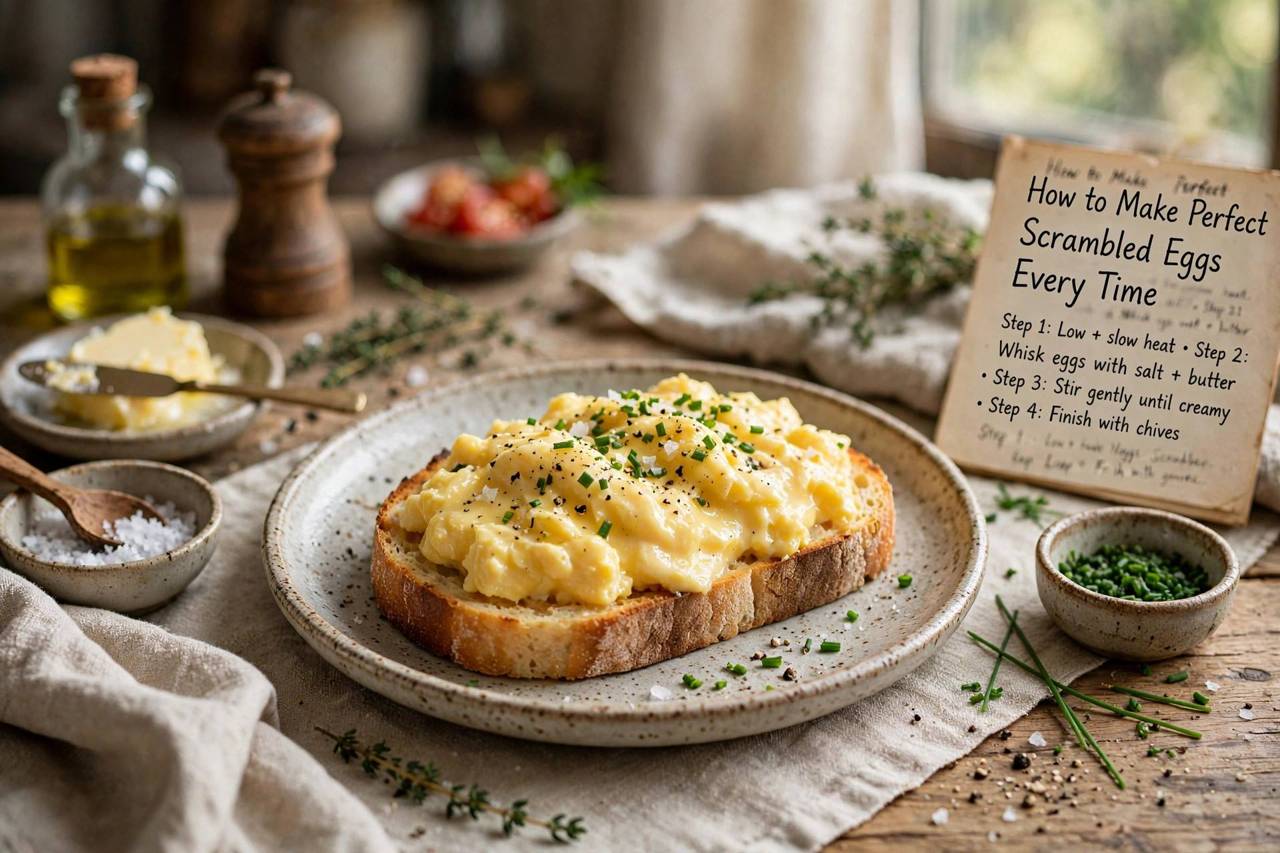
The eggs matter more than any trick. The freshest eggs you can find have firmer whites and richer yolks, which means better texture and better flavor. If you buy from a farmers market or keep backyard hens, you already know the difference. Supermarket eggs work fine too. Just check the date and give them a sniff after cracking. A fresh egg smells like nothing at all.
For the pan, nonstick is the forgiving choice, especially if you are still building confidence. A well-seasoned cast iron skillet works beautifully once you know your heat. What you want to avoid is a thin pan that develops hot spots, because scrambled eggs punish uneven heat instantly. A heavy-bottomed pan distributes the warmth and gives you control.
Use a silicone spatula, not a fork and not a metal utensil on nonstick. The spatula lets you push and fold the eggs gently instead of tearing them. Size the pan to the number of eggs. Two eggs in a huge skillet spread too thin and overcook. Six eggs in a tiny pan steam instead of setting. Match the pan to the job.
The Method: Low Heat and Constant Motion
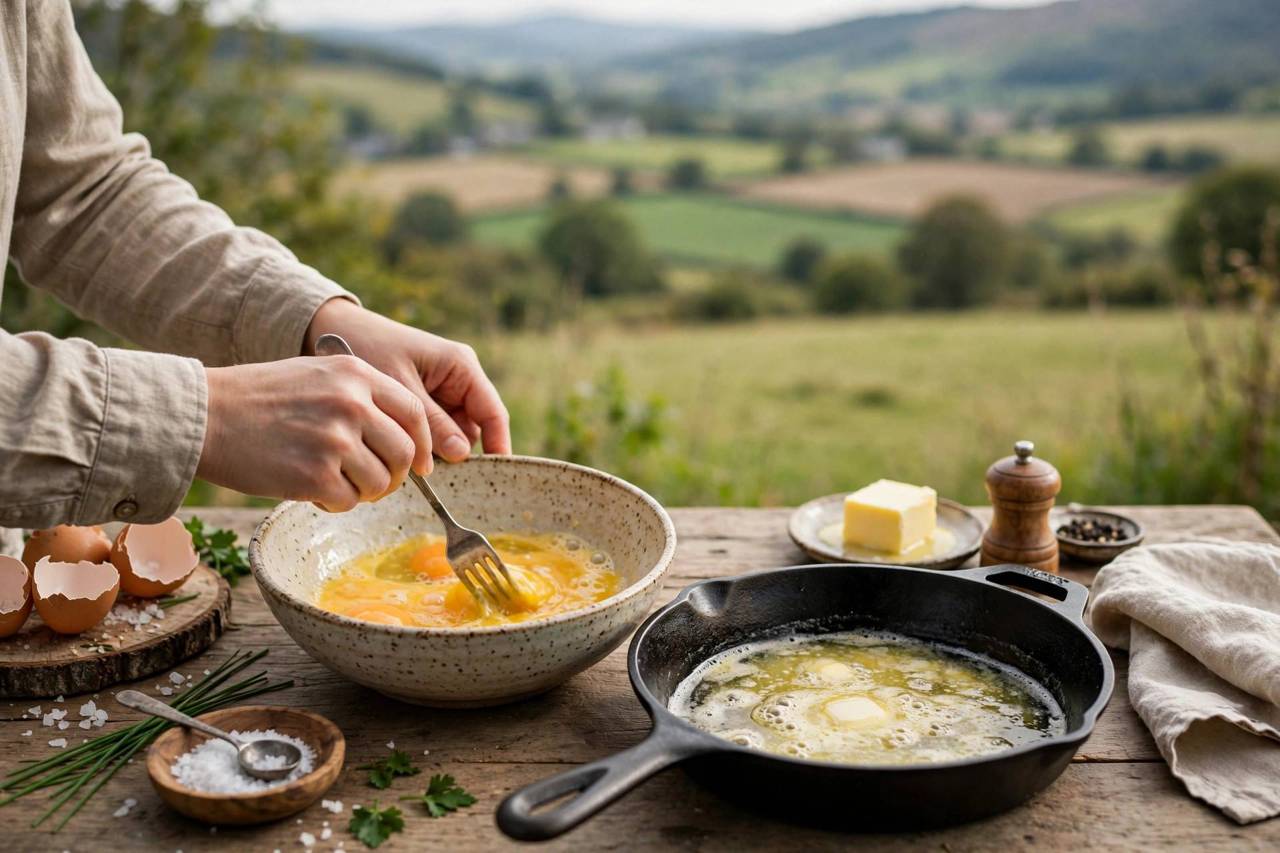
Crack your eggs into a bowl, not directly into the pan. This lets you check each egg as you go and whisk them evenly. Beat them until the whites and yolks are fully combined with no streaks, about thirty seconds with a fork or whisk. Season with salt now. The old advice to salt after cooking is a myth. Salting before gives the eggs time to absorb it evenly.
Heat the pan over low to medium-low heat and melt a knob of butter until it foams but does not brown. Pour in the eggs. Now the important part: stir slowly and constantly, pushing the eggs from the edges toward the center with your spatula. You are building soft curds, not chopping the eggs into bits. Small, slow movements make creamy eggs. Fast, aggressive stirring makes grainy ones.
This takes longer than you expect, usually four to five minutes for a few eggs. That is correct. High heat is the enemy. It squeezes moisture out of the proteins and turns them rubbery in seconds. If the eggs are cooking fast enough to sizzle loudly, your heat is too high. Turn it down and be patient. The eggs will reward you.
Knowing When They Are Done
Here is the rule that changes everything: take the eggs off the heat when they still look slightly underdone. They should be soft, glossy, and just barely holding together, with no raw liquid but plenty of shine. Carryover heat finishes the job in the minute it takes to get them to the table. Eggs that look perfect in the pan will be overcooked on the plate.
Slide them onto a warm plate immediately. A cold plate shocks the eggs and they seize up. If you warmed the plates in a low oven or with hot water, the eggs stay creamy and inviting for the few minutes it takes everyone to sit down. Serve right away. Scrambled eggs wait for no one, and they know it.
For extra richness, stir in a spoonful of cream cheese, creme fraiche, or grated cheese off the heat. The residual warmth melts it into the eggs without overcooking anything. Fresh herbs, chives, dill, or parsley, go on at the very end. They are a garnish, not an ingredient to cook.
Soft and Creamy vs. Firm and Fluffy
Not everyone wants the same eggs, and that is fine. For soft, creamy, custardy eggs, use the lowest heat you can manage, stir constantly, and consider adding a splash of milk or cream to the beaten eggs. The extra liquid slows the setting and keeps everything silky. These are the eggs of fancy brunches, and they are worth the patience.
For firm, fluffy eggs, use medium-low heat instead of low, and let the eggs sit undisturbed for twenty seconds at a time between stirs. The longer pauses let larger curds form. You still take them off early, but the texture will be heartier and more substantial. This style holds up better in breakfast burritos and sandwiches.
Both styles share the same enemies: high heat, inattention, and waiting too long to serve. Master avoiding those three, and whichever texture you prefer will come out right.
Fixing Common Scrambled Egg Mistakes
If your eggs always come out dry, the heat is too high or you are cooking them too long. Both, usually. Turn the burner down a notch and start taking them off a full minute earlier than feels right. The change will feel dramatic the first time.
If they are watery, you might be adding too much milk, or the pan was not hot enough when the eggs went in. A little liquid is fine. A lot turns to steam and separates. And if the eggs stick, the pan needs more butter or the heat needs adjusting. Nonstick pans lose their coating over time, so an old pan may simply need replacing.
Rubbery eggs are the classic sign of high heat plus overcooking. There is no rescuing a batch once it has gone rubbery, so the fix is always prevention. Low heat, constant motion, early exit. Write it on a sticky note and put it on the fridge until it becomes habit.
Serving Ideas Beyond the Plate
Perfect scrambled eggs deserve better than a lonely plate. Pile them on thick toast with avocado and chili flakes. Fold them into warm tortillas with salsa and cheese for breakfast tacos. Serve them over roasted vegetables for a dinner that takes fifteen minutes. They are also the backbone of a good brunch spread, which makes them worth practicing before you host a dinner party that starts with breakfast for dinner.
If you cook eggs often, they fit beautifully into a weekly routine. Eggs keep well, cook fast, and adapt to whatever is in the fridge, which makes them ideal for batch cooking breakfasts. Scramble a big pan, portion it into containers with roasted potatoes or rice, and the week’s mornings take care of themselves.
How to Make Perfect Scrambled Eggs for a Crowd
Cooking for two is technique. Cooking for twelve is logistics. The principles of how to make perfect scrambled eggs do not change at scale, but the method needs adjusting, because a home burner cannot heat a giant pan evenly and eggs wait for no one.
The golden rule of crowds: cook in batches. No more than eight to ten eggs per pan, even in your largest skillet. Beyond that, the eggs steam instead of setting, the curds turn uneven, and half the batch overcooks while the other half stays raw. Two or three quick batches beat one disastrous mega-batch every time. Each batch takes five minutes, so the timing still works.
Keep finished batches warm, not hot. A low oven, around 200 degrees, with the eggs in a covered dish, holds them for fifteen minutes without damage. Do not leave them longer. Scrambled eggs have a short happy window, and an hour in a warming tray turns even perfect eggs sad. Time the batches so the last one finishes just as guests sit down.
For a brunch buffet, set up a toppings bar and let people customize: grated cheese, chives, salsa, hot sauce, avocado, smoked salmon. The eggs stay simple and perfect, and the toppings make it feel abundant. It is less work than cooking to order and more impressive than a single platter. Crack a few extra eggs per batch to account for enthusiastic servings. Running out is the only real failure mode, and it is easily prevented.
Like anything in the kitchen, this gets easier with repetition. Make eggs this way three weekends in a row and the timing becomes instinct. You will stop watching the clock and start watching the eggs, which is exactly the shift that separates decent cooks from good ones. Breakfast will never be boring again.
Frequently Asked Questions
Should I add milk to scrambled eggs?
A small splash makes eggs creamier and more tender, but too much makes them watery. One tablespoon per two eggs is plenty. For the creamiest results, many cooks prefer a spoonful of cream or creme fraiche stirred in off the heat instead.
When should I salt scrambled eggs?
Salt the beaten eggs before cooking. Salting early seasons them evenly throughout. The idea that salt makes eggs tough is a myth. Just use a normal amount, about a pinch per two eggs.
Why are my scrambled eggs rubbery?
Rubbery eggs come from heat that is too high and cooking that goes too long. Use low to medium-low heat, stir gently and constantly, and remove the eggs from the pan while they still look slightly underdone. Carryover heat finishes them.
Can I make scrambled eggs ahead of time?
They are best fresh, but you can cook them slightly underdone, cool quickly, and refrigerate for up to three days. Reheat gently in a pan over low heat with a little butter. They will not be as creamy as fresh, but they are perfectly good for meal prep.
What is the best pan for scrambled eggs?
A heavy nonstick skillet is the most forgiving option. Well-seasoned cast iron also works beautifully. Avoid thin pans with hot spots, and match the pan size to the number of eggs you are cooking.