What Is the Difference Between Gelato and Ice Cream?

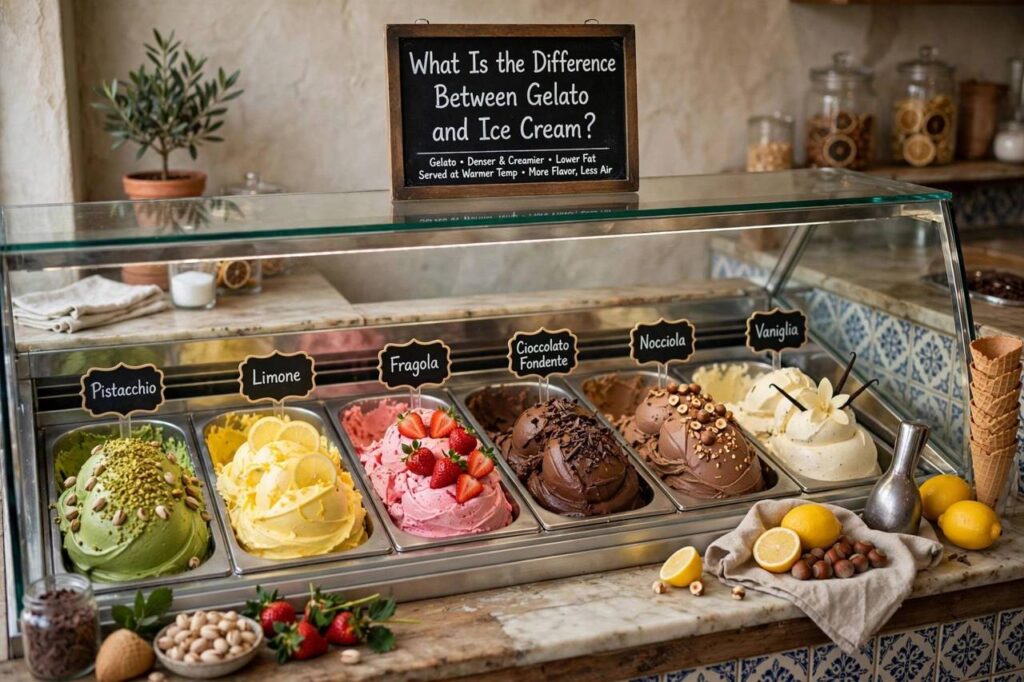
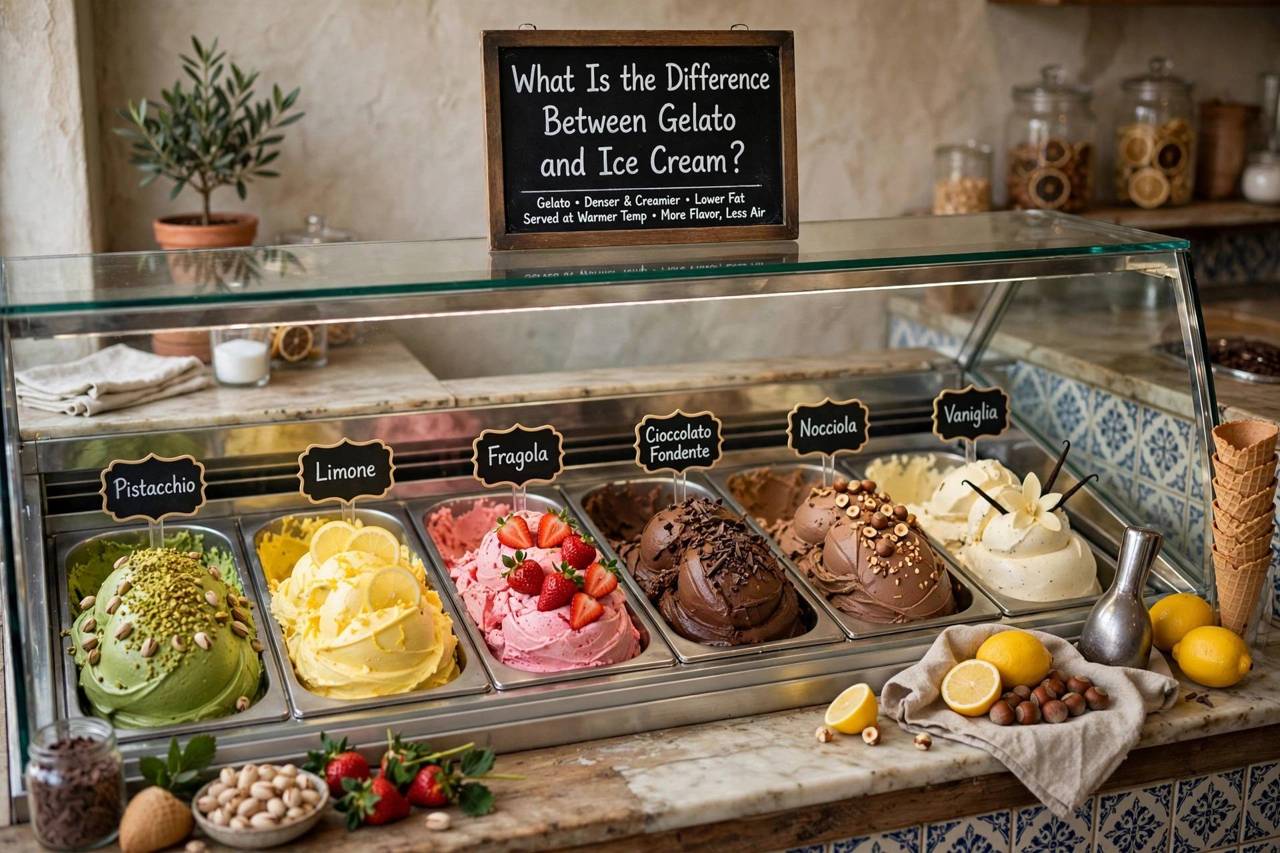
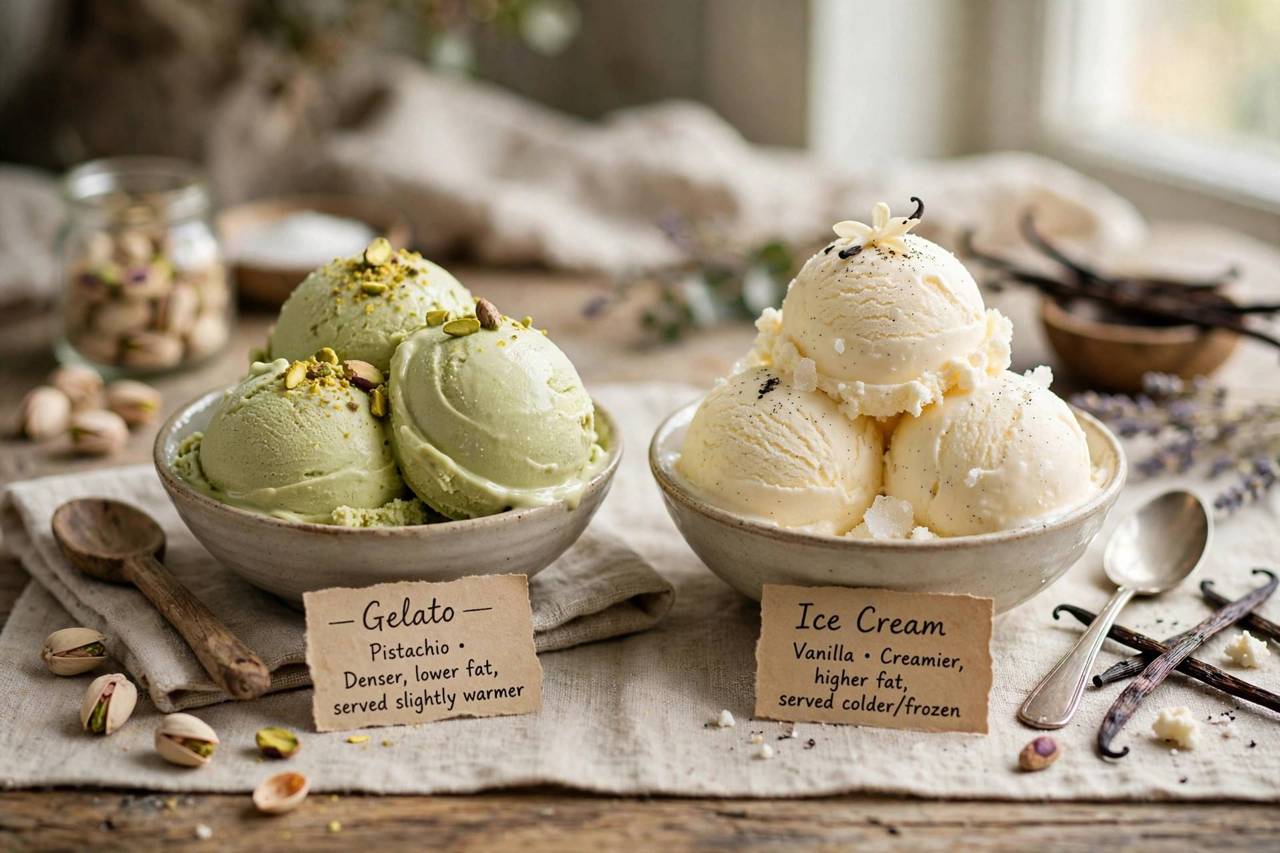
What is the difference between gelato and ice cream? They look similar in the bowl, but they are made differently, served differently, and they taste different for real, physical reasons. Gelato uses less fat and less air, is churned slower, and is served warmer, which makes its flavor hit harder and its texture feel silkier and denser. Ice cream uses more cream, whips in more air, and is served frozen hard, which makes it richer in a buttery way but milder in flavor. I have made both in my own kitchen, and once you know what to look for, you can tell them apart blindfolded. Here is the full breakdown.
Both start from the same family: sweetened frozen dairy. The split happened centuries ago, with gelato developing in Italy as a denser, fresher product and ice cream developing elsewhere, especially America, as a richer, longer-keeping one. Neither is better in any absolute sense. They are different pleasures, and knowing the difference helps you pick the right one and spot the fakes.
Fat Content: The Biggest Difference
This is the number that matters most. Gelato is made with more milk than cream, which keeps its fat content low, typically around 4 to 8 percent. Ice cream leans heavily on cream, and in the United States it must legally contain at least 10 percent milkfat to be called ice cream at all; premium brands go much higher, sometimes past 16 percent.
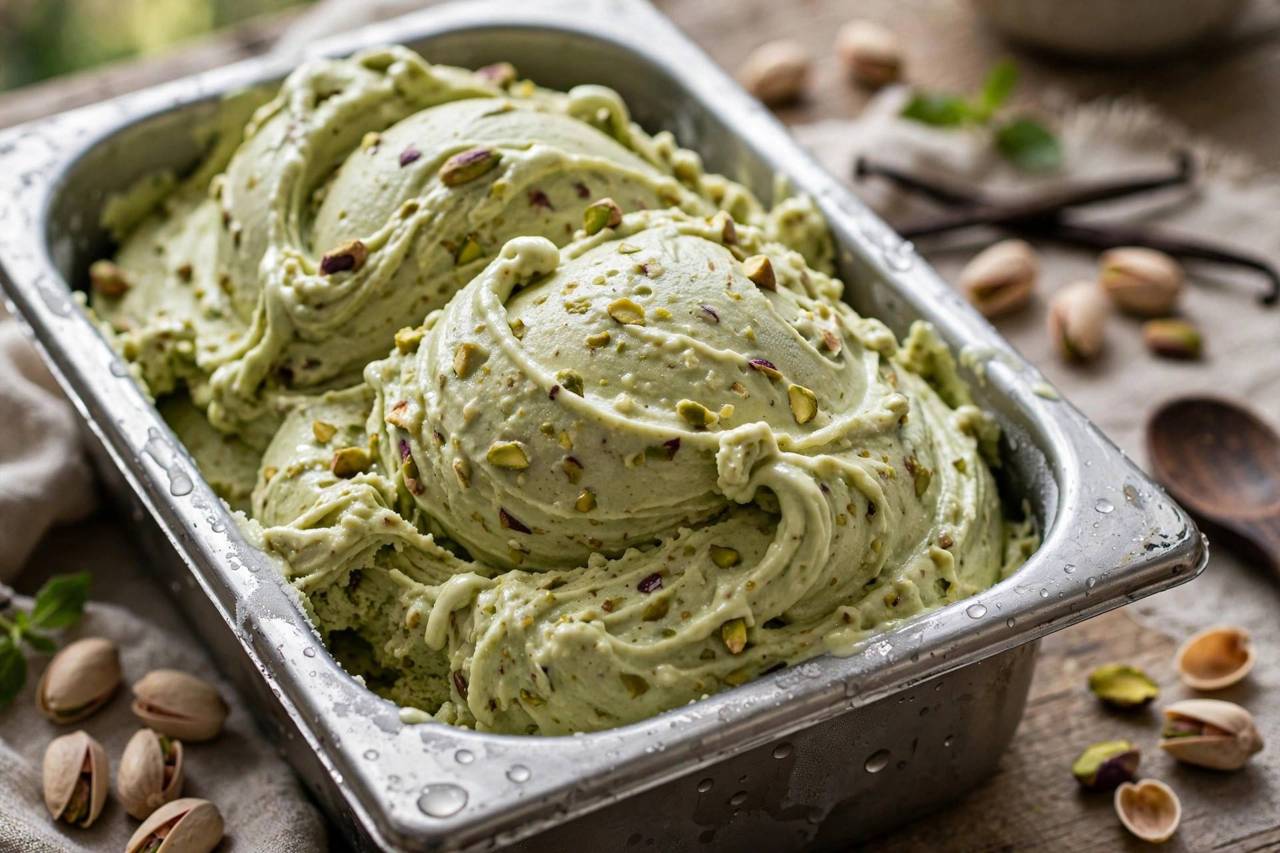
Fat coats your tongue. That sounds like it would make ice cream more flavorful, but it actually does the opposite: a coating of fat mutes flavor slightly, which is why ice cream tastes mellow and creamy while gelato tastes vivid. Gelato’s lower fat lets the actual flavor, pistachio, strawberry, lemon, come through cleanly and immediately. When I make pistachio gelato at home, people always say it tastes more like pistachio than any pistachio ice cream they have had. That is the fat difference talking.
Air: Why Gelato Feels Denser
The second big difference is overrun, the industry term for how much air gets whipped into the mix during churning. Ice cream is churned fast, which whips in a lot of air: typical overrun runs 50 to 100 percent, meaning up to half the tub can be air. Cheap ice cream pushes this even further, which is why a bargain tub feels fluffy and melts into thin soup.
Gelato is churned slowly, with overrun around 20 to 35 percent. Less air means more actual product in every spoonful, which is why gelato feels dense, silky, and substantial on the tongue. It also means gelato melts faster and more luxuriously, while airy ice cream holds its shape longer. If you have ever wondered why a small cup of gelato feels more satisfying than a big bowl of cheap ice cream, air is the answer.
Serving Temperature Changes Everything
Gelato is served around 10 degrees Fahrenheit warmer than ice cream. That sounds minor, but temperature is a flavor lever: colder food numbs your taste buds, warmer food lets flavor bloom. Gelato’s serving temperature is part of why it tastes so intense. It is also why gelato is stored in those wide, shallow metal pans rather than deep tubs; it is meant to be eaten fresh and soon, not warehoused for months.
This is also why gelato does not keep well at home. Your freezer is far colder than a gelateria’s display case, so homemade or store-bought gelato eaten straight from a home freezer will taste muted and hard. Let it sit on the counter for ten minutes before serving. Ice cream, designed for deep-freeze storage, handles the home freezer better, though it benefits from a few minutes of tempering too.
How Each One Is Made
The processes diverge from the start. A classic gelato base is milk, a little cream, sugar, and flavoring, heated gently to dissolve and pasteurize, then cooled and churned slowly. Many traditional gelati are made fresh daily because the low fat and low air mean a short shelf life; the texture degrades within days.
Ice cream starts with a richer base, more cream, often egg yolks in the French style, and gets churned fast to build structure around all that incorporated air. It is then hardened at very low temperatures, which gives it the firm scoopability and long freezer life that supermarkets depend on. Both are real craft; they are just optimized for different things, freshness and intensity versus richness and keeping quality.
Which Has More Sugar and Calories?
People assume gelato is lighter because it tastes less rich, and per spoonful it usually is: less fat and less air mean fewer calories per equal volume than premium ice cream. But sugar levels are comparable between the two; gelato needs its sugar for texture and scoopability at warmer temperatures. The honest nutritional answer is that both are desserts, and the difference that matters is portion behavior: gelato’s intensity means most people are satisfied with a smaller serving.
I won’t pretend either one is health food. But if you are choosing between a small cup of real gelato and a large tub of airy bargain ice cream, the gelato is the better experience and usually the lighter load. Eat the good stuff, eat less of it, enjoy it more.
How to Spot Real Gelato
Not everything labeled gelato deserves the name. Real gelato is stored in covered metal pans, often with lids, because it is sensitive to temperature and air. If you see mountainous, fluffy piles of brightly colored product heaped above the rim, that is decoration, not gelato; the dramatic mounds are usually made with vegetable fats and colorings. Real pistachio gelato is a muted brownish-green, not neon. Real banana is grayish, not yellow. Dull colors are a sign of honesty.
Also check the menu: a shop making real gelato will have a rotating selection and will tell you what was made today. Ask. A good gelateria is proud of the answer.
What Is the Difference Between Gelato and Ice Cream in Numbers?
Sometimes a side-by-side makes it click. Fat: gelato runs about 4 to 8 percent, while ice cream starts at 10 percent by law in the US and climbs past 16 in premium brands. Air (overrun): gelato 20 to 35 percent, ice cream 50 to 100 percent. Serving temperature: gelato is held and served roughly 10 degrees Fahrenheit warmer than ice cream. Shelf life: gelato is best within days of making; ice cream is built to last months in a home freezer. Flavor intensity per spoonful: gelato wins, because less fat mutes less and less air dilutes less. Richness per spoonful: ice cream wins, because that is what all the cream and butterfat are for.
Neither column is a victory; they are different designs. Gelato optimizes for freshness and intensity, ice cream for richness and keeping quality. Knowing which you are in the mood for is the whole game.
Gelato vs. Ice Cream: What to Order and When
After years of ordering both, here is my practical guide. At a real gelateria, order fruit and nut flavors: strawberry, lemon, pistachio, hazelnut. These are where gelato’s low-fat intensity shines brightest, and a good shop makes them daily. At an ice cream shop, order the rich and mix-in heavy flavors: chocolate, cookie dough, salted caramel with chunks. Ice cream’s fat carries mix-ins beautifully and its firmness holds them in suspension.
For dinner parties, gelato served slightly tempered is the elegant choice; it feels lighter after a big meal. For a crowd of kids, ice cream wins on practicality; it survives the freezer-to-table chaos. And when a recipe calls for a la mode on warm pie, use ice cream: its firmness stands up to heat, while gelato melts into a puddle before the first bite.
Storing and Serving Each One Right
Storage is where home cooks go wrong. Ice cream belongs in the coldest part of your freezer, pressed with plastic wrap against the surface to prevent ice crystals, and it keeps for weeks. Gelato hates the home freezer: the deep cold hardens it and mutes the flavor. Buy only what you will eat in a day or two, and temper it on the counter for ten to fifteen minutes before serving until it yields softly to a spoon.
Serving temperature is the lever most people never touch. Ice cream straight from a zero-degree freezer tastes noticeably duller than the same ice cream given five minutes on the counter. A few minutes of patience is the cheapest flavor upgrade in the dessert world.
The One-Sentence Difference
If you need it in a single line for the next dinner-party debate: gelato is churned slower with less fat and less air and served warmer, so it tastes more intense and feels silkier; ice cream is churned faster with more cream and more air and served frozen hard, so it tastes richer and keeps longer. Everything else is commentary. Now go order the pistachio.
Frequently Asked Questions
Is gelato healthier than ice cream?
Per equal volume, gelato usually has less fat and fewer calories than ice cream because it contains less cream and less air. Sugar content is similar. Both are desserts, so the practical difference is small; portion size matters more than the choice between them.
Why does gelato taste more flavorful than ice cream?
Two reasons: less fat coating your tongue, so flavor comes through cleanly, and a warmer serving temperature, so your taste buds pick up more. Lower air content also means more actual flavored product per spoonful.
Can I make gelato with an ice cream maker?
Yes. Use a gelato recipe with more milk than cream, churn it, and serve it warmer than you would ice cream. A standard home ice cream maker works fine; the difference is in the recipe and the serving temperature, not the equipment.
Why does gelato melt so fast?
Less air and less fat mean less structure holding it together, and it is served warmer to begin with. Fast melting is a sign of real gelato, not a flaw. Serve it in chilled bowls and eat it promptly.
Does gelato have eggs?
Usually not. Traditional gelato bases are milk, cream, and sugar without eggs. Some flavors like crema or zabaione do contain egg yolks. Ice cream, especially French-style, commonly uses egg yolks for richness.