How to Make Iced Coffee at Home (Better Than the Café)


Come here, coffee lover — we need to talk about the small fortune you’re spending at the café. That daily iced coffee habit? At café prices, it adds up to a shocking amount over a year. But here’s the beautiful secret: once you learn how to make iced coffee at home, yours will taste just as good — honestly, often better, because you’ll make it exactly how YOU like it.
I’ve tested every method in my own kitchen, and I’m going to share my three favorites: the quick classic method, the smooth cold brew method, and the Japanese iced method for coffee nerds. Plus all my little tricks for avoiding watery, bitter, disappointing results. Let’s brew.
How to Make Iced Coffee at Home: Why Most Attempts Go Wrong
Before the recipes, let’s diagnose the usual suspects behind bad homemade iced coffee — because most people’s first attempt tastes like brown sadness water:
- Pouring hot coffee over ice. The ice melts instantly, diluting everything. You end up with weak, lukewarm disappointment.
- Wrong coffee strength. Iced coffee needs to be brewed stronger than hot coffee, because ice dilution is inevitable. Regular-strength brew becomes dishwater.
- Stale or bitter coffee. Bitterness amplifies when coffee cools. Old beans or over-extracted coffee tastes twice as bad iced.
- Skipping the sweetener step. Sugar doesn’t dissolve in cold liquid. If you sweeten, do it while the coffee is warm or use simple syrup.
Fix these four things and you’re 90% of the way to café quality. Now let’s make some coffee.

Method 1: Classic Iced Coffee (Ready in 10 Minutes)
This is the fastest route to a great glass — perfect for when you need iced coffee NOW.
What you need: Coffee (brewed double-strength), ice, milk or cream, sweetener of choice, a tall glass.
- Brew strong coffee. Use twice your normal coffee grounds — if you usually use 2 tablespoons per cup, use 4. Brew it hot by any method you like (drip, French press, pour-over).
- Sweeten while hot (optional). Stir in sugar or honey now, while it dissolves easily. For cold-simple-syrup lovers, you can add it later.
- Cool it down fast. Pour the hot coffee into a heat-safe pitcher and refrigerate for at least 30 minutes — or speed things up by pouring it over a full glass of ice, accepting some dilution.
- Serve over fresh ice. Fill a tall glass with fresh ice cubes (not the melted ones from the cooling step), pour the chilled coffee over, and add milk or cream to taste.
Maria’s tip: Brew a full pot of double-strength coffee on Sunday, refrigerate it in a sealed pitcher, and you’ve got iced coffee base all week. It keeps well for 5-7 days.
Method 2: Cold Brew (The Smoothest Iced Coffee)
Cold brew is my personal favorite — it’s naturally sweeter, less acidic, and never bitter, because hot water is what extracts those harsh bitter compounds. It takes planning (12-24 hours of steeping), but the hands-on time is about five minutes.
- Coarse-grind your coffee. You want rough, chunky grounds — like breadcrumbs. Fine grounds over-extract and make sludge. Use about 1 cup of grounds per 4 cups of cold filtered water.
- Combine in a large jar. A big mason jar or pitcher works perfectly. Stir gently to make sure all grounds are wet.
- Steep 12-24 hours. Room temperature for bolder flavor, refrigerator for cleaner flavor. Cover it and walk away. Go live your life.
- Strain twice. First through a fine-mesh sieve to catch the big grounds, then through a coffee filter or cheesecloth for a clean cup. Patience here pays off — don’t squeeze the grounds, which pushes bitterness through.
- Dilute to taste. What you’ve made is a concentrate. Start with equal parts concentrate and water (or milk) over ice, then adjust. The concentrate keeps in the fridge for up to 2 weeks.

Method 3: Japanese Iced Coffee (For the Coffee Nerds)
This café technique brews hot coffee directly over ice, flash-chilling it to lock in the aromatics that cold brew mutes. It’s the brightest, most aromatic iced coffee you’ll ever make.
- Set up your pour-over (V60, Chemex, or similar) with the dose you’d normally use — but only half the water.
- Add ice to the carafe equal to the other half of the water weight. So if your recipe is 30g coffee to 500g water, use 250g hot water for brewing and 250g ice in the carafe.
- Brew directly onto the ice. Pour your hot water over the grounds as usual; the coffee drips onto the ice and chills instantly.
- Swirl and serve. Give it a swirl to melt the remaining ice, pour over fresh ice, and taste the difference — bright, fragrant, complex.
This method showcases good beans beautifully. If you’ve got a bag of nice single-origin coffee, this is how to honor it iced.
Maria’s Secrets for Next-Level Iced Coffee
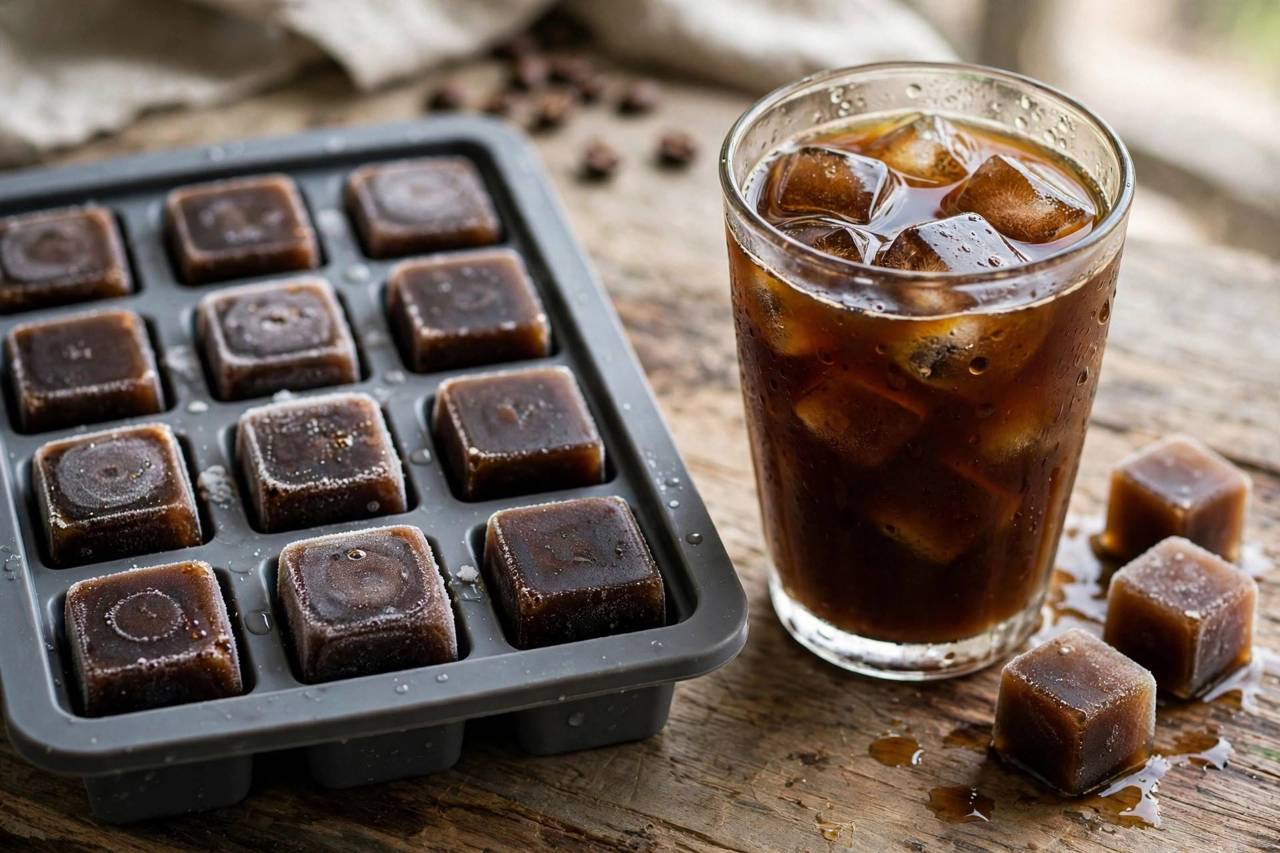
- Coffee ice cubes. Freeze leftover coffee in an ice cube tray. Use these instead of water ice and your drink gets stronger as it sits, not weaker. This one trick changes everything.
- Make simple syrup. Equal parts sugar and hot water, stirred until dissolved, stored in the fridge. It mixes into cold drinks instantly. Add vanilla extract or a cinnamon stick while it’s warm for flavored syrups.
- Try the milk options. Oat milk is the creamiest non-dairy choice for iced coffee. Whole milk gives classic richness. Sweetened condensed milk (a splash) makes a Vietnamese-style iced coffee that’s pure decadence.
- Salt your coffee. A tiny pinch of salt in the grounds before brewing reduces bitterness perception. Don’t skip this — it’s the kind of kitchen secret I only share with friends.
- Invest in decent beans. You don’t need the fanciest bag, but fresh beans (roasted within the last month) make a noticeable difference, especially in cold brew and Japanese iced methods.
Fun Variations to Try
Once you’ve mastered the basics, play around:
- Iced latte: Espresso (or very strong coffee) + cold milk over ice. Simple, classic.
- Vietnamese iced coffee: Strong coffee + 2 tablespoons sweetened condensed milk, stirred, poured over ice. Dangerously good.
- Iced mocha: Add a tablespoon of cocoa powder or chocolate syrup to your coffee before chilling.
- Cinnamon honey iced latte: Stir honey and a pinch of cinnamon into warm espresso, then pour over ice and milk.
- Affogato-style: Pour a shot of hot espresso over vanilla ice cream. Technically dessert. Technically iced coffee. No notes.
The Money Math (You’ll Love This)
Let’s do the cozy kitchen math together. A café iced latte runs several dollars. Homemade? Pennies per glass — even with good beans and nice milk, you’re looking at a fraction of the cost. If you buy iced coffee five days a week, making it at home saves you a genuinely life-improving amount of money over a year. That’s a vacation fund, friend. Or a very nice espresso machine, if you’re feeling the irony.
And if your home coffee ever gets so good that friends start suggesting you open a shop — well, stranger things have happened. Here’s how to start a coffee shop, just in case the dream takes hold.
Troubleshooting: When Your Iced Coffee Disappoints
Let’s fix the most common complaints one by one, friend:
- “It’s too bitter.” Your grind is too fine, your water too hot, or your beans too dark for the method. Go coarser, try a medium roast, and add that pinch of salt. Cold brew also sidesteps bitterness almost entirely.
- “It’s too weak.” You under-dosed. Iced coffee needs roughly double the grounds of hot coffee. Bump it up and taste again.
- “It tastes stale.” Coffee goes stale fast once brewed — use refrigerated coffee within a week, and cold brew concentrate within two. Also check your beans: if the bag’s been open for two months, the coffee was tired before you started.
- “The milk curdles.” Very acidic coffee plus cold milk can curdle, especially with lighter roasts. Fix: let the coffee cool a bit more before adding milk, use fresher milk, or switch to oat milk, which is remarkably curdle-resistant.
- “It’s just… boring.” Time for flavor! Vanilla syrup, cinnamon, cocoa, a splash of coconut milk, even a little orange zest in cold brew — iced coffee is a canvas. Play.
Storing Iced Coffee: Your Weekly Prep
Here’s my Sunday routine that keeps iced coffee ready all week: brew a double-strength pot, cool it, and store it in a sealed glass pitcher in the fridge — good for 5 to 7 days. Keep a tray of coffee ice cubes in the freezer. Keep simple syrup in a squeeze bottle. Each morning becomes a 60-second assembly job: ice, coffee, milk, syrup, done.
Don’t store iced coffee with milk already mixed in for more than a day or two — dairy shortens the lifespan. And always use sealed containers; coffee absorbs fridge odors eagerly. Nobody wants onion-adjacent iced coffee. Ask me how I know.
FAQ
How to make iced coffee at home without it tasting watery?
Brew double-strength coffee, chill it before serving (don’t pour hot coffee over ice), use fresh ice, and try coffee ice cubes made from frozen leftover coffee. These four steps eliminate dilution almost entirely.
What’s the difference between iced coffee and cold brew?
Iced coffee is hot-brewed coffee that’s been chilled and served over ice — brighter and quicker to make. Cold brew is steeped in cold water for 12-24 hours — smoother, naturally sweeter, and less acidic. Both are delicious; they’re just different experiences.
How long does homemade cold brew last in the fridge?
Cold brew concentrate keeps well for up to 2 weeks refrigerated in a sealed container. Diluted, ready-to-drink cold brew is best within 3-4 days. If it starts tasting off or dull, it’s time for a fresh batch.
Can I make iced coffee with instant coffee?
Absolutely. Dissolve 2 tablespoons of instant coffee in a small amount of hot water, add cold water and ice, then milk and sweetener to taste. It won’t win awards, but it’s fast, cheap, and perfectly satisfying on a busy morning.
Why does my iced coffee taste bitter?
Bitterness usually comes from over-extraction (grounds too fine, water too hot, steeped too long) or stale beans. Try a coarser grind, slightly cooler water, and fresher coffee. A pinch of salt in the grounds also tames bitterness remarkably well.