What Is the Difference Between Baking Soda and Powder?

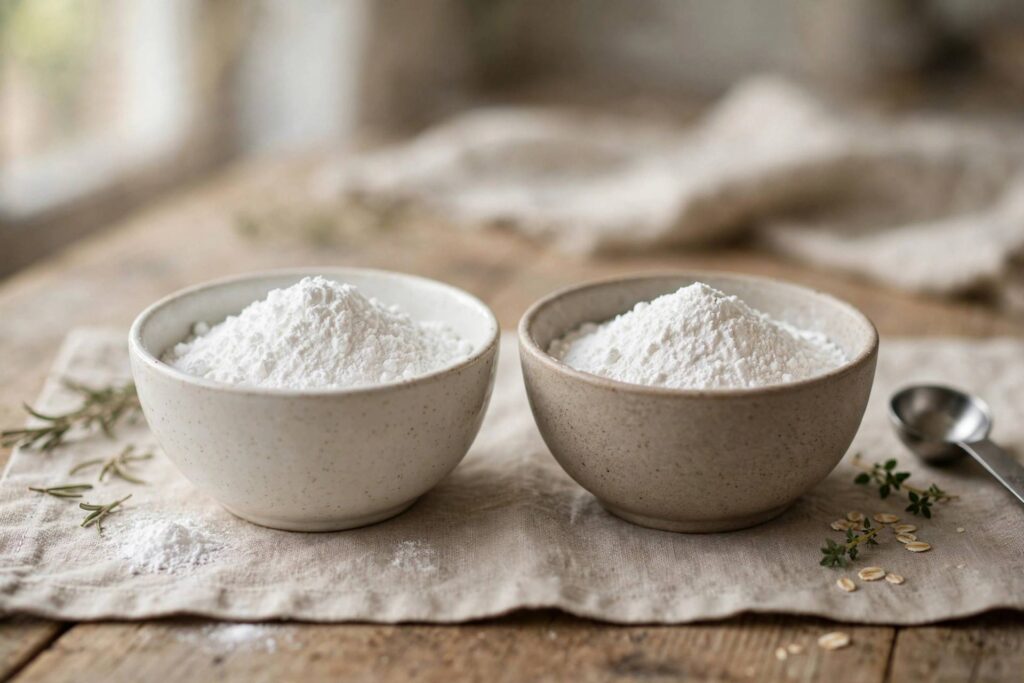
You’re halfway through a recipe, you reach into the pantry, and there they are: two little boxes, both white powder, both promising fluffy baked goods — baking soda and baking powder. They look almost identical, their names are confusingly similar, and using the wrong one (or the wrong amount) is the difference between tall, tender muffins and flat, sad discs. I’ve been baking for decades and I still double-check which box I’m grabbing. Let me clear up the confusion once and for all, so you never have to guess again. Here’s what is the difference between baking soda and powder, when to use each, and how to substitute in a pinch.
What Is the Difference Between Baking Soda and Powder? The Short Answer
Baking soda is pure sodium bicarbonate — a base that needs an acid (like buttermilk, lemon juice, vinegar, or honey) plus moisture to activate and create lift. Baking powder is baking soda plus a powdered acid (and a little starch to keep it stable) — it only needs moisture and heat to work, no extra acid required.
Think of it this way: baking soda is one ingredient waiting for a partner; baking powder is the complete kit, partner included. That one difference explains every rule about when to use which.
How Each One Actually Works (The Delicious Science)
Both are chemical leaveners — they make doughs and batters rise by producing carbon dioxide gas. Here’s the play-by-play:
Baking soda’s story: When sodium bicarbonate meets an acid and liquid, a reaction fires immediately, releasing CO₂ bubbles. Those bubbles get trapped in the batter, expand in the oven’s heat, and create lift. No acid in your recipe? No reaction. The soda just sits there — and worse, it leaves behind a soapy, metallic taste. This is why baking soda recipes always include something acidic: buttermilk pancakes, lemon cakes, chocolate cake with cocoa (natural cocoa is acidic), banana bread, honey-sweetened treats.
Baking powder’s story: Most baking powder today is “double-acting,” which is a lovely bit of food science. The first reaction happens when it gets wet (in the mixing bowl), and the second reaction happens when it gets hot (in the oven). That two-stage lift is why baking powder gives such reliable, even rising — and why recipes with baking powder are more forgiving about timing. You mix, you bake, it rises. No acid detective work required.
When to Use Which: The Practical Rules
Use baking soda when your recipe already contains a meaningful amount of acid. Classic examples: buttermilk, yogurt, sour cream, lemon juice, vinegar, molasses, honey, natural (not Dutch-processed) cocoa powder, brown sugar, applesauce, pumpkin. The acid is there anyway for flavor — the soda just harnesses it for lift.
Use baking powder when there’s no significant acid in the recipe — plain milk, water, or neutral batters. Think classic vanilla cake with regular milk, biscuits, scones, and many cookie recipes. The powder brings its own acid to the party.
Use both when a recipe needs more lift than the acid present can provide with soda alone, or when you want the soda to neutralize excess acid (for better browning and flavor) while the powder handles the heavy lifting. Many chocolate cakes, pancakes, and muffins use this combo — the soda tames the acidity and adds tenderness, the powder ensures a strong rise.
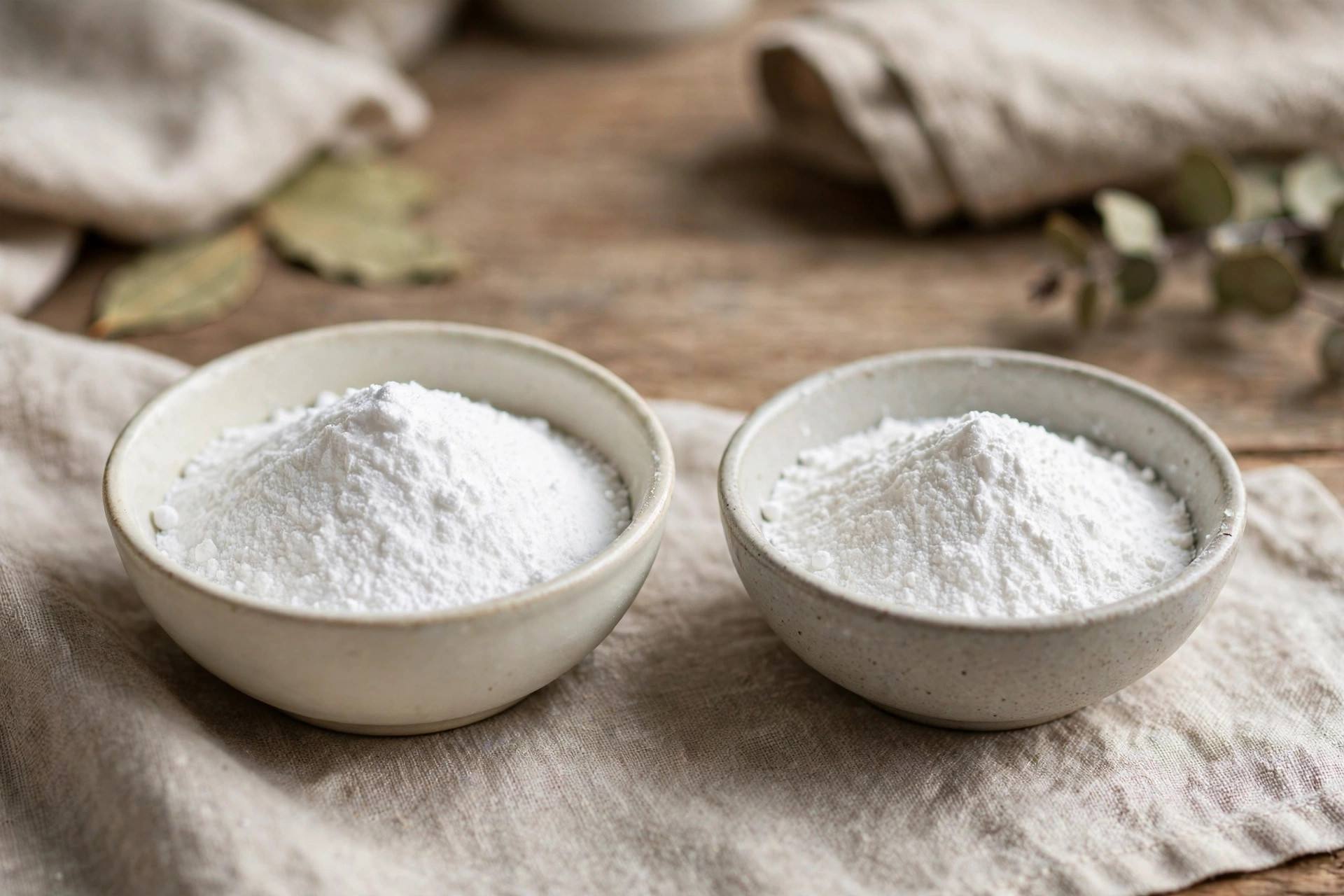
Can You Substitute One for the Other?
This is the question that brings most people here, so let’s be precise:
Substituting baking powder for baking soda: Possible but imperfect. Baking powder is weaker (roughly 3x less potent per teaspoon, since it’s diluted with acid and starch), so you’d need about 3 teaspoons of powder to replace 1 teaspoon of soda. It works in a pinch, but the flavor balance may shift slightly since you’re adding extra acid.
Substituting baking soda for baking powder: Trickier. You need to add an acid to activate it — a common hack is ¼ teaspoon baking soda plus ½ teaspoon cream of tartar to replace 1 teaspoon of baking powder (cream of tartar is the powdered acid, essentially recreating baking powder from scratch). Without the added acid, you’ll get poor lift and that dreaded soapy-metallic taste.
My honest advice as someone who’s tested every substitution in the book: for everyday baking, just keep both boxes fresh in your pantry. They’re inexpensive, they last (more on that below), and using the right one is the simplest path to consistent results. Substitutions are for emergencies, not routines.
How Much to Use (And Why More Isn’t Better)
Here’s a rule of thumb I share with every new baker: about ¼ teaspoon of baking soda per cup of flour, or about 1 teaspoon of baking powder per cup of flour. Recipes vary, but these ratios are the gravitational center that most well-tested recipes orbit.
The temptation to add extra “for more rise” is strong — and it’s always a mistake. Too much leavener doesn’t make things rise higher; it makes them rise fast and then collapse, with a coarse, tunnel-filled crumb and a bitter, chemical taste. Leavening is chemistry, not enthusiasm. Measure carefully, level off your spoons, and trust the recipe.
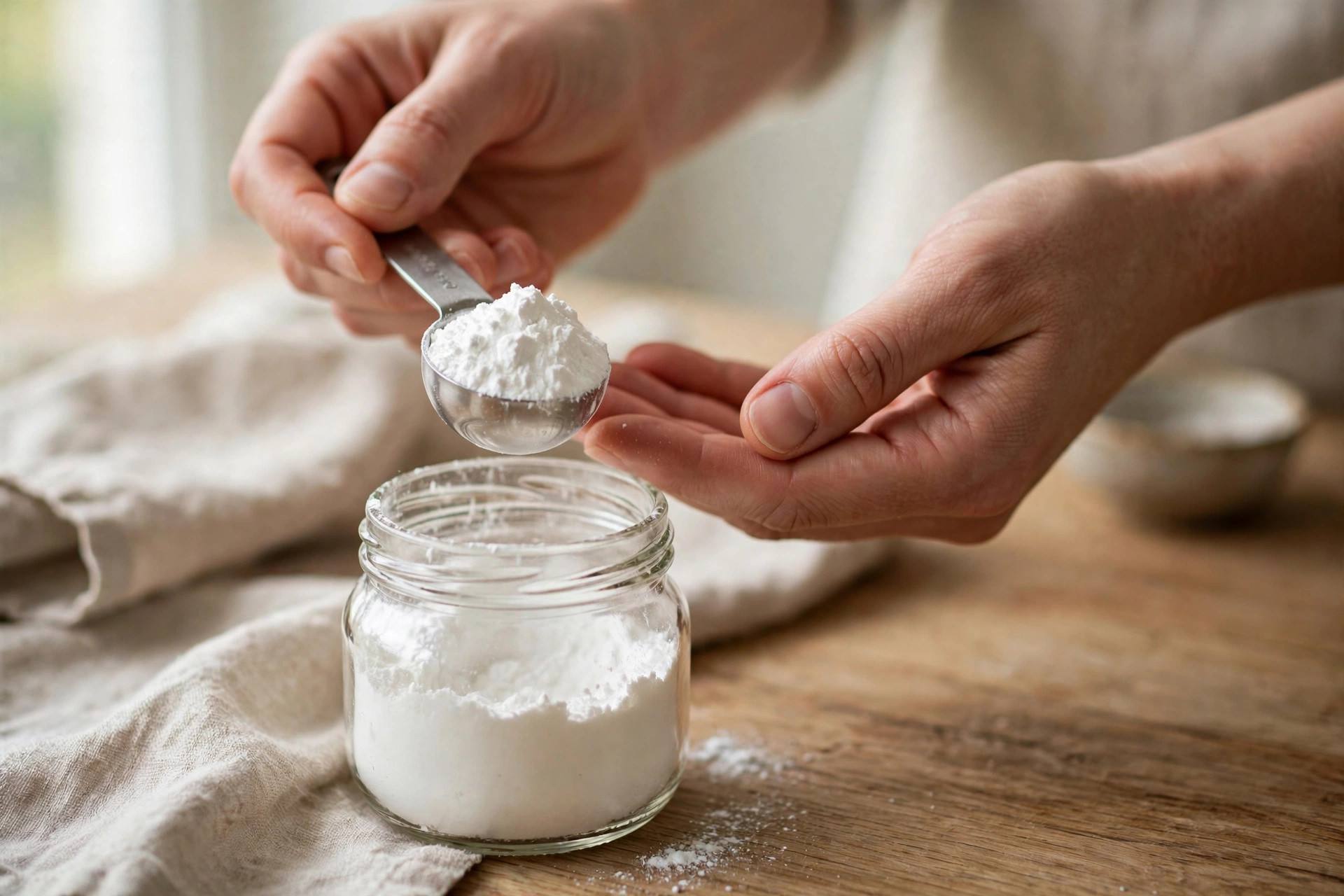
Freshness Matters More Than You Think
Both baking soda and baking powder lose potency over time — and a dead leavener is the silent culprit behind so many baking failures. That box of baking soda that’s been absorbing fridge odors since 2022? It’s not going to lift your cake.
The test for baking soda: Drop ½ teaspoon into a small bowl of vinegar. It should fizz vigorously immediately. Weak fizz = replace it.
The test for baking powder: Drop ½ teaspoon into a small bowl of hot water. It should bubble actively. Barely a fizzle = replace it.
As a practical matter: baking soda stays potent for about 6 months once opened (longer unopened), and baking powder for about 6-12 months. I write the opening date on the box with a marker — a tiny habit that has saved more bakes than I can count. Store both in a cool, dry place, tightly sealed. Humidity is the enemy.
Troubleshooting Common Leavening Disasters
Flat, dense baked goods: Expired leavener is suspect number one — test it. Suspect number two is overmixing after adding flour, which develops gluten and deflates the bubbles. Mix just until combined.
Bitter, soapy, or metallic taste: Too much baking soda, or baking soda without enough acid to neutralize it. Double-check your measurements and make sure the recipe’s acid content matches.
Rose beautifully then collapsed: Too much leavener created big bubbles that couldn’t hold their structure, or the oven door was opened too early. Also check your oven temperature with a thermometer — ovens lie.
Uneven rise / big tunnels: Usually overmixing or too much leavener. Gentle mixing and correct measurements fix both.
Yellowish or brown spots on the surface: Baking soda that wasn’t fully mixed in. Whisk your dry ingredients together thoroughly before combining with wet — those little soda pockets are unmistakable once you’ve seen them.
Beyond Baking: Bonus Uses
Since you’ll have both in the pantry, you might enjoy knowing they’re useful far beyond the mixing bowl:
- Baking soda deodorizes (fridge, shoes, carpets), softens beans when added to soaking water, helps vegetables retain bright color when blanched, and makes an effective gentle scouring cleaner.
- Baking powder (the aluminum-free kind) can give extra-crispy skin on roast chicken wings — toss them with a light coating before roasting. It’s a restaurant trick worth stealing.
But in your baking, remember their roles: soda needs acid, powder brings its own, and together they cover every situation a home baker will meet. Now you know what is the difference between baking soda and powder. Keep both fresh, measure with care, and your cakes, muffins, and cookies will thank you with every perfect rise.
Quick-Reference Chart: Soda or Powder?
Pin this to your fridge until it’s second nature:
- Recipe has buttermilk, yogurt, or sour cream? → Baking soda (the acid is already there).
- Recipe has lemon juice, vinegar, or molasses? → Baking soda.
- Recipe has natural cocoa powder or brown sugar as the main acid? → Baking soda, often with a little powder for insurance.
- Recipe has only milk, water, or eggs (no real acid)? → Baking powder.
- Recipe has Dutch-processed cocoa (not acidic)? → Baking powder.
- Recipe already calls for both? → Trust it. The recipe developer balanced them deliberately.
When you’re adapting your own recipes, start from the flour ratios — ¼ teaspoon soda or 1 teaspoon powder per cup of flour — then adjust for the acid present. After a few bakes, reading a recipe’s leavening like a map becomes instinct. You’ll glance at the ingredient list and just know.
FAQ
What happens if I use baking soda instead of baking powder?
Without an acid in the recipe to activate it, baking soda won’t produce proper lift and will leave a soapy, metallic taste. If the recipe does contain acid, you can substitute using about ⅓ the amount (¼ tsp soda + ½ tsp cream of tartar per 1 tsp powder), but results vary.
Can I use baking powder when a recipe calls for baking soda?
Yes, in a pinch — use about 3 teaspoons of baking powder for every 1 teaspoon of baking soda, since powder is roughly three times weaker. The texture and flavor may differ slightly, but it’s the safer direction to substitute.
How can I tell if my baking powder is still good?
Drop ½ teaspoon into hot water — it should bubble vigorously. If it barely fizzes, it’s expired and won’t leaven properly. Test every 6 months once opened, and date the container when you open it.
Why do some recipes use both baking soda and baking powder?
Usually for two reasons: the soda neutralizes excess acid in the recipe (improving flavor and browning) while the powder provides reliable lift, or the recipe needs more total leavening than the available acid can support with soda alone. They complement each other.
Does it matter if my baking powder contains aluminum?
Some bakers detect a slight metallic taste from aluminum-based baking powders, especially in delicate recipes. Aluminum-free (often labeled as such, using monocalcium phosphate) avoids this entirely. For most everyday baking the difference is subtle, but aluminum-free is an easy upgrade.