How to Meal Prep for Beginners: Your Friendly Guide to Stress-Free Weekly Meals

Let me tell you a little secret, friend: learning how to meal prep for beginners changed my weeknights completely. There was a time when 6 p.m. meant staring into an empty fridge, ordering takeout I did not really want, and feeling guilty about it. Then a friend showed me that meal prep does not mean eating the same boring chicken and rice for five days straight. It means giving your future self a gift — a fridge full of good food, ready when you are.
If the idea of meal prep feels overwhelming, take a deep breath. You do not need fancy containers, a chef’s training, or an entire Sunday chained to the stove. You just need a simple plan, a couple of hours, and this guide. I will walk you through everything, step by step, the way I would if we were standing in my kitchen together.
What Is Meal Prep, Really?
Meal prep simply means preparing food (or parts of meals) ahead of time so that cooking during the week is quick and easy. That is it. There is no single “right” way to do it. Some people cook five full dinners on Sunday. Others just wash and chop vegetables, cook a big batch of grains, and marinate proteins. Both count as meal prep.
For beginners, I always recommend starting with the middle path: component prepping. Instead of cooking complete meals, you prepare versatile building blocks — cooked grains, roasted vegetables, a couple of proteins, a sauce or two. Then during the week, you mix and match. Monday might be a grain bowl, Tuesday becomes tacos, Wednesday turns into a big salad. Same ingredients, totally different meals. Nothing boring about that.
Why Bother? The Real Benefits of Meal Prepping
You might be wondering whether meal prep is worth the Sunday effort. Let me share what my family and friends have told me after trying it:
- You save real money. Fewer impulse takeout orders and less wasted produce add up fast.
- You eat better without thinking about it. When the healthy option is the easy option, you choose it.
- Weeknights get calmer. Dinner goes from a 45-minute production to a 10-minute assembly.
- Less food waste. You buy with a plan and use what you buy.
- You actually look forward to lunch. Homemade lunches beat sad desk salads every time.
The goal is not perfection. Even prepping two or three days of lunches counts, and it is a wonderful place to start.
What You Need Before You Start
Good news: you probably own most of what you need already. Here is my honest starter list — nothing fancy.
Containers
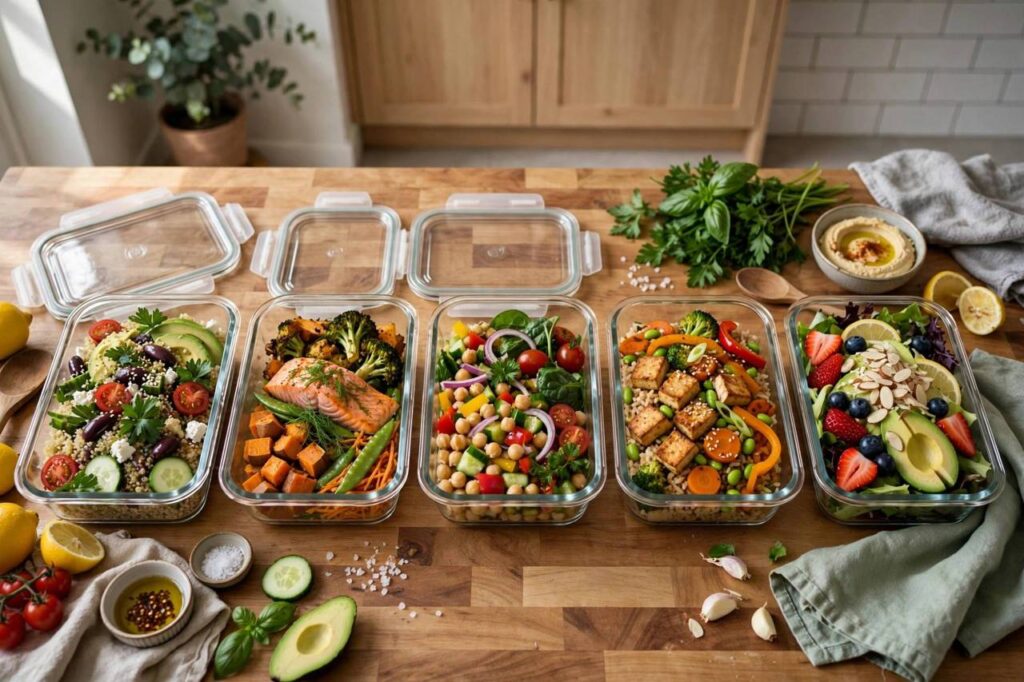
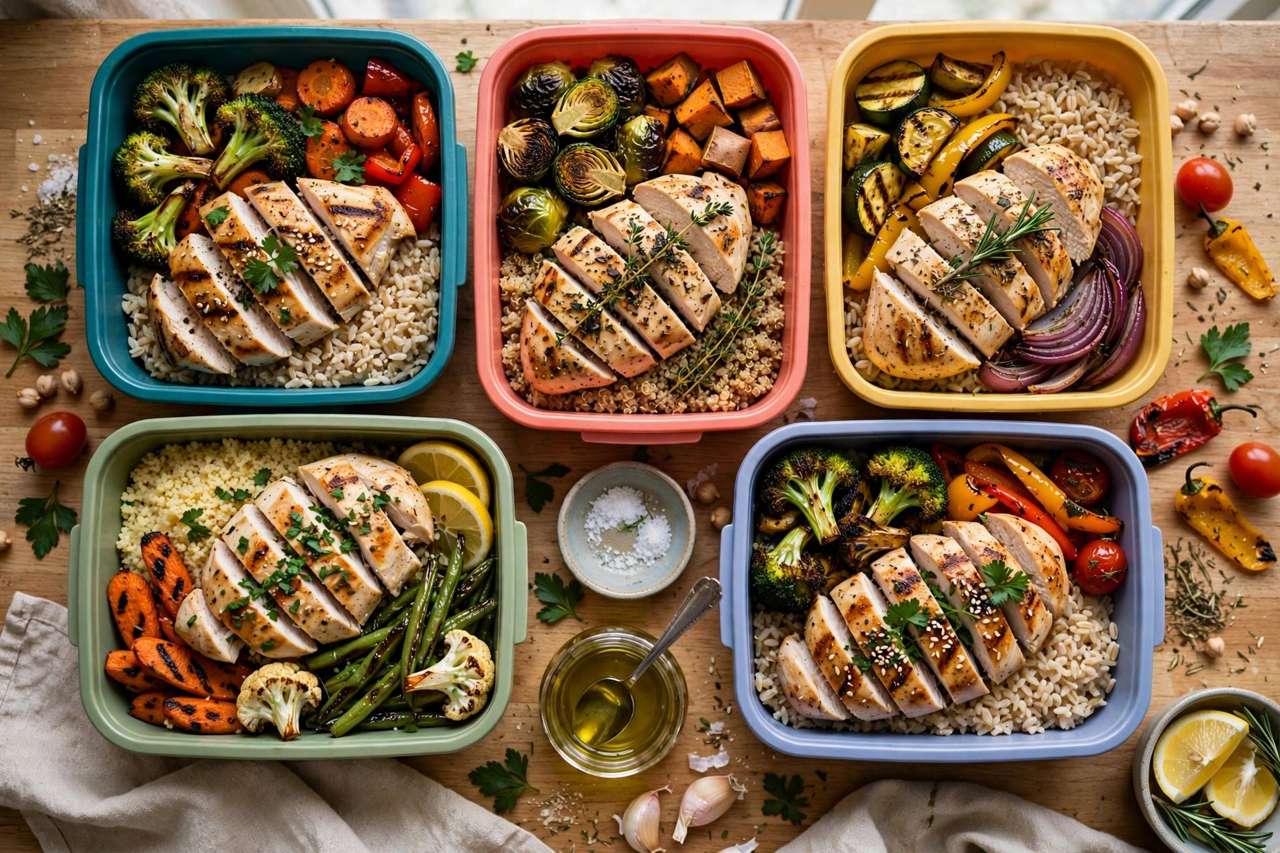
Glass containers with locking lids are my favorite because they go from fridge to microwave to table without staining or holding smells. Start with 6 to 8 medium containers (about 3 to 4 cups each) and a few small ones for sauces and snacks. You can absolutely start with what you have, even if it is a mismatched collection — do not let perfect containers be the reason you never start.
Basic tools
A large sheet pan, a big pot, a sharp chef’s knife, a cutting board, and a couple of mixing bowls will handle almost everything. If you have a slow cooker or rice cooker, even better, but they are not required.
A simple plan
This is the real essential. Before you cook a single thing, decide what you are making. Pick one grain, two proteins, two or three vegetables, and one or two sauces. That is a complete week of mix-and-match meals. Write it down — a sticky note on the fridge is perfect.
How to Meal Prep for Beginners: The Step-by-Step Method
Here is the exact method I teach every beginner. Set aside about two hours on a day that works for you — Sunday is classic, but any day is fine.
Step 1: Choose your menu (15 minutes)
Keep it simple for your first week. A great beginner menu looks like this:
- Grain: brown rice or quinoa
- Proteins: baked chicken thighs and black beans
- Vegetables: roasted sweet potatoes, broccoli, and bell peppers
- Fresh extras: washed greens, cherry tomatoes, avocado (prep day-of)
- Sauces: a simple lemon-tahini dressing and salsa
Choose foods you genuinely like eating. Meal prep fails when people force themselves to eat bland “diet” food. Cook food you love.
Step 2: Shop with a list (30 minutes)
Write your grocery list from your menu, organized by store section (produce, meat, pantry). Stick to the list. Buying exactly what your plan needs is how you avoid waste and save money. A quick tip: check your pantry first so you do not buy a third bottle of olive oil.
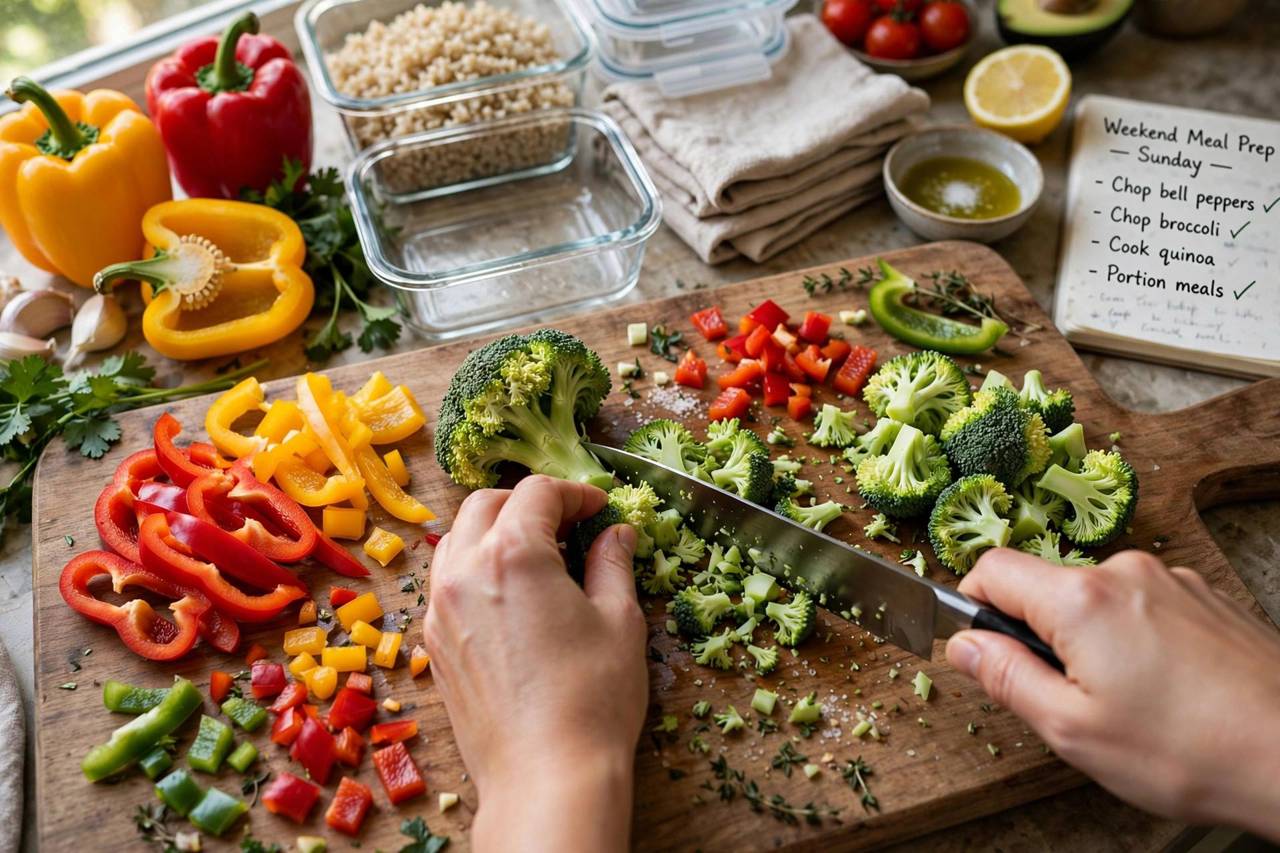
Step 3: Prep in this order (60 to 90 minutes)
The secret to an efficient prep session is working in the right order — start the slow things first, then use the waiting time for the quick things:
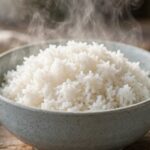
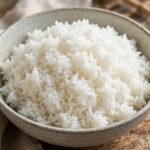
- Start the grain. Get rice or quinoa going on the stove or in the rice cooker first. It needs the least attention.
- Heat the oven. While the grain cooks, chop vegetables, toss them with olive oil, salt, and pepper, and spread them on sheet pans. Roast at 425°F (220°C) for 20 to 30 minutes.
- Cook the protein. Season chicken thighs simply — salt, pepper, garlic powder, paprika — and bake them on a second sheet pan, or sear them in a skillet. Warm the black beans with a little cumin and garlic.
- Make the sauces. While everything cooks, whisk together your dressings. Lemon-tahini: tahini, lemon juice, garlic, water, salt. Done in three minutes.
- Wash the fresh stuff. Rinse greens and berries, halve cherry tomatoes. Store them separately so they stay crisp.
- Cool and pack. Let hot food cool for 20 to 30 minutes (never more than two hours at room temperature), then portion into containers.
How to Store Meal Prep Safely
Food safety matters, and it is simpler than you think. Follow these rules and your food will stay fresh and safe all week:
- The 4-day rule: Most cooked meals keep safely in the fridge for 3 to 4 days. Plan your prep day accordingly — if you prep Sunday, plan to eat or freeze by Wednesday or Thursday.
- Cool before sealing: Let food cool to room temperature (within two hours), then seal and refrigerate. Sealing hot food creates condensation that makes everything soggy.
- Freeze the overflow: Soups, stews, cooked grains, and many proteins freeze beautifully for up to 3 months. Label containers with the date and contents.
- Keep sauces separate: Store dressings and sauces in small containers and add them at serving time. This keeps everything fresh and prevents sogginess.
- Reheat properly: Reheat leftovers to steaming hot (165°F / 74°C) throughout. When microwaving, stir halfway for even heating.
Easy Beginner Meal Prep Recipes to Try First
Let me share three starter recipes that are nearly impossible to mess up and endlessly flexible.
1. Sheet Pan Chicken and Vegetables
Toss chicken thighs, sweet potato cubes, broccoli florets, and bell pepper strips with olive oil, salt, pepper, garlic powder, and paprika. Spread on a sheet pan (give everything space — crowding causes steaming, not roasting). Bake at 425°F for 25 to 30 minutes, flipping once. This one pan makes four generous servings.
2. Big-Batch Quinoa Bowls
Cook 2 cups of quinoa in vegetable broth for extra flavor. Roast whatever vegetables you have. Warm a can of black beans with cumin. Portion into containers: quinoa, beans, veggies. Add fresh avocado and a squeeze of lime when you eat. These keep beautifully for four days.
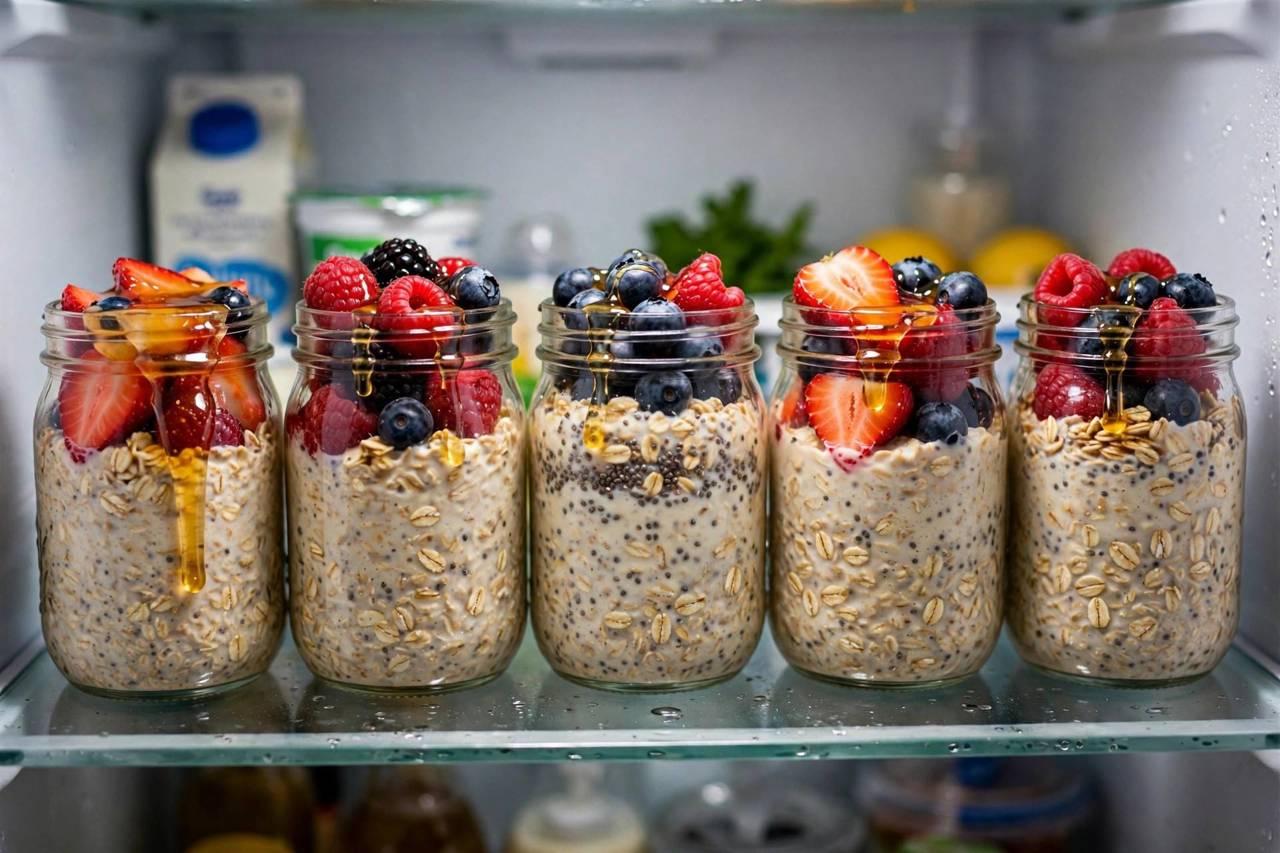
3. Overnight Oats (No Cooking at All)
For breakfasts: in each jar, combine half a cup of rolled oats, half a cup of milk, a spoonful of yogurt, a drizzle of honey, and a pinch of cinnamon. Top with berries. Refrigerate overnight. Grab and go in the morning. Make five jars on Sunday night in ten minutes.
Common Beginner Mistakes (and How to Avoid Them)
I have seen every meal prep mistake in the book — I have made most of them myself. Here is how to dodge the big ones:
- Prepping too much variety. Five different elaborate recipes on day one leads to burnout. Start with simple components, not a restaurant menu.
- Ignoring what you actually like. If you hate reheated fish, do not prep fish. Cook food you are excited to eat.
- Skipping the sauces. Plain components get boring fast. Two good sauces make the same ingredients taste completely different.
- Forgetting snacks. Prep a few snacks too — cut fruit, hummus with veggies, a handful of nuts. Future-you will be grateful at 3 p.m.
- Not labeling. Everything looks the same after three days. A piece of masking tape and a marker saves you from mystery-container roulette.
Your First Week: A Simple Sample Plan
Here is a complete first-week plan using the components above. Notice how the same prepped ingredients become different meals:
- Monday lunch: Quinoa bowl with black beans, roasted sweet potato, salsa
- Monday dinner: Sheet pan chicken with roasted broccoli and bell peppers
- Tuesday lunch: Big salad with greens, chicken, cherry tomatoes, lemon-tahini
- Tuesday dinner: Quinoa with black beans, roasted veggies, avocado
- Wednesday lunch: Chicken and sweet potato with greens and tahini dressing
- Breakfasts: Overnight oats, all week
See? One prep session, a whole week of real meals. You did not eat the same thing twice, and you barely cooked after Sunday.
FAQ
How long does meal prep take for beginners?
Plan for about two hours for your first few sessions, including shopping. As you get comfortable, most people get it down to 60 to 90 minutes of cooking. Starting simple is the key — component prepping is much faster than cooking five different full recipes.
How long does meal prepped food last in the fridge?
Most cooked meals stay fresh for 3 to 4 days in the refrigerator. Soups, stews, and cooked grains often last the full four days; cooked chicken and fish are best within 3 days. When in doubt, freeze extras on prep day and thaw them midweek.
What foods should beginners avoid meal prepping?
Skip foods that do not reheat well: fried foods (they go soggy), delicate greens dressed in advance, and avocado (it browns — add it fresh). Crispy foods, creamy sauces that separate, and seafood beyond a day or two are also tricky for beginners.
Do I need special containers to start meal prepping?
No. Start with whatever food-safe containers you own. If you decide to buy, glass containers with locking lids are the best long-term investment — they do not stain, they reheat evenly, and they last for years. A set of 6 to 8 medium containers covers most beginners.
Can I meal prep if I get bored eating the same food?
Absolutely — that is exactly why I recommend component prepping over cooking identical full meals. With grains, proteins, vegetables, and two sauces prepped, you can build bowls, wraps, salads, and tacos all week. Same ingredients, different meals, zero boredom.