How to Make Perfect Rice Every Single Time (No More Mush)

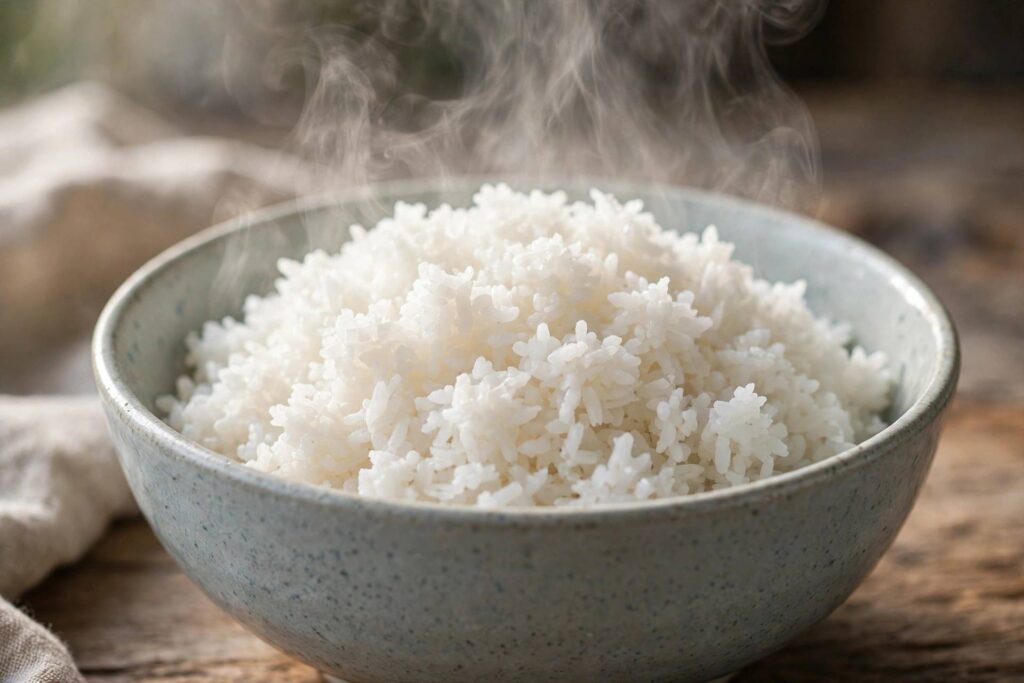
Can I tell you a secret, friend? For years, my rice was terrible — and I never imagined I’d one day teach others how to make perfect rice. Gummy. Crunchy. Burnt on the bottom, soupy on top — sometimes all in the same pot. I was convinced perfect rice required some mysterious talent I simply didn’t have.
Then my grandmother watched me struggle, laughed her warm laugh, and taught me what I’m about to teach you: perfect rice isn’t talent. It’s technique — a few simple rules that work every single time. Once you learn how to make perfect rice, you’ll wonder why it ever seemed hard.
The Three Rules of Perfect Rice
Everything in this guide comes back to three principles. Internalize these and you’re 90% there:
- The right ratio. Too much water = mush. Too little = crunch. Each rice type has its ratio, and I’ll give you all of them below.
- Don’t peek, don’t stir. Once the lid goes on, it stays on. Every peek releases steam — and steam is doing the cooking. Stirring breaks grains and releases starch, which means gumminess.
- Rest before fluffing. When the timer ends, the rice isn’t done — it needs 5-10 minutes of resting with the lid on. This lets moisture equalize so every grain is perfect, top to bottom.
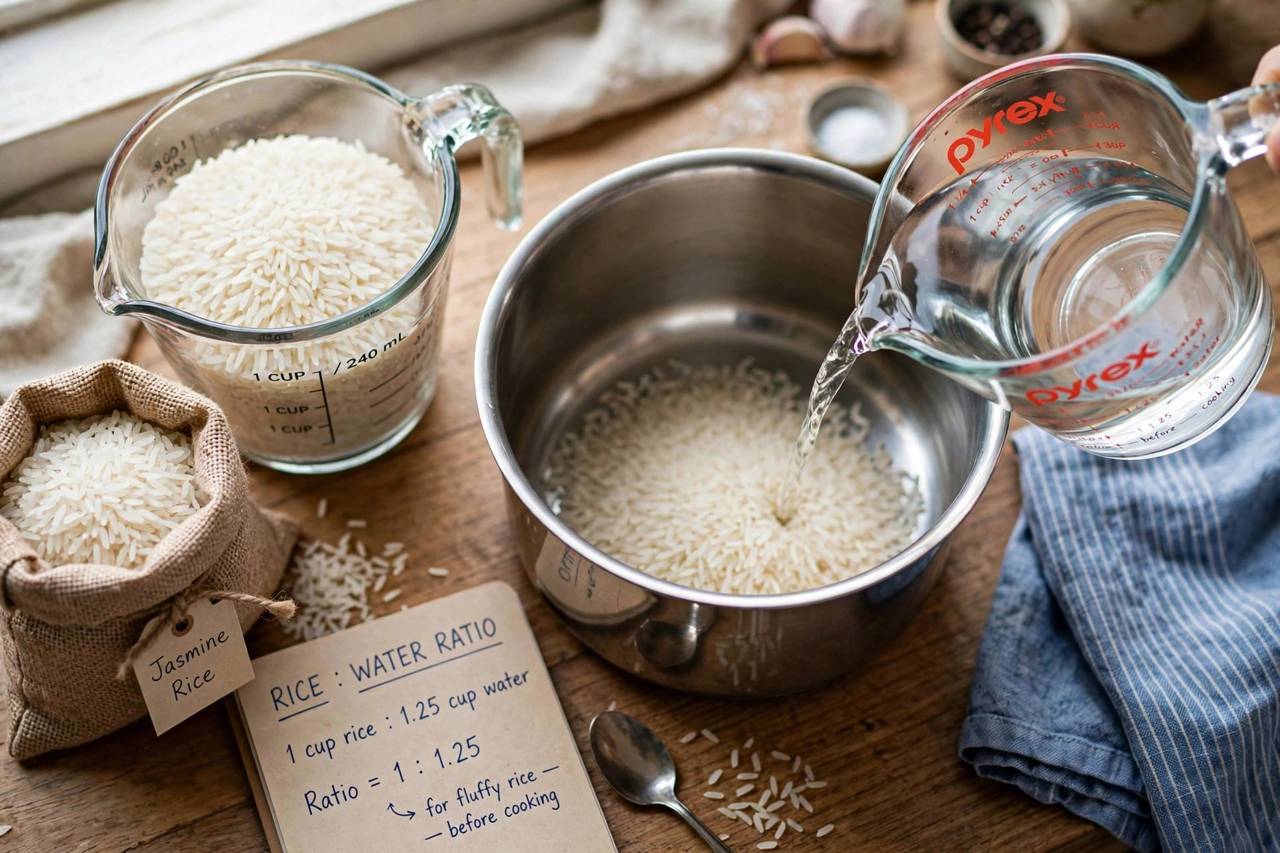
How to Make Perfect Rice on the Stovetop
This is the master method. Learn it once, use it forever.
- Rinse the rice (usually). Place rice in a bowl, cover with cold water, swish with your hand, and drain. Repeat 2-3 times until the water runs mostly clear. Rinsing removes excess surface starch — the main cause of gummy rice. (Exception: arborio for risotto and some enriched rices — check the package.)
- Measure rice and water. For standard long-grain white rice: 1 cup rice to 1.5 cups water. Add a pinch of salt and a tiny knob of butter or drizzle of oil if you like (optional, but lovely).
- Bring to a boil. Combine rice, water, and salt in a pot with a tight-fitting lid. Bring to a rolling boil over medium-high heat.
- Drop to the lowest simmer, lid on. As soon as it boils, reduce heat to the lowest setting and cover. Don’t lift that lid again.
- Cook undisturbed. White rice: 15 minutes. Brown rice: 40-45 minutes. Set a timer and walk away.
- Rest 10 minutes. Remove from heat (lid still on!) and let it rest. This is not optional — it’s when the magic finishes.
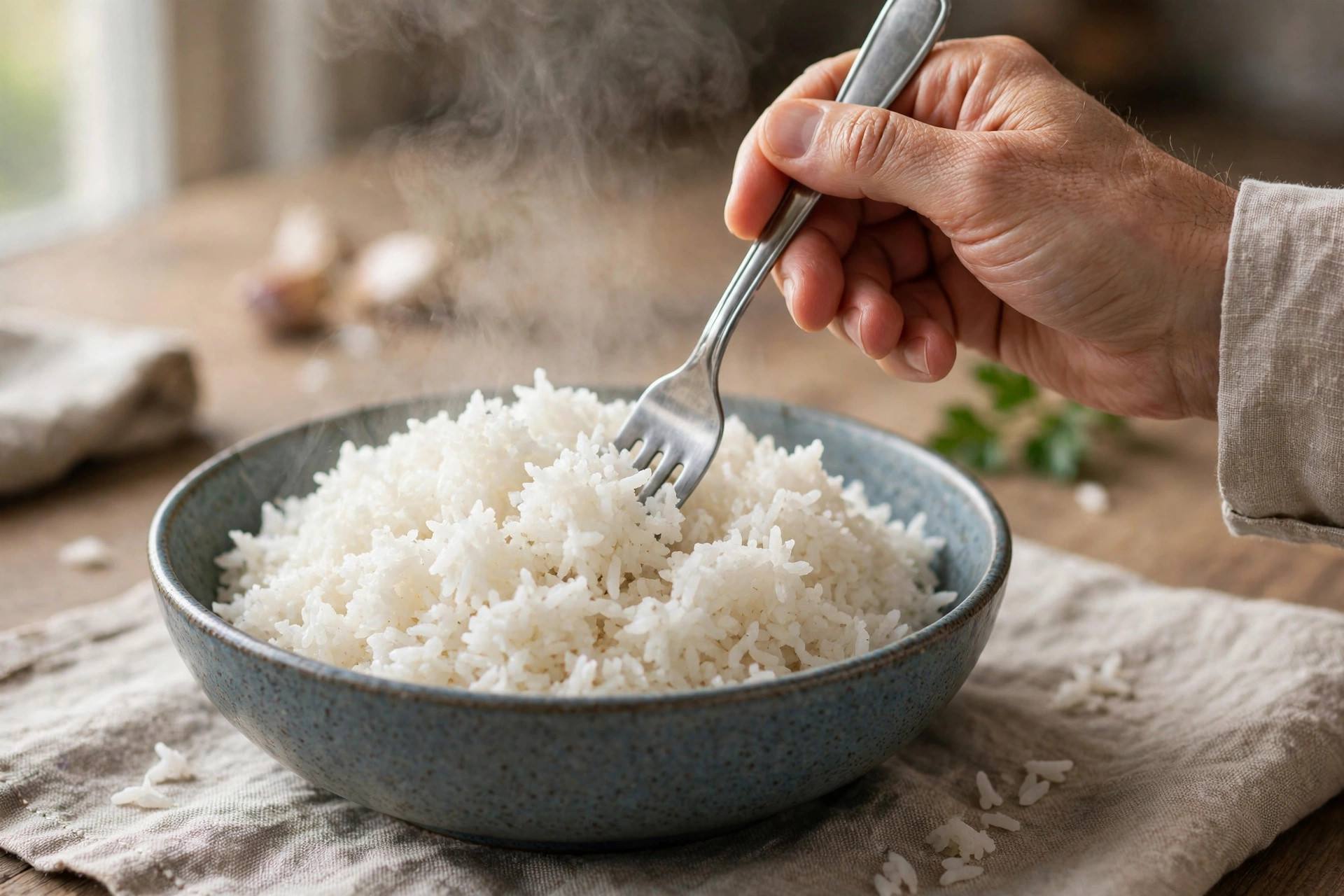
- Fluff with a fork. Finally! Remove the lid, fluff gently with a fork (not a spoon — a fork separates without mashing), and serve.
Rice-to-Water Ratios Cheat Sheet
Different rices drink different amounts of water. Here’s your reference:
- Long-grain white (jasmine, basmati): 1 cup rice : 1.5 cups water, 15 min
- Medium-grain white: 1 cup rice : 1.5 cups water, 15 min
- Short-grain white (sushi rice): 1 cup rice : 1.25 cups water, 15 min (plus seasoning after)
- Brown rice (long-grain): 1 cup rice : 2 cups water, 40-45 min
- Wild rice: 1 cup rice : 3 cups water, 45-55 min
- Parboiled/converted rice: 1 cup rice : 2 cups water, 20-25 min (very forgiving)
Altitude note: above 3,000 feet, add a couple of tablespoons of extra water and a few extra minutes — water boils cooler up there, so rice needs a little more help.
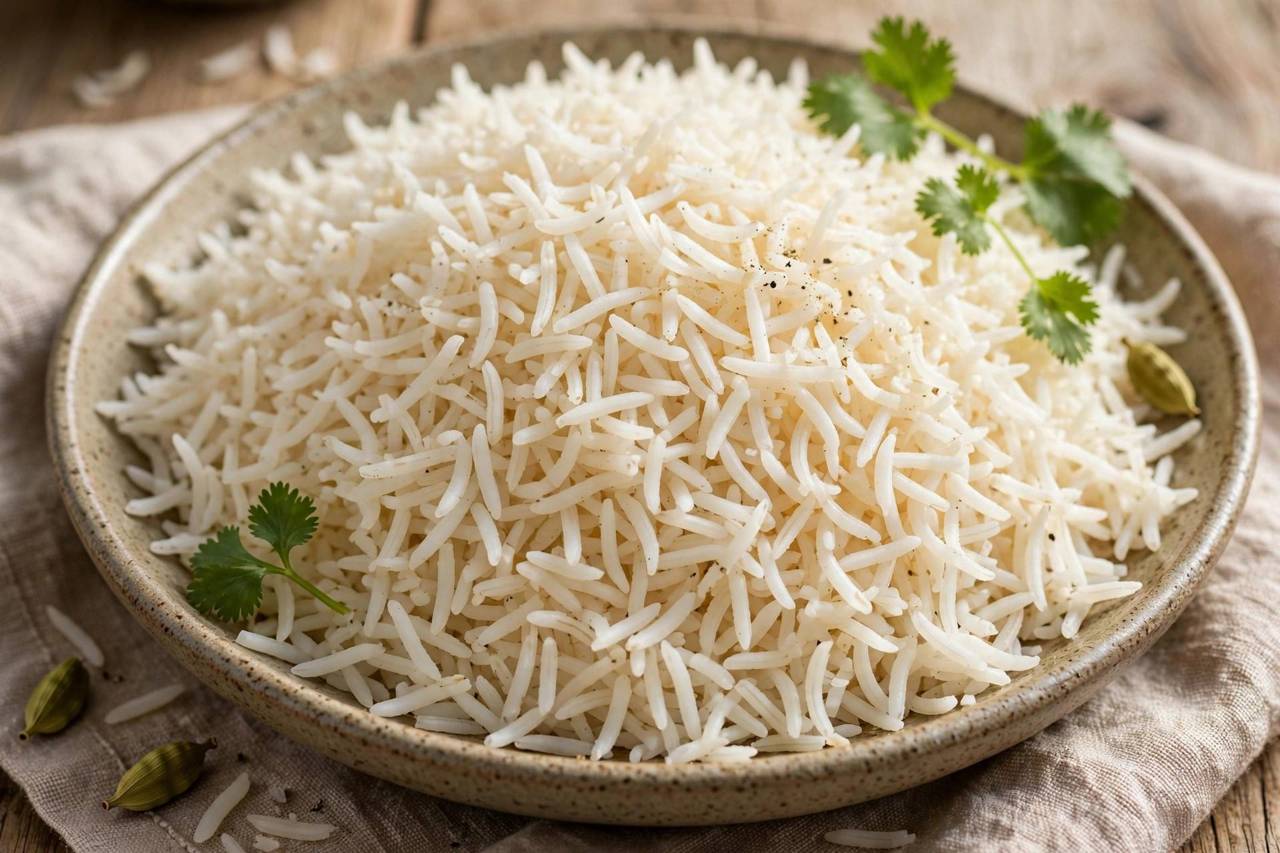
Rescuing Rice Gone Wrong
Even with perfect technique, things happen. Here’s how to save each disaster:
- Too wet/mushy: Drain any standing water, return the pot to low heat uncovered for a few minutes, stirring gently to evaporate moisture. Spread on a baking sheet to cool quickly if needed. Next time: less water.
- Too crunchy/undercooked: Sprinkle 2-3 tablespoons of water over the rice, cover, and return to low heat for 5-10 minutes. The added steam finishes the job. Next time: a touch more water or a few more minutes.
- Burnt on the bottom: Don’t stir! Scoop the good rice off the top into a new pot, leaving the burnt layer behind. Stirring mixes the burnt flavor through everything. A piece of bread laid on top for a few minutes can absorb mild burnt smell.
- Bland: Rice cooked in water is a blank canvas — that’s a feature, not a bug. Cook in broth instead of water, add a bay leaf or cardamom pods to the pot, or finish with butter and salt. Seasoning is where personality lives.
Beyond the Basics: Rice Variations Worth Trying
- Coconut rice: Replace half the water with coconut milk, add a pinch of sugar and salt. Heavenly with anything spicy or tropical.
- Buttered herb rice: Stir butter, chopped parsley, and lemon zest through finished rice. Simple, elegant, addictive.
- Toasted rice (pilaf style): Sauté the dry rice in butter or oil for 2-3 minutes until lightly golden before adding water. Adds a wonderful nutty depth.
- Broth rice: Cook in chicken or vegetable broth instead of water. Instant flavor upgrade for the exact same effort.
- Lime cilantro rice: Stir fresh lime juice, lime zest, and chopped cilantro into hot cooked rice. Restaurant-style, at home.
Rice Cooker vs. Stovetop: My Honest Take
People ask me this all the time, so here’s my truth: a rice cooker is wonderful — set it, forget it, perfect rice, warming function. If you eat rice several times a week, it’s worth the counter space.
But the stovetop method in this guide produces rice that’s just as good, and learning it means perfect rice anywhere — at a friend’s house, on vacation, anywhere with a pot and a lid. Learn the stovetop method first. Buy the rice cooker later if you want the convenience. Skill before gadget, always.
Storing and Reheating Leftover Rice
Cool leftover rice quickly (spread it on a tray — don’t leave it sitting warm for hours), refrigerate within an hour, and use within 3-4 days. To reheat: sprinkle a tablespoon of water over the rice, cover, and microwave until steaming — the added moisture revives it beautifully. Leftover rice also makes the BEST fried rice, because day-old refrigerated rice fries up separate and crispy instead of clumping. Some of my favorite meals started as “leftover rice night.”
The Science Bit: Why These Rules Work
Understanding the “why” makes the rules stick. Here’s what’s happening in the pot:
- Rinsing removes surface starch. Rice grains are coated in loose starch powder from milling. In hot water, that starch gelatinizes into glue — the source of gumminess. Rinsing washes it away before it can cause trouble.
- The lid traps steam, and steam does the cooking. Rice doesn’t just absorb the water it sits in — the grains in the upper part of the pot cook primarily in steam. Lifting the lid vents that steam, leaving top grains undercooked while bottom grains overcook. Hence: don’t peek.
- Resting equalizes moisture. When cooking ends, moisture distribution is uneven — wetter at the bottom, drier at top. The rest period lets moisture migrate through the grains via residual heat, so every bite is uniform. It’s the same principle as resting meat after cooking.
- Stirring = starch release. Agitation knocks starch off the grain surfaces into the surrounding liquid, thickening it into paste. That’s exactly what you want for risotto — and exactly what you don’t want for fluffy rice.
Rice Around the World: Dishes Worth Trying
Once you’ve mastered plain perfect rice, the world’s rice dishes are your playground:
- Japanese sushi rice: Short-grain rice seasoned while warm with rice vinegar, sugar, and salt, fanned to cool. The foundation of sushi — sticky, glossy, seasoned.
- Indian biryani: Fragrant basmati layered with spiced meat or vegetables, sealed and steamed so the aromas marry. A celebration dish worth the effort.
- Spanish paella: Medium-grain rice cooked in a wide pan with saffron broth, developing the prized crispy bottom layer called socarrat. Don’t stir — the crust is the point.
- Chinese fried rice: Day-old jasmine rice wok-tossed with egg, vegetables, and soy sauce over fierce heat. The ultimate leftover transformation.
- Italian risotto: Arborio rice stirred constantly with warm broth, releasing starch into a creamy sauce. The one rice dish where you break all the rules on purpose.
- Middle Eastern pilaf: Rice toasted in butter with vermicelli noodles, then simmered in broth — nutty, golden, fragrant.
Every one of these starts with understanding rice fundamentals — which you now have. My grandmother would be proud, friend.
One-Pot Rice Dinners: Put Your Skills to Work
Now that you can cook perfect rice, let it carry dinner. These one-pot meals build on everything you’ve learned:
- Chicken and rice: Brown seasoned chicken thighs, add rice and broth in the same pot, cover and simmer. The chicken juices flavor the rice — one pot, complete dinner.
- Shrimp and rice skillet: Sauté shrimp with garlic, add rice and broth, simmer covered. Finish with lemon and parsley. Weeknight-elegant in 25 minutes.
- Vegetable rice pilaf: Sauté onion, carrot, and peas, add toasted rice and broth, simmer. A complete meatless meal that even picky eaters tend to love.
- Coconut curry rice: Simmer rice in coconut milk with curry powder and vegetables. Creamy, fragrant, and deeply comforting.
The pattern is always the same: flavor base, rice, liquid, lid, patience. Master the fundamentals and improvisation follows naturally — that’s how all good home cooking works, friend.
FAQ
How to make perfect rice that isn’t sticky?
Rinse the rice before cooking to remove excess surface starch, use the correct water ratio (1:1.5 for long-grain white), don’t stir during cooking, and let it rest 10 minutes before fluffing with a fork. Each step fights stickiness.
Should you rinse rice before cooking?
For most white rice, yes — rinsing removes surface starch that causes gumminess. Exceptions: arborio rice for risotto (you want that starch), and some enriched rices where rinsing washes away added nutrients (check the package).
Why is my rice always mushy?
Almost always too much water or too much heat. Measure carefully (1 cup long-grain white rice to 1.5 cups water), keep the simmer truly low once covered, and never lift the lid during cooking. Also, make sure you’re resting the rice off-heat before fluffing.
How long does rice take to cook?
White rice: 15 minutes simmering plus 10 minutes resting. Brown rice: 40-45 minutes plus resting. Wild rice: 45-55 minutes. The resting time counts — don’t skip it.
Can you make perfect rice without a rice cooker?
Absolutely — the stovetop method in this guide produces rice every bit as good as a rice cooker. All you need is a pot with a tight-fitting lid, correct ratios, and the discipline to not lift the lid. Rice cookers add convenience, not quality.