How to Keep Bananas Fresh Longer (My 5 Kitchen Tricks)

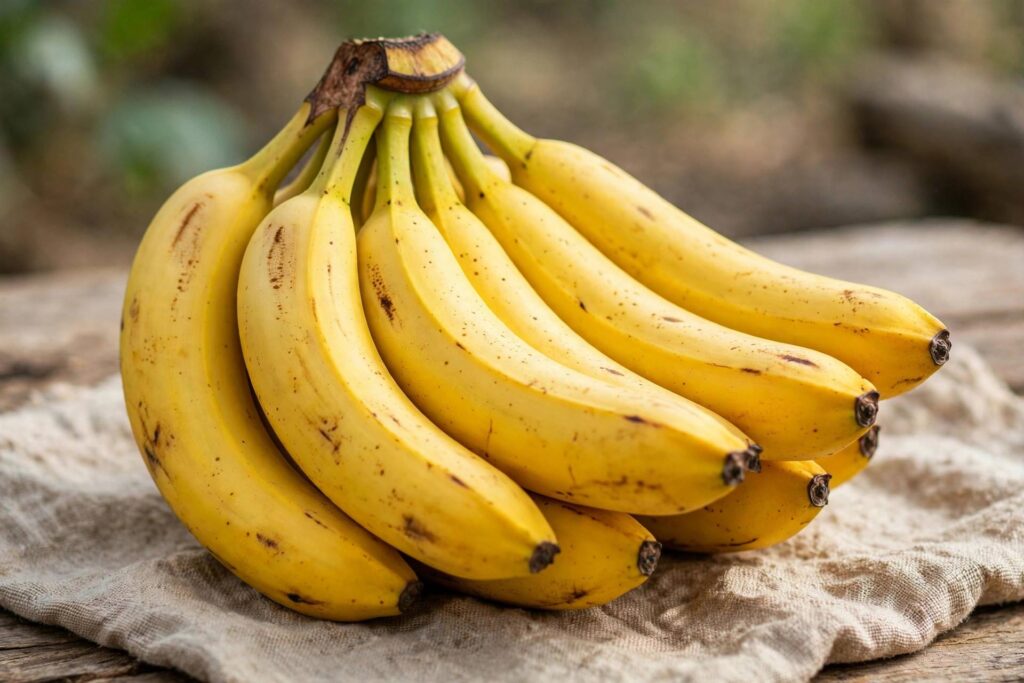
You buy a beautiful bunch of bananas on Monday, and by Thursday they’re covered in brown spots and attracting fruit flies. Sound familiar? Bananas are one of nature’s most frustrating fruits — they go from perfectly ripe to overripe in what feels like hours. But here’s the good news from my kitchen: with a few simple tricks, you can easily add 3-5 extra days to your bananas’ prime, and even “too ripe” bananas have delicious second lives. Let me share everything I’ve learned about how to keep bananas fresh longer — five simple tricks that add days to their prime.
Why Bananas Ripen So Fast (The Science in 30 Seconds)
Bananas produce ethylene gas — a natural plant hormone that triggers ripening. Here’s the catch: bananas are especially sensitive to their own ethylene, which means a bunch of bananas essentially ripens itself faster just by being together. Warmth accelerates the process, and any bruising or damage releases even more ethylene.
Understanding this gives you the whole strategy: to slow ripening, you want to reduce ethylene exposure, keep things cool (but not too cold), and minimize damage. Every trick below is just a practical application of those three principles.
How to Keep Bananas Fresh Longer, Trick 1: Wrap the Stems
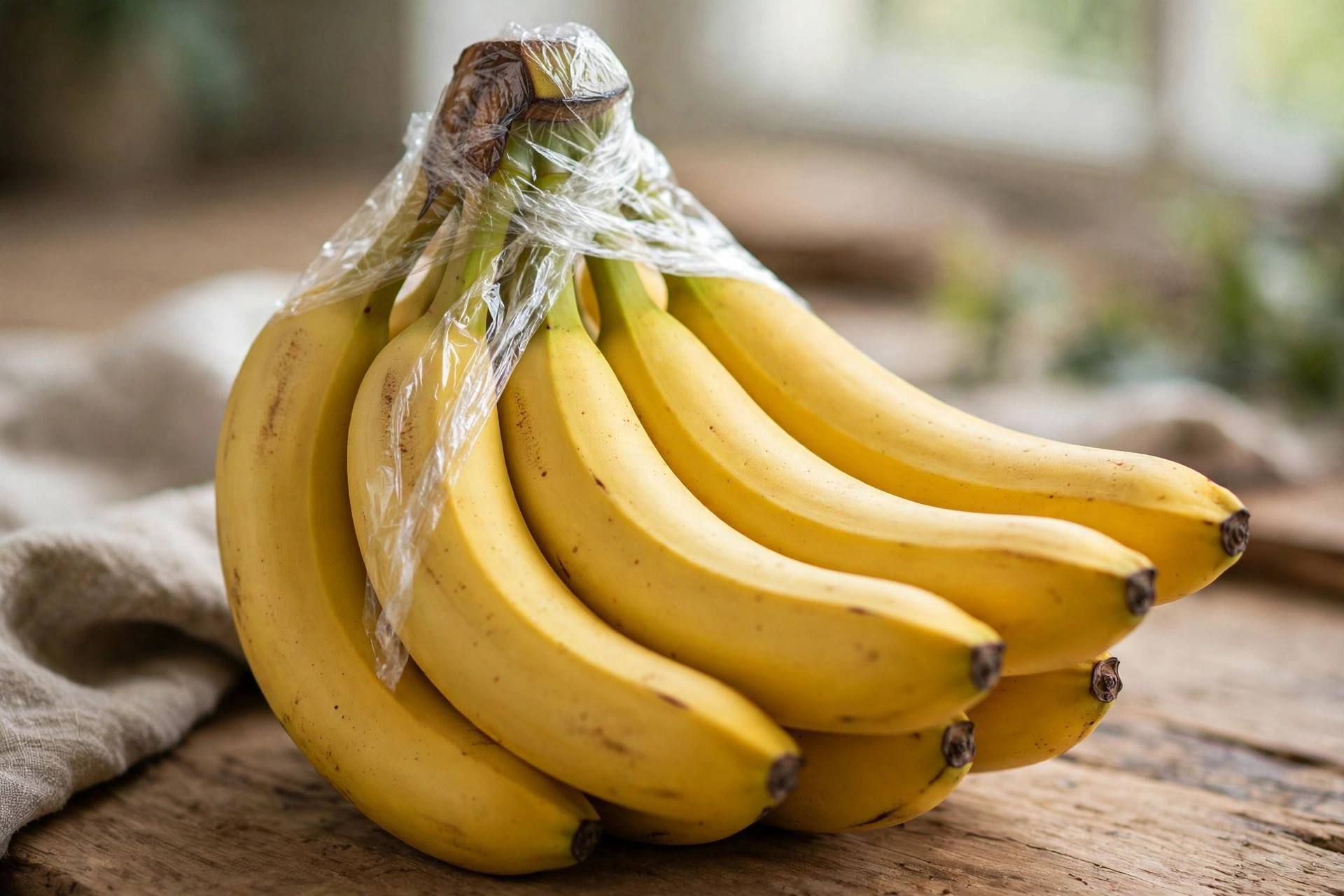
This is the highest-impact, lowest-effort thing you can do: wrap the crown (the stem end where the bananas join) tightly with plastic wrap, foil, or beeswax wrap. A significant amount of ethylene escapes through the stem — sealing it slows the whole bunch’s ripening noticeably.
For even better results, separate the bananas from the bunch and wrap each stem individually. Yes, it’s a little fiddly. Yes, it works — separated, wrapped bananas can outlast an unwrapped bunch by several days. I do this every single time I bring bananas home, and it never fails to pay off.
Trick 2: Hang Them Up
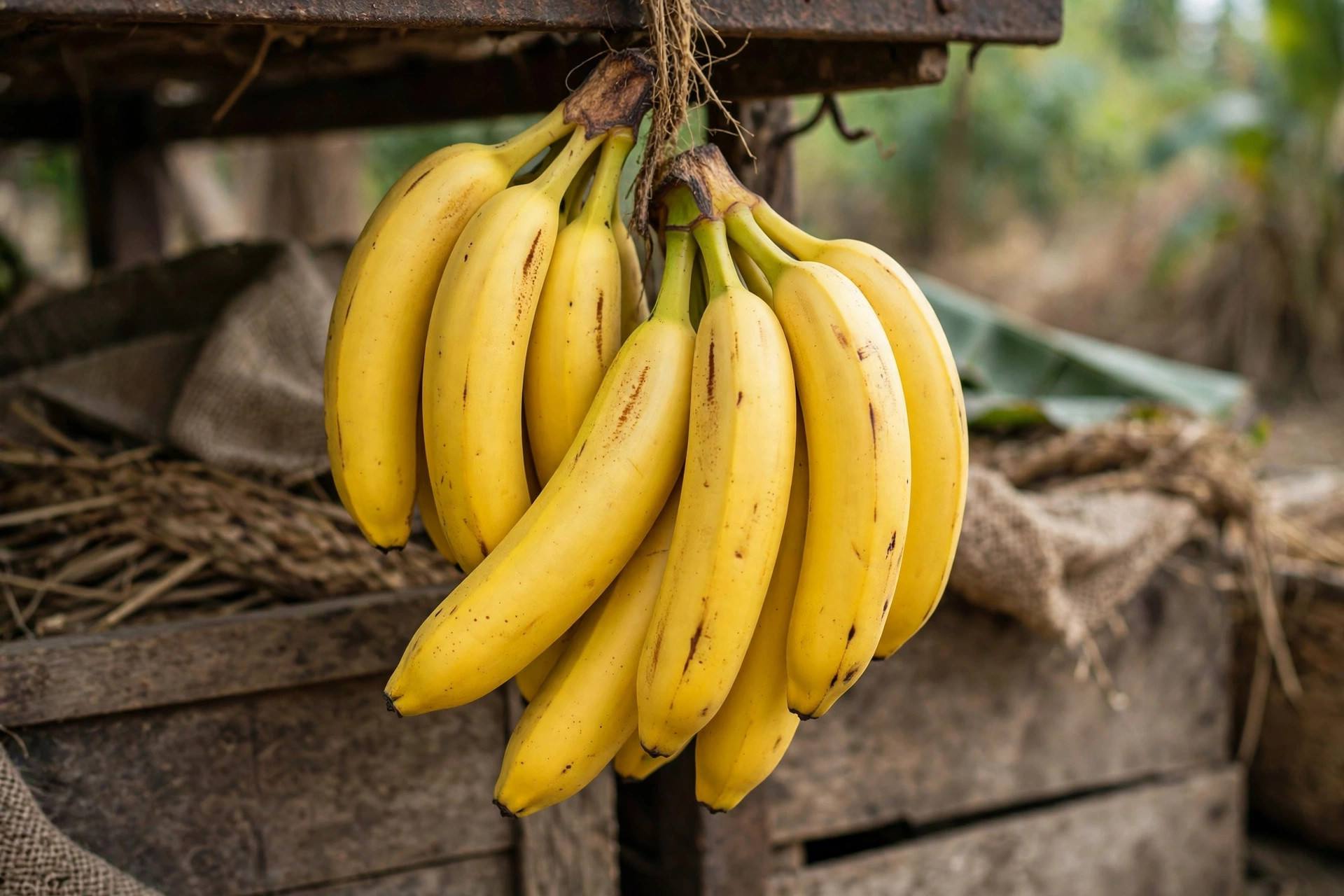
A banana hanger or hook isn’t just cute kitchen decor — it serves a real purpose. Bananas resting on a countertop develop pressure bruises on the contact points, and bruised spots release extra ethylene that speeds up the whole fruit’s ripening. Hanging eliminates contact bruising entirely and allows air to circulate around the fruit.
No hanger? Improvise: hang the bunch from a cabinet knob, a mug tree, or even a simple S-hook. Anything that keeps them suspended and separated works. Combined with wrapped stems, hanging is the one-two punch of banana preservation.
Trick 3: Control the Temperature (But Skip the Fridge… Mostly)
Bananas are tropical fruit, and they’re fussy about cold. Below about 56°F (13°C), the peel suffers chill damage — it darkens rapidly even though the fruit inside may be fine. That’s why refrigerated bananas look alarming even when they’re perfectly edible.
The strategy: keep unripe or perfectly-ripe bananas at cool room temperature (the coolest spot in your kitchen, away from the stove and sunny windows), and move them to the fridge only once they’re at peak ripeness. Refrigeration at that point dramatically slows further ripening — the peel will darken, but the fruit inside stays at peak for several more days. Don’t judge a refrigerated banana by its peel.
Never refrigerate green bananas — the cold permanently stalls their ripening, and they’ll never develop proper sweetness or texture. Patience at room temperature is the only cure for green bananas.
Trick 4: Separate From Other Fruit
Remember that ethylene gas? Bananas are both major producers and highly sensitive to it — and so are many other fruits. Storing bananas in a fruit bowl with apples, avocados, or tomatoes creates an ethylene feedback loop where everything ripens faster. Give your bananas their own space, away from other produce. Your apples will thank you too.
The flip side of this trick is useful: if you want to ripen bananas faster (for banana bread, say), put them in a paper bag with an apple. The trapped ethylene works like a ripening accelerator. It’s the same science, pointed in the opposite direction.
Trick 5: Buy at Different Ripeness Stages
This is my favorite practical strategy, and it requires zero effort: when you shop, buy some bananas yellow and ready to eat, and some still green-tinged. The green ones ripen just as the yellow ones peak, giving you a rolling supply of perfect bananas across the whole week instead of a three-day feast followed by a brown-spotted famine.
It sounds obvious, but most people grab a uniform bunch and then act surprised when they all ripen simultaneously. Stagger your ripeness, stagger your eating window. Simple.
What About Already-Cut Bananas?
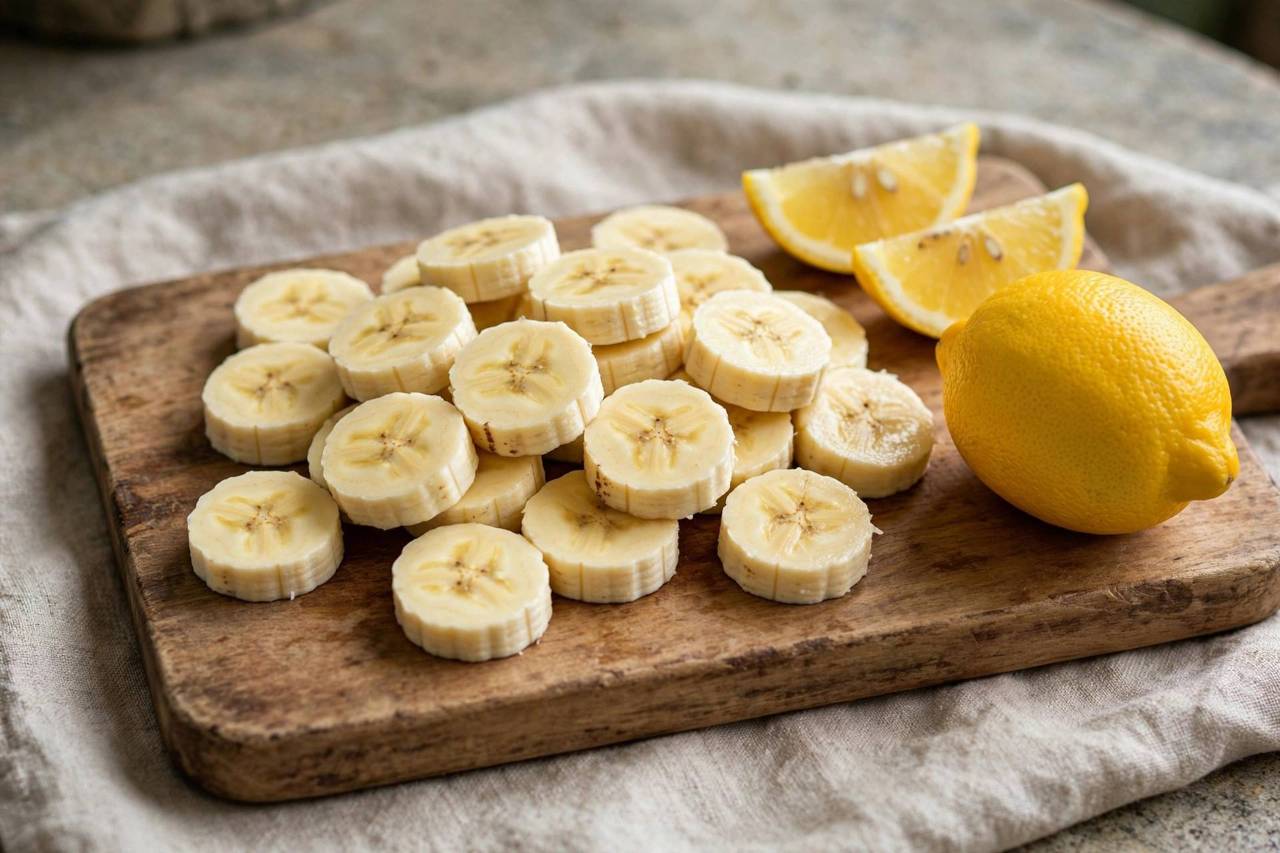
Sliced bananas brown quickly because cutting exposes the flesh to air (oxidation). To slow it down:
- Toss with acid: a light coating of lemon, lime, or orange juice dramatically slows browning. Pineapple juice works too and adds complementary flavor.
- Wrap tightly: press plastic wrap directly against the cut surfaces to minimize air contact.
- Refrigerate: cut bananas should always be refrigerated and eaten within a day or two.
For lunchboxes, slicing the banana at eating time rather than in the morning makes a real difference. And a squeeze of lemon on banana slices in a fruit salad keeps the whole bowl looking fresh for hours — a trick worth knowing for gatherings.
When They’re “Too Ripe”: The Delicious Second Act
Here’s my philosophy: there is no such thing as a wasted overripe banana, only a banana waiting for its true calling. Brown-spotted bananas are sweeter and more aromatic than yellow ones — they’re actually better for many uses:
- Banana bread and muffins: the classic. Overripe bananas make the moistest, most flavorful banana bread. This is their destiny.
- Smoothies: peel, slice, and freeze overripe bananas — frozen banana chunks make smoothies thick and creamy without ice.
- Nice cream: blend frozen banana chunks alone and watch them transform into soft-serve-like ice cream. Add cocoa, peanut butter, or berries.
- Pancakes: mash into batter for naturally sweet, fluffy banana pancakes.
- Freeze for later: peel (always peel before freezing — frozen peels are miserable to remove), slice or halve, freeze on a tray, then bag. They keep for months and are smoothie-ready anytime.
The freezer is the ultimate banana time machine. When a banana passes peak, don’t toss it — peel it and freeze it. Future you will be grateful.
The Complete Banana Timeline: A Quick Reference
- Day 1-2 (green-tinged): not ready. Room temperature, be patient.
- Day 3-4 (yellow, firm): peak eating stage begins. Wrap stems, hang them up.
- Day 5-6 (yellow with small brown spots): sweetest eating stage. Move to fridge to hold here.
- Day 7+ (heavily spotted/brown): baking and freezing stage. Banana bread time.
With the stem-wrapping, hanging, and temperature tricks, you can stretch this timeline by 3-5 days — turning a 4-day banana window into more than a week. That’s fewer wasted bananas, fewer grocery trips, and more money in your pocket.
Now you know how to keep bananas fresh longer. Bananas ask so little of us — just a bit of stem wrapping, a hook to hang from, and the wisdom not to refrigerate them green. In return, they give us a week of perfect, portable, naturally-wrapped snacks. That’s a trade I’ll make every time.
Reading Banana Ripeness Like a Pro
Not all yellow is equal. Learning to read the subtle stages helps you use each banana at its best:
- Green: starchy, less sweet, firmer texture. Some people enjoy them sliced into savory dishes; most should wait.
- Green-tipped yellow: just ripe — firm, mildly sweet, holds its shape beautifully in fruit salads.
- Fully yellow: the classic eating banana — sweet, creamy, perfect out of hand.
- Yellow with brown speckles: peak sweetness. The speckles are sugar spots — this is the banana at its most flavorful for eating fresh.
- Mostly brown: very soft, intensely sweet, borderline for fresh eating but unbeatable for baking.
The speckled stage is the most misunderstood — many people throw bananas away just as they reach maximum deliciousness. Those brown spots aren’t decay; they’re the visible sign that starches have converted to sugars. A speckled banana is a ripe banana doing exactly what nature intended.
Mistakes That Kill Bananas Early
- Storing them in plastic bags: sealed bags trap ethylene and moisture, creating a ripening sauna. If your bananas came in a bag, take them out immediately.
- Keeping them next to the stove or in sunlight: heat is ripening fuel. The sunny windowsill might look pretty, but it’s aging your fruit fast.
- Refrigerating green bananas: worth repeating — cold damage to unripe bananas is irreversible. They’ll stay green-ish and starchy forever.
- Leaving them in the bunch until the end: the bunch ripens as a unit, and one overripe banana accelerates its neighbors. Pull bananas off as they peak.
- Tossing “ugly” bananas: a brown banana isn’t a bad banana. Before you throw one away, ask: is it actually spoiled, or just ready for banana bread?
FAQ
Should bananas be stored in the fridge or on the counter?
On the counter until they reach peak ripeness, then in the fridge to hold them there. Never refrigerate green bananas — cold permanently stalls their ripening. The peel will darken in the fridge, but the fruit inside stays good for several extra days.
Does wrapping banana stems really work?
Yes — it’s one of the most effective tricks. A large share of a banana’s ethylene gas escapes through the stem; sealing it with plastic wrap or foil measurably slows ripening. Separating the bananas and wrapping each stem individually works even better.
How long do bananas last?
At room temperature, typically 3-5 days from purchase to overripe. With stem wrapping, hanging, and proper temperature management, you can extend that to 7-10 days. Refrigeration at peak ripeness adds several more days (with darkened peels).
Are brown bananas safe to eat?
Absolutely — brown spots indicate ripeness and increased sweetness, not spoilage. Bananas are only bad when they’re mushy throughout with an off smell, leaking liquid, or showing mold. Heavily spotted bananas are ideal for baking and smoothies.
Can you freeze bananas?
Yes — peel them first (frozen peels are nearly impossible to remove), then slice or halve them, freeze in a single layer on a tray, and transfer to a freezer bag. They keep for months and are perfect for smoothies, nice cream, and baking.