What Do Minimalists Actually Own? An Honest Look

The question I get most about minimalism isn’t “how do I start?” — it’s “but what do you actually own?” People picture either a monk’s cell or a normal home, and the truth is somewhere in between, varying wildly by person. So I’m going to do what I wish someone had done for me: open the drawers. Here’s what minimalists actually own — my own honest inventory, which only makes sense alongside what minimalism actually means, plus what I’ve observed in minimalist friends’ homes — room by room, with the surprising keeps and the things nobody misses.
Fair warning: this isn’t a prescription. Your inventory will differ based on your cooking habits, climate, work, hobbies, and family size. Think of this as a reference point, not a target.
In this guide:
- The Minimalist Kitchen
- The Minimalist Wardrobe
- The Minimalist Bathroom
- Living Areas and Bedroom
- Surprising Things Minimalists Keep
- Things Nobody Misses
- It’s Not About the Number
The Minimalist Kitchen
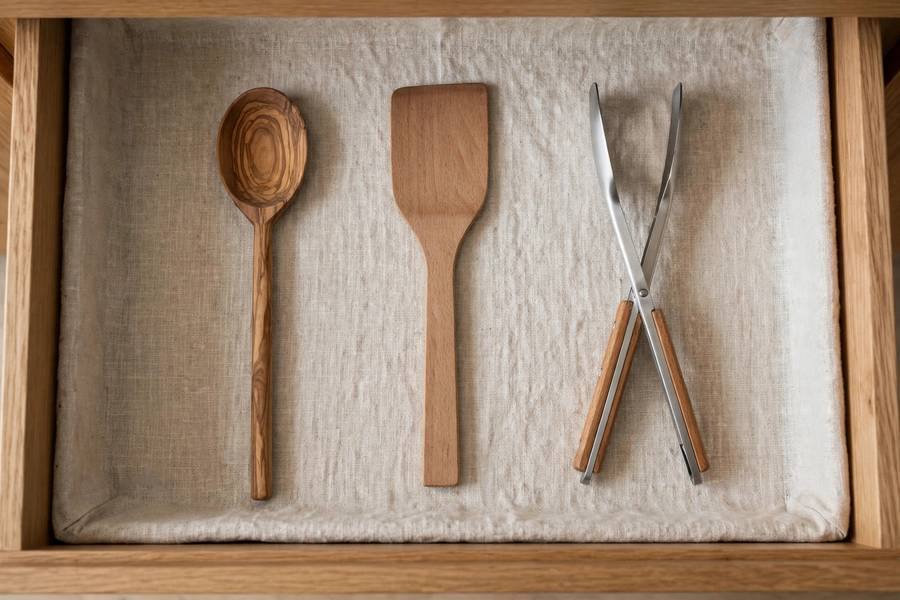
The kitchen is where minimalism shows its practical face. Mine: one good chef’s knife, one paring knife, one wooden spoon, one spatula, one set of tongs, a cutting board, a large pot, a skillet, a saucepan, a baking sheet, a mixing bowl, measuring cups, a colander, and a kettle. Dishes: 4 dinner plates, 4 bowls, 4 mugs, 4 glasses, basic cutlery for 6. Small appliances: just a coffee maker (non-negotiable) — no toaster (broiler works), no blender gathering dust, no single-use gadgets.
The principles — the result of a how to declutter your kitchen and home pass: one excellent version of each tool instead of three mediocre ones, multi-functional over single-use (the pot that boils, braises, and bakes beats three specialty pans), and clear counters — everything lives in a cabinet or drawer. Cooking in a minimalist kitchen is genuinely easier: you can find everything, cleaning takes minutes, and there’s actually room to work.
What varies: serious cooks keep more (my chef friend’s knife roll alone would stock my kitchen — and every knife gets used), bakers keep baking gear, big families need more dishes. The test is always use, not count. A bread baker’s grain mill isn’t clutter; it’s a workshop.
The Minimalist Wardrobe
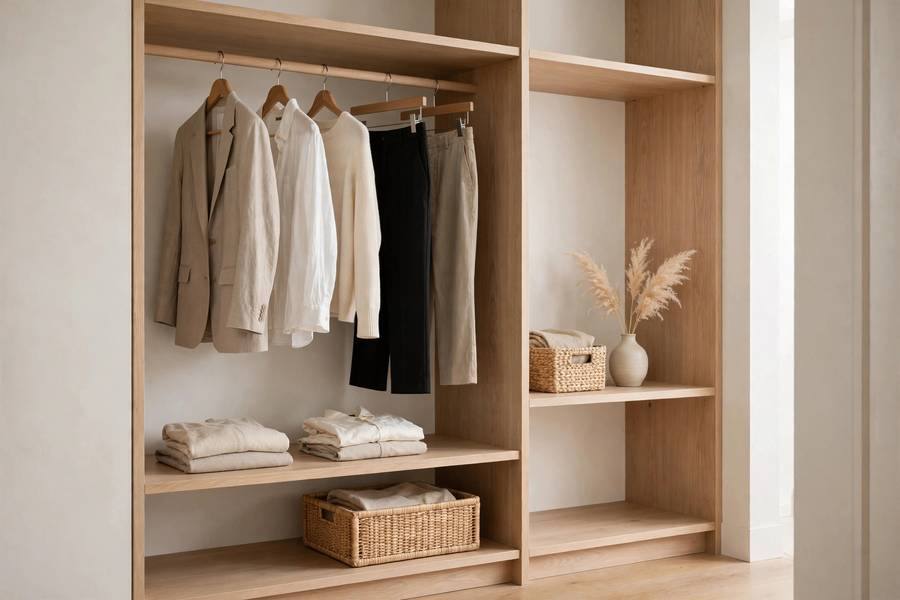
My current count: about 40 pieces including shoes and outerwear. (Method: the capsule wardrobe guide.) The breakdown: 9 tops, 6 bottoms, 4 layers (blazer, denim jacket, winter coat, cardigan), 2 dresses, 5 pairs of shoes, 2 bags, and the unmentionables (10 underwear, 10 socks — running out of socks is the fastest way to break minimalism). Everything in navy, gray, white, olive, with rust accents. Everything matches everything.
What I notice: I wear literally all of it. There’s no “someday” section, no aspirational sizes, no “it was on sale” regrets. Laundry is a normal weekly load, not an archaeological dig. Packing for a week takes ten minutes because any combination works. And here’s the vanity metric: I get more compliments on my style now than when I owned three times as much — constraint reads as curation.
Friends’ versions range from 25 pieces (the true capsule devotee) to 60+ (the clothes-lover who edits ruthlessly but keeps variety). Both are minimalist. The number is irrelevant; the feeling — open closet, zero dread, five-minute decisions — is the metric.
The Minimalist Bathroom
The smallest room, the fastest win. Mine: shampoo, conditioner, body wash, face wash, moisturizer, sunscreen, deodorant, toothbrush and toothpaste, razor, basic medications, and a small first-aid kit. One of each, one backup max. Hair tools: a dryer. That’s the whole inventory, and it fits in one drawer and one shelf.
The purge that got me here: six half-used shampoos consolidated to one, the graveyard of hotel toiletries (donated unopened, tossed the opened), expired medications (pharmacy take-back), and the “someday” products for skin concerns I didn’t have. The 12-month rule helps: most opened cosmetics expire within a year — if you haven’t finished it, you didn’t need it.
The minimalist bathroom cleans in ten minutes because there are clear surfaces to wipe. And the money savings are real: no more $40 serums bought on influencer promises, no duplicate purchases because you couldn’t find the first one. Boring products, used completely, replaced as needed. Revolutionary.
Living Areas and Bedroom
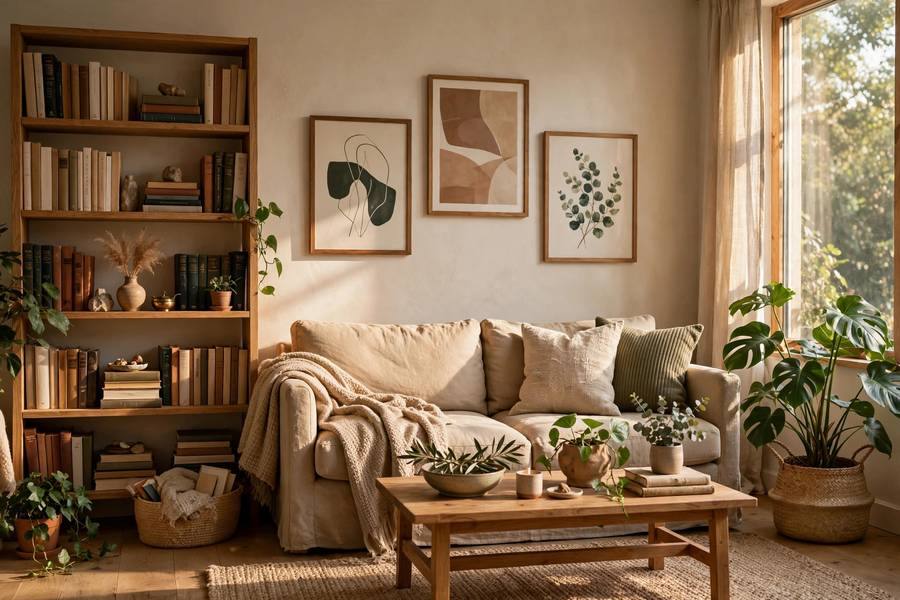
Living room: sofa, coffee table (with storage — everything should earn its keep), a reading chair, a bookshelf (curated, not crammed), plants, and art I love. Media: no DVD collection (streaming), a small shelf of favorite books, board games we actually play. The “decor” is things with function or meaning — no filler objects. It looks personal, not sparse.
Bedroom: bed, nightstand with lamp and current book, dresser, and that’s the furniture. Bedding: two sets, rotated. The calm-bedroom effect is real — I sleep better in a clear room, and there’s actual research linking bedroom clutter to worse sleep. No TV (the living room is ten steps away), no “chairdrobe” (clothes go in the closet or the hamper — more closet tactics in how to organize a small apartment) — the chairdrobe is where minimalism goes to die).
Home office: desk, good chair, laptop, notebook, pen cup, task lamp. Paper: one inbox tray processed weekly, important documents in one file box, everything else digital. The paperless-ish office is one of minimalism’s great unsung victories — no filing cabinets, no paper piles, no “I’ll sort this later” stacks.
The hobby exception
Hobby gear lives by different rules: my friend’s climbing gear fills a closet, my neighbor’s woodworking fills a garage, my camera gear fills a shelf. None of it is clutter — it’s all used, loved, and maintained. Minimalism never asks you to give up what you love; it asks you to give up what you don’t.
Surprising Things Minimalists Keep
The inventories always contain surprises that break the stereotype. Good coffee gear: almost every minimalist I know has strong opinions about coffee and the equipment to prove it — because daily rituals earn their place. Books: many keep substantial libraries; a book collection you actually read and love isn’t clutter. Hobby equipment: see above — the things you use weekly are the point of having less of everything else.
Sentimental items: the good ones, displayed or archived properly — grandmother’s ring, kids’ best artwork, travel mementos with real stories. Minimalists aren’t anti-sentiment; they’re anti-sentimental-clutter (the box of meaningless souvenirs kept from guilt). Quality tools: the excellent knife, the reliable car, the computer that works — minimalists often own nicer versions of fewer things.
Entertaining capacity: the minimalist who hosts Thanksgiving keeps the extra chairs and the big pot — used twice a year is still used. “Use” includes seasonal and occasional. The test isn’t frequency; it’s whether the item serves a real, recurring role in your actual life.
Things Nobody Misses
The flip side — what every minimalist released without a backward glance. Duplicates: the extra everything — no one misses the fourth spatula. “Someday” items: the fondue set, the aspirational clothes, the hobby gear for abandoned hobbies — releasing these feels like exhaling. Guilt objects: gifts you never liked, inherited items kept from obligation — the relief of releasing these is physical.
Single-use gadgets: the avocado slicer, the banana hanger, the egg separator — a knife does all of it. Paper: manuals (they’re online), old bills (digital), the filing cabinet of “important” papers nobody ever needed. Just-in-case items: the 20/20 rule covers this — if it’s under $20 and 20 minutes away, release it; the catastrophic “need” almost never comes, and if it does, you’ve saved years of storage for a $15 repurchase.
It’s Not About the Number
I’ll say it once more: the count doesn’t matter. I’ve seen happy minimalists with 50 possessions and happy minimalists with 500. What matters is the relationship: does everything you own serve your actual life? Can you find things? Is maintenance easy? Do you feel calm? Those are the diagnostics, and they’re all qualitative.
If you’re inventory-curious about yourself, do the audit: walk through your home and count categories (mugs, t-shirts, chargers). Don’t judge, just count. The numbers will tell you where your excess lives — everyone has a category that shocks them. Mine was tote bags: seventeen. Seventeen! I kept three. I have never once needed the fourteenth tote bag.
Open your own drawers — metaphorically or literally — and ask the question: does this serve my life? Keep what does, release what doesn’t, and don’t worry about what the number says. The goal was never a specific inventory. It was a home where everything belongs — including you.
A minimalist home typically contains: a curated kitchen (one excellent version of each tool, multi-functional cookware), a wardrobe where everything fits and gets worn (often 30-50 pieces), a simplified bathroom (one of each essential), and living areas with furniture that earns its keep plus meaningful decor. Hobby gear, books, and sentimental keepsakes are kept — the target is the unused, duplicate, and guilt-kept, not the loved.
There’s no official number — happy minimalists range from under 100 to several hundred items. What matters is the relationship to possessions: everything serves your actual life, maintenance is easy, and you feel calm. Counting items is a distraction; the qualitative feeling is the real metric.
Many do — minimalism isn’t anti-technology. The pattern is intentional tech: the devices that serve real purposes, configured deliberately (fewer apps, fewer notifications). A minimalist might own a great laptop, a phone with 12 apps, and no smart gadgets collecting dust — tools, not toys.
They keep the meaningful ones — displayed with honor or archived in one small keepsake box — and release the guilt-kept remainder (photographing first if helpful). The distinction is love versus obligation: grandmother’s ring stays; the box of unidentifiable souvenirs from guilt goes.
The universal first cuts: duplicates (extra kitchen tools, mugs, chargers), expired products, ‘someday’ items for abandoned hobbies or aspirational lives, guilt objects (unloved gifts, obligatory heirlooms), single-use gadgets, and paper clutter. These go with zero regret and immediate relief.