Squash Faults Explained: Lets, No Lets, Strokes and Penalties

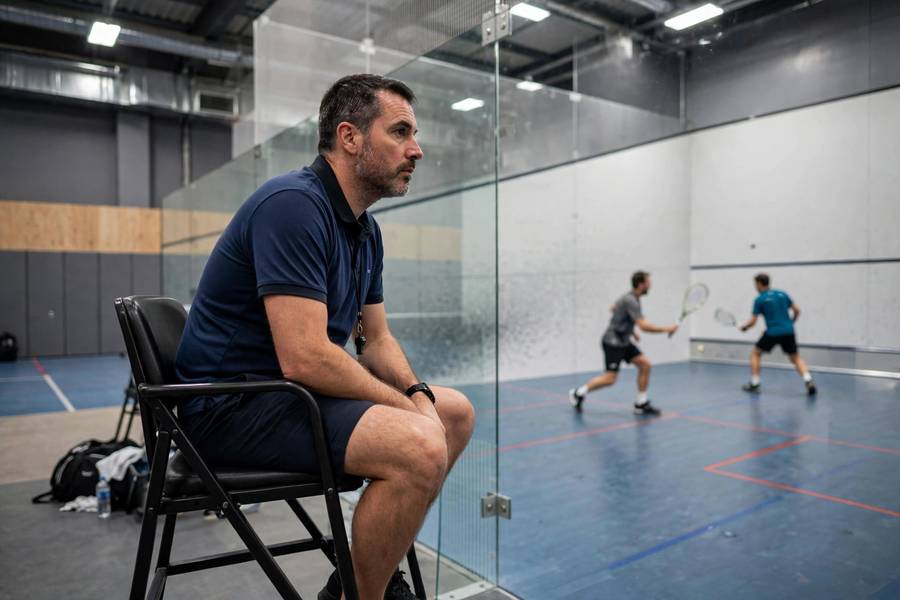
Nothing starts a club argument faster than a disputed let call. Two players, one crowded court, completely opposite views of what just happened — I’ve seen friendships tested over a single rally. The irony is that squash’s fault and interference rules are actually logical once someone explains the system behind them.
This guide breaks down every squash fault that matters: lets, strokes, no lets, conduct penalties, and serve faults — what each one means, when it’s called, and how referees (or you and your opponent) decide. For the broader rulebook, see our complete squash rules guide.
In this guide:
- What Counts as a Fault in Squash
- Lets: The Rally Is Replayed
- Strokes: You Win the Point
- No Lets: Play On
- Conduct Faults and Penalties
- Serve Faults
- How to Appeal (and How Refs Decide)
What Counts as a Fault in Squash
In squash, “fault” covers two different things. First, rally-ending faults: hitting the tin (“down”), hitting above the out line, hitting the floor before the front wall, or letting the ball bounce twice. These are automatic — the rally ends and the point goes to your opponent, no discussion. Second, interference faults: blocking your opponent’s access to the ball or their swing. These are judgment calls, and they’re where all the drama lives.

Lets: The Rally Is Replayed
A let means the rally is replayed — no point awarded, play the point again. Lets are called when interference happens but the obstructed player probably wouldn’t have won the rally anyway, or when the interference was accidental and minor. Classic let situations:
- Your opponent’s follow-through would have hit you, so you couldn’t swing freely — but you were stretched and unlikely to make a winning return.
- Both players go for the ball and collide lightly with no one’s shot affected decisively.
- The ball hits an opponent on the way to the front wall but would likely have been a weak shot anyway.
- A rally is interrupted by something outside anyone’s control — a ball from another court, a light flickering out.
The philosophy: a let is the fair reset when something went wrong but nobody clearly deserves the point. In casual play, generous lets keep the game friendly. In competitive play, players appeal lets constantly — it’s tactical, and referees expect it.
Strokes: You Win the Point
A stroke awards you the point outright. It’s called when interference was serious and you were in a position to play a winning shot. The test the referee applies: would the player have been able to hit a winning return if the interference hadn’t happened? If yes, stroke. Key stroke situations:
- Your opponent doesn’t clear and blocks your direct path to the ball when you’re set for an easy winner.
- Your opponent’s body is in your swing path and you can’t play the shot safely — and you were in position to attack.
- Your opponent deliberately moves into your line to block you (this can also draw conduct penalties).
- The ball, on its way to the front wall, would have hit your opponent and you were playing an outright winner — the “would have hit” stroke.
The let-vs-stroke decision is the heart of squash refereeing, and it’s genuinely difficult — it requires judging both the interference and the hypothetical quality of the blocked shot. Even pro referees get debated endlessly by commentators, players, and fans alike after big calls. As a player, the lesson is simple: if you’re clearly obstructed on a winning opportunity, appeal confidently for the stroke.

No Lets: Play On
A no let means the appeal is denied outright and the rally result stands — usually because the appealing player wouldn’t have reached the ball anyway, created the interference themselves, or didn’t make enough effort. Common no-let calls:
- You appeal for interference but you were three meters from the ball and never going to reach it.
- You run into your opponent because you took a bad line to the ball — the interference was your fault.
- You stop playing and appeal instead of making a genuine effort to play the ball. Referees punish “fishing” for lets.
- The ball was clearly going to be a loser (hitting the tin, flying out) regardless of any contact.
The “make an effort” principle is the one beginners violate most. You can’t stand still, watch your opponent hit, then claim you were blocked. The referee needs to see you trying to play the ball. Movement first, appeal second.
Conduct Faults and Penalties
Beyond rally interference, squash penalizes bad behavior on a sliding scale:
- Conduct warning: for a first minor offense — mild dissent, a bit of gamesmanship, wasting time.
- Conduct stroke: the point goes to your opponent. For repeated or serious offenses — deliberate blocking, racket abuse, audible obscenity.
- Conduct game: you lose the entire game. For continued abuse after a conduct stroke.
- Conduct match: you’re defaulted. Rare, reserved for the truly outrageous.
Deliberate dangerous play — swinging recklessly when an opponent is close — can skip straight to severe penalties. Squash is built on the assumption that players protect each other; the conduct system is the enforcement arm of that trust.
Serve Faults
The serve has its own fault list, and unlike tennis there’s no second serve — a fault loses the rally:
- Foot fault: any part of your foot touching outside the service box (or the line) when you strike the ball. The classic beginner fault.
- Service line fault: the serve hits the front wall on or below the service line.
- Wrong court: the serve lands in the wrong quarter court or fails to reach the opposite quarter.
- Not hitting the front wall first: the serve must strike the front wall before anything else — side wall first doesn’t count.
- Out: serve goes above the out line.
Because there’s only one serve, smart players serve conservatively — a reliable deep serve beats a flashy one that faults one time in five. Our full breakdown of squash serve rules covers the mechanics in detail.
How to Appeal (and How Refs Decide)
The fastest way to internalize all of this is to watch pro matches with the refereeing in mind. PSA match streams are perfect for it: every tight call gets replayed, the referee’s reasoning is often explained by commentators, and you’ll start predicting let-vs-stroke decisions before they’re announced. I assign this as homework to every player I coach — an hour of watching with the rules fresh in your head teaches more than a month of arguing calls on court.
To appeal, stop play immediately and say “let please” (or “stroke please” if you’re confident). Don’t play the ball and then appeal — playing on waives your right. The referee decides based on three questions: Was there interference? Did the player make a genuine effort to get to the ball? Would they have made a good return? Yes/yes/yes leans stroke; interference without a likely winner leans let; no real interference or no effort means no let.
In matches without a referee — most club games — players call their own. The convention: give lets generously, concede strokes honestly when you know you blocked someone, and never, ever argue for more than ten seconds. The rally’s already dead; don’t kill the evening too. And if you’re working on the movement patterns that keep you out of interference trouble, general athletic conditioning like strength training for runners genuinely helps — fitter players get to the ball earlier and need fewer lets.
Learn these distinctions and you will never again stand on court arguing about a call you do not understand. The players who know the fault system play with more confidence, appeal more effectively, and — just as importantly — earn a reputation as fair competitors. That reputation is worth more than any single point.
A fault is any illegal action that ends or affects a rally: hitting the tin or out lines, letting the ball bounce twice, foot-faulting on serve, or interfering with your opponent’s play. Rally-ending faults are automatic; interference faults are judged as lets, strokes, or no lets.
A let replays the rally with no point awarded — called when interference occurred but the blocked player probably wouldn’t have won the point. A stroke awards the point to the blocked player — called when serious interference denied them a likely winning shot.
A no let denies an interference appeal, so the rally result stands exactly as played. It’s called when the appealing player wouldn’t have reached the ball anyway, caused the interference themselves, or didn’t make a genuine effort to play the ball.
Yes. Deliberate or dangerous obstruction can draw conduct penalties escalating from a warning to a conduct stroke (lose the point), conduct game (lose the game), or conduct match (defaulted). Accidental blocking is handled through lets and strokes instead.
You lose the rally — there’s only one serve in squash, no second chances. The point goes to your opponent, who then serves from the box matching their new score.