Squash Serve Rules: Boxes, Heights, Foot Faults and Common Mistakes

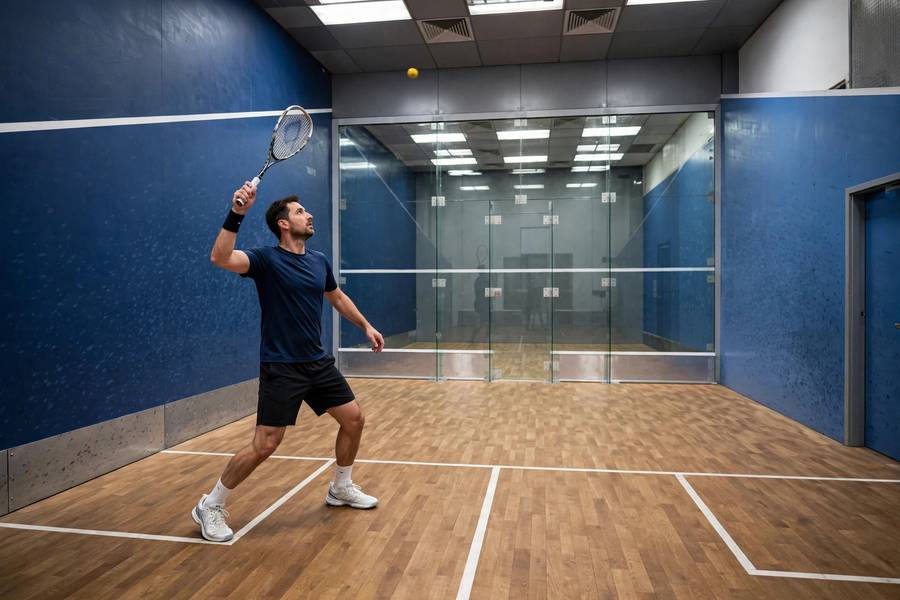
The squash serve is the most under-coached shot in the beginner’s game. Everyone obsesses over drives and boasts, then casually donates three or four points per match on sloppy serves. Here’s the thing: the serve is the only shot in squash you control completely — no one’s rushing you, the ball’s in your hand, and you get to choose exactly what happens. Treat it with respect and it’s free points.
This guide covers the squash serve rules in full: where to stand, where the ball must land, foot faults, and why there’s only one serve. For how serves fit into the wider game, see our basic squash rules.
In this guide:
- Where You Stand: The Service Boxes
- Where the Ball Must Go
- Foot Faults: The Beginner Killer
- One Serve Only: No Second Chances
- Serve Strategy That Actually Works
- Solo Serve Practice: 15 Minutes That Pays Off
- Serving in Doubles: What’s Different
- Common Serve Mistakes
Where You Stand: The Service Boxes
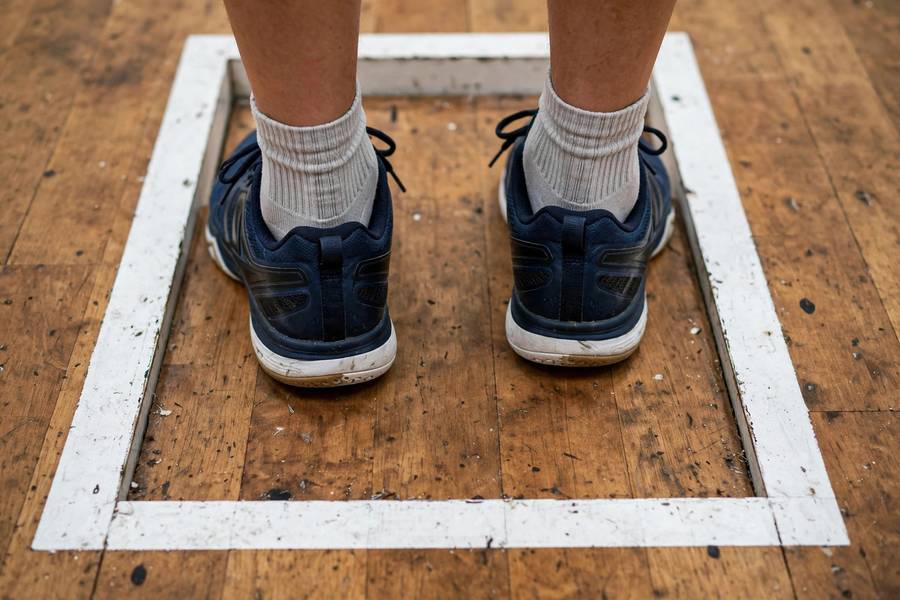
Each side of the court has a small service box near the middle. When serving, you must have at least one foot inside the box — the other foot can be outside, but the one inside must stay inside until you’ve struck the ball. Which box you use depends on the score: serve from the right box when your score is even (0, 2, 4…) and the left box when it’s odd (1, 3, 5…).
This even/odd convention is the same one tennis uses, and it’s worth memorizing because it also tells your opponent where to stand — the receiver waits in the opposite quarter court. If you lose track mid-game (everyone does at first), just glance at the score and do the math. Right is even, left is odd. Say it like a mantra until it’s automatic.
Where the Ball Must Go
A legal serve must:
- Hit the front wall first, directly — not via a side wall. Side-wall-first serves are faults.
- Land above the service line on the front wall. The service line is the middle line, well above the tin. Clip it or land below it and the serve is down.
- Land in the opposite quarter court — the quarter diagonally opposite your service box. It must bounce there (or be volleyed by the receiver, though beginners rarely volley serves).
- Stay below the out line. A serve that flies above the top line is out, same as any other shot.
Note what the serve does not have to do: it doesn’t have to bounce before the receiver hits it (volleying the serve is legal, just unusual), and there’s no “let cord” concept like tennis — if your serve clips the top of the tin… well, that’s just down. The tin is unforgiving.
Foot Faults: The Beginner Killer
A foot fault happens when any part of your foot touches the service box line or the floor outside the box at the moment you strike the ball. It’s the most common serve fault among beginners, and it’s entirely about setup discipline:
- Place your inside foot well inside the box, not flirting with the line. Give yourself a margin.
- Don’t step or drag as you swing. Plant, swing, then move. The temptation to stride into the serve is strong — resist it.
- In casual play, nobody calls foot faults. In league play, they absolutely do. Practice legally from day one so you don’t have to relearn it.
Watch the pros and you’ll notice their service motion is almost boringly still in the lower body — all the work happens in the shoulder and wrist. That’s the model.
One Serve Only: No Second Chances
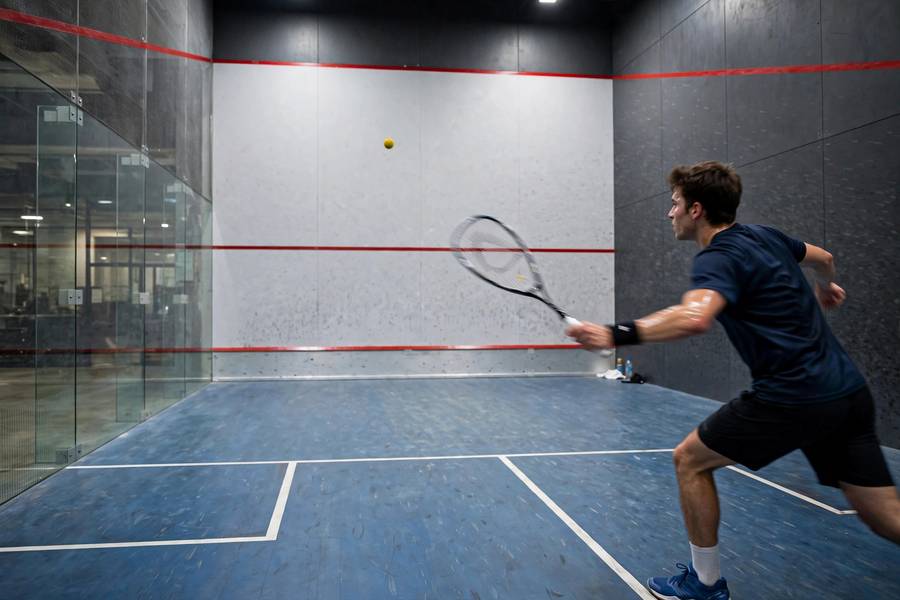
Unlike tennis, squash gives you exactly one serve attempt. Fault it and you lose the rally — point to your opponent, who now serves. This single rule shapes all serve strategy: the expected value of a risky serve is terrible. A serve that lands 90% of the time and starts the rally neutrally beats a serve that lands 60% of the time but occasionally wins the point outright. Do the math over a match and conservative serving wins by a landslide.
This is also why serve faults feel so deflating — you’ve donated a point without your opponent doing anything. I tell beginners to treat the serve as a 95%-reliability shot. If you’re faulting more than one serve in twenty, simplify immediately: higher, deeper, less cute.
Serve Strategy That Actually Works
Within the rules, the serve is a genuine weapon. The goals, in order:
- 1. Get it in. Reliability first, always. A serve that lands is infinitely better than one that doesn’t.
- 2. Hit it deep and high. A high, deep serve to the back corner pushes the receiver back and gives you time to reach the T. This is the beginner’s best serve and the pro’s most common one — there’s no shame in it.
- 3. Vary it occasionally. Once your deep serve is automatic, add a lower, harder serve or one aimed at the receiver’s backhand. Variation keeps the receiver honest, but it’s seasoning, not the meal.
- 4. Move immediately. The serve isn’t over when you hit it — sprint to the T as the ball travels. Beginners admire their serve; good players are already gone.
One advanced note: some players use a lob serve — high, slow, dying in the back corner — to buy maximum recovery time. It’s legal, effective, and deeply annoying to play against. Learn it once your basic serve is solid. For comparison, tennis serving is a whole different beast with its own fault system — our guide to how to serve a tennis ball shows how another racket sport handles the second-serve safety net that squash deliberately removes.
Solo Serve Practice: 15 Minutes That Pays Off
The serve is the easiest shot in squash to practice alone, and almost nobody does it. Fifteen focused minutes will do more for your serve than months of casual games:
- Target practice: place a towel in the back corner of the service quarter and serve 20 balls trying to land them on it. Count your hits. Beat your score next time.
- Height control: serve 20 balls aiming to hit the front wall in a zone a foot above the service line. Watch how many clip the line — that’s your fault rate, and you want it near zero.
- Both boxes: alternate boxes every five serves. Most players have a weaker side; find yours and fix it before opponents do.
- Serve and move: after every serve, sprint to the T as if the rally is live. Build the habit so match day is automatic.
Do this twice a week for a month and your serve becomes a genuine asset. In a sport where most beginners donate points on serve faults, reliability alone will win you games against players who hit better drives than you.
Serving in Doubles: What’s Different
The serve mechanics in doubles are identical, but the context changes. With four players on court, a weak serve gets punished faster — two opponents means twice the chance someone volleys your serve aggressively. The serving order is fixed per team (partners alternate turns as the serve rotates back), and the non-receiving opponents must give the server a clear view and path. Because the doubles court is wider, the classic deep serve to the back corner has to travel further and straighter — practice the angle, because serves that drift toward the middle get picked off. When in doubt, serve high, deep, and boring. In doubles, boring is beautiful.
Common Serve Mistakes
- Serving too low. Beginners aim at the service line and clip it. Aim a foot above it — the margin costs you nothing.
- The walking serve. Striding through the box as you hit. Plant your feet.
- Wrong box. Serving from the left at 4–2. Check the score every time until it’s reflex.
- Admiring the serve. Standing in the box watching your beautiful serve while your opponent crushes a return. Move.
- Overcomplicating. Spin serves, trick serves, power serves — all fault-prone. Master boring first.
- Rushing. Take a breath, bounce the ball once, serve. The serve is yours; use the time.
The serve also rewards a stable, athletic base — the kind built by regular strength training for runners work.
Nail the serve and you’ve banked the easiest points in squash. It’s the only shot where your opponent can’t pressure you — so there’s no excuse for giving it away.Stand with at least one foot in the service box (right box on even scores, left on odd), and hit the ball directly onto the front wall above the service line so it lands in the opposite quarter court. Only one serve attempt is allowed — a fault loses the rally.
A foot fault occurs when any part of your foot touches the service box line or the area outside the box at the moment you strike the serve. It loses you the rally immediately, since squash allows only one serve.
Serve from the right service box when your score is even (0, 2, 4…) and the left box when it’s odd (1, 3, 5…). The receiver waits in the quarter court diagonally opposite.
No. The serve must hit the front wall above the service line and land in the opposite quarter court, but the receiver may volley it before it bounces. In practice, beginners almost always let it bounce.
One, and only one. Unlike tennis, there is no second serve — if your serve faults, you lose the rally and the point goes to your opponent.