Best Forearm Exercises: 8 Moves for Grip and Size

Forearms are the most visible muscle you own. Short sleeves, handshakes, every daily task: your forearms are on display while your biceps hide. Yet almost everyone trains them as an afterthought, if at all. I learned their importance from rock climbers, who have the most developed forearms in sports and train grip with the seriousness lifters reserve for squats. These 8 exercises build both forearm size and crushing grip strength, because the two come together. The full arm program is in my best arm exercises guide.
Forearm Anatomy in 60 Seconds
Your forearm has two main groups. The flexors on the palm side close your fingers and flex the wrist; they build the thick underside of the forearm. The extensors on the back of the forearm open the fingers and extend the wrist; they are smaller but crucial for elbow health and balanced development. The brachioradialis sits on top near the elbow and responds best to hammer-grip movements. Complete forearm training hits all three: flexors for size, extensors for health, brachioradialis for the full look. Most people only train flexors (through curls and grip work) and wonder why their elbows ache; the extensors are the missing piece.
The 4 Best Exercises for Forearm Size
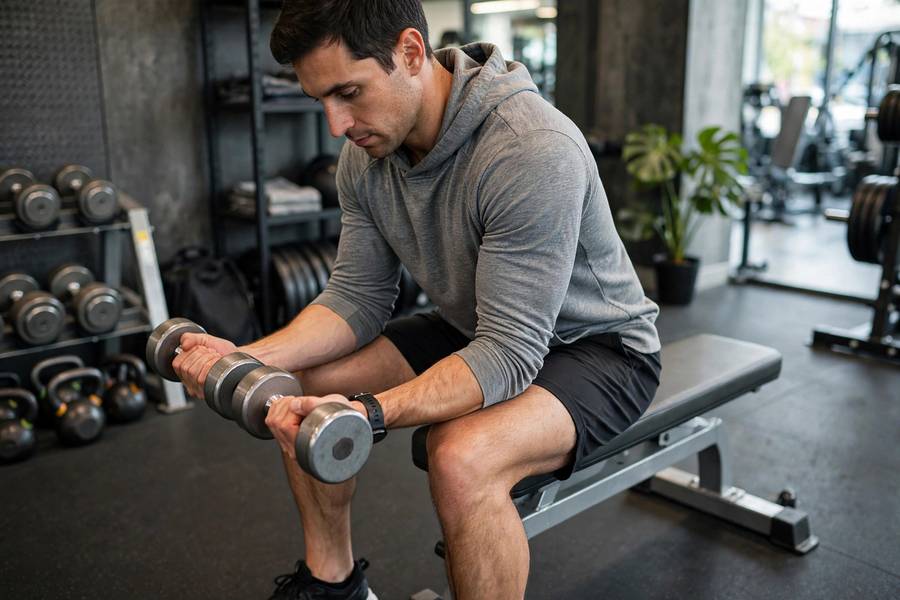
1. Dumbbell wrist curl: 3×15. Seated, forearms on thighs, palms up, curl the weight with only the wrists through full range. Light weight, strict form; the forearms respond to high reps and deep burn. My best dumbbell exercises guide covers dumbbell setup.
2. Reverse wrist curl: 3×15. Same position, palms down. Targets the extensors directly. Use half the weight of regular wrist curls; the extensors are much weaker and that is normal.
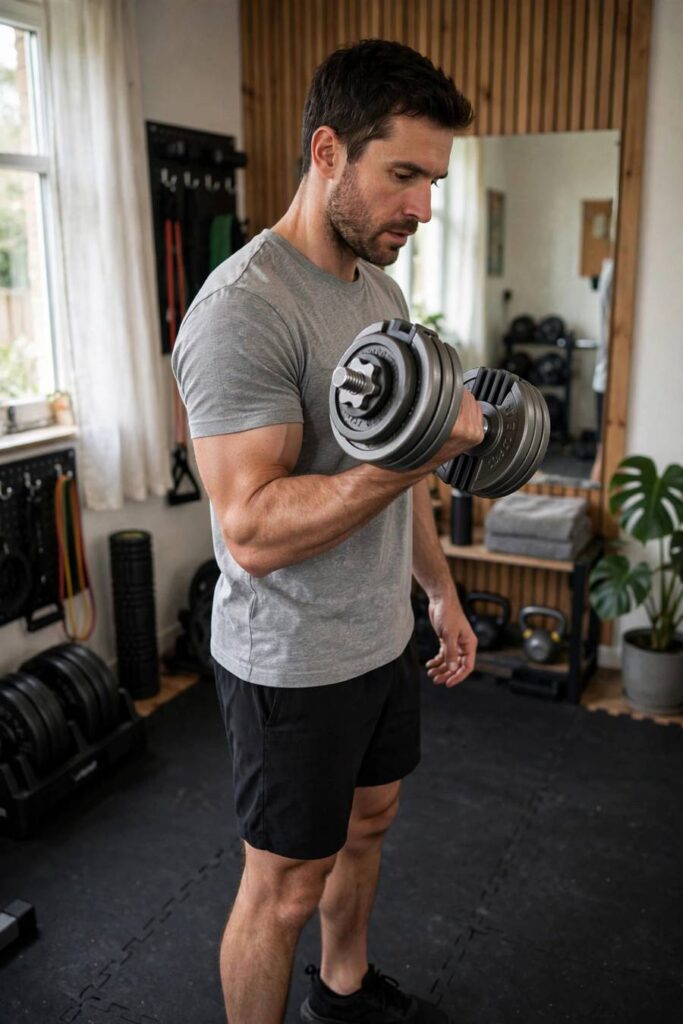
3. Hammer curl: 3×10. The brachioradialis builder. Heavy enough to challenge, strict enough to keep tension on the target. This one exercise adds more visible forearm size than most dedicated forearm routines.
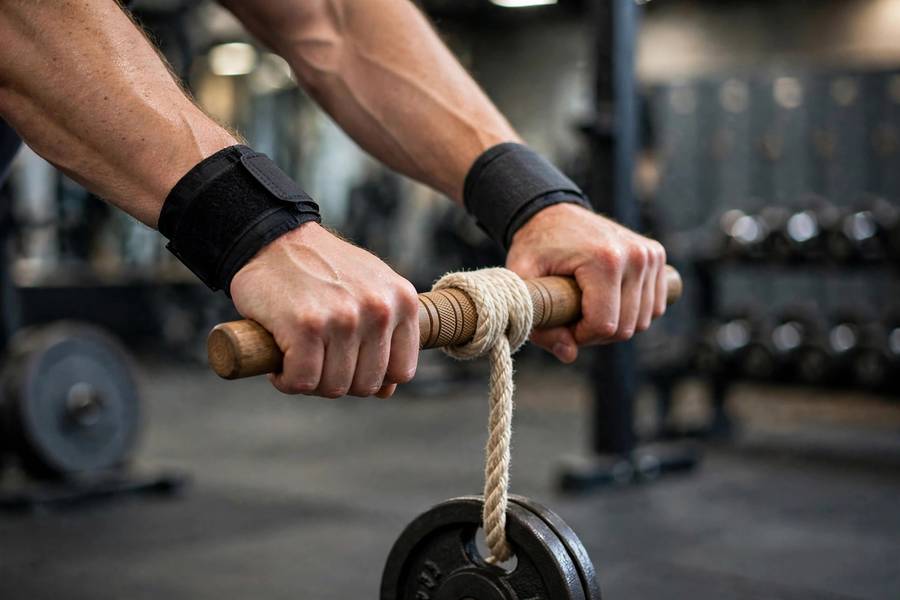
4. Wrist roller: 3x up-and-down. Roll the weight up and down with alternating wrist flexion. Old-school, brutally effective, hits flexors and extensors in one movement. Start light; the burn is disproportionate to the weight.
The 4 Best Exercises for Grip Strength
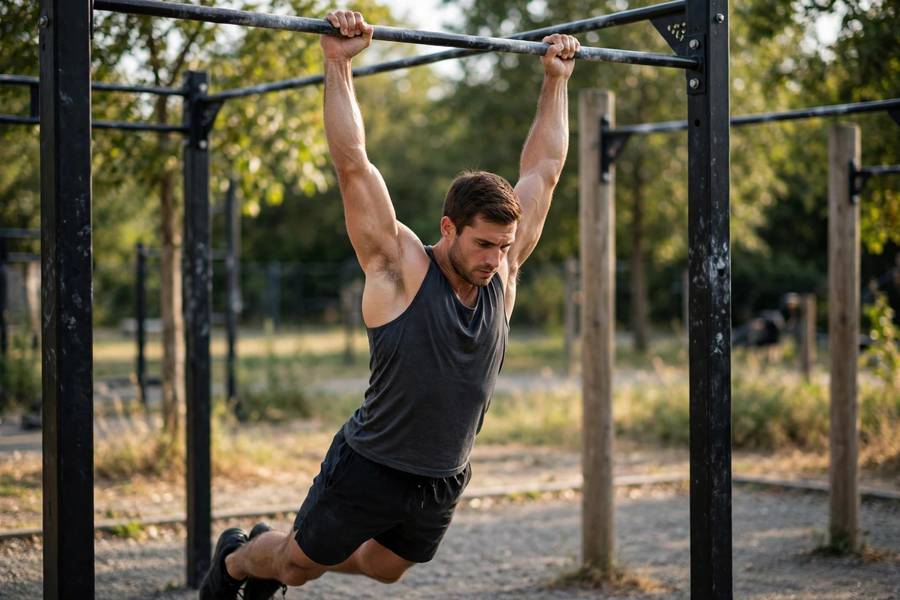
5. Dead hang: 3x max time. Hang from a bar until your grip gives out. Build to 90 seconds. The foundation of all grip training; if you do nothing else, do this. It also decompresses the shoulders, which is why how to do pull-ups programming always includes hanging.
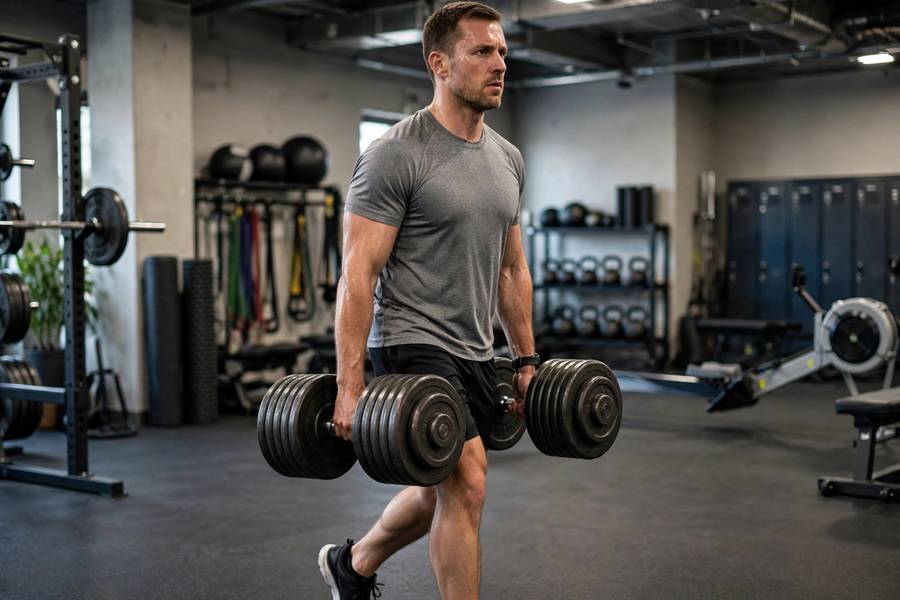
6. Farmer carry: 3×40 meters. The heaviest dumbbells you can hold with good posture, walked. Grip endurance under load, plus traps, core, and conditioning. The single best bang-for-buck grip exercise.
7. Plate pinch: 3×30 seconds. Pinch two smooth weight plates together with your fingertips and hold. Builds the thumb and finger-tip strength that bar work misses. No plates? Pinch heavy books.
8. Towel hang or towel pull-up: 3x max. Drape towels over a bar and hang or pull from them. The thick, unstable grip recruits far more forearm musculature than a bar. Advanced and humbling; earn it with months of dead hangs first.
The Climber’s Forearm Routine
Rock climbers build the best forearms in sports with a simple formula worth stealing: high-frequency, submaximal hangs. Their version: hang from a bar or hangboard for 10 seconds, rest 50 seconds, repeat 6 times, done daily. The short hangs never approach failure, so the tendons adapt without inflammation, and the daily frequency accumulates enormous volume over months. Adapt it: 6×10-second dead hangs with a minute rest, every day, separate from your lifting. Add 5 seconds per hang each week. After 8 weeks, most people double their max hang time and notice visible forearm thickening. The lesson from climbing is that forearms respond to frequent easy volume better than infrequent hard sessions; they are endurance-oriented muscles built for repetition. This daily micro-dose plus your twice-weekly dedicated work is the complete formula.
Programming Forearms Without Overuse
Forearms are small, heavily used in every upper-body session, and easy to overtrain. The rule: 2 dedicated forearm sessions per week, 6-8 sets total, placed at the end of arm or pull days. Session: wrist curls 3×15, reverse curls 3×15, one grip movement (rotate hangs, carries, pinches weekly). That is it. The forearms also get indirect work from every curl, row, and deadlift you do; the dedicated work is the top-up, not the foundation. If your elbows start aching, cut dedicated forearm volume in half before anything else; forearm overuse shows up at the elbow first. More is not better here; the forearms grow from consistent moderate work, and they punish greed with tendon irritation that takes weeks to calm down.
Protecting Your Elbows
Forearm training lives next door to elbow pain, and the two get confused constantly. The prevention checklist: always train extensors (reverse curls) alongside flexors, at a 1:1 set ratio; never do heavy wrist curls with a bent wrist under load, keep it neutral; warm up with 2 minutes of wrist circles and light hangs before loaded work; and progress grip weights slowly, 10 percent at a time. If the inside of your elbow aches (golfer’s elbow territory), back off flexor volume and add eccentric reverse curls: 3×15 slow lowering, which is the rehab standard. If the outside aches (tennis elbow), cut extensor volume temporarily and check your overall pressing-to-pulling ratio. Elbow pain from forearm work is almost always a volume or balance problem, not a structural one, and it resolves when the programming gets honest.
Forearm Training for Desk Workers
Desk work creates a specific forearm problem: eight hours of typing shortens the flexors and weakens the extensors, leaving the classic tight, achy forearm. The fix is not more gripping; it is extensor balance and mobility. Daily: reverse wrist curls with a light dumbbell or band, 2×20, plus prayer stretches held 30 seconds, 3 rounds. During work: every hour, spread your fingers wide against a rubber band for 15 reps; it takes 30 seconds and reverses the typing posture. If you lift in the evenings, do the extensor work before training as prehab, not after when you are fatigued. Desk workers who add this routine typically resolve chronic forearm tightness within a month and find their lifting grip improves as a side effect. The keyboard is the most common forearm training implement in the world; train against what it does to you.
The 5-Minute Forearm Warm-Up
Before any loaded forearm or grip work: 1 minute of wrist circles each direction, 1 minute of prayer and reverse prayer stretches, 1 minute of light band finger extensions (band around fingers, spread open, 2×15), 1 minute of easy dead hangs building to full weight, 1 minute of empty wrist-roller rolls. Five minutes total, and it makes the difference between productive training and cranky tendons. Cold forearms plus heavy carries is the fastest route to elbow irritation I know; the warm-up is non-negotiable, especially in winter or morning sessions. I do this exact sequence before every grip session and have not had a forearm issue in years.
Frequently Asked Questions
Forearms are stubborn; expect 3-6 months of consistent work for visible change. They are used constantly in daily life, so they need dedicated overload to grow. The good news: once built, forearm size is very persistent and fades slowly.
Heavy deadlifts, rows, and pull-ups build impressive grip strength, but they undertrain the extensors and the wrist flexors through full range. Add 2-3 sets each of wrist curls and reverse curls weekly; it takes 10 minutes and completes the development that compounds miss.
Directly and significantly. Most deadlift stalls at intermediate levels are grip stalls, not back stalls. Three months of dedicated hangs and carries typically adds 10-20kg to a grip-limited deadlift. Do not use straps as a permanent workaround; fix the grip.
They build crushing grip decently but miss the supporting musculature that bar and carry work develop. Use them as a supplement for desk-side training, not as your primary grip work. Hangs, carries, and pinches build more complete strength.
Pump without progression is the issue: doing the same light wrist curls forever creates blood flow but no growth stimulus. Progress the load or reps like any other muscle, train through full range, and give it 6 months. Forearms obey the same rules as everything else.
Rarely. Forearm and grip work to absolute failure creates disproportionate tendon stress and soreness that interferes with the next several sessions. Stop grip sets when your hold weakens noticeably, usually 1-2 reps from failure. Save true failure for one finisher set per week at most.