Best Arm Exercises With Dumbbells: 10 Moves, Two Bells

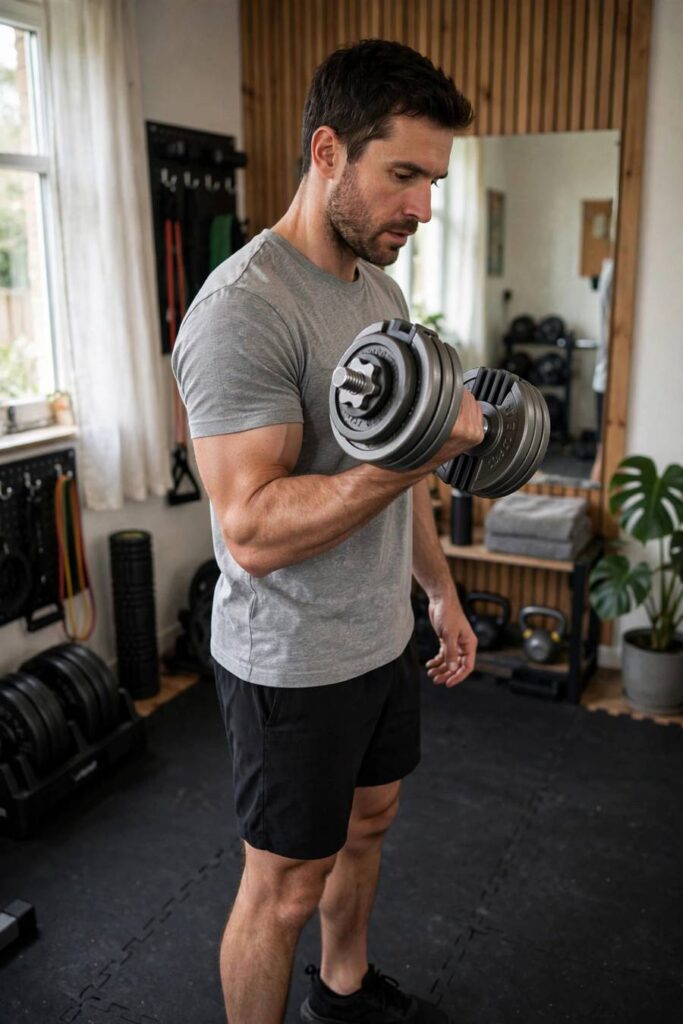
If I could only keep one piece of training equipment, it would be a pair of adjustable dumbbells. Barbells are better for maximal strength, cables are better for constant tension, but dumbbells are the best all-round tool for arms: they work each arm independently, allow natural movement paths, and cover every arm muscle with ten movements. This is my ranked list of the ten best arm exercises with dumbbells, with the exact sets, reps, and form cues I give clients. The gym-wide master list is my best arm exercises guide, and the full dumbbell library is in best dumbbell exercises.
The 4 Best Dumbbell Bicep Exercises
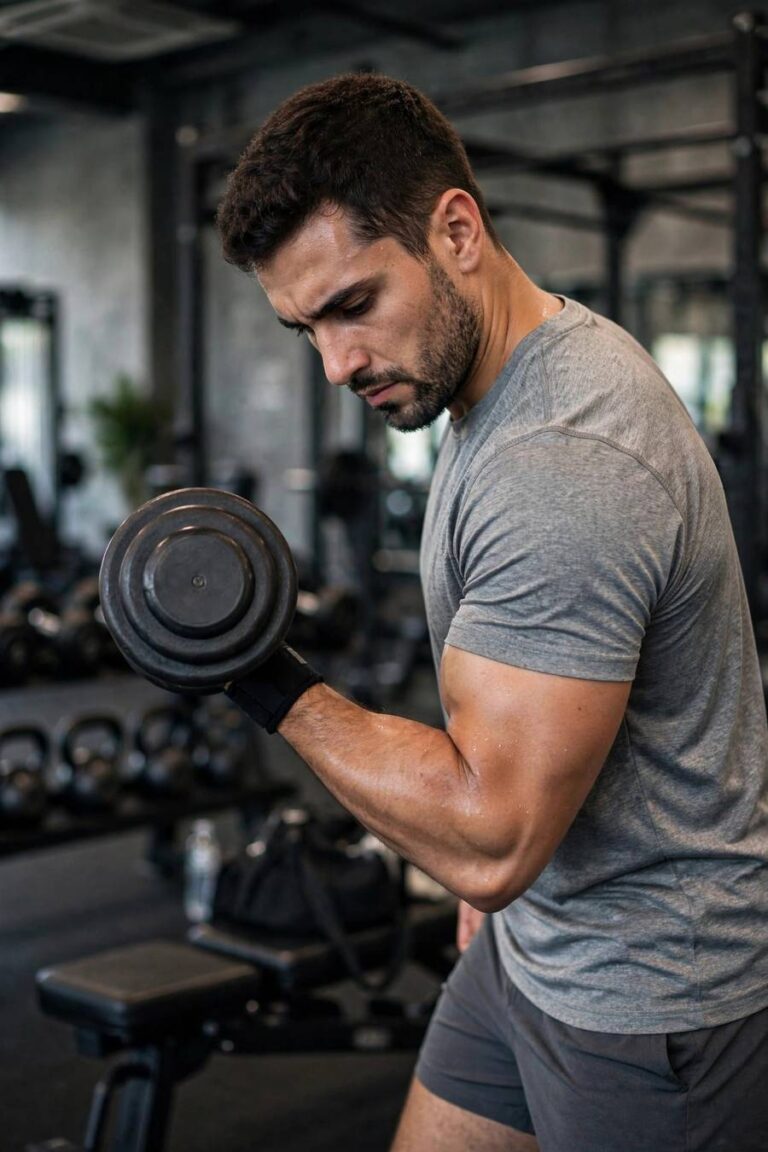
1. Standing dumbbell curl: 3×10-12. The king. Elbows pinned to ribs, curl with a 2-second lowering phase. No swinging; if your torso moves, the weight is too heavy. This is the movement every other curl is measured against.
2. Incline dumbbell curl: 3×10. Seated on a bench reclined to 45 degrees, arms hanging behind your torso. The stretched position at the bottom loads the long head of the biceps brutally. Use 20 percent less weight than standing curls; the stretch makes it harder.
3. Hammer curl: 3×10. Palms facing each other. Builds the brachialis underneath the biceps, which pushes the peak up, plus forearm thickness. The most underrated arm exercise in existence.
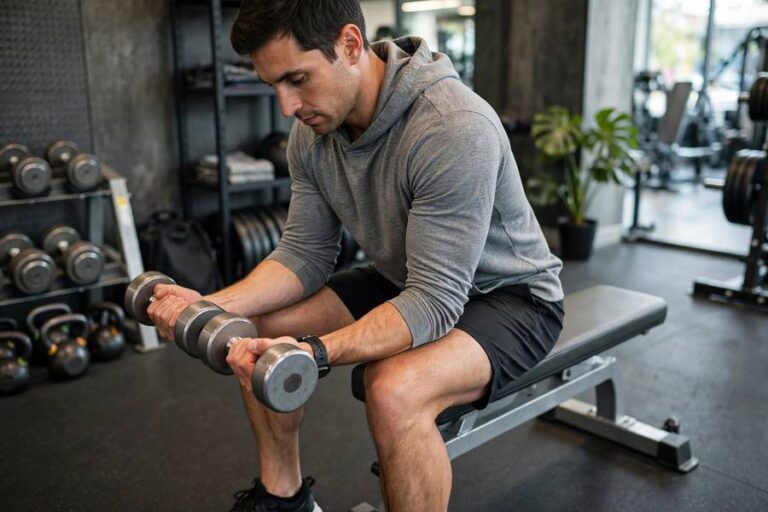
4. Concentration curl: 3×12 per arm. Seated, elbow braced on the inner thigh. The strictest curl variation; nothing moves except the forearm. Light weight, maximum mind-muscle connection, brutal pump.
The 4 Best Dumbbell Tricep Exercises
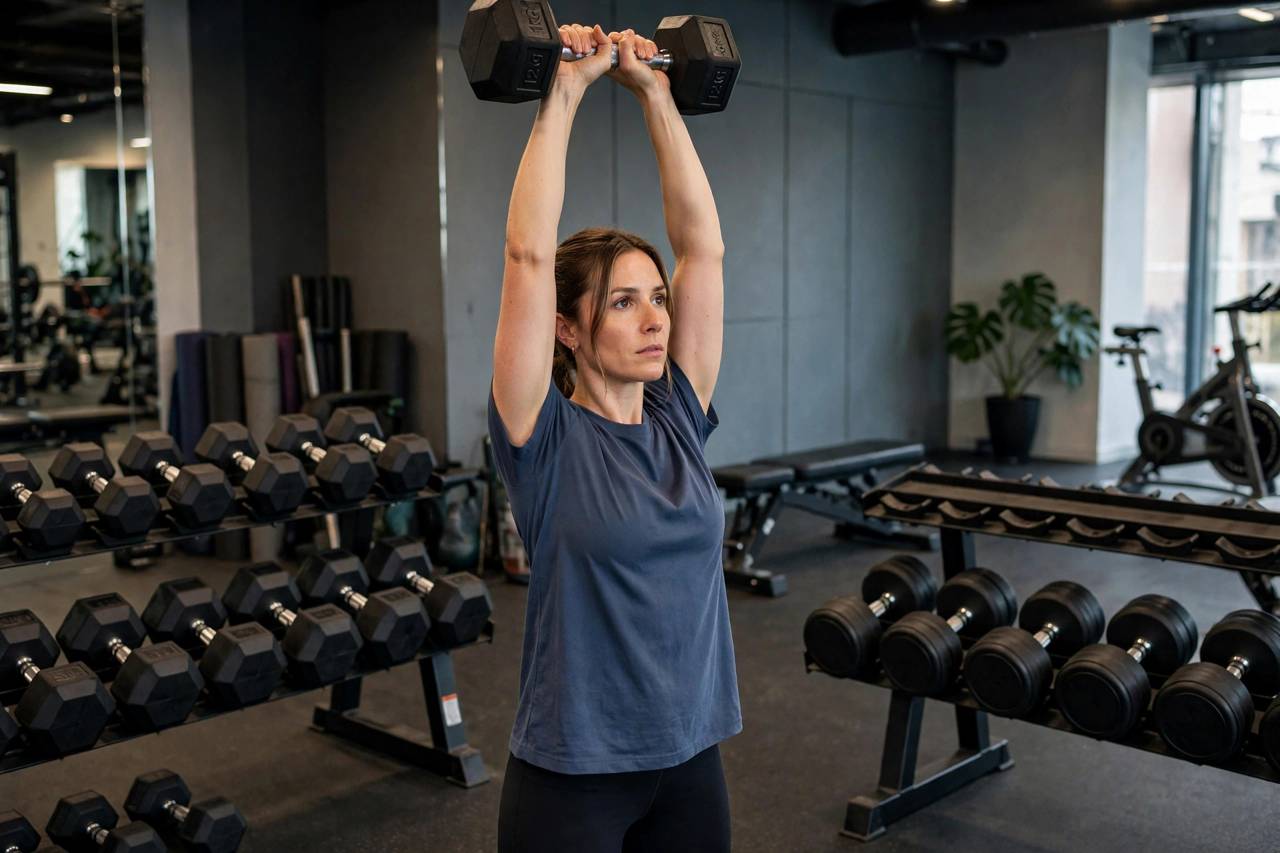
5. Overhead dumbbell extension: 3×10-12. One dumbbell, both hands, lowered behind the head. The deep stretch at the bottom targets the long head, the biggest part of the triceps. Keep upper arms vertical and still.
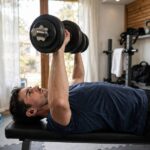
6. Lying tricep extension (skullcrusher): 3×10. Lying on a bench or floor, lower the dumbbells toward your forehead by bending only the elbows. Control the weight; this one punishes ego lifting at the elbow joint.
7. Tricep kickback: 3×12 per arm. Bent over, upper arm parallel to the floor, extend fully and squeeze for one second. Light weight, strict form. The best finisher in the dumbbell arsenal.
8. Close-grip dumbbell press: 3×10. Lying down, dumbbells pressed together over the chest, elbows tucked. A compound press that loads the triceps heavily while letting you use real weight. My best shoulder exercises guide covers the shoulder-health side of heavy pressing.
2 Combo Moves That Hit Everything
9. Zottman curl: 3×10. Curl up supinated, rotate to pronated at the top, lower slowly. Biceps concentric, forearms eccentric. The most efficient single dumbbell arm exercise; I program it when time is short.
10. Dumbbell clean and press: 3×8. Clean the bells to your shoulders, press overhead. Forearms and grip on the clean, shoulders and triceps on the press, biceps stabilizing throughout. Not an isolation move, but the best bang-for-buck arm-adjacent movement with dumbbells.
Choosing the Right Weight
The test for every exercise: a weight you can lift with perfect form for the target reps, with the last 2 reps being hard but clean. As a starting reference for an average adult male beginner: 7-10kg for curls, 5-8kg for extensions, 10-12kg for close-grip press. Women typically start 30-40 percent lighter with identical programming. Adjustable dumbbells solve the multi-weight problem: you need different loads for curls versus kickbacks versus presses, and plate-loaded adjustables change in seconds. Fixed dumbbells work if you own three pairs (light, medium, heavy); two pairs is the workable minimum. When in doubt, start lighter than you think. The first session teaches you the movements; the weights catch up within weeks.
The Dumbbell-Only 12-Week Plan
Weeks 1-4: Run the 35-minute workout below twice weekly, learning every movement. Add one rep per set weekly. Weeks 5-8: Increase weights by the smallest plate when you hit rep targets. Swap standing curls for incline curls and skullcrushers for close-grip press for variety. Weeks 9-12: Add a third weekly session, light: Zottman curls 3×10, kickbacks 3×12, hammer curls 3×10, 20 minutes. Test at week 12: max strict curls with your working weight, max dips-equivalent (close-grip press reps). Typical result: working weights up 30-50 percent, arms visibly bigger. Repeat with heavier bells. The plan works because it is boring: same movements, progressive load, no program-hopping. Dumbbell training rewards patience more than creativity.
The 35-Minute Dumbbell Arm Workout
Warm up: 2 minutes of arm circles and 10 light curls per arm. Then: standing curls 3×12, overhead extensions 3×12, hammer curls 3×10, skullcrushers 3×10, incline curls 3×10, kickbacks 3×12 per arm. Rest 60 seconds between sets, 90 between exercises. That is 18 sets, about 32 minutes. Twice a week, at least two days apart. Every 4 weeks, swap two movements for variety: concentration curls for standing curls, close-grip press for skullcrushers. Balance the pressing with pulling: how to do pull-ups twice a week keeps the elbows and shoulders healthy under all this arm volume. Track every weight; the logbook is the program.
Mistakes I See Every Week
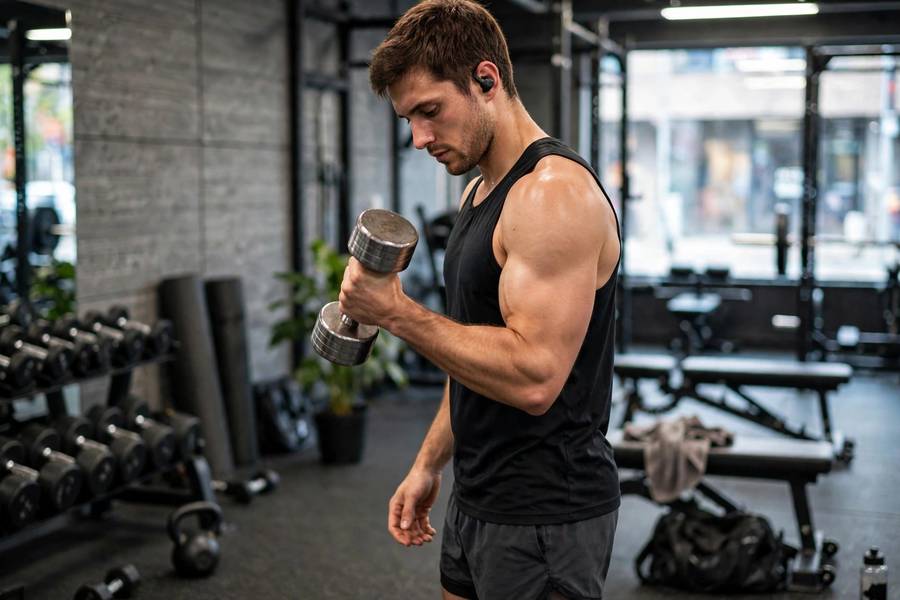
Swinging curls. The classic. Torso rocking means the weight is too heavy and the biceps are doing half the work. Stand against a wall if you cannot stop swinging.
Elbows flaring on extensions. Elbows drifting outward on skullcrushers shifts load to the shoulders and irritates the elbows. Keep them tucked and pointing at the ceiling.
Half reps on kickbacks. The squeeze at full extension is the entire point of the exercise. Short, partial reps are wasted time.
Same weight for everything. Curls and kickbacks need different loads. Adjustable dumbbells exist precisely for this; use them.
Skipping warm-up sets. One light set before the first heavy exercise of each muscle. Cold tendons and heavy extensions are a bad combination, especially at the elbow.
Tracking Arm Growth
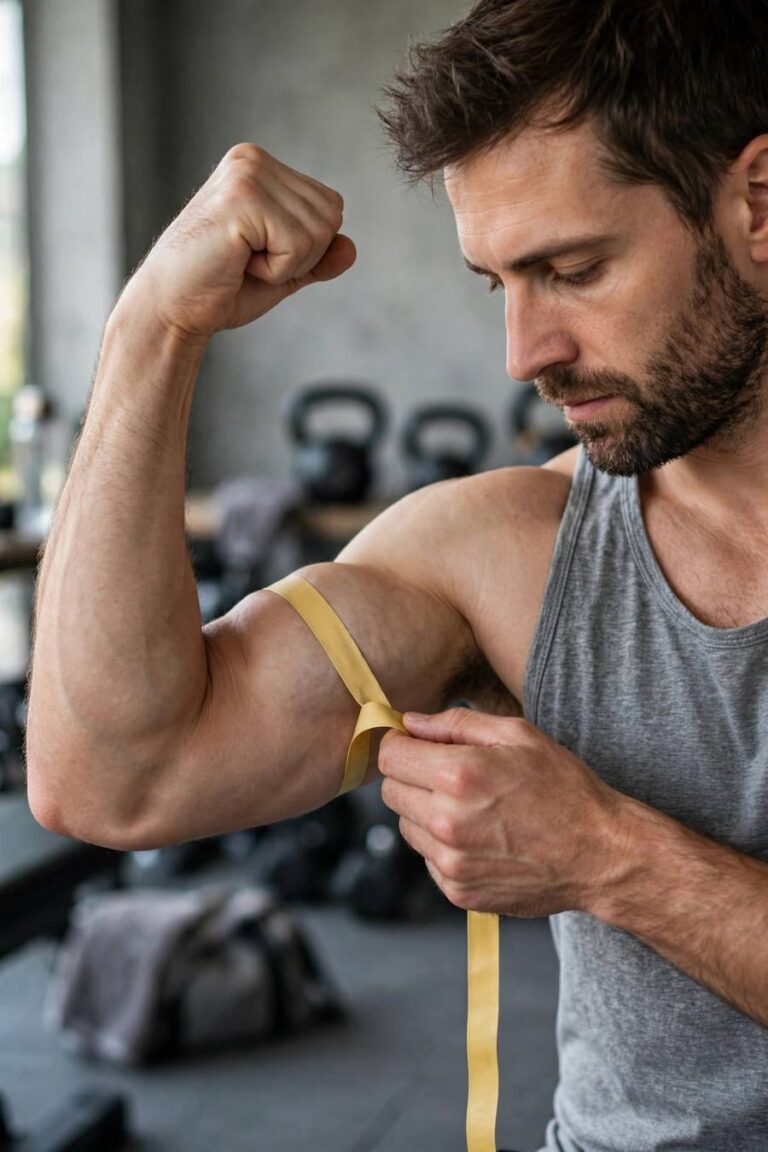
Measure flexed upper arms monthly, same time of day, same tape position; half an inch per quarter is excellent progress for intermediates. Log every working weight; the numbers going up is proof of growth even when the mirror is quiet. Take photos in the same lighting monthly; you see yourself daily and miss gradual change. And track the indirect indicators: shirts fitting tighter at the sleeve, curl weights climbing, dips getting easier. Arms are slow to change visibly and the logbook is what keeps you honest through the flat months. The clients who track consistently outgrow the ones who do not, not because tracking builds muscle, but because it sustains the behavior that does.
Adjustable vs Fixed Dumbbells for Arms
Adjustable dumbbells win for arm training, and it is not close. A single pair replacing 9 fixed weights saves space and money, and the 10-second weight change keeps rest periods honest; fumbling with plate collars between curls and kickbacks ruins workout flow. The two types: spin-lock adjustables (cheap, slow to change, fine for arms) and dial/twist adjustables (fast, pricier, better for supersets). Either works for arms since the loads are moderate. Fixed dumbbells make sense only if you train in a commercial gym or want zero setup friction. One caution: cheap spin-locks with loose collars are dangerous overhead; check tightness before every overhead extension set. For most home trainees, a 2-24kg adjustable pair is the buy-it-once solution that serves arm training for a decade.
Frequently Asked Questions
The standing dumbbell curl for biceps and the overhead dumbbell extension for triceps. If forced to pick one total-arm movement, the Zottman curl covers biceps and forearms in every rep. But arms need at least 3-4 movements for complete development; no single exercise does it all.
Absolutely. Arm exercises need 4-5 different weights across movements, and adjustables replace a full rack in the space of a shoebox. They are the highest-value home gym purchase for arm training, paying for themselves within months compared to a gym membership.
Heavy enough that the last 2 reps of each set are challenging with perfect form. For most beginners, 5-10kg per hand covers curls and extensions. Buy adjustables that go from 2kg to at least 20kg per hand; that range serves you for years.
No. Twice a week is the sweet spot; three times works for advanced trainees with careful volume management. Daily dumbbell arm training exceeds recovery capacity and stalls progress within weeks. Muscles grow between sessions, not during them.
It helps for incline curls and skullcrushers, but the floor substitutes fine for both. An adjustable bench is a nice second purchase after the dumbbells themselves. Standing curls, presses, kickbacks, and hammer curls need no bench at all.
Switch to an EZ-bar or dumbbells with a neutral grip, keep wrists straight and neutral throughout the rep, and stop curling with bent-back wrists. Most curl wrist pain is a grip-angle problem, not a weakness problem. If pain persists beyond two weeks of corrected form, reduce curl volume temporarily and add reverse wrist curls.