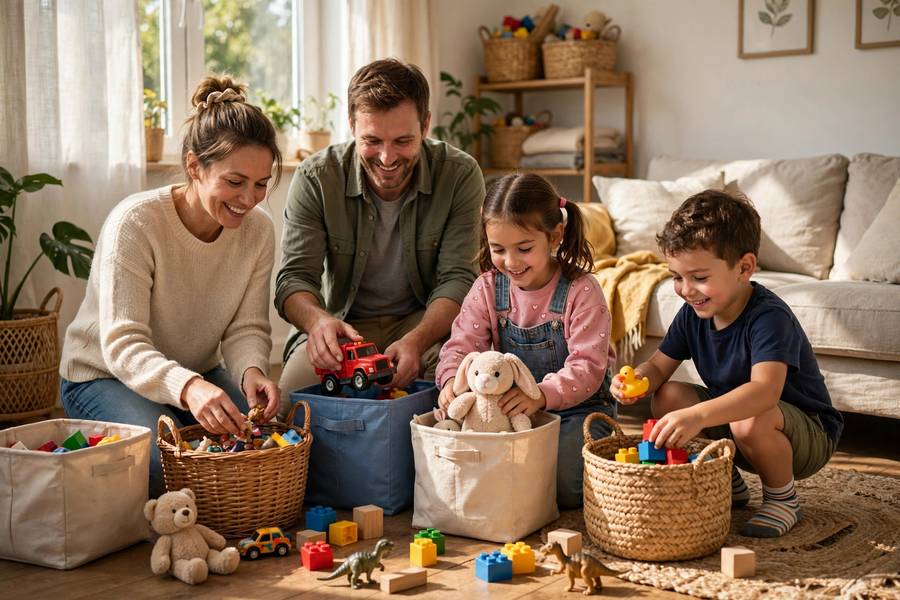
Minimalism With Kids: Yes, It’s Possible

“Minimalism with kids” sounds like “quiet with toddlers” — a contradiction in terms. I thought so too, until I watched my sister do it with three kids under eight. Her house isn’t empty or white or silent. There are toys, art supplies, and the occasional rogue Lego in the couch. But it’s calm. Cleanup takes fifteen minutes. The kids can find their things. And nobody — not the kids, not the parents — misses the stuff they released. It changed what I believed was possible.
This guide is for parents who want the calm without the guilt: how to do minimalism with kids in a way that’s kind to children, sustainable for parents, and honest about the challenges. No 33-possession toddlers. No throwing away beloved loveys. (And for summer, this summer bucket list for kids proves simple beats stuffed.) Just a family version of intentional living that actually works.
In this guide:
- Why Bother? The Case for Family Minimalism
- The Mindset Shift (Yours First)
- The Toy Strategy That Actually Works
- Decluttering With Kids (Not Against Them)
- Winning the Inflow Battle
- Room-by-Room: The Kid Zones
- When It’s Hard (Because Sometimes It Is)
Why Bother? The Case for Family Minimalism
Kids are drowning in stuff, and it’s not making them happier. The average American child owns over 200 toys but plays with a fraction of them; research on toy quantity and play quality found that children with fewer toys played more creatively and for longer with each toy. More toys doesn’t mean more play — it means more scattered, shorter, shallower play. Fewer toys, counterintuitively, means better play.
For parents, the case is even clearer. Less stuff means faster cleanup (my sister’s whole-house reset takes 15 minutes — compare that to the archetypal toy explosion that takes an hour), less to organize and maintain, fewer battles over lost things, and calmer spaces that genuinely reduce everyone’s stress. Parental burnout has many causes, but “managing a warehouse of plastic” is a contributor nobody needs.
There’s also the values case: kids learn consumption patterns by watching. A home where things are chosen carefully, cared for, and released gratefully teaches more about enough-ness than any lecture. You’re not depriving your kids by having less; you’re giving them the experience of sufficiency — which, in a culture of more, is a genuine gift.
The Mindset Shift (Yours First)
Family minimalism starts with parental expectations, not kid behavior. Release the Pinterest-perfect vision — your home will have kid stuff visible, art on the fridge, and toys in the living room. That’s not failure; that’s a family home. The goal is manageable, not magazine-ready — which is what minimalism actually means for real families: everything has a home, cleanup is fast, and the volume stays at a level the family can actually maintain.
Accept that kids’ minimalism looks different from adults’. A child’s “enough” includes beloved stuffed animals, art supplies, books, and the weird rock collection — these aren’t clutter, they’re childhood. The target isn’t fewer things for its own sake; it’s removing the excess that buries the beloved: the broken toys, the forgotten party favors, the duplicates, the “played with once” gadgets.
And let go of guilt about the past. The toy avalanche wasn’t a moral failing — it was marketing, grandparents, and the genuine desire to delight your kids. You’re not fixing a mistake; you’re evolving a system. That framing matters, because guilt-driven purging leads to the same frenzy-and-regret cycle as any other kind.
The Toy Strategy That Actually Works
The container rule is the backbone: toys live in defined containers (bins, shelves, a toy box), and when a container is full, something must leave before anything enters. This makes limits physical and non-negotiable — no abstract “too many toys” debates, just “the bin is full.” Kids understand physical limits far better than philosophical ones.
Toy rotation is the secret weapon. Box up half the toys and store them away; rotate every month or two. Kids greet the “new” (actually old) toys with genuine excitement — it’s like Christmas without spending. Rotation also reveals what they truly love: the toys they ask about during off-rotation are keepers; the ones they never mention can quietly exit.
Favor open-ended toys that grow with the child: blocks, art supplies, dress-up clothes, building sets, balls, books. These get years of play versus weeks. And implement the “one in, one out” rule for gifts especially — birthdays and holidays are the great inflow events, so make choosing what leaves part of the celebration ritual, not a punishment after.
The beloved-item rule
Every child gets an absolute veto category: the lovey, the favorite stuffed animal, the irreplaceable treasures. These are never subject to decluttering, ever. Knowing their treasures are safe makes kids dramatically more willing to release everything else. Security first, editing second.
Decluttering With Kids (Not Against Them)
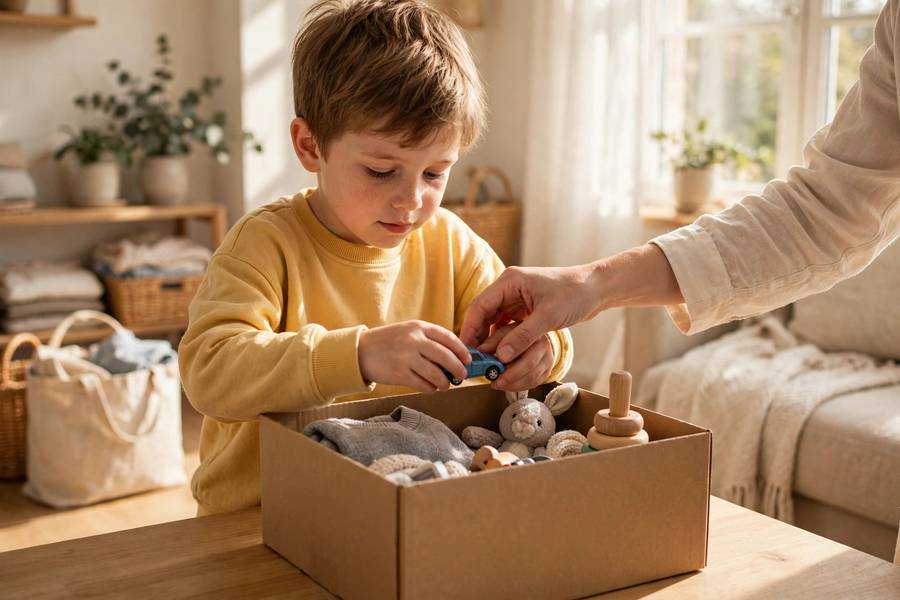
Never purge a child’s things secretly. I know the temptation — they’re asleep, the broken Happy Meal toys are right there — but discovered purges destroy trust, and trust is worth more than a tidy playroom. Instead, make decluttering a collaborative, even fun, process matched to their age. (The adult version: how to declutter your house room by room.)
For little ones (3-6): make it a game. “Let’s find all the broken toys for the fix-it box!” “Can you find five toys to share with kids who need them?” Focus on categories, not individual beloved items, and keep sessions short (15 minutes max). For school-age kids (7-12): give them real agency — their room, their decisions, with gentle guidance. The container rule helps: “Your shelf holds what it holds — you choose what earns the spots.”
For teens: respect their space entirely, model your own decluttering, and invite (never require) participation. Teens who’ve watched family minimalism work often declutter voluntarily — on their own timeline. And for the truly hard items across ages: the Maybe box works for kids too. “Let’s put these in the special box, and if you don’t ask about them by your birthday, we’ll share them with other kids.” Most boxes get donated unopened. The child chose; the system worked.
Winning the Inflow Battle
Family minimalism is 20% decluttering and 80% inflow management, because kids are clutter magnets: party favors, school papers, grandparents, holidays, fast-food toys, craft projects. You need systems, not willpower.
Gifts: Have the kind conversation with grandparents and relatives early — wish lists, experience gifts (zoo memberships, lessons, outings), contributions to savings, or “one thoughtful gift” agreements. Most grandparents are relieved; shopping blind for kids is stressful. Frame it as helping them succeed, not restricting them.
Party favors and trinkets: Establish the “one-day rule” — party favors get one day of glory, then the broken/cheap ones quietly exit. Kids rarely notice; they’re onto the next thing. School papers: one keepsake box per child per year; photograph the rest into a digital album. The art they were proudest of gets displayed, then archived. Fast-food toys: just say no at the counter, or implement immediate donation — the novelty lasts eleven minutes anyway.
Your own buying: the hardest inflow to control. Pause before every kid purchase: do they need it, or do you need the feeling of providing? Experiences and attention outperform objects for kid happiness every time — research consistently shows kids value time with parents over toys. The best gift is often just you, present and unhurried.
Room-by-Room: The Kid Zones
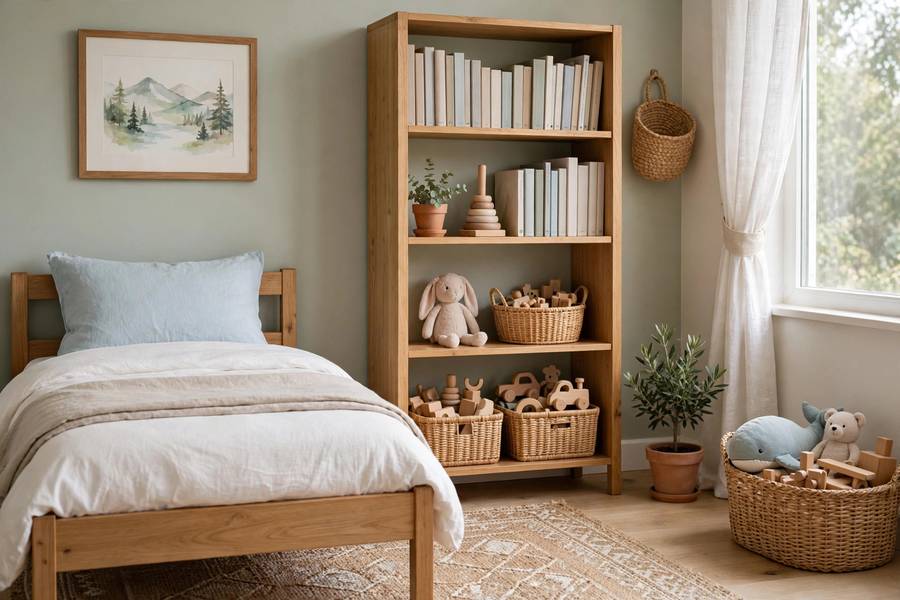
Bedrooms: Clothes that fit and get worn (kids outgrow fast — purge seasonally), bedding plus one spare set, books (keep favorites, rotate the rest via library), and the beloved items. Purge outgrown clothes the moment you notice, not “someday” — a small ongoing habit beats a massive seasonal ordeal.
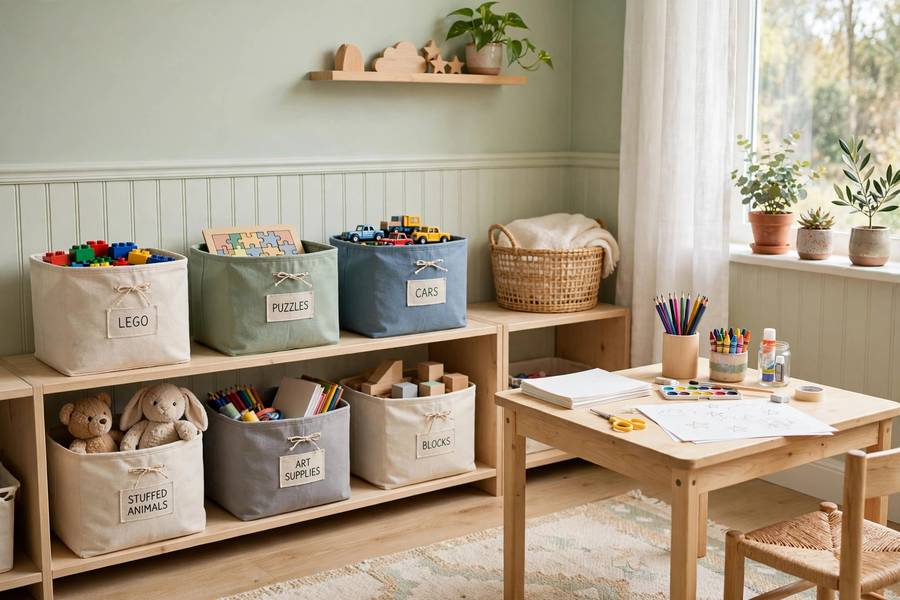
Play areas: Container rule in full force. Zones help: building zone, art zone, reading corner, active play. When every type has a spot, cleanup becomes sorting, which kids can actually do. Label bins with pictures for pre-readers. Cap art supplies at what fits the art caddy — dried markers and broken crayons exit without ceremony.
The rest of the house: One family “kid drawer” in the kitchen for the stuff that migrates, a launch pad by the door for backpacks and shoes (the morning sanity saver), and how to organize a small apartment with kids for the rest, and a firm rule that toys live in kid zones — with a nightly 5-minute “toy rescue” where everyone returns strays. Fifteen minutes of family reset beats an hour of solo parental tidying.
When It’s Hard (Because Sometimes It Is)
Let’s be honest about the hard parts. Sentimental kid stuff — the first shoes, the hospital bracelet, the mountain of artwork — is genuinely difficult. Keep the truly precious in one small keepsake box per child; photograph the rest. The memories are yours; the objects are just triggers, and photos trigger just as well.
Differing partners: if one parent is on board and the other isn’t, start with your own things and shared spaces by agreement. Never make it a wedge issue — a peaceful cluttered home beats a minimalist battleground. Model, invite, be patient. My sister’s husband came around in year two, entirely on his own.
Kids who resist: some children are natural collectors, and that’s a temperament, not a defect. Work with it — curate the collection (the rock collection gets a display shelf, not the whole yard), set boundaries kindly, and pick your battles. The goal is a functional home and a trusting relationship, in that order of priority.
Family minimalism isn’t about perfect homes — it’s about homes that work. Homes where cleanup is quick, where kids can find their favorite things, where parents aren’t drowning in management, and where everyone knows the difference between enough and excess. That’s not just possible with kids. In some ways, kids make it more meaningful — because you’re not just editing a home, you’re teaching a way of being. And they’re watching. Make it a good lesson.
Yes — it just looks different from solo minimalism. Family minimalism means manageable rather than empty: everything has a home, cleanup takes minutes, and beloved items are protected. Use the container rule for toys, rotate toys seasonally, involve kids in decisions, and focus 80% of effort on managing inflow (gifts, party favors, school papers) rather than repeated purging.
Never purge secretly — it destroys trust. Make it collaborative and age-appropriate: games for little ones (‘find five toys to share’), real agency for school-age kids with the container rule as the limit, and full respect for teens’ space. Every child gets veto-protected beloved items; knowing treasures are safe makes releasing the rest easy.
There’s no magic number — use the container rule instead: toys live in defined containers, and full means something leaves before anything enters. Research shows children with fewer toys play more creatively and longer with each one. Toy rotation (storing half, swapping monthly) makes a moderate collection feel constantly fresh.
Have the kind conversation early: provide wish lists, suggest experience gifts (memberships, lessons, outings), propose ‘one thoughtful gift’ agreements, or contributions to savings. Frame it as helping them choose well, not restricting them — most gift-givers are relieved to have guidance.
The essentials: the container rule (physical limits for every category), one-in-one-out (especially for gifts), toy rotation, the beloved-item veto (treasures are never purged), the one-day rule for party favors, one keepsake box per child per year for school papers/art, and a nightly 5-minute family reset. Manage inflow relentlessly — it’s 80% of the game.