Minimalism for Beginners: Your First 30 Days


When I tell people I’m a minimalist, they picture the before-and-after: the dramatic purge, the empty white rooms. What they don’t picture is how it actually started — with me, overwhelmed, googling “minimalism for beginners” at midnight, hoping someone would just tell me what to do on day one. So here’s what I wish I’d found: not philosophy, not inspiration, but a plan. Thirty days, one small task a day, each taking 15-30 minutes. By the end, you won’t just have less stuff — you’ll think differently about stuff, which is the real transformation.
This guide assumes you’re starting from zero: a normal home, normal amount of stuff, normal skepticism. No buying anything new (especially not organizing products — not yet), no marathon sessions, no throwing away things you’ll regret. Just thirty small days that add up to a different relationship with your belongings.
In this guide:
- The Beginner Mindset (Read This First)
- Week 1: See Your Stuff Clearly (Days 1-7)
- Week 2: The Easy Purge (Days 8-14)
- Week 3: Categories and Decisions (Days 15-21)
- Week 4: Systems and Inflow (Days 22-30)
- After Day 30: What Changes
- Beginner Traps to Avoid
The Beginner Mindset (Read This First)
Three ideas to carry through the month. First: minimalism is a question, not an answer. The question is “does this serve my life?” — asked about everything you own. (More on the philosophy: what minimalism actually means.) There’s no target number of possessions, no required aesthetic. Your minimalism will look different from mine, and that’s correct.
Second: you’re building a skill, not cleaning a house. The skill is deciding — quickly, kindly, and without drama — what stays and what goes. Like any skill, it starts clumsy and gets smooth. Day 3 decisions will feel hard; day 25 decisions will feel obvious. Trust the process.
Third: slow is fast. The beginners who last are the ones who go gently. The ones who purge frantically usually rebound — rebuying, regretting, quitting. Fifteen focused minutes a day beats five chaotic hours on a Saturday. It helps to anchor it — how to create a daily routine shows how. This isn’t a race; there’s no prize for finishing first, but there’s a real penalty for burning out.
Week 1: See Your Stuff Clearly (Days 1-7)
Day 1: Write your “why” — one paragraph on why you’re doing this. Be specific: “I want to stop losing my keys,” “I want cleaning to take an hour, not a day,” “I want to save $300 a month.” Post it on the fridge. Day 2: Take “before” photos of every room — not for social media, for you. You’ll want these on day 30.
Day 3: Walk through your home with a trash bag and remove only actual trash — expired food, dead pens, junk mail, broken items. Ten minutes. Day 4: The one-surface challenge: clear a single surface completely (nightstand, bathroom counter, desk corner). Live with it for three days and notice how it feels.
Day 5: Count something — your mugs, your t-shirts, your phone apps. Just count; don’t purge yet. Awareness first. Day 6: Set up your exit system: four bags labeled Donate, Sell, Relocate, Trash, plus a Maybe box. Find your donation drop-off and its hours. Day 7: Rest and observe. Notice the cleared surface. Notice what you reached for this week and what you didn’t touch. You’re learning your patterns.
Week 2: The Easy Purge (Days 8-14)
Day 8: Expired and dead: medicines, sunscreen, cosmetics, batteries, spices older than a year. Day 9: Duplicates — water bottles (keep 2), mugs (keep favorites), phone chargers for dead phones, scissors (how many do you own?). Day 10: Paper purge: junk mail, old receipts, manuals for things you don’t own, takeout menus.
Day 11: The sock and underwear drawer — toss the holey, the stretched, the lonely singles. Day 12: Bathroom consolidation: six half-used shampoos become one; keep one backup of each essential. Day 13: Kitchen duplicates: the extra spatulas, the novelty gadgets unused in a year, the chipped mugs. Day 14: Donation run #1 — take everything out of the house today. Feel the lightness. Take an “after” photo of one area.
Notice: nothing here required a hard decision. That’s intentional. You’re training the letting-go muscle on light weights before the heavy lifting.
Week 3: Categories and Decisions (Days 15-21)
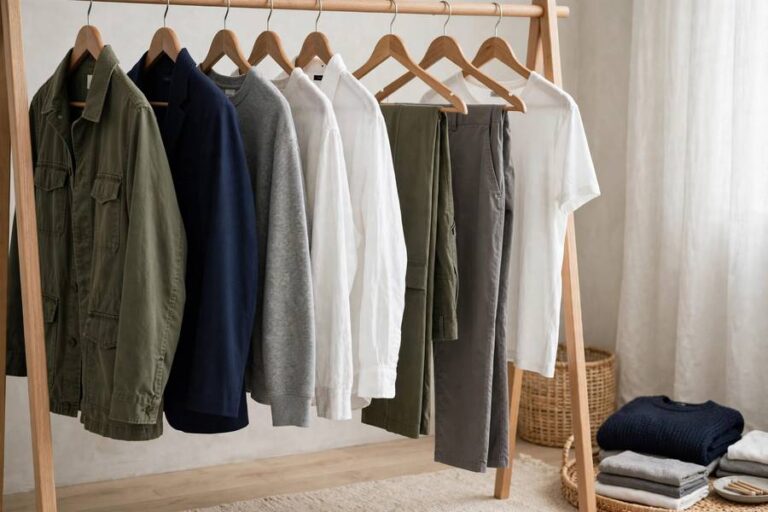
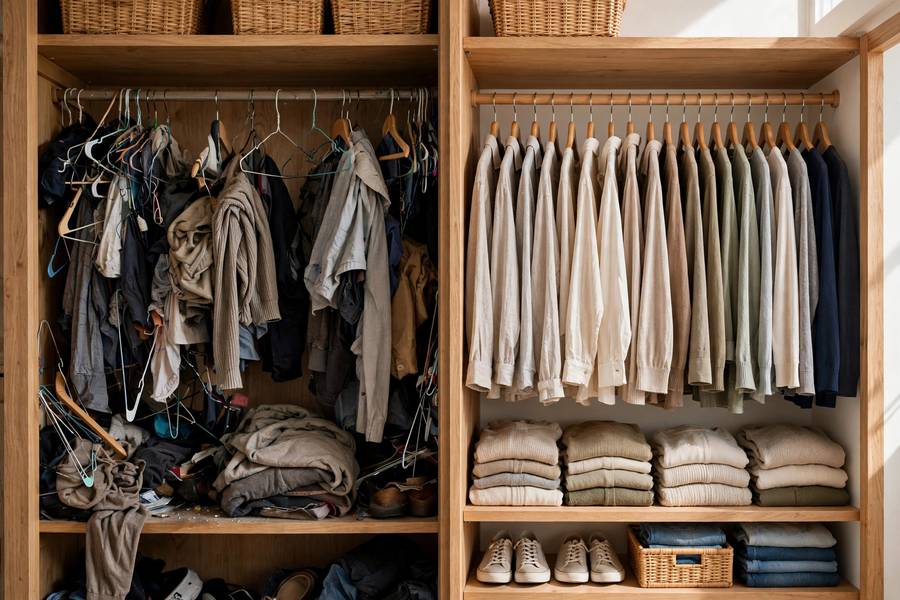
Day 15: Clothes, part 1 — everything that doesn’t fit, is worn out, or you haven’t worn in a year. (Full method: how to declutter your closet step by step.) Use the hanger trick going forward (hangers backward; anything still backward in 6 months goes). Day 16: Clothes, part 2 — the “someday” items and aspirational pieces for lives you don’t live. Keep what serves your actual life.
Day 17: Books and media — keep favorites and unread; release the “read once, keeping for the shelf” ones. Day 18: The junk drawer — empty it completely, then only return what earns a spot. Day 19: Hobby supplies for hobbies you’ve quit (be honest — quitting is allowed). Day 20: Decor that’s just filling space — if you wouldn’t notice it gone, let it go.
Day 21: Donation run #2, plus list any sell-worthy items today (photograph and post within 48 hours or donate them). Rest in the evening. You’re past the halfway point, and your home already feels different — check those day-2 photos if you doubt it.
The decision script for hard items
For anything you hesitate on, run the five questions: used in the last year? Would I buy it again today? Is it the best version I own? Does it serve my actual life? Would I pay to move it? Survivors stay guilt-free. Genuine hard calls go in the Maybe box — sealed, dated six months out, stored away. Unopened at the deadline means donated unopened.
Week 4: Systems and Inflow (Days 22-30)
Decluttering is half the job; the other half is stopping the refill. Day 22: Unsubscribe from 20 marketing emails (search “unsubscribe” in your inbox and go on a spree). Day 23: Delete shopping apps from your phone; unfollow shopping influencers. Day 24: Start your 30-day want list — a note where non-essential wants go with dates. Revisit monthly.
Day 25: Institute one-in-one-out: new item in, old item out, starting today. Day 26: Tackle the entryway — the clutter landing zone. Give everything a home: keys, mail, shoes, bags. Day 27: Digital mini-declutter: delete unused apps, clear 500 old photos, unsubscribe from 10 more newsletters.
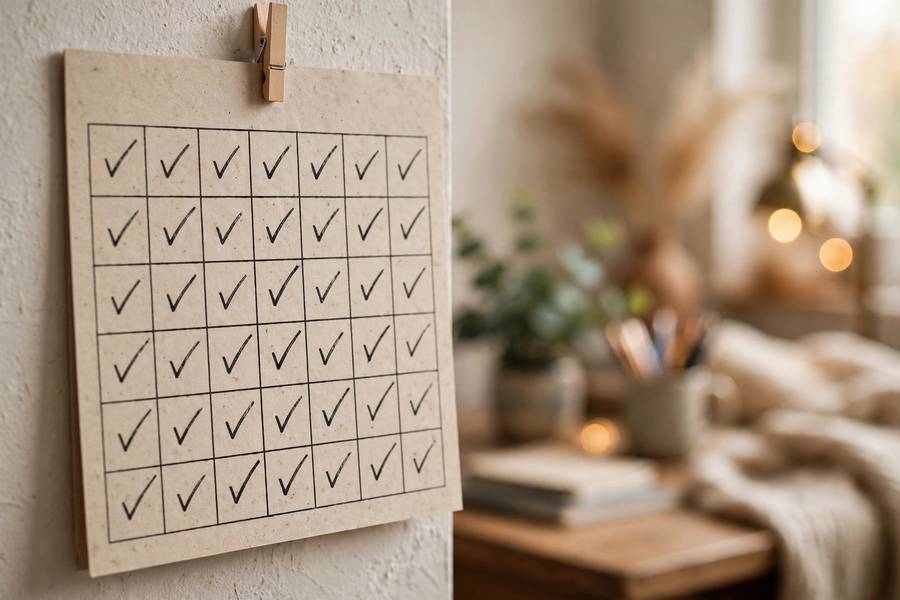
Day 28: The storage test — open every closet, cabinet, and storage spot. Anything you forgot you owned is a candidate. Day 29: Final donation run; photograph your “after” rooms. Day 30: Compare day-2 and day-29 photos. Write down what changed — not just the rooms, but how you feel. Then pick your next category for month two (sentimental items, garage, whatever remains).
After Day 30: What Changes
Here’s what thirty days buys you: visible results in every room, a trained decision muscle, working exit systems, inflow controls, and — the real prize — a changed relationship with stuff. You’ll notice yourself pausing before purchases, seeing clutter differently, and feeling calmer in your space. The maintenance from here is light: an annual review pass, one-in-one-out, and the 30-day list. Pair the new habits with a morning routine that sets up your day — fifteen calm minutes before the world starts makes every other habit easier to keep.
Month two is for the deeper layers: sentimental items (do these gently, in one unhurried session), the garage or storage unit, and refining what “enough” means for you. There’s no deadline. Some people do a focused month and then coast for a year. Others make it an ongoing practice. Both are correct — the only wrong move is the frantic purge-and-rebound.
Beginner Traps to Avoid
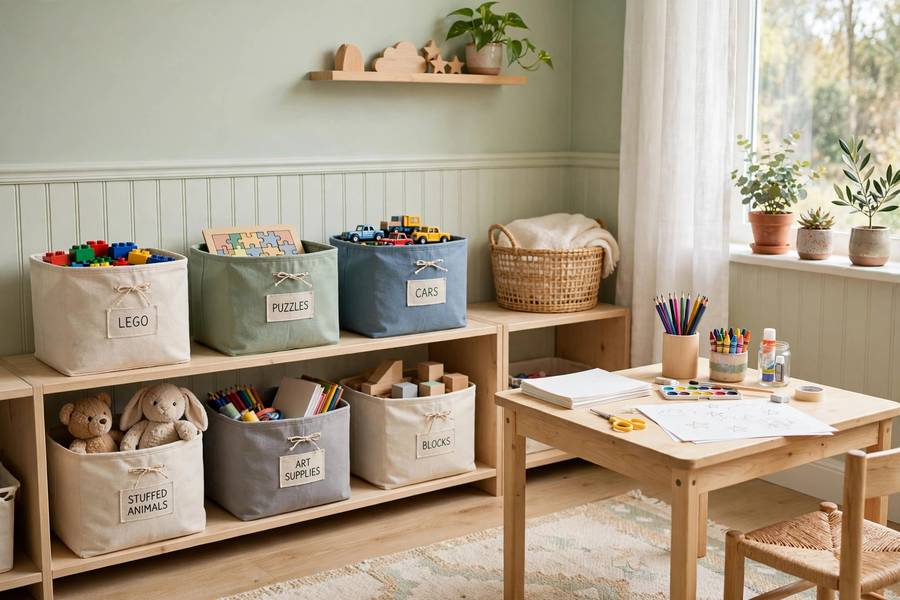
Trap 1: Buying organizing products first. Bins for undecided stuff is expensive procrastination. Declutter first, contain what is left. Then how to be more organized keeps the systems running. Trap 2: Decluttering other people’s things. Your stuff only. Model, don’t mandate. Trap 3: The aesthetic chase. If your journey requires buying all-new matching beige items, you’ve been marketed to. Trap 4: Counting possessions. The number is irrelevant; the feeling is the metric. Trap 5: Comparing your home to influencers’. Your lived-in real life is the only valid benchmark — compare to your day-2 photos, not someone’s feed.
Start today. Not Monday, not next month — today, with day 1’s task: write your why. It takes five minutes, and it’s the first domino. Thirty days from now, you’ll be standing in a calmer home wondering why you didn’t start sooner. Everyone says that. Everyone’s right.
Follow a day-by-day plan: week 1 for observing and preparing (write your why, set up donation systems, clear one surface), week 2 for easy purges (expired items, duplicates, paper), week 3 for real categories (clothes, books, kitchen), week 4 for inflow systems (unsubscribe, 30-day want list, one-in-one-out). Fifteen to thirty minutes a day is enough.
Start with zero-emotion items: trash, expired products, dead batteries, junk mail. Then duplicates (extra mugs, water bottles, chargers), then easy categories like worn-out socks and unread magazines. Save clothes, sentimental items, and hobby gear for later when your decision muscle is stronger.
There’s no official number — minimalism is a question (‘does this serve my life?’), not a count. Anyone selling you a target number is selling an aesthetic, not a practice. Focus on how your space feels and functions, not on hitting an arbitrary possession total.
Purging too fast and rebuying (go slow), decluttering other people’s belongings without permission, buying organizing products before decluttering, chasing an Instagram aesthetic instead of function, and comparing your real home to influencers’ staged spaces. Model the behavior; don’t mandate it.
Three systems: one-in-one-out for all purchases, a 30-day waiting list for non-essential wants (most evaporate), and an annual review pass through every room. Plus inflow control: unsubscribe from marketing, delete shopping apps, stop browsing-as-entertainment. Maintenance takes just hours per year.