Minimalist Lifestyle Examples: What It Actually Looks Like

The internet’s version of minimalism is suspiciously uniform: white walls, a single chair, a person staring thoughtfully out a window. Real minimalists — the ones I know personally — look nothing like that. One is a nurse with three kids and a very lived-in house. One is a chef whose kitchen is (necessarily) full of tools. One is a retiree in a 400-square-foot cottage who cans tomatoes like it’s her job. All of them would call themselves minimalists, and all of them are right. (Here is what minimalism actually means, minus the stereotypes.)
This article is the antidote to the stereotype: concrete examples of what minimalist lifestyles actually look like across homes, wardrobes, schedules, money, and digital life. Not the Instagram version — the real one, with kids and hobbies and personality intact.
In this guide:
- Minimalist Homes (5 Real Examples)
- Minimalist Wardrobes in Practice
- Minimalist Schedules and Routines
- Minimalist Money in Action
- Minimalist Digital Lives
- What All of Them Share
Minimalist Homes (5 Real Examples)
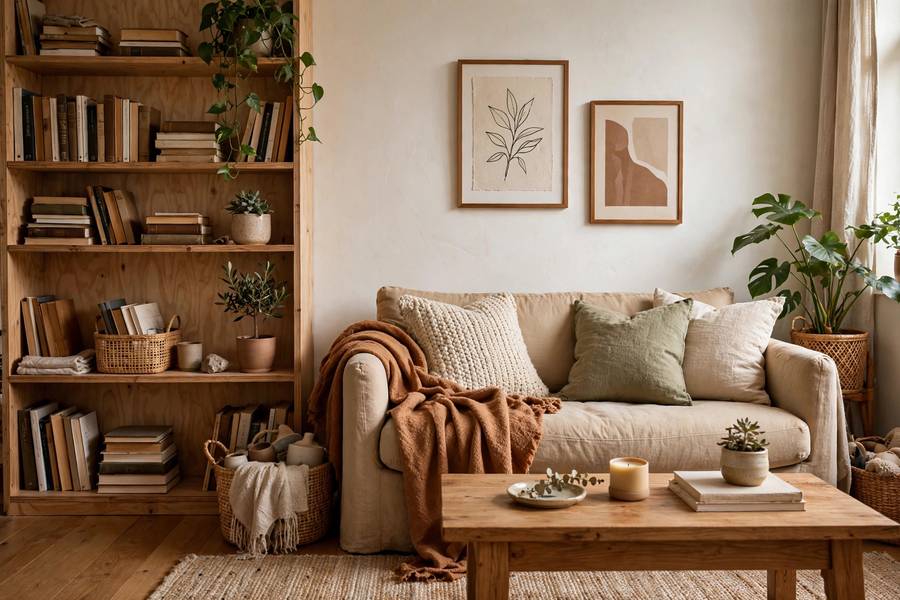
The city studio dweller. My friend Maya, 29, in 420 square feet: a bed, a small sofa, a desk, a dresser, an open shelf for books and plants. Everything has a place; cleaning takes 40 minutes. Her “decor” is plants, books, and art she loves — the place has personality, just no filler. Guests always say it feels bigger than it is. That is minimalism doing its job — and the small apartment decorating ideas she used are worth stealing.
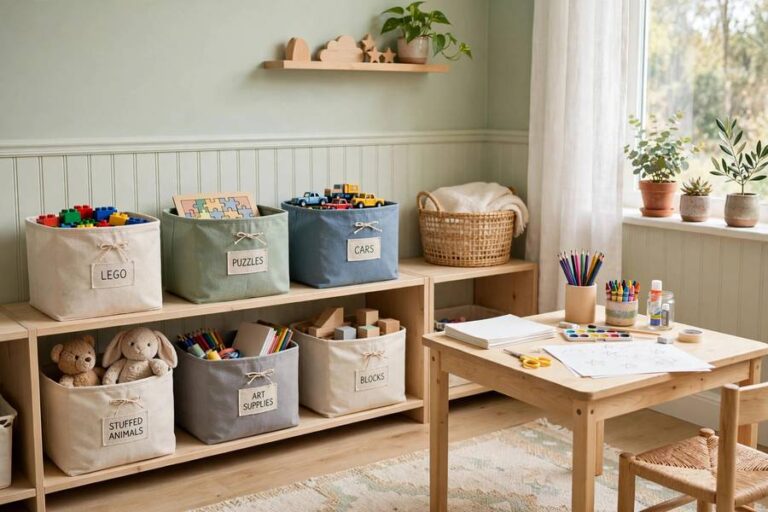
The family of five. My sister’s house with three kids: toys live in four bins (container rule), clothes are purged seasonally, the kitchen has clear counters, and the whole-house reset takes 15 minutes with everyone helping. It’s not empty — there’s art on the fridge and Legos in the living room — but it’s manageable. The kids can find their things. The parents aren’t drowning. That’s the whole point.
The hobbyist. My neighbor Tom is a woodworker with a full garage shop — and a minimalist. How? Every tool earns its place; nothing sits unused; the shop is organized like a surgical suite. Minimalism isn’t about having little; it’s about everything serving a purpose. A workshop full of used-daily tools is more minimalist than a “minimalist” living room full of decorative objects that do nothing.
The downsized retirees. A couple I know sold the four-bedroom house, moved to a two-bedroom cottage, and kept only what fit — which turned out to be plenty. Their must-keeps: good kitchen tools (they cook daily), garden supplies, books, and the dining table that seats the grandkids. Everything else was released. They report the same thing every downsizer reports: they don’t miss any of it.
The renter minimalist. Me, for years: everything I owned fit the “could I move it in a weekend?” test. I had already done the how to declutter your house room by room work. Furniture chosen for function, decor limited to what I loved, no “someday” items. Renting and minimalism are natural partners — when you might move, every possession is a future moving cost, which makes editing easy.
Minimalist Wardrobes in Practice
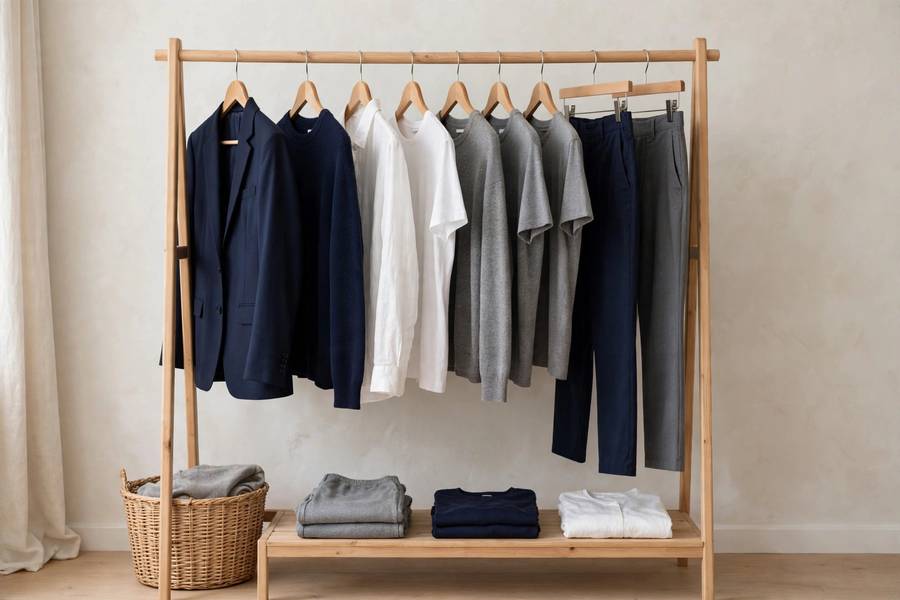
A minimalist wardrobe isn’t a specific number of items — it’s a wardrobe where everything fits, everything gets worn, and getting dressed takes five minutes. Real examples: my own wardrobe is about 40 items including shoes and outerwear, all in a palette of navy, gray, white, and olive — built using the capsule wardrobe guide approach, so everything matches everything. Laundry day is simple; packing for trips takes ten minutes.
My sister’s version (with kids, so different constraints): a “uniform” approach for workdays — five variations of the same outfit formula — plus weekend clothes and a small occasion section. The kids have two weeks of mix-and-match clothes each, purged seasonally as they grow. Nobody stands in front of a full closet feeling like they have nothing to wear, because everything in the closet actually gets worn.
The principles across all versions: a coherent color palette (not necessarily neutrals — one friend’s is all jewel tones), quality over quantity for daily-worn items, the hanger trick to identify the unworn, and a one-in-one-out rule. The result isn’t boring — it’s the opposite. When everything fits and flatters, you look better with less.
Minimalist Schedules and Routines
Minimalism applies to time too, and the examples are illuminating. The minimalist schedule isn’t empty — it’s curated. My own: protected morning routine (no phone for the first hour), deep work blocks with phone on silent, one weekly “admin hour” for all the life paperwork, and evenings that are mostly unscheduled. The white space isn’t laziness; it’s where thinking, rest, and spontaneity live.
A parent friend’s version: ruthless about commitments — one activity per kid per season, no overscheduling, Sundays protected as family time with nothing on the calendar. “We say no to good things so we can say yes to great things” is their family motto, and their kids are notably un-frazzled compared to peers doing five activities each.
The pattern: minimalists treat attention like money — budgeted, not frittered. Fewer commitments, each chosen deliberately. Saying no is the schedule equivalent of decluttering: uncomfortable at first, liberating forever.
Minimalist Money in Action
Minimalist finances share a shape: spend intentionally on what matters, ruthlessly cut what doesn’t, automate the rest. A real example — my monthly budget has exactly three discretionary categories: food out with friends, books, and travel savings. Everything else is automated bills and necessities. I don’t track every coffee; I just don’t have many spending categories to leak from.
The 30-day list in practice: my phone note currently has four items with dates. Three will expire unwatched; one (a good winter coat to replace my dying one) will get purchased deliberately after research. That’s the system working — wants get a cooling-off period, needs get proper attention.
Another friend’s version: the “enough” number. She calculated what her life actually costs to run well — not lavishly, well — and treats income above that as optional (savings, generosity, freedom fund). Knowing your enough-number is the financial equivalent of knowing your wardrobe size: it ends the endless “more” and replaces it with a finish line.
Minimalist Digital Lives
The minimalist phone: a dozen or so apps, all intentional — messaging for real humans, maps, notes, camera, music, banking, and not much else. No social feeds on the phone (desktop-only if at all), notifications limited to calls and texts from actual people, home screen with nothing competing for attention. It looks boring. It feels like freedom.
The minimalist inbox: aggressive unsubscribing (the search-“unsubscribe”-and-purge session), filters that file newsletters into a “read later” folder, email checked in batches rather than as a drip feed. One friend has maintained inbox zero for two years with a simple rule: every email gets archived, replied, or deleted within 24 hours. No “I’ll deal with this later” pile.
The minimalist information diet: one or two trusted news sources checked once daily (not the outrage drip), books over feeds for learning, and a read-later app for the occasional long article. The result isn’t ignorance — it’s the opposite. Less noise means the signal actually gets through.
A minimalist day, hour by hour
6:30 — wake, no phone for the first hour; coffee, journal, walk. 8:00 — deep work block, phone on silent in another room. 12:00 — lunch, ideally with a human, no screens. 13:00 — shallow work and admin. 17:00 — done; phone back on for real humans only. Evening — cook, read, hobby, people. 22:00 — phone charges outside the bedroom. It’s not exciting. That’s the feature.

What All of Them Share
Across every example — the studio, the family, the woodworker, the retirees — the same five threads appear. Intentionality: everything owned, scheduled, and spent is chosen on purpose. The enough-line: each has defined “enough” for their life, ending the infinite more. Systems over willpower: container rules, one-in-one-out, scheduled batches — structure does the heavy lifting. Comfort with missing out: happily skipping the sale, the trend, the upgrade. Time affluence: every one of them has more unscheduled time than their peers, and they all name it as the best part.
Notice what’s absent from every example: perfection, deprivation, and whiteness (literal or metaphorical). Nobody’s home is empty. Nobody’s life is boring. The minimalist lifestyle, done right, doesn’t look like a magazine — it looks like a life with the volume turned down on noise and up on what matters. Your version will look like you, just edited. And that’s exactly right.
Real minimalist lifestyles vary widely: a studio dweller with 40-minute cleanups, a family of five with 15-minute whole-house resets, a woodworker with a full but purposeful shop, retirees in a cottage with only what fits. The common threads are intentionality, defined ‘enough’ lines, systems over willpower, and more unscheduled time — not empty white rooms.
A typical minimalist day: phone-free first hour, deep work blocks with distractions silenced, batched admin and email, intentional meals, and unscheduled evenings for hobbies, people, or rest. The pattern is curated time — fewer commitments chosen deliberately, with protected white space for thinking and spontaneity.
Absolutely — hobbies are often the point. A woodworker’s full shop, a chef’s equipped kitchen, or a gardener’s shed can all be minimalist if every item earns its place and gets used. Minimalism targets the unused, the duplicate, and the aspirational — not the tools of a life you actually live.
A wardrobe where everything fits, everything gets worn, and dressing takes five minutes — typically a coherent color palette so everything matches, quality basics for daily wear, and a one-in-one-out rule. The item count varies; the feeling (no ‘nothing to wear’ mornings) is the metric.
Minimalists define an ‘enough’ number, limit discretionary spending to a few intentional categories, use a 30-day cooling list for wants, and automate the rest. The goal isn’t deprivation — it’s ending the leak of mindless spending so money flows to what genuinely matters: security, freedom, experiences, generosity.