Squash vs Racquetball Rules: Every Key Difference, Side by Side

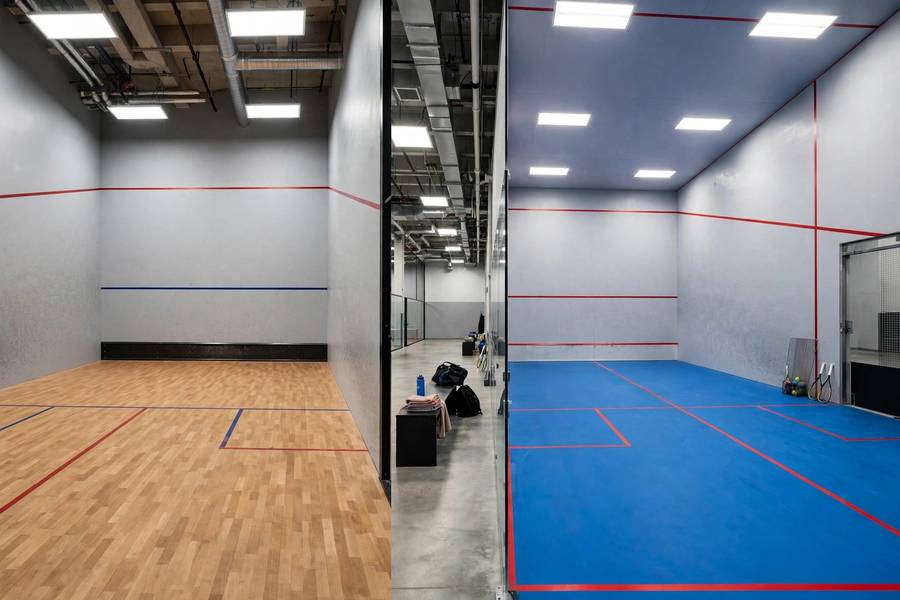
“So it’s like racquetball?” Every squash player has heard this, usually while carrying their gear through a gym that has both courts. And every squash player has felt the little twitch of wanting to explain that no, it’s really not — while knowing the sports genuinely look similar to outsiders. Both involve rackets, small balls, four walls, and a lot of sweat. But the rules create two very different games.
This guide compares squash vs racquetball rules side by side: courts, equipment, scoring, serves, and playing style — so you can understand both, and choose the one that fits you. For squash specifics, our basic squash rules is the companion read.
In this guide:
- The One-Sentence Difference
- The Court: Size and Markings
- The Ball and the Racket
- Scoring: Where They Really Diverge
- The Serve
- Gameplay and Playing Style
- Side-by-Side Comparison
- Switching Between the Two
- Which Should You Play?
The One-Sentence Difference
Here it is cleanly. Squash: a slow, low-bounce ball that must be hit above a tin on the front wall, on a 32×21-foot court, with point-a-rally scoring to 11. Racquetball: a fast, bouncy rubber ball that can hit any wall including the ceiling, on a bigger 40×20-foot court, with rally scoring to 15. Same family, different sports.
The Court: Size and Markings
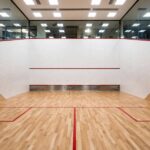
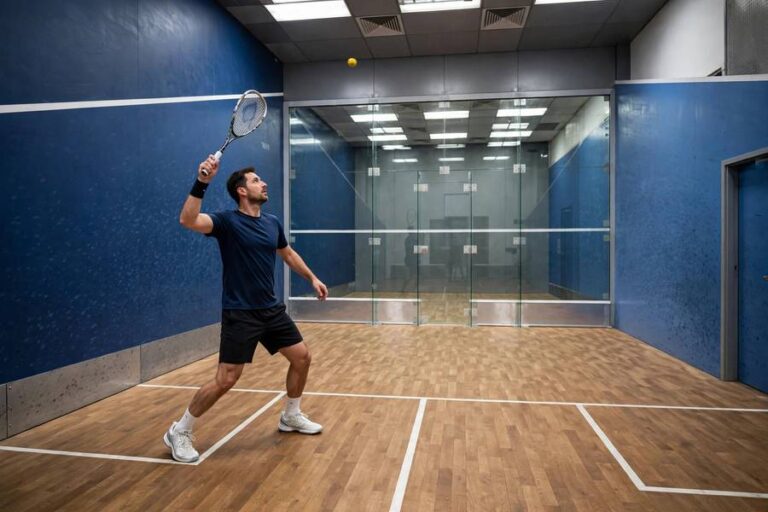
- Squash court: 32 feet long × 21 feet wide. Front wall has a tin (19 inches) at the bottom, a service line, and an out line around the top. The ceiling is out of play.
- Racquetball court: 40 feet long × 20 feet wide — longer, slightly narrower. No tin; instead there’s a short line on the floor (serves must land beyond it) and the ceiling is in play, which completely changes shot options.
The ceiling difference is the big one. In racquetball, ceiling shots are a core defensive weapon — you can lob the ball off the ceiling to buy time. In squash, hitting the ceiling is out. This single rule pushes the two sports’ tactics in opposite directions. If court geometry fascinates you, our breakdown of squash court dimensions goes deep on the squash side.
The Ball and the Racket
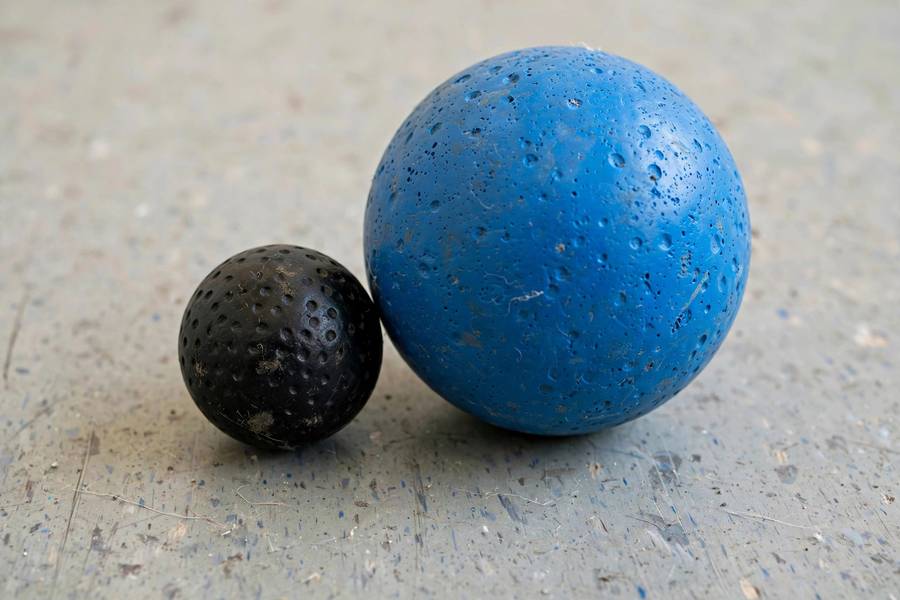
- Squash ball: small (about 40mm), hollow rubber, very low bounce — the standard double-yellow-dot barely bounces when cold. The ball must be warmed up through play.
- Racquetball: larger (about 57mm), extremely lively rubber ball that bounces high and fast from the first hit. No warm-up needed.
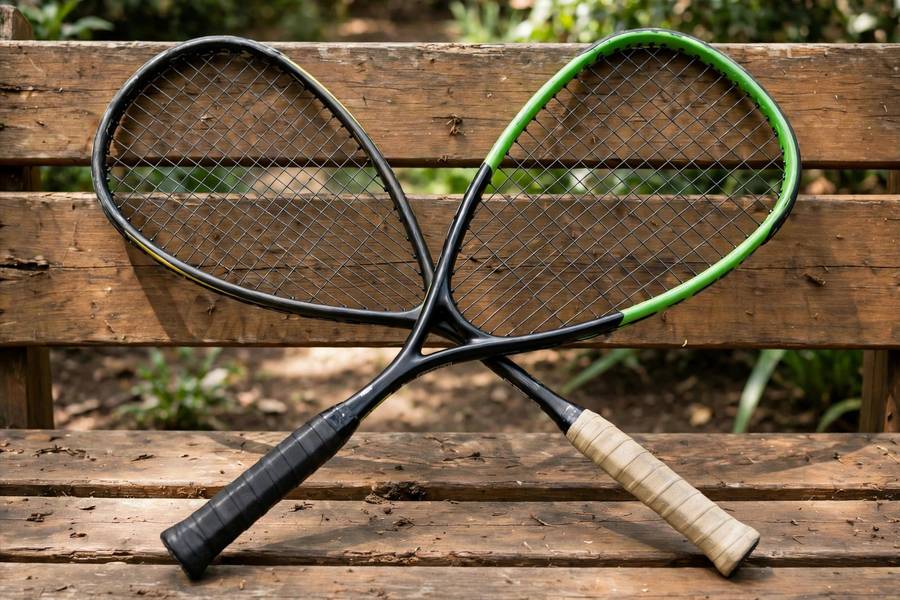
- Squash racket: long, narrow head (max 27 inches long), strung for control and touch.
- Racquetball racket: shorter, wider head (max 22 inches), built for power on a bouncier ball.
The ball difference drives everything. Squash’s dead ball rewards precision, deception, and fitness — you have to create every opportunity. Racquetball’s lively ball rewards reflexes, power, and aggressive shot-making — opportunities come fast and you have to take them. Beginners often find racquetball immediately more fun (rallies happen instantly); squash takes a few sessions to click but offers deeper tactical water.
Scoring: Where They Really Diverge
- Squash: point-a-rally (PAR) to 11, win by 2, best of 5 games. Every rally scores, for server or receiver.
- Racquetball (traditional/USA Racquetball): rally scoring to 15, win by 2, best of 3 games — though historically racquetball used side-out scoring (only the server could score) to 15, and some leagues still do. The IRT pro tour uses rally scoring.
In practice, both modern versions score every rally — the sports converged here after squash abandoned side-out scoring in the 2000s. The remaining differences are game length (11 vs 15) and match format (best of 5 vs best of 3). Tennis, for contrast, kept its gloriously weird scoring — see our explainer on tennis scoring for the third way to do it.
The Serve
- Squash: one serve only, must hit the front wall above the service line and land in the opposite quarter. Fault = lose the rally.
- Racquetball: traditionally two serves (like tennis) — fault the first, take a second. The serve must hit the front wall and land beyond the short line; the receiving zone rules are more complex, with drive serves, lob serves, and Z-serves as distinct tactical options.
Racquetball’s second serve makes aggressive serving viable — you can risk a screaming drive serve knowing a fault just costs you the first attempt. Squash’s one-serve rule forces conservatism. This is one reason racquetball feels more explosive from the first shot.
Gameplay and Playing Style
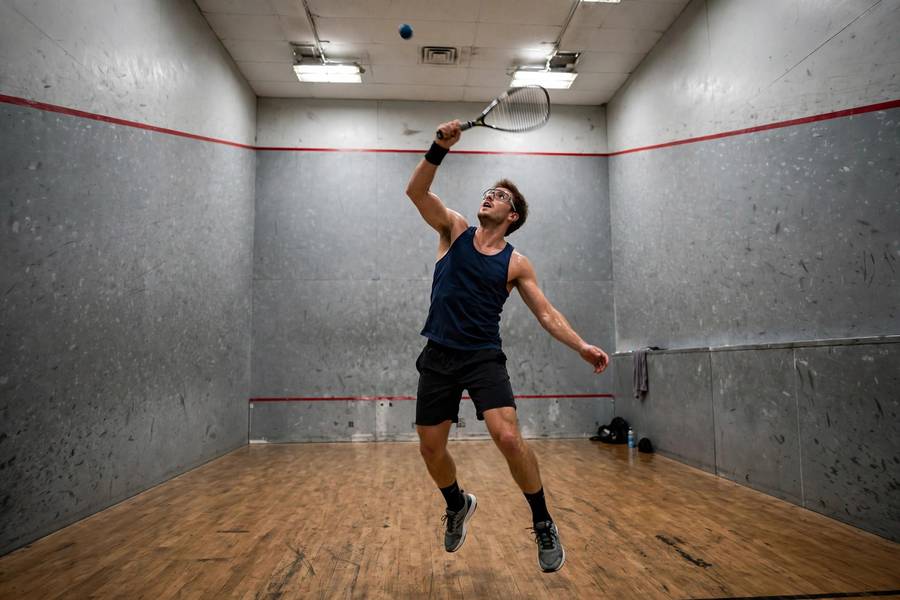
Squash rallies are longer, more tactical, and more physically grinding — the dead ball and the tin force construction, patience, and movement. The average pro squash rally lasts far longer than a racquetball rally, and squash is widely rated among the most physically demanding racket sports. Racquetball is faster, more reflex-based, and more about explosive power — the ball comes back quickly, ceiling shots extend defense, and matches turn on split-second reactions.
Interference rules differ too. Squash has its elaborate let/stroke system because players share tight space around a slow ball. Racquetball has hinders (dead-ball hinders replay the rally; avoidable hinders penalize), a simpler system suited to a faster game with more separation.
Side-by-Side Comparison
Everything in one place:
| Squash | Racquetball | |
|---|---|---|
| Court | 32 x 21 ft | 40 x 20 ft |
| Ball | Small, dead, low bounce | Large, lively, high bounce |
| Ceiling | Out of play | In play (key tactic) |
| Front-wall target | Above the 19-inch tin | Anywhere on front wall |
| Scoring | PAR to 11, win by 2 | Rally to 15, win by 2 |
| Match format | Best of 5 games | Best of 3 games |
| Serves | One only | Two (first and second) |
| Racket max length | 27 inches | 22 inches |
| Interference calls | Lets, strokes, no lets | Dead-ball and avoidable hinders |
| Typical rally | Long, tactical, grinding | Short, fast, explosive |
Switching Between the Two
Players cross over in both directions, and each brings habits the other sport punishes. Squash players trying racquetball hit everything too softly at first — the dead-ball touch that wins squash points just feeds racquetball opponents comfortable balls — and they forget the ceiling exists as a weapon. Racquetball players trying squash hit everything too hard, aim too low, and spend their first month donating points to the tin.
The adjustment period is real but short: give it three or four sessions of deliberate correction. Squash-to-racquetball players should practice ceiling shots and learn to trust the bounce instead of volleying everything. Racquetball-to-squash players should drill the straight drive relentlessly — length and tightness, not pace — and learn to love the high, deep defensive lob that racquetball never required. Both directions make you a better all-round racket athlete; the sports genuinely cross-train each other.
Which Should You Play?
- Play squash if: you want deep tactics, a phenomenal workout, an international competitive scene, and a sport that rewards patience and craft. It’s harder to start and more rewarding to master.
- Play racquetball if: you want instant fun, explosive rallies, a lower learning curve, and you’re in North America where courts and players are plentiful. It’s easier to start and brutally fun at every level.
- Play both if: your gym has both courts. They cross-train beautifully — squash builds your movement and touch, racquetball sharpens your reflexes and power. Just don’t mix up the rules mid-rally. The ceiling is not in play in squash, no matter how much you wish it were in that moment.
Whichever you choose, the fitness demands are real — court sports punish the unprepared. Some structured conditioning like our strength training for runners keeps your legs and lungs ready for either game.
Key differences: squash uses a slow dead ball with a tin on the front wall (19 inches minimum height) and no ceiling in play; racquetball uses a fast bouncy ball with the ceiling in play and no tin. Squash scores point-a-rally to 11 (best of 5); racquetball scores to 15 (best of 3). Squash allows one serve; racquetball traditionally allows two.
No. In squash, hitting the ceiling is out. In racquetball, the ceiling is a legal surface and ceiling shots are a core tactic. This is one of the biggest rule differences between the sports.
Squash has a steeper learning curve — the dead ball, the tin, and the fitness demands take longer to master. Racquetball is easier to pick up and rally immediately. At advanced levels both are extremely demanding in different ways: squash for endurance and tactics, racquetball for reflexes and power.
Not legally in sanctioned play — racquetball rackets have a maximum length of 22 inches vs squash’s 27, with different head shapes. Casually you could try, but the equipment is optimized for very different balls and you’d be at a real disadvantage.
Modern versions are similar — both now score every rally. Squash plays point-a-rally to 11, win by 2, best of five games; racquetball plays to 15, win by 2, best of three. Historically both used side-out scoring where only the server could score.