Squash Equipment for Beginners: What You Actually Need (and What to Skip)

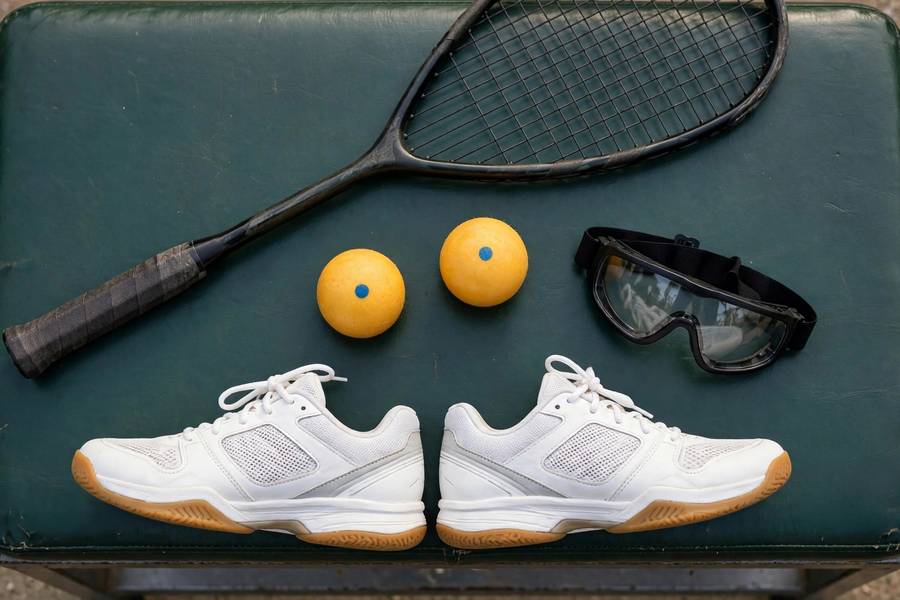
Walk into any sports shop’s squash section and you’ll face a wall of rackets from $30 to $300, balls with different colored dots, and accessories you’ve never heard of. Here’s the good news: squash is one of the cheapest racket sports to start, and most of that wall is irrelevant to you right now. I’ve helped dozens of beginners kit out, and the advice never changes.
This guide covers exactly what beginners need — racket, ball, shoes, eyewear — what to look for in each, what to skip, and what a sensible first kit costs. If you haven’t played yet, you might also want our guide to how to play squash for beginners so the gear actually gets used.
In this guide:
- The Racket: What Actually Matters
- The Ball: Get This Right
- Shoes: Non-Negotiable
- Eyewear: The Unsexy Essential
- Clothing and the Extras
- Strings, Grips and Looking After Your Gear
- What to Skip (For Now)
- When to Upgrade Your Kit
- Buying Smart: A Beginner’s Budget
The Racket: What Actually Matters
For your first racket, ignore the marketing and focus on three things: weight (lighter is easier — look for 120–140g unstrung), head size (a midplus/teardrop head gives a bigger sweet spot and more forgiveness), and price ($40–$80 gets you a perfectly good beginner racket). Brand barely matters at this level.
What actually matters more than the racket: the grip size and the strings. A grip that’s too big forces a tight hold and kills your wrist action — if you’re between sizes, go smaller and build up with an overgrip. And check the strings: beginners often inherit rackets with dead, fraying strings. A fresh basic restring transforms a $30 racket more than upgrading to a $150 one ever will.
Don’t buy a pro’s racket. Advanced rackets are heavier, smaller-headed, and brutally unforgiving — they’re designed for players who hit the sweet spot every time. You don’t, yet. The forgiving beginner racket you can actually rally with beats the pro frame you can’t, every single time.
The Ball: Get This Right
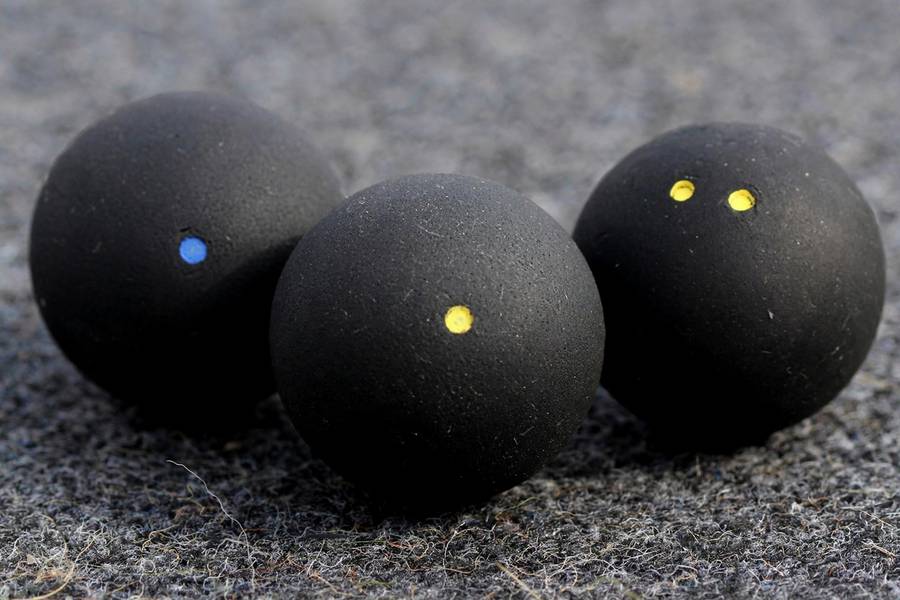
Squash balls come in a dot system that confuses everyone exactly once:
- Blue dot (or red dot): fastest, bounciest, easiest. This is the beginner ball. It stays warm and lively, so rallies actually happen.
- Single yellow dot: medium speed. The step up when blue-dot rallies get too easy — usually after a few months.
- Double yellow dot: slowest, least bouncy. The official competition ball, designed for advanced players who generate their own pace. Miserable for beginners.
This is the single most impactful equipment choice a beginner makes. I’ve watched first sessions transform just by swapping a dead double-yellow for a blue dot — suddenly rallies last 10 shots instead of 2, and the beginner thinks they’re a natural. They’re not; the ball is just doing its job. Buy a tube of three blue dots; they’re cheap.
Shoes: Non-Negotiable
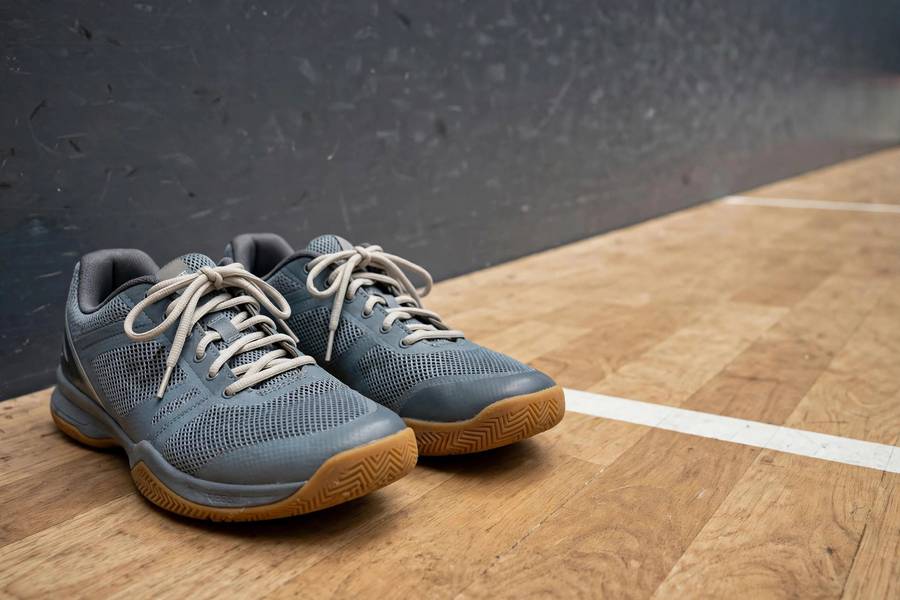
You need proper indoor court shoes with non-marking soles — most clubs will literally stop you at the door without them. Running shoes are a bad substitute: they’re built for forward motion, while squash is all lateral lunges, and their grip pattern can stick dangerously on court floors. Court shoes (squash, badminton, volleyball, or indoor tennis shoes all work) give you lateral support and the right slide-to-grip balance.
Fit matters more than brand: snug in the heel, room in the toe box, and replace them when the tread smooths out. Worn soles on a squash court are a sprained ankle waiting to happen — I’ve seen it, and it’s never worth the saved money.
Eyewear: The Unsexy Essential
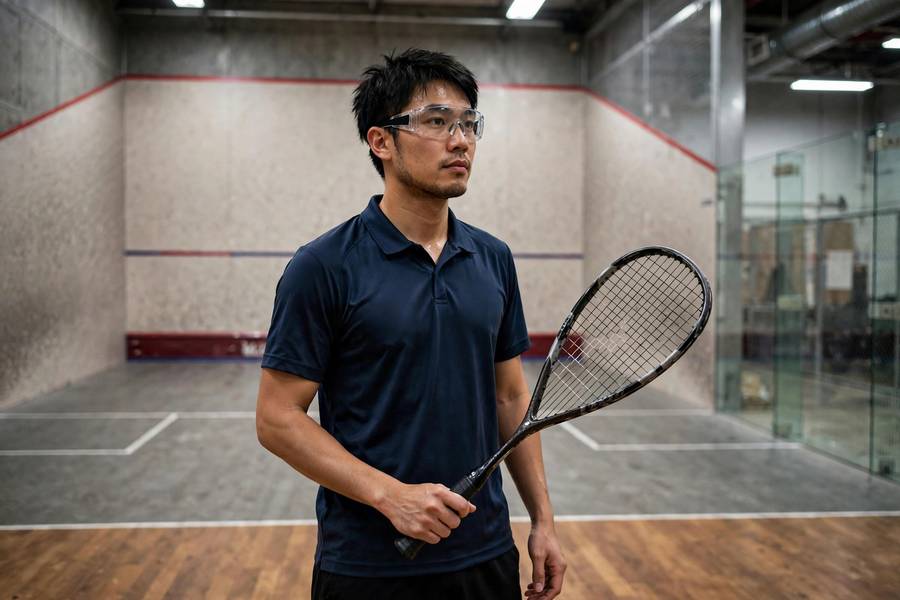
A squash ball at close range carries real energy, and eye injuries — while rare — are the sport’s serious risk. Protective eyewear certified for racket sports costs little and eliminates the worry entirely. Many clubs and all junior programs require it; adults should treat it as strongly recommended, especially beginners whose court awareness and swing control are still developing. Get the proper sports kind, not fashion glasses — they’re designed to stay on and take impact.
Clothing and the Extras
Wear whatever breathable sports clothes you own — there’s no dress code at club level. Beyond that, the genuinely useful extras are:
- Grip tape/overgrips: rackets get slippery with sweat. A fresh overgrip every few weeks costs almost nothing.
- Wristbands: keep sweat off your grip hand. Unfashionable, effective.
- A water bottle: you’ll drink more than you expect. Squash is sneaky-sweaty.
- A racket bag: protects the frame and strings in transit. A basic sleeve is fine.
Strings, Grips and Looking After Your Gear
Beginners obsess over which racket to buy and ignore the two things that actually determine how it plays: strings and grip. Strings lose tension from the moment they’re installed, and dead strings turn even a good racket into a wooden plank. If your inherited or second-hand racket has fraying, notched, or visibly loose strings, a basic restring ($15–$25 at most shops) will improve it more than any upgrade. For tension, beginners do best in the middle of the racket’s recommended range — lower tensions give more power and forgiveness, higher tensions give more control but punish mishits.
Grips are the other silent performance killer. The factory grip on a cheap racket gets slippery fast, and a slippery grip makes you squeeze harder, which tightens your whole arm and ruins your touch. Wrap a fresh overgrip over the base grip every few weeks of regular play — it takes two minutes and costs about a dollar. You’ll feel the difference immediately.
Basic maintenance extends everything: keep the racket in a cover (extreme heat, like a car trunk in summer, can warp frames and kill string tension), wipe down eyewear lenses so they don’t scratch, and air out your shoes instead of leaving them sealed in a bag. None of this is complicated; it’s just the difference between gear that lasts two years and gear that lasts six months.
What to Skip (For Now)
- Expensive pro rackets. Covered above — forgiveness beats prestige.
- Vibration dampeners, lead tape, custom string setups. Fine-tuning for problems you don’t have yet.
- Specialist squash clothing. Any gym kit works until you’re playing multiple times a week.
- A ball machine or training aids. A patient hitting partner (or solo practice) teaches more.
- Multiple rackets. One is enough until you’re playing competitively and need a backup for broken strings.
When to Upgrade Your Kit
The upgrade itch hits every beginner around month three. Here’s my honest framework for when each upgrade is actually earned:
- Racket: upgrade when you can rally 20+ shots consistently, your shots land roughly where you aim, and you can feel the difference between a sweet-spot hit and a mishit. At that point a slightly heavier, smaller-headed racket rewards your improved technique instead of punishing it. Before that, it’s jewelry.
- Ball: move from blue dot to single yellow dot when blue-dot rallies feel too easy and the ball feels like it’s flying. If you’re still struggling to keep rallies alive, stay on blue — there’s no prize for suffering.
- Shoes: replace when the tread wears smooth or the lateral support feels sloppy, not on a schedule. Court shoes die from the sides first — check the outer edges.
- Eyewear: upgrade only if yours fogs badly or fits poorly. Protection doesn’t have tiers that matter at club level.
Notice what’s missing: there’s no point where more expensive gear substitutes for practice. I’ve watched players with $250 rackets lose to players with $40 rackets and good footwork, and the $40 player always enjoys it more. Buy competence first — it’s the only equipment that never goes on sale.
Buying Smart: A Beginner’s Budget
A sensible first kit: beginner racket $40–$70, tube of blue-dot balls $8–$12, court shoes $50–$90 (the one item worth spending on — your ankles will thank you), protective eyewear $15–$25, overgrips $5. Total: roughly $120–$200 for everything, and the shoes and eyewear last years.
Once you’re kitted out, get familiar with where you’ll actually play — our guide to squash court dimensions maps every line and box — and start building the leg strength the sport demands with our strength training for runners program.
Buy the racket and balls from a squash-specialist shop if you can — general sports stores often stock only advanced gear and can’t advise on grip sizes. And resist the upgrade itch for at least six months. When your blue-dot rallies are long, your shots are landing where you aim, and you’re beating players who’ve played for years — then treat yourself to the nicer racket. You’ll have earned it, and you’ll actually be able to tell the difference.A beginner racket (light, forgiving head, $40–$80), blue-dot balls (bouncy and easy to rally with), non-marking indoor court shoes, and protective eyewear. That’s the complete essential kit — everything else can wait.
A blue-dot (or red-dot) ball. It’s the fastest and bounciest, which makes rallies possible while you’re learning. Avoid the double-yellow-dot competition ball until you’re an intermediate player — it’s too dead for beginners.
Around $120–$200 total: $40–$70 for a beginner racket, $8–$12 for balls, $50–$90 for court shoes, and $15–$25 for protective eyewear. It’s one of the cheapest racket sports to start.
Yes — indoor court shoes with non-marking soles, which most clubs require. Running shoes are a poor substitute because they lack lateral support and can grip dangerously on court floors. Squash, badminton, or volleyball court shoes all work.
It’s strongly recommended. The ball travels fast at close range, and beginners are still developing swing control and court awareness. Certified racket-sports eyewear is cheap and required in junior programs at most clubs.