How to Shoot Off the Dribble: Pull-Ups and Rhythm Shooting

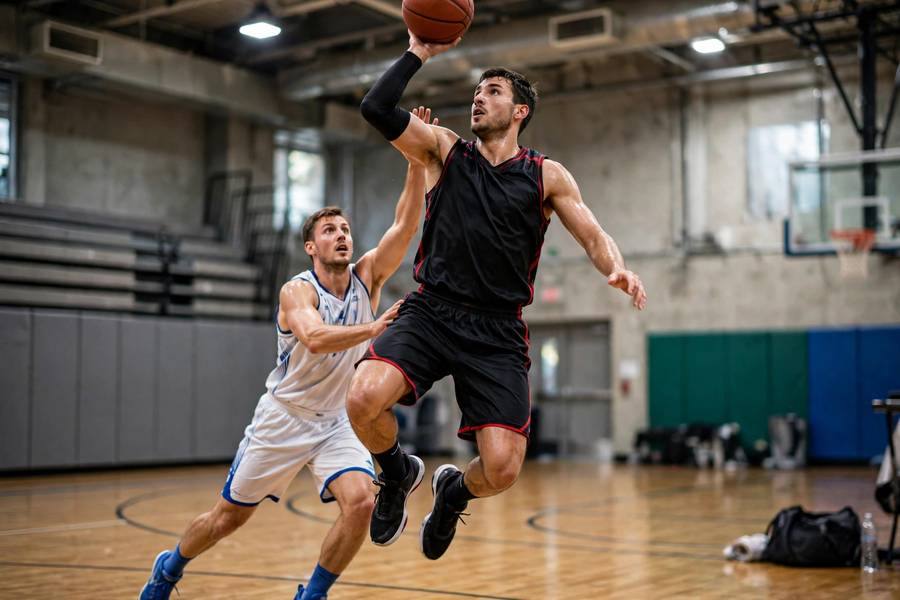
There’s a specific sound a great pull-up jumper makes — not the swish, the stop. The squeak of shoes killing full-speed momentum in a single plant, then silence as the shooter rises, balanced, like they were never moving at all. I spent two years trying to learn that stop, and the breakthrough came when a coach told me: ‘You’re not stopping then shooting. The stop is the start of the shot.’ Everything changed that day.
Shooting off the dribble — pull-ups, step-backs, rhythm jumpers on the move — is what separates shot-makers from spot-up shooters. This guide breaks down the gather, the footwork, the pull-up and step-back mechanics, and the drills that build them. You need solid standstill form first; our guide to proper shooting form is the prerequisite.
In this guide:
- Why It’s a Different Skill
- The Gather: Killing Your Momentum
- Footwork: 1-2 Step vs Hop
- The Pull-Up Jumper: The Money Shot
- The Step-Back: Advanced Separation
- Rhythm Shooting: Making It Feel Natural
- Reading the Defender
- Drills That Build the Pull-Up Game
Why It’s a Different Skill
A standstill shot starts from balance. An off-the-dribble shot starts from motion — and your body has to convert motion into balance in a fraction of a second, then shoot. That conversion is the entire skill. Players who are deadly catch-and-shoot but useless off the bounce aren’t missing a shooting skill; they’re missing a stopping skill. The shot itself should be identical to your standstill jumper. Everything before the shot is what’s new.
The Gather: Killing Your Momentum
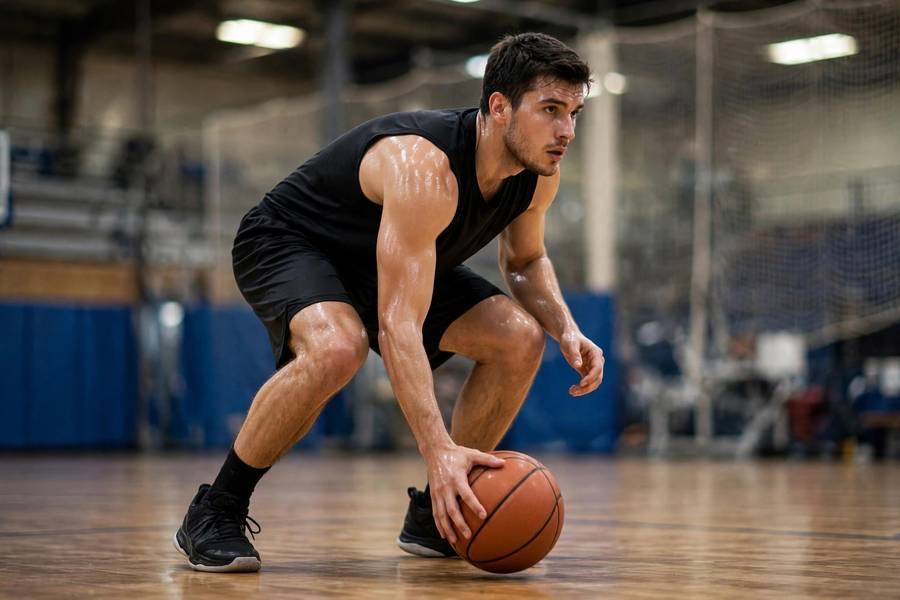
The gather is the last dribble (or two) where you collect the ball and prepare to shoot. The keys:
- Gather low and tight. The ball comes up into your shooting pocket, not out wide. A loose gather adds a full beat to your shot — enough for any decent defender to contest.
- Kill momentum with your plant. Your plant foot hits hard, knee bent, absorbing your forward motion. Think of it as a brake, not a wall — controlled deceleration, not a crash.
- Eyes up early. Find the rim during the gather, not after. Players who look down at the ball while gathering shoot blind for the first half of the motion.
- Stay low through the gather. Rising early (standing up as you gather) wastes your dip — you want to arrive low and loaded, then explode up.
Drill the gather alone before adding the shot: dribble full speed, gather, plant, freeze. Check your balance — if you’re wobbling, the gather needs work, not the shot. Ten minutes of gather-freezes will do more for your pull-up game than an hour of rushed pull-ups.
Footwork: 1-2 Step vs Hop
Two legal ways to stop, and you need both:
- The 1-2 step: plant foot lands first, then the second foot steps through into your shooting base. Best for pull-ups on the move — it naturally kills forward momentum and squares you. Most players’ primary pattern.
- The hop (jump stop): both feet land simultaneously. Best for quick stops and step-backs — faster, but demands more core strength to stabilize. Also the safer legal option when you’re unsure about travel calls.
The choice is situational: 1-2 for rhythm pull-ups flowing downhill, hop for sudden stops and separation moves. Practice both until they’re unconscious, because in games you’ll choose by feel in a tenth of a second. And whatever you choose — land balanced. An off-balance plant makes an off-balance shot, and no amount of upper-body correction fixes a bad base.
The Pull-Up Jumper: The Money Shot
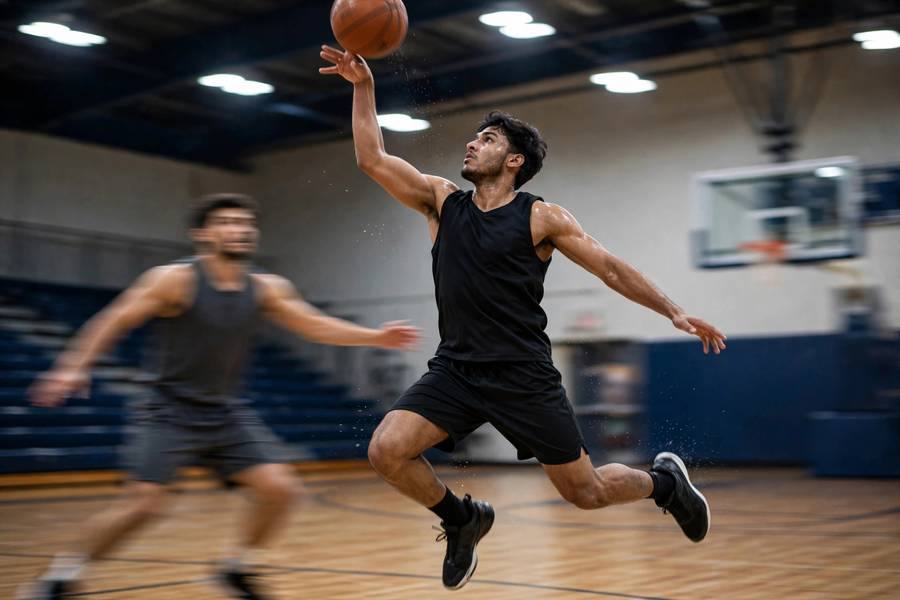
The pull-up is the most valuable off-the-dribble shot: one hard dribble (or a hesitation), plant, rise, shoot — all in rhythm. The sequence at full speed:
- 1. Attack the hip. Dribble hard at the defender’s hip to force them backpedaling. A pull-up against a set defender is just a contested jumper; against a retreating one, it’s open.
- 2. The slow-to-fast. Decelerate slightly before the plant — the change of pace is what creates the space. Constant speed is guardable; change of speed is not.
- 3. Plant and gather. 1-2 step, ball into the pocket, eyes on rim — all in one beat.
- 4. Rise straight. Up, not forward. Your momentum was killed by the plant; don’t resurrect it by drifting.
- 5. Same shot. Identical release, arc, and follow-through to your standstill jumper. The shot doesn’t know you were moving.
Start from the elbows and free-throw line extended — the mid-range pull-up is the highest-percentage version and the foundation for everything deeper. Extend to three-point pull-ups only when the mid-range version is automatic.
The Step-Back: Advanced Separation
The step-back creates space by going backward: dribble at the defender, plant hard, and push back off that plant into your shot. It’s the hardest off-the-dribble move to master because you’re shooting while moving away from the basket — balance is everything.
The mechanics: attack forward to sell the drive, plant the inside foot hard, push backward (not upward yet) to create 2–3 feet of separation, then gather into a hop or 1-2 and rise straight. The common errors: pushing back too far (you’re shooting a fadeaway now, congratulations), not selling the drive first (no separation created), and fading during the shot (the plant did its job, then you undid it). Learn the pull-up first — the step-back is its graduate-level sibling.
Rhythm Shooting: Making It Feel Natural
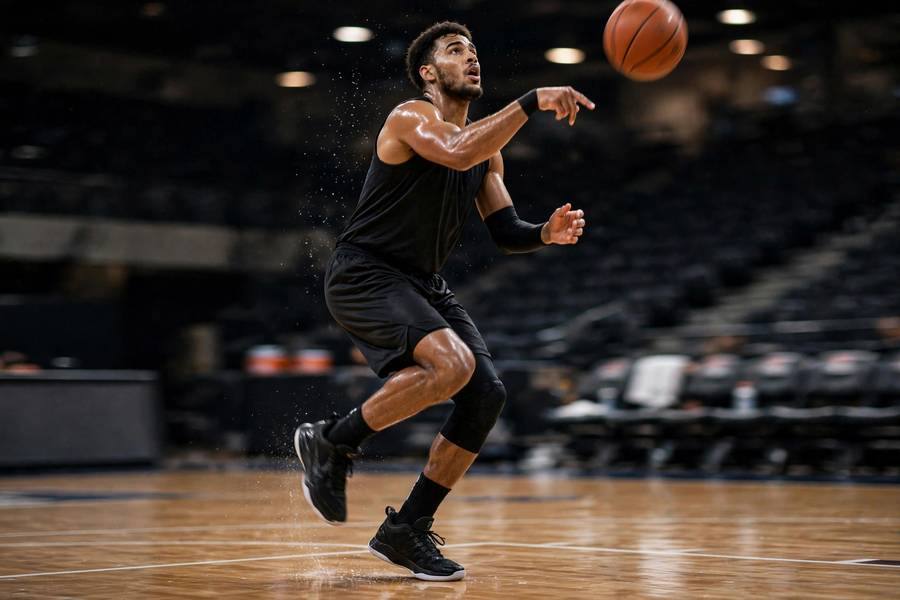
The difference between a mechanical pull-up and a natural one is rhythm — the shot’s internal tempo. Build it with progression drills:
- Walk-throughs: walking speed, full sequence, exaggerating each phase. Boring, essential, 5 minutes.
- Half-speed flows: 50% pace, focusing on the plant-to-rise connection. The moment the plant becomes the dip.
- Full-speed singles: one rep, full speed, then stop and reset. Quality over flow for now.
- Continuous flows: rebound your own make/miss and go again without stopping. This is where rhythm is born — the shot starts to feel like dancing instead of assembling furniture.
Rhythm arrives suddenly: one session it clicks and the whole sequence feels like a single motion instead of five. That’s your nervous system automating the pattern. Once it’s there, protect it — don’t tinker with a working pull-up.
Reading the Defender
Off-the-dribble shooting is a decision skill, not just a mechanical one. Read two things:
- The defender’s momentum: backpedaling or off-balance = pull up now, the space is there. Set and squared = keep driving or pass; the pull-up will be contested.
- The help: know where the second defender is before you plant. The best pull-up shooters aren’t just making shots — they’re choosing the moments when the shot is actually available.
Young players pull up because they can; good players pull up because they should. The decision is half the skill. Film your games and count your pull-up attempts by quality of look — the ratio will tell you whether your problem is mechanics or judgment.
Drills That Build the Pull-Up Game
- 1-dribble pull-ups, 5 spots: 10 makes per spot, mid-range. The foundation drill — do it every session.
- Hop vs 1-2 alternation: alternate footwork patterns rep by rep. Builds the unconscious selection.
- Cone pull-ups: dribble at a cone (the ‘defender’), plant, pull up. Move the cone to vary the angle.
- 3-dribble attack: three hard dribbles from half court into a pull-up. Simulates real downhill momentum.
- Make-it-take-it pull-ups: make a pull-up, sprint to half court and back, shoot again. Fatigue + mechanics.
The same explosive first step powers both moves — if you want to take your vertical further, our guide on how to dunk a basketball builds the leap.
Step-back progression: 10 makes each: stationary step-back, one-dribble step-back, full-speed step-back. In that order, always.
And the engine behind all of it: off-the-dribble shooting is brutally leg-intensive — every plant, every rise, every landing. Players with durable, powerful legs shoot better pull-ups in the fourth quarter, full stop. The lower-body strength programs in our strength training for runners translate directly to late-game lift on your jumper.
Gather the ball low and tight on your last dribble, plant hard (1-2 step or hop) to kill your momentum, keep your eyes on the rim through the gather, and rise straight into your normal shooting motion. The shot itself should be identical to your standstill jumper — the skill is in the stop, not the shot.
A pull-up jumper is a shot taken off the dribble: you attack, plant your feet to stop your momentum, and rise into a jumper in one rhythm. It’s typically a mid-range shot and is the most fundamental off-the-dribble scoring move.
Gather the ball cleanly before your final two steps, and use a decisive 1-2 plant or a clean two-foot hop. Most travels come from late gathers (dribbling into the steps) or extra stutter steps — commit to the plant instead of shuffling.
A pull-up stops your forward momentum and rises straight up; a step-back actively creates separation by pushing backward off the plant before shooting. The pull-up is the foundation — master it before adding the step-back’s backward momentum.
Because the stop is a separate skill from the shot. Practice the gather-and-plant alone (dribble, gather, plant, freeze, check balance) before adding the shot. Most players try to learn both simultaneously and learn neither.