How to Improve Your Basketball Shooting Accuracy: 12 Proven Fixes

Let me save you some time: there is no secret to shooting accuracy. I’ve coached players who bought every gadget, watched every video, and tried every gimmick — and the ones who actually got accurate all did the same boring things. They fixed their base, cleaned their release, added arc, and then shot thousands of structured reps while tracking the numbers. That’s the whole list. The players looking for a shortcut are usually the ones who need the basics most.
This guide gives you 12 proven fixes for basketball shooting accuracy — mechanical, mental, and practical — plus a 30-day plan that puts them in order. For the underlying mechanics, our guide to proper shooting form is the reference manual.
In this guide:
- Accuracy Is a System, Not a Talent
- Fix 1: Rebuild Your Base
- Fix 2: Clean Up Your Release
- Fix 3: Add Arc
- Fix 4: Lock Your Eyes
- Fix 5: Build a Pre-Shot Routine
- Fix 6: Fix Your Shot Selection
- Fix 7: Structured Reps, Not Random Shots
- Fix 8: Film Yourself Monthly
- Fix 9: Condition Your Legs
- Fix 10: Practice Under Pressure
- Fix 11: Develop the Weak Side
- Fix 12: Track Everything
- The 30-Day Accuracy Plan
Accuracy Is a System, Not a Talent
Accuracy = repeatable mechanics × good decisions × enough reps. Miss any leg of the tripod and the whole thing wobbles. Great mechanics with terrible shot selection still produce bad percentages; great decisions with broken mechanics still miss; and perfect everything with 50 reps a week never ingrains. The 12 fixes below address all three legs. Most players need 3–4 of them, not all 12 — diagnose first (film yourself, chart your misses), then apply the fixes that match your actual leaks.
Fix 1: Rebuild Your Base
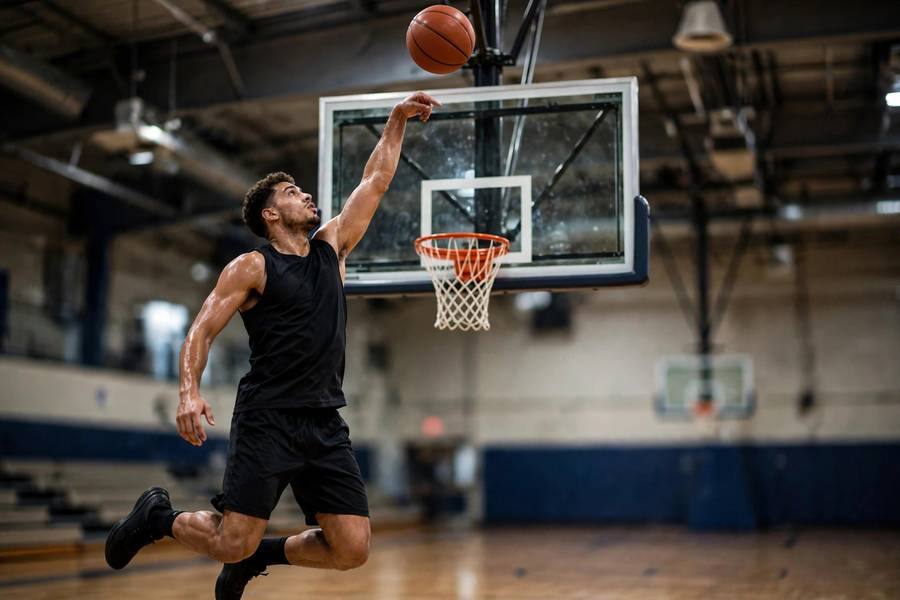
Feet shoulder-width, toes to the rim, knees soft, weight balanced — and identical every single shot. Inconsistent bases produce inconsistent shots; it’s that direct. The landing-spot drill (towel under your takeoff spot, land on it) exposes base problems in one session. Fix your feet and a shocking number of “mysterious” misses disappear, because balance errors cascade into every phase above them.
Fix 2: Clean Up Your Release
The two release killers: guide-hand interference (thumb flick) and an incomplete follow-through. One-hand form shooting — 50 reps daily, guide hand behind your back — isolates the shooting hand and rebuilds a clean release in about two weeks. Then hold every follow-through for a full count. Your release point is the single most important variable in accuracy; everything else serves it.
Fix 3: Add Arc
Most inaccurate shooters shoot too flat. A higher arc dramatically increases the effective size of the rim — the geometry is unambiguous. Cue the “rainbow”: from mid-range, the ball’s peak should clear the top of the backboard square. It will feel too high for a week. The makes will tell you it’s right. Arc comes from legs, not from heaving with your arms — which is fix 9’s territory.
Fix 4: Lock Your Eyes
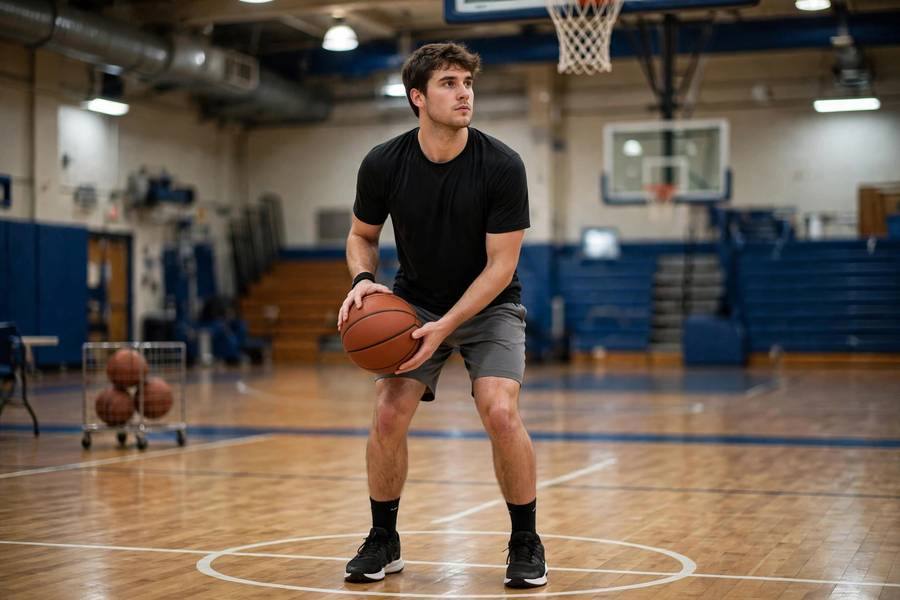
Pick a target — front of the rim or back of the rim — and stare at it from catch through follow-through. Ball-watchers (tracking the flight) lose target lock and their depth calibration drifts. This is the easiest fix on the list and players resist it the most, because watching your beautiful arc feels good. Stop watching. Stare at the iron. Your percentages will thank you within days.
Fix 5: Build a Pre-Shot Routine
Free throws are the laboratory: same dribbles, same breath, same timing, every time. But the principle extends to all shooting — a consistent catch-and-set rhythm (feet set, quick dip, shoot) acts as a trigger that tells your body “we’ve done this ten thousand times.” Routines don’t just calm nerves; they standardize the microseconds before the shot, which is where inconsistency breeds.
Fix 6: Fix Your Shot Selection
The fastest accuracy boost available: stop taking bad shots. Contested fadeaways early in the clock, heat-check threes at 25%, rushed shots with 15 seconds left — these aren’t mechanical problems, they’re decision problems. Chart your makes by shot type for two weeks; the data will embarrass you into better decisions. Good shooters aren’t just accurate — they’re selective. There’s a reason coaches would rather have a 45% shooter who takes great shots than a 45% shooter who takes terrible ones: only one of them scales to better defense.
Fix 7: Structured Reps, Not Random Shots
Two hundred counted, structured reps beat five hundred casual ones. Use a routine with blocks (form, mid-range, range, pressure), count makes, and progress systematically — our 30-minute shooting routine is built exactly for this. Random shooting grooves randomness; structured shooting grooves repeatability. The rim rewards the second kind.
Fix 8: Film Yourself Monthly
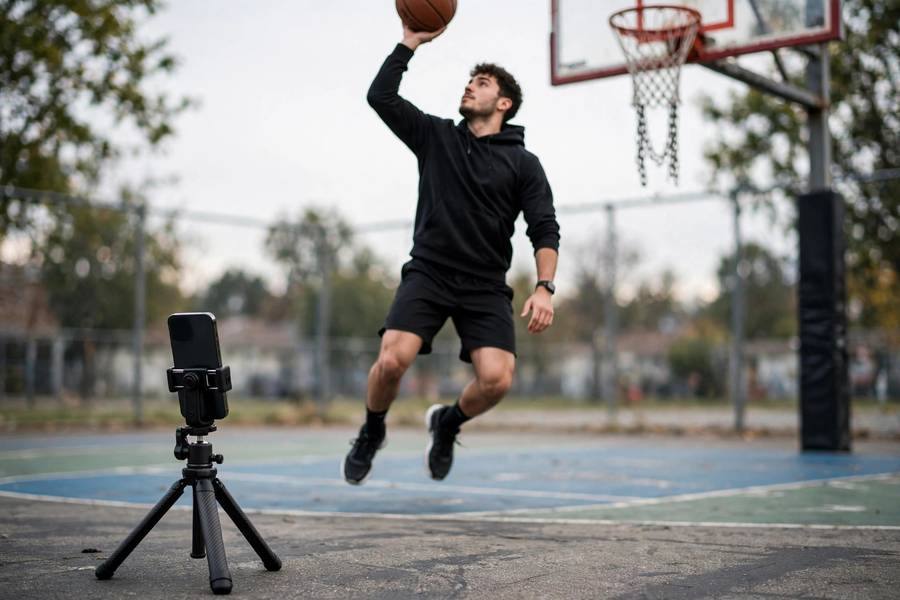
What you feel and what you do are different sports. Monthly film sessions — 20 shots side view, 20 front view, slow motion — catch mechanical drift before it becomes a slump. Every player I’ve coached has found at least one surprise on film. The camera doesn’t flatter and doesn’t lie; it’s the cheapest shooting coach you’ll ever hire.
Fix 9: Condition Your Legs
Your shot in minute 35 is powered by your legs in minute 35. Tired legs mean short shots, flat arcs, and collapsing form — which is why accuracy always dips late in games for underconditioned players. Two sessions a week of leg strength work plus regular conditioning doesn’t just help your defense; it directly protects your shooting percentage in the fourth quarter. Our strength training for runners programs build exactly this kind of durable leg power, and our guide to the best arm exercises covers the upper-body endurance that keeps your release stable when you’re gassed.
Fix 10: Practice Under Pressure
Practice accuracy and game accuracy are different skills until you bridge them. Add consequences: sprints for missed free throws, beat-the-pro games, shooting with a hand in your face, end-of-clock scenarios. Pressure inoculation works — the tenth time you shoot with something on the line feels routine, which is precisely the point. Players who only practice comfortable never learn what their shot does uncomfortable.
Fix 11: Develop the Weak Side
One-sided players are predictable players, and predictable players take worse shots. Fifteen minutes a week of weak-hand form shooting and weak-side finishes expands your options around the rim and off the dribble — which means better looks, which means better percentages. It also balances your body’s mechanics in ways that subtly improve your strong side too.
Fix 12: Track Everything
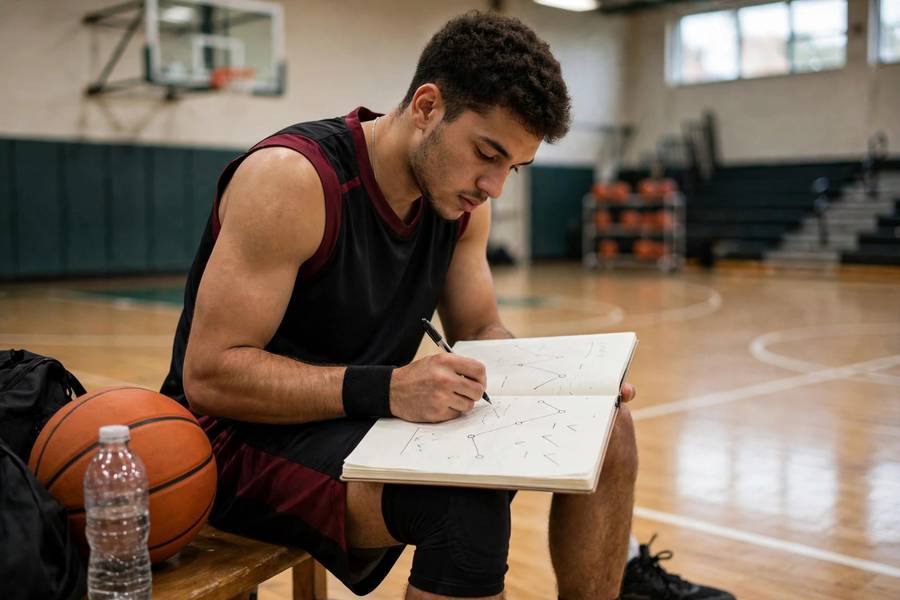
What gets measured gets improved. Log: makes/attempts by zone, free throw percentage weekly, and your pressure-drill scores. Review monthly. The numbers tell you which fixes are working and which leaks remain — and watching a zone climb from 40% to 60% over two months is the motivation that sustains the boring work. Shooters who track improve roughly twice as fast as those who don’t, in my experience. The notebook is equipment.
The 30-Day Accuracy Plan
- Days 1–3: Diagnose. Film yourself, chart 100 shots by zone and miss direction. Identify your 2–3 biggest leaks from the 12 fixes.
- Days 4–10: Foundation. Apply fixes 1–2 (base, release) with 30-min daily sessions. One-hand form shooting, landing-spot drill, nothing else fancy.
- Days 11–17: Build. Add fixes 3–5 (arc, eyes, routine). Extend range one step. Start tracking zone percentages.
- Days 18–24: Pressure. Add fixes 10 and 6 (pressure reps, shot selection audit). Play competitive shooting games twice this week.
- Days 25–30: Consolidate. Re-film, compare to day 1, and lock in the routine as your permanent practice structure. Plan the next 30 days around whatever the film still shows.
Thirty days won’t make you a great shooter. But it will make you a diagnosed shooter with a system — and that’s the actual difference between players who improve and players who hope. The great shooters aren’t the ones with the prettiest form; they’re the ones with a process. Build yours.
Fix your base (consistent feet and balance), clean your release (eliminate guide-hand interference, hold follow-through), add arc, lock your eyes on the rim, and shoot structured, counted reps 5–6 days a week. Then track zone percentages and fix shot selection — the fastest accuracy gains often come from better decisions, not better mechanics.
Usually three causes: rushing under pressure (no pre-shot routine), poor shot selection (taking shots in games you’d never take in practice), and conditioning (tired legs late in games). Add pressure reps with consequences and audit your in-game shot selection.
150–250 quality structured reps per day, 5–6 days a week, is the proven range. More important than volume: the reps must be structured (form → mid-range → range → pressure), counted, and at game speed. 100 perfect reps beat 500 casual ones.
Enormously. A higher entry angle geometrically increases the effective target size of the rim — a 45-degree entry nearly doubles your margin versus a flat shot. Most inaccurate shooters shoot too flat; adding arc is one of the highest-leverage fixes available.
Expect noticeable improvement in 4–6 weeks of structured daily practice and a genuinely reliable shot in 3–6 months. Rebuilding flawed mechanics takes longer than building fresh ones, which is why learning correctly (or fixing one flaw at a time) matters more than rushing.