Celebrity Nighttime Skincare Routine: The PM Ritual for Real Glow

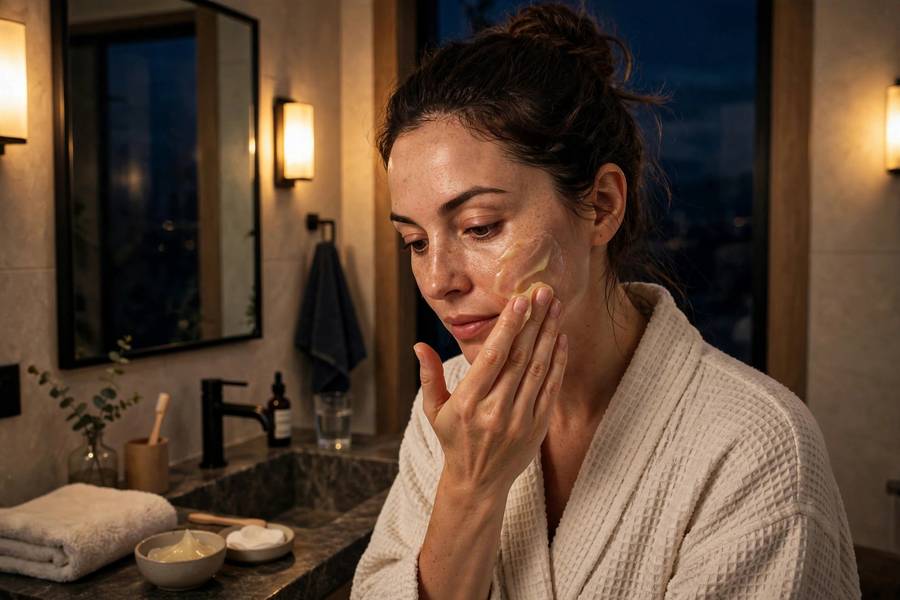
If the morning routine is about protection, the night routine is where the actual work happens. I learned this sitting in a makeup trailer at midnight while an actress removed a full red carpet face and walked me through every step. Her morning routine took ten minutes. Her night routine took thirty, and she called it non-negotiable, the way athletes talk about sleep. The celebrity nighttime skincare routine is longer, more active, and more deliberate than anything that happens at dawn, because night is when skin repairs itself and when the heavy lifting ingredients do their jobs.
Here is the full order, the reasoning behind each step, and the mistakes I see people make when they try to copy it.
Steps 1-2: The Double Cleanse
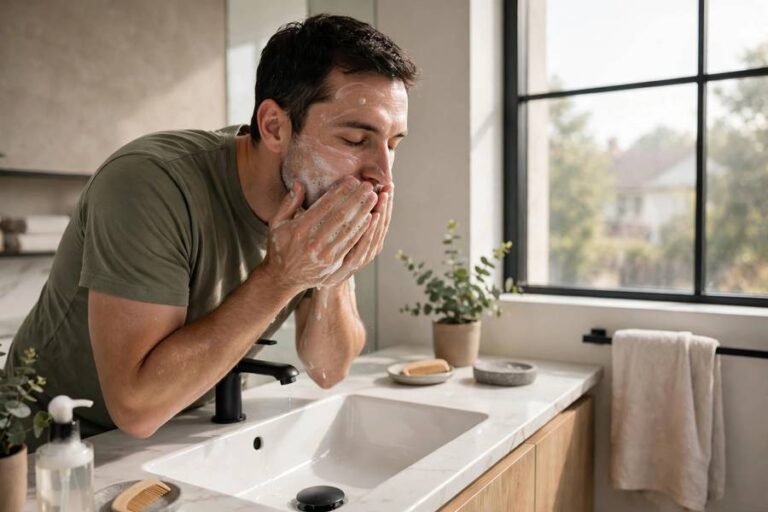
Every serious night routine starts with a double cleanse, and celebrities are religious about it. Step one is an oil-based cleanser or balm that dissolves makeup, sunscreen, and the grime of the day. I have watched stars massage a balm in for a full two minutes, and the patience is the point. Rushing this step leaves residue that blocks everything after it. The balm should melt everything into a gray film that rinses clean with water.
Step two is the water-based cleanser: the same gentle cream or gel from the morning, used to clean the actual skin now that the makeup is gone. Sixty seconds, lukewarm water, no scrubbing. The two-step logic is simple. Makeup dissolves in oil, sweat and dirt dissolve in water, and no single cleanser does both jobs well. Skipping the double cleanse after a full face of makeup is like mopping without sweeping first.
On no-makeup days, a single gentle cleanse is fine. The double cleanse is for sunscreen-and-makeup days, which for working actors is most days. Match the effort to the day.
Step 3: Tone, Then Exfoliate (Sometimes)
After cleansing comes the hydrating toner or essence, pressed into damp skin exactly like the morning. Then, two to three nights a week, an exfoliating step: a chemical exfoliant with AHAs or BHAs, or an enzyme treatment. This is where I see the most damage from overenthusiasm. Exfoliation is powerful and easy to overdo, and the celebrities with the best skin exfoliate less often than you would guess.
The professional rule is frequency over strength. A gentle exfoliant used twice a week beats an aggressive one used once a month followed by a week of recovery. Signs of over-exfoliation are unmistakable: shine that is actually inflammation, stinging when products are applied, and breakouts in unusual places. If any of that sounds familiar, stop exfoliating for two weeks and let the barrier rebuild.
Never exfoliate on retinoid nights when you are starting out. That combination is the fastest route to a ruined barrier I know. Alternate them, and let your skin tell you which nights are which.
Step 4: The Retinoid (The Main Event)
This is the step the whole routine is built around. Prescription tretinoin, or an over-the-counter retinol if that is what you have, applied to dry skin in a pea-sized amount for the entire face. It is the most evidence-backed topical in existence for fine lines, discoloration, and texture. It is also the step with the most honest learning curve. The purge, the peeling, the temptation to quit in week three: all normal, all survivable, all worth it.
The application rules I have collected from dermatologists are consistent. Apply to completely dry skin, because damp skin increases penetration and irritation. Start two nights a week and build slowly. Buffer with moisturizer first if you are sensitive. And wear sunscreen the next morning without exception, because retinoids increase sun sensitivity. The stars who credit retinoids all describe the same first month: ugly, then suddenly worth it.
One warning from experience: more is not better. A pea-sized amount is the studied dose. Doubling it doubles the irritation without doubling the results. Patience is the active ingredient here.
Steps 5-6: Serums and Heavy Moisturizer
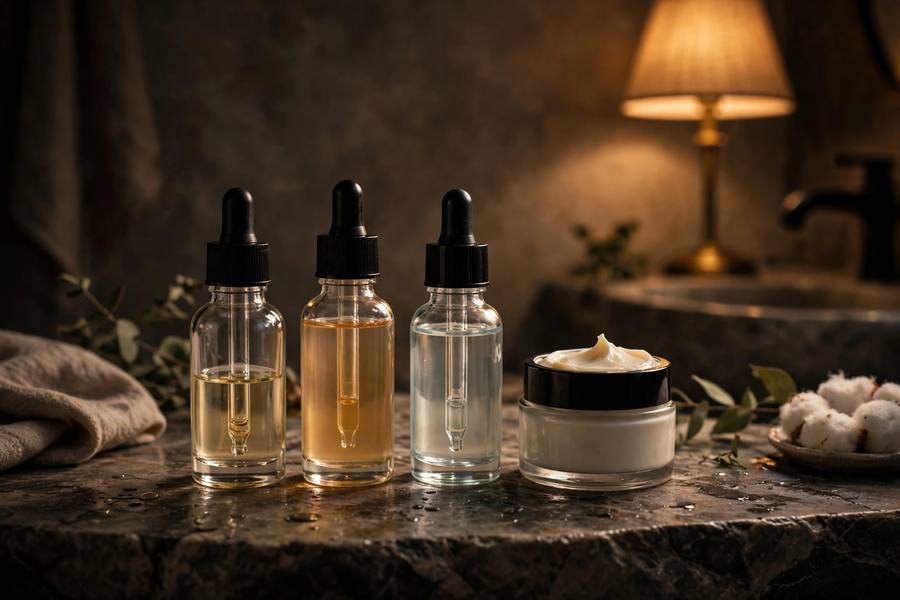
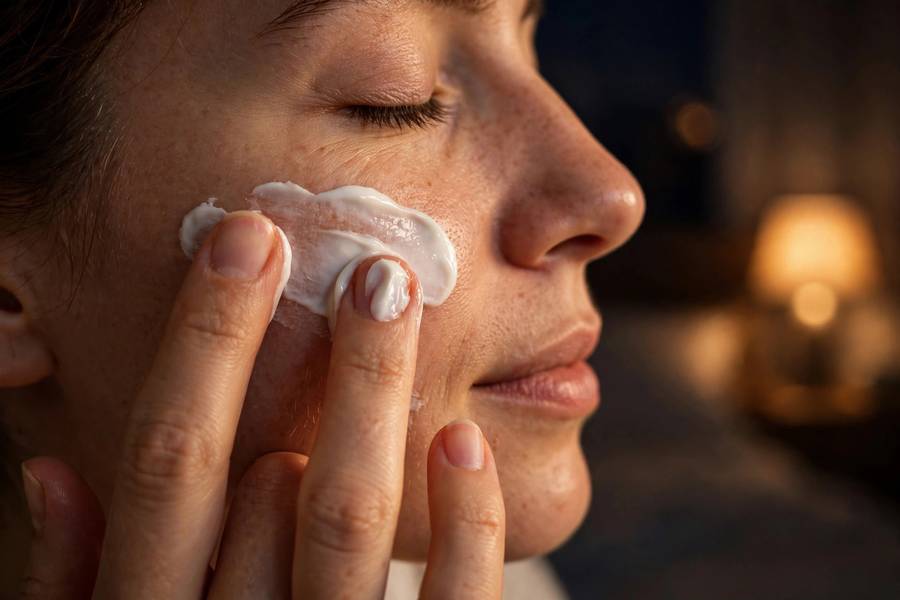
After the retinoid comes the support system. Hydrating serums with hyaluronic acid or niacinamide calm and feed the skin, and then the night moisturizer: richer and heavier than anything used in the morning. Night is when you can afford occlusion and weight, because nobody is putting makeup over it. I have seen night creams so thick they could frost a cake, and on retinoid nights, that thickness is doing real protective work.
The sandwich method is the pro move for sensitive skin: moisturizer, then retinoid, then moisturizer again. It slows penetration just enough to cut irritation without killing results. On non-retinoid nights, layer freely. Peptides, niacinamide, hydrating serums: night is their shift, and they work best on well-moisturized skin.
Give each layer a minute to settle. The whole routine should feel like a ritual, not a race. The stars who love their night routines describe them as the wind-down, and there is something to that. Skin responds to consistency, and consistency responds to enjoyment.
Step 7: The Occlusive Layer (Slugging)
The final step, a few nights a week, is the occlusive: a thin layer of petrolatum-based ointment over everything, the technique the internet calls slugging. It sounds absurd and it works beautifully. The occlusive layer seals in every layer beneath it and prevents overnight water loss, which is the main reason skin looks deflated in the morning. I was skeptical until a facialist showed me the before-and-after on a dehydrated client. I am skeptical no longer.
A few cautions. Do not slug over active breakouts or on nights you used strong exfoliants; sealing in irritation is not the goal. Use a thin layer, not a mask-thick one. And protect the pillowcase. Done right, two or three nights a week, it is the cheapest glow treatment in existence. For the morning half of the equation, the guide to dressing like a celebrity covers the daytime polish, and the complete routine guide puts both halves together.

Thirty minutes, seven steps, same order every night. That midnight trailer session rewired how I think about skincare. The glow is not bought in the morning. It is built at night, one patient layer at a time.
The Morning After: What Night Effort Looks Like
Here is how you know a night routine is working: the morning gets easier. Skin that was properly cleansed, treated, and sealed overnight wakes up calm, hydrated, and even. Makeup applies in half the time. The under-eyes need less correction. I have watched makeup artists assess a face at 6 a.m. and know instantly whether the night routine happened, because the skin tells on you. Good nights are visible by dawn.
The compound effect is what matters. One good night routine changes nothing. Thirty change the texture. Ninety change the trajectory. The celebrities with the remarkable skin are not the ones who did something dramatic once; they are the ones who did the unglamorous thing a thousand times. The night routine is the clearest example in all of beauty of boring consistency beating exciting novelty.
And the payoff is not just skin deep. There is a confidence that comes from a face that behaves, the kind you see in the best red carpet looks, where the makeup looks effortless because the canvas was prepared for weeks. Just remember that the canvas is only part of the picture. When a star credits a single product for the glow, check how celebrity endorsements really work before rewriting your routine around it.
Oil cleanse, water-based cleanse, hydrating toner, exfoliant (2-3 nights a week), retinoid, hydrating serums, rich moisturizer, and an occlusive layer a few nights a week. Thinnest to thickest, with actives before moisturizers.
Double cleansing means an oil-based cleanser first to dissolve makeup and sunscreen, then a water-based cleanser to clean the skin. It is worth doing on makeup and heavy-sunscreen days; a single gentle cleanse is fine otherwise.
Beginners should not. Combining retinoids with AHAs or BHAs on the same night is the fastest route to a damaged barrier. Alternate them on different nights until your skin is well adapted, and even then keep it moderate.
Slugging is applying a thin occlusive layer, usually petrolatum-based ointment, over your night routine to prevent water loss. It works well for dry skin a few nights a week, but should be skipped over active breakouts.
Hydration improvements show in days. Retinoid results take 8-12 weeks of consistent use, with an adjustment period of peeling and purging in the first month. Consistency matters more than product count.
The morning gets easier: calm hydrated skin, faster makeup application, less under-eye correction. One good night changes nothing — thirty change the texture, ninety change the trajectory. Consistency is the visible difference.