How Do Celebrities Get Flawless Skin? The Honest Answer


It is the most-asked question of my career, usually delivered with a kind of exhausted hope: how do celebrities get flawless skin? As if there is a single answer, a cream, a treatment, a secret I am withholding. After ten years of asking the question from the other side, I can give you the honest answer. It is not one thing. It is seven things, stacked, and only two of them come in a jar.
Here is the full stack, in order of impact.
The Part They Can’t Buy: Genetics
Let us start with the uncomfortable truth. Genetics are the foundation, and they are unevenly distributed. Collagen density, melanin behavior, how skin scars, how it holds volume: these are inherited. Hollywood selects for good genetics the way basketball selects for height. The camera finds the people whose skin photographs well, and then we ask how they did it, as if the selection never happened.
This is not defeatism. It is calibration. Genetics set the range, but habits decide where in the range you land. I have seen genetically blessed stars ruin their skin with sun and smoking, and genetically average people achieve remarkable skin with discipline. You cannot change the cards, but you can absolutely change how you play them. Everything below is the playing.
The takeaway is to stop comparing your bare face to a cast face. Compare your skin to your own skin last year. That is the only fair fight, and it is winnable.
The Part That Matters Most: Prevention
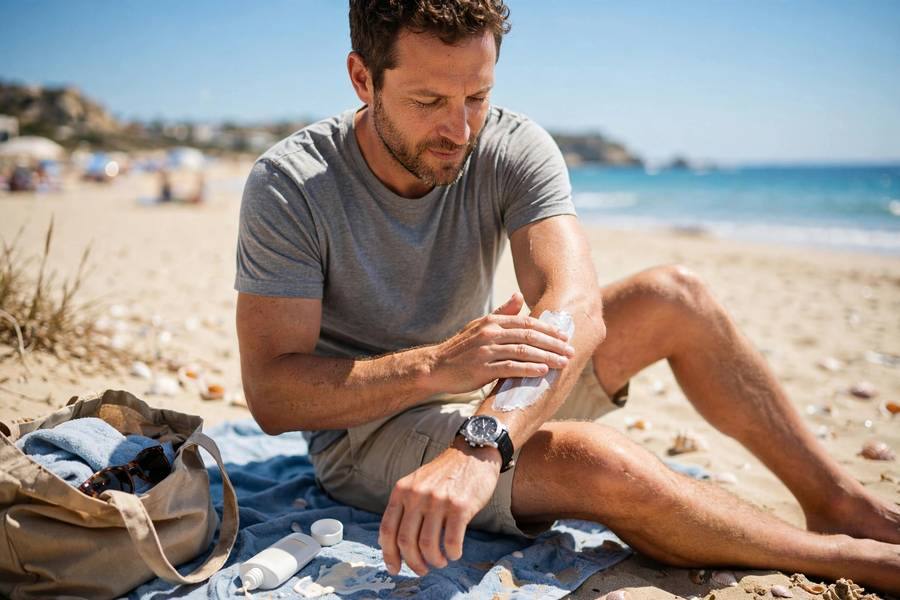
The biggest controllable factor is prevention, and it is almost entirely sunscreen. UV damage is cumulative, and the stars with the best skin at fifty are the ones who protected it at thirty. I cannot overstate this. Every dermatologist I have interviewed says the same thing: sunscreen is the highest-impact intervention in all of skincare, and the gap between the protected and the unprotected widens every decade.
Prevention also means the boring virtues. Not smoking. Moderating alcohol. Sleeping enough. Managing stress. None of these photograph well, which is why they never trend, but they are doing more for celebrity skin than most of the products combined. The flawless skin you admire is often just undamaged skin, and undamaged skin is a series of small refusals sustained over decades.
Start here regardless of budget. A twenty-dollar sunscreen worn daily is doing more than a two-hundred-dollar serum used sporadically. Prevention is the whole game for the first forty years.
The Part That Costs Money: Maintenance
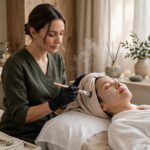
The expensive part is maintenance: retinoids, regular facials, light lasers, peels, and occasionally injectables, all done conservatively and consistently over years. This is the tier civilians see least and assume most about. It is real, it helps, and it is a subscription, not a purchase. The glow is rented monthly.
What is worth knowing is how conservative the best maintenance is. The stars aging best favor gentle, repeated treatments over dramatic interventions. The goal is always the same: to look like yourself on your best day, not like a different person. When maintenance is done well, you cannot tell it was done at all. That invisibility is the skill, and it is expensive because it requires restraint from both the doctor and the patient.
The accessible version is a dermatologist relationship rather than a product. One honest professional guiding conservative choices beats a drawer of expensive guesses.
The Part You Never See: Presentation
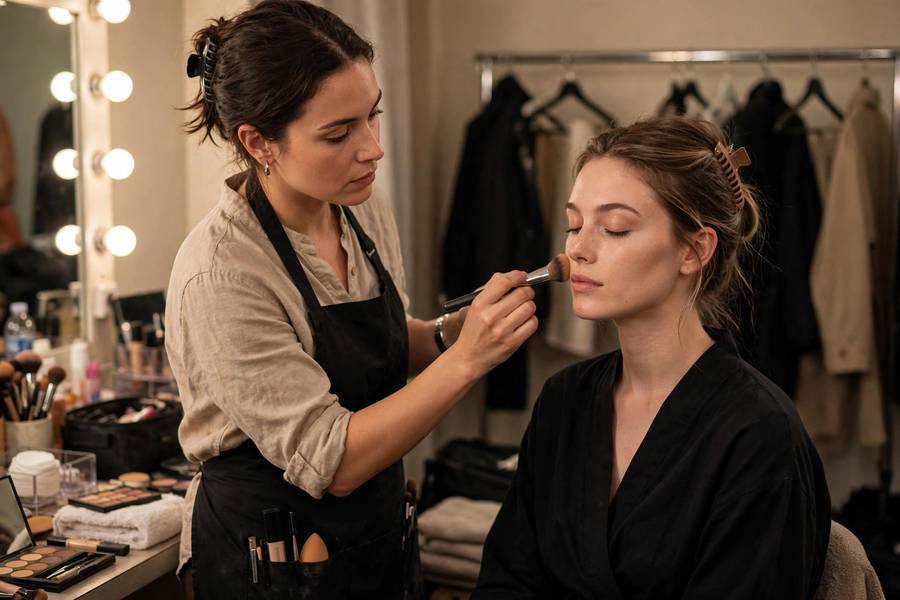
Now the part nobody factors in: presentation. The flawless skin you see is lit by professionals, finished by makeup artists, and often filtered or retouched. I have stood three feet from faces that look airbrushed on screen, and at three feet they look like skin: pores, texture, the occasional mark. Beautiful skin, human skin. The flawlessness was lighting, makeup, and distance.
Professional makeup alone closes most of the gap people are trying to close with skincare. Primer, color correction, foundation matched by an expert, setting for the lighting conditions: it is a craft. Then the photographer lights for the face, and the retoucher removes what is left. By the time you see it, you are comparing your bathroom mirror to a team of six. It was never a fair comparison.
This is actually good news. It means the standard you are chasing is partly stagecraft, and stagecraft can be learned. Good lighting and good makeup are available to everyone.
Your Version of the Stack
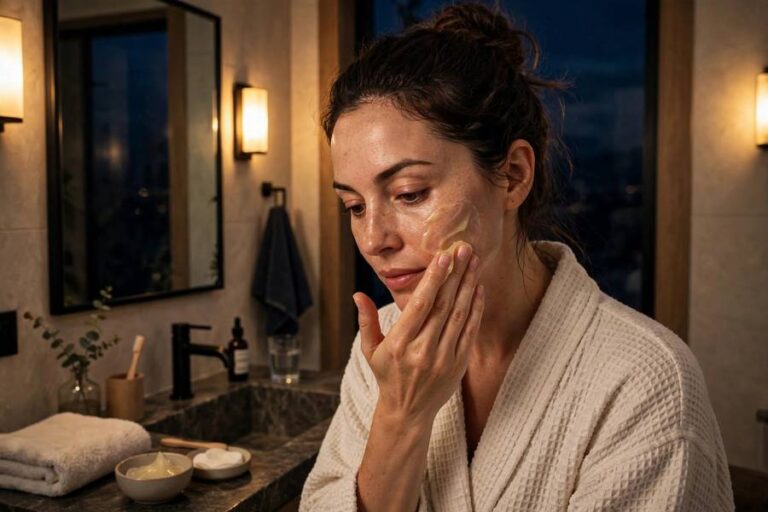
So here is your honest stack. Daily sunscreen, the non-negotiable. A retinoid at night, the proven repair. A simple routine you will actually follow, the consistency engine. Sleep and the boring virtues, the free multipliers. A dermatologist for guidance, the professional edge. And good lighting plus learned makeup skills, the presentation layer. That is the entire formula, and it is available at every budget.
What is not in the stack: a miracle cream, a secret treatment, a genetic lottery ticket. For the routine itself, the celebrity skincare routine guide has the order of operations, and how celebrity endorsements work explains why the marketing tells a different story.

Flawless skin is not a product. It is genetics plus prevention plus maintenance plus presentation, sustained over years. The good news is that three of the four are choices, and the fourth was never the whole story anyway.
The Lighting Test
Here is an experiment I recommend to everyone chasing flawless skin: photograph your face in three lightings. Bathroom overhead, window daylight, and a lamp held at forty-five degrees like a photographer would. You will look like three different people, and the lamp version will look airbrushed. That is the lighting test, and it explains more of celebrity skin than any product ever will.
Professional lighting is designed to flatter. Soft, diffused, angled to fill shadows: it erases texture the way no cream can. I have stood on sets where the lighting alone took ten years off everyone in the room, crew included. Then I have seen the same people under the harsh fluorescents of a hallway, looking entirely human. The skin did not change between the rooms. The photons did.
This is not a conspiracy. It is physics, and it is actually liberating. Once you understand that the flawlessness is partly stagecraft, you can stop chasing it with products and start using it yourself. A well-placed lamp, a window, the golden hour: these are free, and they work on everyone. The best red carpet looks are lit by the best in the business, and now you know the secret. It was never just the skin. It was the light, the makeup, the distance, and the team. The skin was only ever one part of the stack.
A combination of good genetics, decades of daily sunscreen, retinoids, regular professional treatments, excellent sleep, professional makeup, and professional lighting and retouching. No single product accounts for it.
No. Up close, celebrity skin looks like skin — with pores and texture. The flawlessness comes from professional makeup, expert lighting, camera distance, and often retouching. It is presentation as much as skincare.
Genetics set the range, but habits decide where you land in it. Daily sunscreen, retinoids, sleep, and not smoking can dramatically improve any genetic starting point over time.
Yes, for the factors that matter most. Daily sunscreen, a prescription retinoid, a simple consistent routine, and good sleep are all affordable. Professional treatments and presentation skills add the rest.
Many use some form of professional maintenance, from facials and light lasers to injectables, though approaches and openness vary widely. The current veteran preference favors subtle, conservative work.
A large share. Professional lighting — soft, diffused, angled to fill shadows — erases texture no cream can match. Photograph your own face in bathroom light versus window light versus a lamp at 45 degrees: three different people, same skin.
Two weeks of consistent basics: daily sunscreen, gentle cleansing, real moisturizer, and eight hours of sleep. Hydration and barrier repair show fast. Everything else — retinoids, treatments — works on a timeline of months, not days.
No. Up close, celebrity skin has pores, texture, and the occasional blemish like everyone else’s. What photographs as perfection is professional makeup, expert lighting, camera distance, and often retouching — presentation stacked on good maintenance.
Because photos add the full presentation stack: professional makeup, flattering light, flattering angles, camera distance, and often retouching. In person at three feet, celebrity skin looks like skin — pores, texture, and all. The camera is the most powerful skincare product ever made.