History of the Asian Para Games: From FESPIC to Aichi-Nagoya 2026

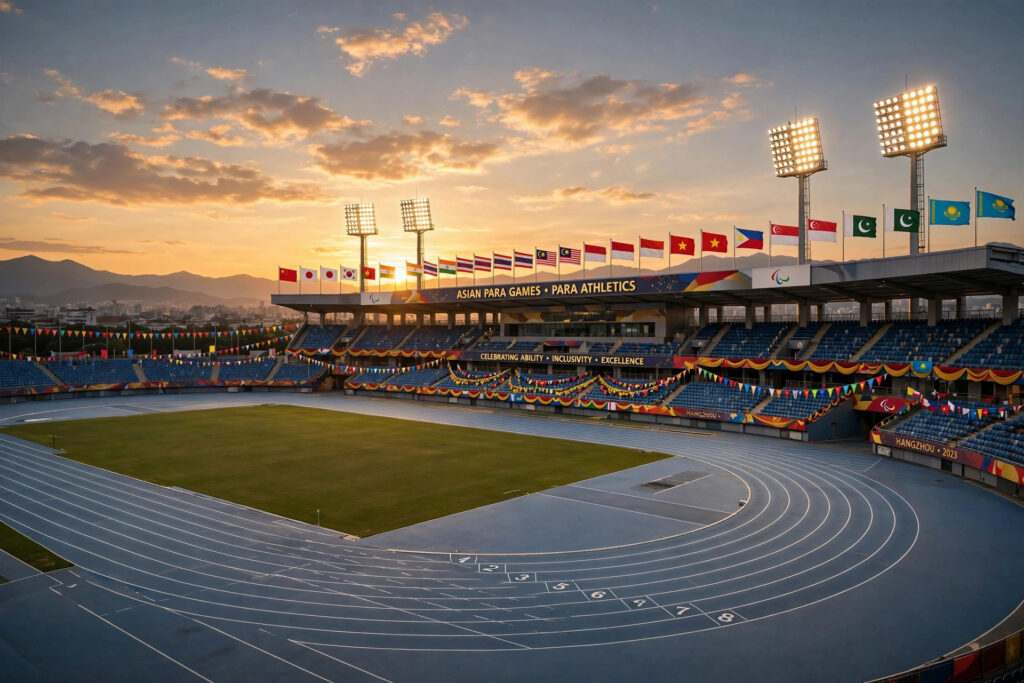
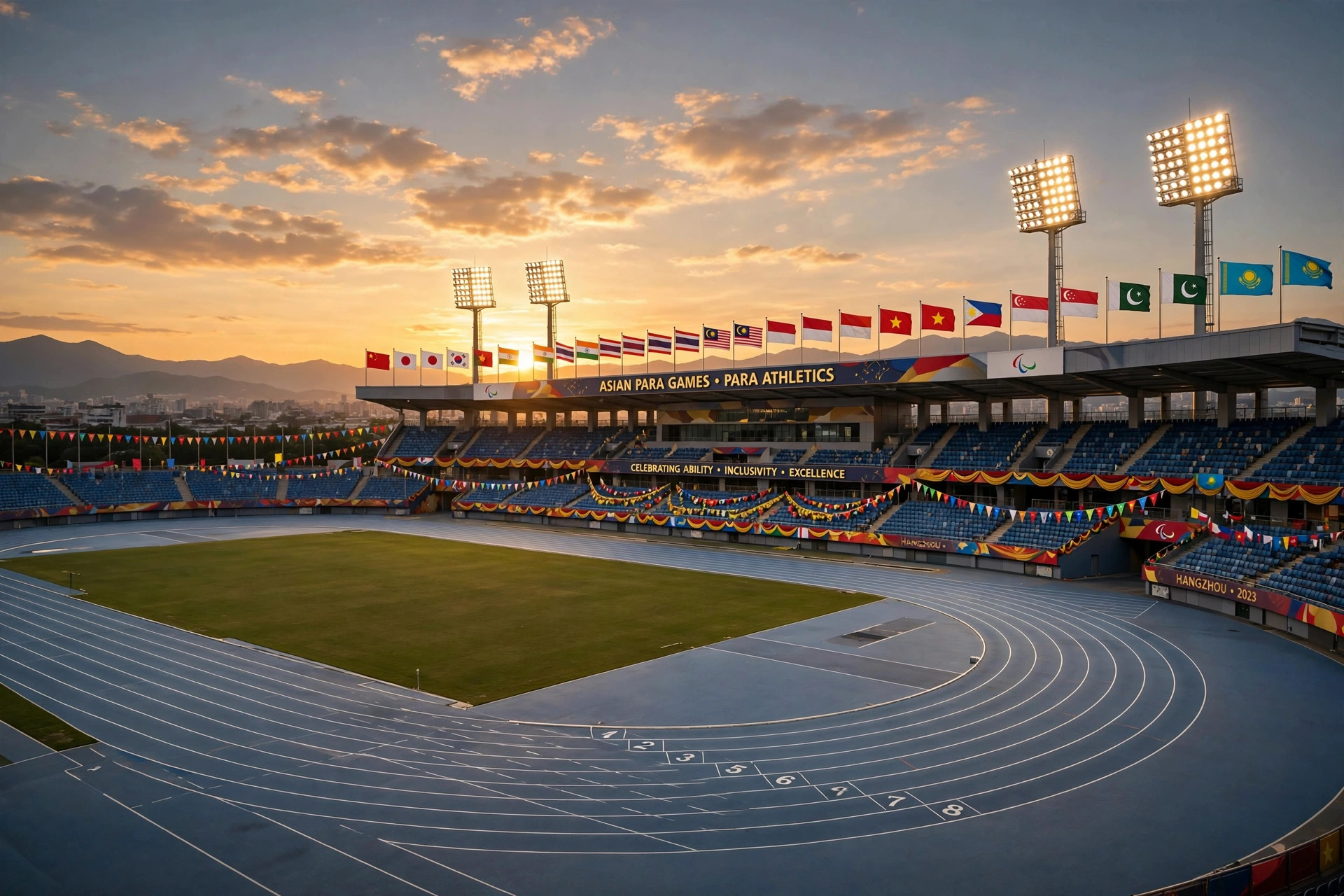
Every great competition has a starting point, and the Asian Para Games has one of the most important origin stories in sport — even if most people have never heard of it. The full Asian Para Games history starts in 1975 in Japan, with fewer than a thousand athletes and a simple idea: disabled athletes in the Asia-Pacific deserved a stage. Half a century later, that stage hosts thousands of athletes across dozens of nations, and in October 2026 the fifth edition of the modern Games lands in Aichi-Nagoya. Here’s how it happened.
The FESPIC Games: Where It All Began
The year was 1975. Across most of Asia and the Pacific, sporting opportunities for people with disabilities were almost non-existent. The response was the first FESPIC Games — the Far East and South Pacific Games for the Disabled — held in Beppu, Oita Prefecture, Japan, from June 1 to 3. Eighteen nations sent 973 athletes to compete across just eight events. Emperor Hirohito opened the Games personally.
The stated goals were bigger than medals: promote the welfare of disabled people across the region, deepen friendship and understanding, and use sport as a force for rehabilitation. Think about that for a second. This wasn’t a television product or a tourism play. It was a movement, built in a decade when disabled athletes were largely invisible in most of the countries competing.
The FESPIC Games ran every four years and grew steadily. Central Asian nations — Kazakhstan, Uzbekistan, Kyrgyzstan, Turkmenistan, Tajikistan — plus Armenia and Azerbaijan joined for the 7th edition in 1999, and Middle Eastern countries entered for the 9th and final edition in 2006. Here’s a cool detail: the 1999 and 2002 FESPIC Games were staged alongside the 1998 and 2002 Asian Games, planting the seed for the idea that the able-bodied and para Games should share a stage. Nine editions, thirty-one years, and the map kept expanding.

The Merger That Created the Asian Para Games
By the early 2000s, the structure around para sport in Asia was due an overhaul. The Asian Paralympic Council was established on 30 October 2002 in Busan, South Korea, taking responsibility for regional para competition, and in 2006 it became the Asian Paralympic Committee (APC) with a president elected directly by its General Assembly.
Then came the final FESPIC Games in Kuala Lumpur, Malaysia, in December 2006. At its closing, the FESPIC Federation was dissolved and merged into the Asian Paralympic Council — the moment the old era formally ended and the new one began. The FESPIC Games were done. Something bigger and more unified was coming: a true Asian multi-sport event for athletes with disabilities, run in parallel with the Asian Games themselves.
Guangzhou 2010: The First Asian Para Games
The inaugural Asian Para Games landed in Guangzhou, China, in December 2010, held right after that year’s Asian Games in the same city — the model the movement had been chasing since those shared FESPIC-Asian Games editions. Forty-one nations sent 2,405 athletes to compete in 19 sports across 341 events. It worked. It worked immediately.
Guangzhou proved the concept: same city, same venues, same organisational muscle, separate Games with their own identity. The crowds came. The competition was serious. And China, which would go on to top the medal table at every edition, set the standard from day one.
Incheon 2014 and Jakarta 2018: Growth Years
The 2014 Games went to Incheon, South Korea, with 41 nations and 2,497 athletes competing across 23 sports and 443 events — the biggest para sports event Asia had ever staged at that point. The Korean organisers leaned into spectacle and accessibility, and the Games kept building the fanbase.
Then Jakarta 2018. Indonesia hosted the third edition with 43 nations and 2,757 athletes across 18 sports — but here’s the number that matters: 506 events, the most in the Games’ history at that time. Jakarta was loud, chaotic, passionate, and exactly the kind of host that proved these Games belonged in the mainstream. Attendance and atmosphere were off the charts, and the para Games stopped being anyone’s warm-up act.
Hangzhou 2022: The Record-Breaker (Held in 2023)
The fourth edition was supposed to happen in Hangzhou in October 2022. COVID had other plans, and the Games were postponed a full year, eventually running from 22 to 28 October 2023. When they finally arrived, they were enormous: 44 nations, a record 3,100 athletes, 22 sports and 501 events. It remains the largest Asian Para Games ever held, and Hangzhou’s tech-forward, accessibility-obsessed organisation set a new bar for what the Games could look like.
The delay gave the edition an unusual footnote — the “2022 Games” held in 2023 — but nobody watching remembers the paperwork. They remember the records falling.
Aichi-Nagoya 2026: Asian Para Games History Comes Full Circle
Now the fifth edition heads to Aichi Prefecture and Nagoya, Japan, from 18 to 24 October 2026 — back where the whole story started. Japan hosted the first FESPIC Games in 1975; fifty-one years later, it hosts the modern Games’ fifth edition. That symmetry is worth sitting with for a moment.
The 2026 edition is expected to feature 18 sports and 492 medal events with around 45 nations competing — slightly leaner than Hangzhou’s record edition, partly because of tighter athlete entry quotas this time around. India, for example, is sending a smaller squad than its record-breaking Hangzhou contingent. But the trajectory is unmistakable: what started as 973 athletes in a Japanese spa town in 1975 now fills stadiums across a continent. And the pipeline is already set — Doha hosts in 2030 and Riyadh in 2034, so the story is only accelerating.
For everything about this year’s edition — the dates, the sports on the programme, and how to follow it — check out your complete guide to the 2026 edition.
Why the Asian Para Games Matter
Here’s what I keep coming back to. The FESPIC founders weren’t trying to build a broadcast product. They were trying to prove that disabled athletes deserved a stage at all. The Asian Para Games turned that belief into an institution — one that now runs on the same four-year cycle, with the same host-city ambition, as the Asian Games themselves.
The growth numbers tell the story better than I can: from 973 athletes and 18 nations in 1975, to 2,405 athletes in Guangzhou 2010, to 3,100 athletes and 44 nations in Hangzhou 2023. Every edition has pushed the ceiling higher. And with Japan hosting in 2026, the movement that started there returns home — bigger, louder, and impossible to ignore.
The first Asian Para Games took place in Guangzhou, China, in December 2010, with 41 nations and 2,405 athletes competing in 19 sports. They were preceded by the FESPIC Games (1975–2006), which are considered the precursor to the modern Asian Para Games.
The FESPIC Games — the Far East and South Pacific Games for the Disabled — ran from 1975 to 2006 across nine editions. The first was held in Beppu, Japan, with 18 nations and 973 athletes. The FESPIC Federation was dissolved at the closing of the final edition in Kuala Lumpur in 2006 and merged with the Asian Paralympic Council, which became the Asian Paralympic Committee.
The fourth Asian Para Games were originally scheduled for October 2022 in Hangzhou, China, but were postponed by one year due to the COVID-19 pandemic. They were eventually held from 22 to 28 October 2023, with a record 3,100 athletes from 44 nations competing.
The fifth Asian Para Games will be held in Aichi Prefecture and Nagoya, Japan, from 18 to 24 October 2026, featuring 18 sports and 492 medal events. Future editions are already awarded: Doha in 2030 and Riyadh in 2034.
The Games are organised by the Asian Paralympic Committee (APC). The APC’s predecessor, the Asian Paralympic Council, was established in October 2002 in Busan, South Korea, and became the Asian Paralympic Committee in 2006.
The growth has been dramatic. The 1975 FESPIC Games had 973 athletes from 18 nations; the 2010 Asian Para Games in Guangzhou had 2,405 athletes from 41 nations; and the 2023 Hangzhou edition set records with 3,100 athletes from 44 nations across 22 sports. The 2026 Aichi-Nagoya edition expects around 45 nations competing for 492 medals.