
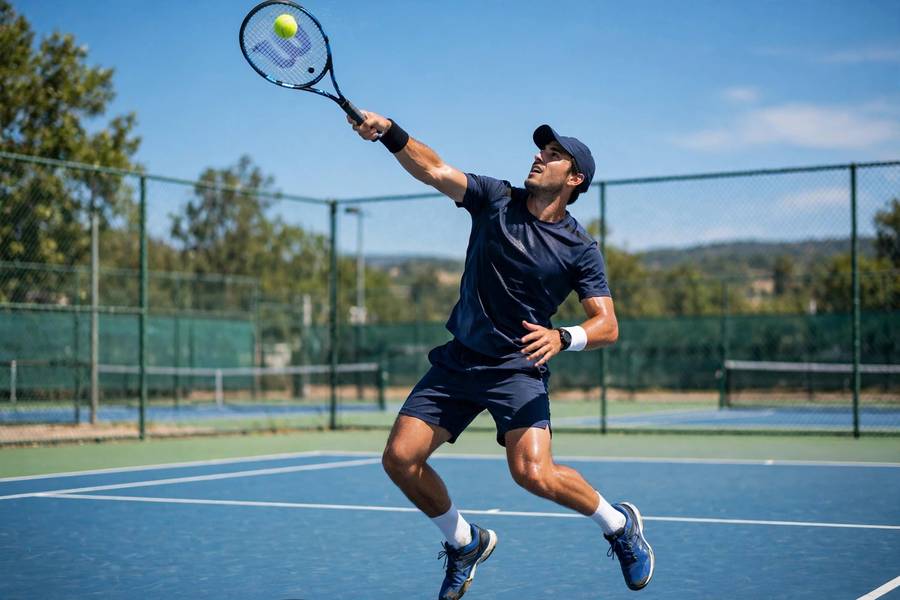
The serve is the only shot you fully control — no opponent, no rally, no surprises. It’s also the shot that separates players most. I learned this the hard way playing college club tennis: my groundstrokes were decent, my serve was a liability, and my match record showed it exactly.
Eighteen months later, my serve was my best shot. Not because I got stronger — because I finally understood the mechanics. The serve is a throwing motion with a racket, and once you feel that, everything clicks.
This guide takes you from “how do I start” to a reliable first and second serve. Let’s build it piece by piece.
Table of Contents
- Why the Serve Matters More Than You Think
- The Grip: Continental or Nothing
- The Stance: Platform vs. Pinpoint
- The Toss: The Skill That Makes or Breaks Serves
- The Swing: Trophy Pose to Contact
- Contact and Pronation: Where Power Actually Comes From
- First Serve vs. Second Serve: Two Different Weapons
- The 4 Serve Drills That Fixed My Serve
- Placement: Serving Smart, Not Just Hard
- The Numbers: What’s a Good Serve?
- 5 Serve Mistakes and Fixes
- Frequently Asked Questions
Why the Serve Matters More Than You Think
Here’s the stat that made me rebuild my serve: in men’s tennis, the server wins about 64 percent of points. In women’s tennis, about 58 percent. The serve is the single biggest advantage in the sport — every point starts with it, and a good one puts you ahead before the rally begins.
For beginners, the math is even more dramatic. I tracked my own matches: when I double-faulted fewer than 3 times per set, I won 80 percent of my sets. When I double-faulted more, I won 30 percent. The serve wasn’t part of my game — it WAS my game.
Thirty minutes of serve practice beats an hour of rallying for match impact.
The Grip: Continental or Nothing
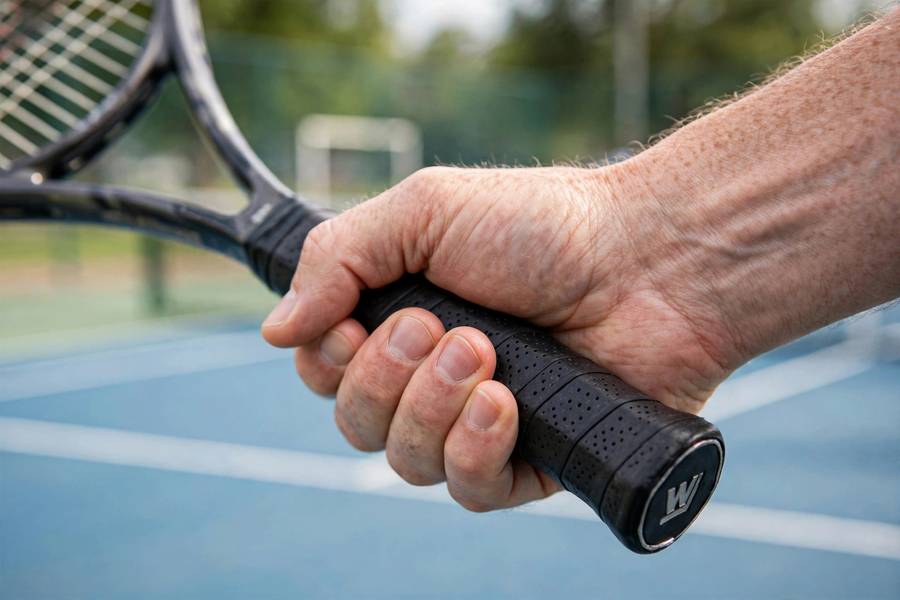
If you serve with a forehand grip (the one you’d use to shake hands with the racket), stop. I did this for a year, and it caps everything — no spin, no slice, and a ceiling on power.
The serve grip is the continental grip: hold the racket like a hammer, base knuckle of your index finger on the top bevel. It feels wrong for two weeks, then unlocks the entire serve — flat, slice, and kick all come from here.
Test: with a continental grip, the racket face naturally opens to the side at contact, which is what lets you brush up the back of the ball for spin. With a forehand grip, you’d have to contort your wrist to do the same thing. The grip does the work — let it.
The Stance: Platform vs. Pinpoint
Two stance options, both legal, both used by pros:
Platform stance: feet stay planted shoulder-width apart through the whole motion. More stable, easier to learn, better for beginners. This is where you start.
Pinpoint stance: the back foot slides up to the front foot during the toss. Generates slightly more power through leg drive, but adds a moving part that complicates timing.
Start platform. I used platform for my entire rebuild and only experimented with pinpoint later. The power difference is marginal for beginners; the consistency difference is massive. Stand sideways to the net, front foot pointing toward the net post, back foot parallel to the baseline. Weight balanced, knees soft, like every athletic stance you’ve ever used.
The Toss: The Skill That Makes or Breaks Serves
I’m giving the toss its own section because it’s the number one serve problem and the least practiced skill in tennis. A bad toss ruins everything after it — you can’t hit a moving target with a complicated swing.
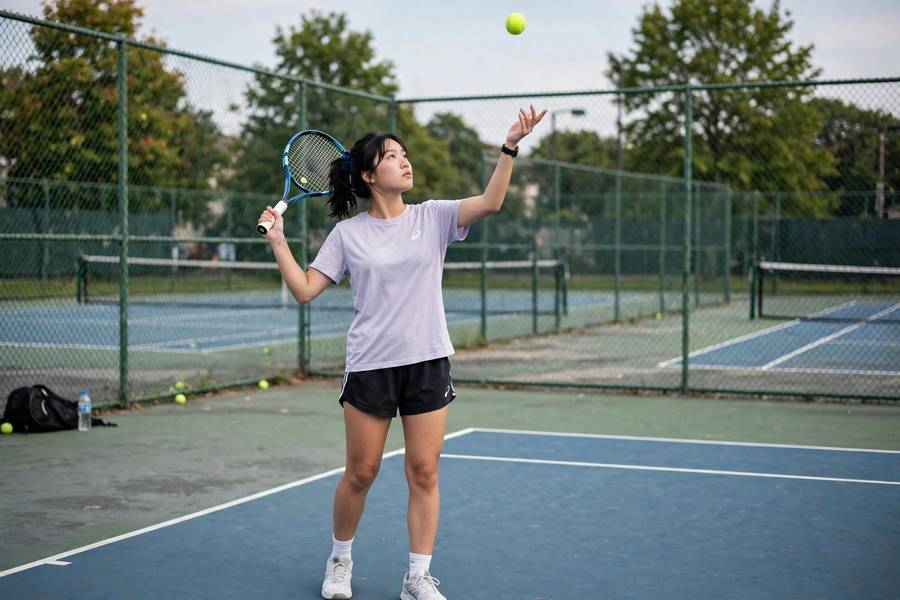
The toss rules: straight arm, release the ball at eye level, toss to roughly one o’clock (slightly in front and to the right for right-handers). The ball should peak just above your maximum reach — high enough to hit at full extension, not so high that you’re waiting.
The toss must be consistent, not perfect — pros miss their ideal spot regularly. Practice tossing without hitting: 50 tosses, catch at the peak.
My pro’s drill that fixed my toss in a week: toss and let the ball drop without swinging. The ball should land about 6 inches inside the baseline, just in front of your front foot. If it’s landing behind you, you’re tossing too far back (the classic beginner error). If it’s way in front, you’re pushing it forward. Adjust until the drop spot is consistent, then add the swing.
On breezy days, lower the toss slightly and speed up — less airtime, less drift.
The Swing: Trophy Pose to Contact
The serve swing has a checkpoint that every good server hits: the trophy pose. Racket dropped behind your back (like you’re scratching between your shoulder blades), tossing arm extended up, knees bent, chest open. It looks like a trophy — hence the name. From here, everything uncoils upward.
The sequence: toss up, knees bend, racket drops to back-scratch, then legs drive, hips rotate, shoulder fires, elbow extends, racket whips up. It’s a kinetic chain — power flows ground-up, each segment accelerating the next. Your legs contribute more than your arm; I didn’t believe it until knee serves cost me 30 percent of my pace.
Key thought: throw the racket at the ball. If you played baseball or threw a football, you already know this movement.
Contact and Pronation: Where Power Actually Comes From
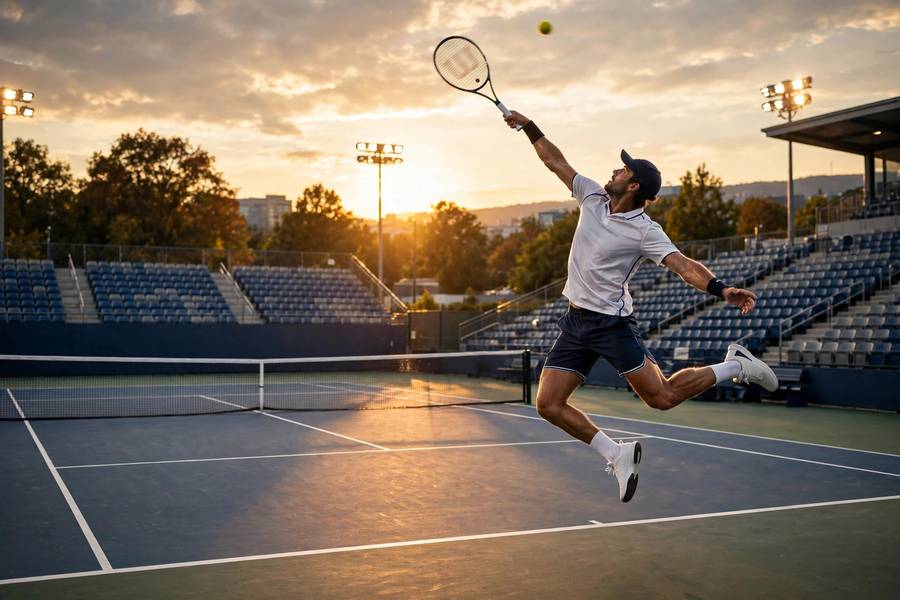
Here’s the advanced bit that separates decent serves from weapons: pronation. At contact, your forearm rotates — palm turning from facing sideways to facing forward — like turning a doorknob. This rotation happens in the last instant before contact and contributes massively to racket-head speed.
You don’t need to think about pronation consciously at first. It happens naturally if your grip is continental and your swing is loose. But knowing it exists explains why relaxed servers hit harder than muscled ones: tension kills the snap, and the snap is where the speed lives.
Contact at full extension, slightly in front, ball at toss peak. Hit up through the ball — it goes up first, then down into the box. Beginners who hit “down” dump it in the net; 3-foot net, and gravity plus spin bring it down.
First Serve vs. Second Serve: Two Different Weapons
You get two serves for a reason — they’re different shots with different jobs.
First serve: the weapon — flat or slight slice, 70-80% power, aimed at corners. Missing is fine; that’s what the second serve is for. Target 60-65%.
Second serve: the safety net — heavy topspin/kick, 60-70% power, clearing the net by 3-4 feet. Get it in and make it hard to attack.
The beginner mistake: hitting two first serves. The second “first serve” misses, double fault, free point. I did this for months. Learn a topspin second serve early and your double faults will plummet.
The 4 Serve Drills That Fixed My Serve
1. Toss-and-catch (50 reps). Toss, catch at full extension. Builds the toss consistency everything depends on. Do this as a warm-up forever.
2. Knee serves. Serve from your knees — it isolates the upper body and forces you to feel the throwing motion without leg drive confusing things.
3. Target serving. Place targets in the box corners; serve 10 balls at each, first and second serves. Track your percentage.
4. The second-serve-only set. Play a practice set with all second serves — it builds the topspin motion under mild stress.
Placement: Serving Smart, Not Just Hard
A 90-mph serve to the backhand beats a 110-mph serve to the forehand. Placement is strategy, and it’s free.
The three targets: wide (pulls the returner off the court), body (jams the returner, hardest to attack), T (down the middle, shortest distance). Vary them. A predictable server is a comfortable returner.
Learn your opponent’s weakness in warm-ups — usually the backhand. Serve there on big points. The pros do exactly this, and the data backs it: serves to the backhand win more points at every level.
The Numbers: What’s a Good Serve?
Benchmarks so you know where you stand:
- Beginner: first serve 60-80 mph, landing 40-50 percent, double faults common. Goal: cut double faults first, add pace later.
- Intermediate: first serve 80-100 mph at 60 percent, reliable topspin second serve. This wins most recreational matches.
- Advanced: first serve 100-120 mph with placement, kick second serve that bounces over shoulder height.
Serve speed is fun to measure (radar apps on phones work fine), but first-serve percentage and double-fault rate predict match results better.
Build serve-specific strength with bodyweight exercises for serve power — shoulder and core work translates directly. I schedule basket sessions around the best time of day to exercise, and on rest days pickleball rules if you want a smaller court game keeps the competitive itch scratched.
5 Serve Mistakes and Fixes
1. Tossing too far back. The ball drifts behind you, you arch backward, everything falls apart. Fix: toss-and-drop drill until the landing spot is consistent.
2. Dropping the tossing arm early. It guides shoulder alignment; dropping it collapses your coil. Fix: keep it up until the racket starts forward.
3. Hitting with a forehand grip. Caps spin and power, strains the wrist. Fix: continental grip, two weeks of weirdness, lifetime of better serves.
4. No knee bend. Serving with straight legs throws away your biggest power source. Fix: exaggerate the knee bend in practice — feel silly now, serve bombs later.
5. Aiming for lines on second serves. Going for too much on the second ball. Fix: aim 3 feet inside the lines with heavy spin. Boring second serves win matches; exciting ones lose them.
Frequently Asked Questions
Start with a continental grip, platform stance, and a consistent toss to one o’clock at full extension. Learn the trophy pose checkpoint, then swing up through the ball like a throwing motion. Practice the toss separately first — it’s the foundation everything else depends on. Begin with a simple flat serve before adding spin.
You’re likely hitting down at the ball instead of up through it. The serve must travel up over the 3-foot net before gravity brings it down into the box. Fix: toss slightly more in front, hit at full extension, and think “up and over.” A low toss also causes net balls — make sure the ball peaks above your reach.
The first serve is an aggressive, flatter shot at 70-80 percent power aimed at corners — missing is acceptable. The second serve is a safer, spin-heavy shot (topspin or kick) with more net clearance and margin, designed to land reliably and resist attack. Never hit two first serves; the double fault gives away a free point.
Develop a real topspin second serve with 3-4 feet of net clearance and aim 3 feet inside the lines. Most double faults come from hitting a flat, aggressive second serve. Practice second-serve-only sets to build confidence, and fix your toss — inconsistent tosses cause a huge share of double faults.
The continental grip — like holding a hammer, base knuckle of the index finger on the top bevel. It feels unnatural for about two weeks but unlocks flat, slice, and kick serves. Serving with a forehand grip limits spin and power and strains the wrist; switch early before the wrong grip becomes habit.
A reliable beginner serve (consistent toss, decent pace, few double faults) takes 2-3 months of regular practice — 30 minutes, two to three times per week. A genuine weapon with placement and a kick second serve takes 1-2 years. The serve rewards solo practice more than any other shot, so basket sessions accelerate everything.