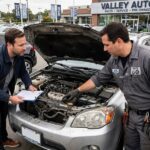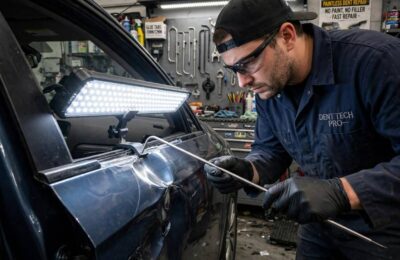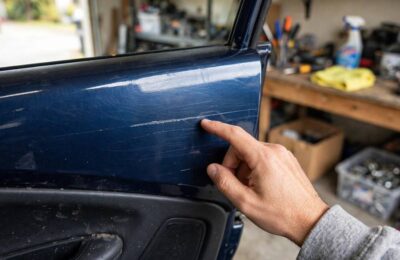


Two identical cars, two sellers — one gets top dollar, one gets taken. The difference is never luck; it’s preparation. I’m Marcus, and ten years around cars taught me the playbook: one Saturday of proper prep routinely adds $1,000–$2,000 to a private sale.
Here’s how to do it right, in the order that matters.
Table of Contents
- Step 1: Choose How to Sell
- Step 2: Price It Like a Professional
- Step 3: Prep the Car
- Step 4: Photos That Sell
- Step 5: Write a Listing That Filters Tire-Kickers
- Step 6: Safe Test Drives
- Step 7: Negotiate and Close
- Step 8: Paperwork and Safe Payment
- Frequently Asked Questions
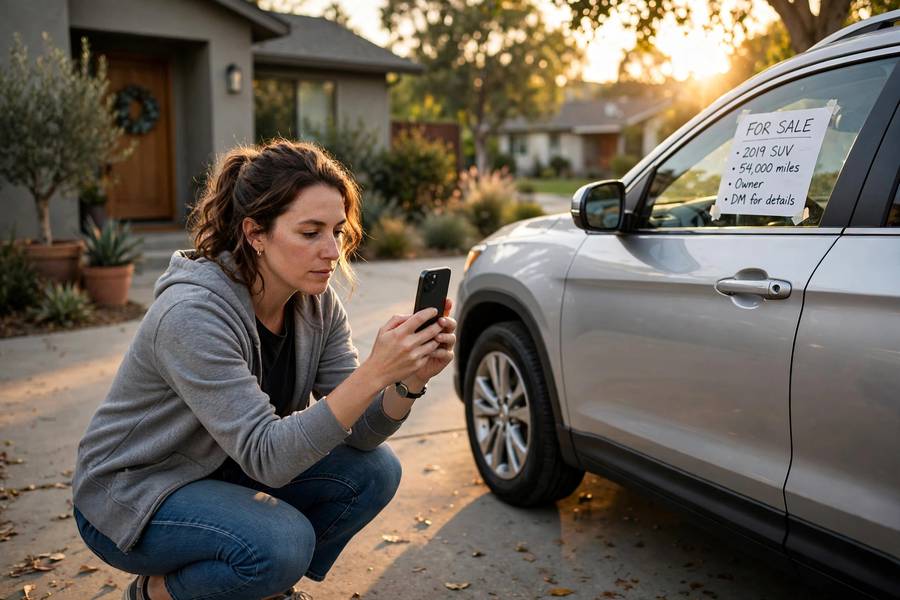
Step 1: Choose How to Sell
Three paths, three trade-offs. Be honest about which fits your life:
Private sale: most money, most effort. Typically 10–20% more than any other method — often $2,000–$5,000 on a mainstream car. The cost is your time: photos, listings, messages, test drives, humanity. If the car is desirable and you can spare two weekends, this is the answer.
We break down how often to change engine oil step by step in a separate guide.
Dealer trade-in: least money, least effort. Expect wholesale value minus a bit. Makes sense when the tax credit on your next purchase narrows the gap (many states tax only the difference), or when convenience beats cash. Get the trade-in number before negotiating the new car’s price, or they’ll shell-game the numbers.
Instant cash buyers (CarMax, Carvana, etc.): predictable, middle money. Firm offer in an hour, valid about a week — usually better than trade-in, worse than private sale. My pick when the car must be gone on a deadline. Real money, zero weirdos at your house.
My rule: if the private-party premium over the instant offer is under ~$1,500, take the instant offer and keep your weekends. Your time has value. If the gap is $3,000+, sell it yourself.
Step 2: Price It Like a Professional
Pricing wrong is the most expensive mistake — too high and you chase the market down for months; too low and you donate money.
Check all three sources: KBB private-party value, Edmunds, and — most important — live asking prices for your exact car within 100 miles. KBB is theory; live listings are the market. If KBB says $14,000 but five identical cars sit at $12,500, the market is $12,500.
Price the car, not your feelings. Maintenance doesn’t add value — it preserves it. Buyers expect working brakes; they won’t pay extra because yours are new. Price against comparables; let your records justify the ask, not inflate it.
Build in 5–8% negotiation room and price just under a round number ($12,900, not $13,000). Serious buyers negotiate; with zero room, they walk. But don’t build in 20% — overpriced cars get ignored, not negotiated down.
Know your floor. Decide your lowest acceptable number before the first message, and write it down. Negotiation fatigue is real — by the fourth test drive you’ll take anything. The number you chose calmly Tuesday beats the one you accept exhausted Sunday.
Step 3: Prep the Car
I’m a mechanic, so I’m biased — but buyers pay more for clean cars with records than for nicer cars without them. Perception is reality. The Saturday routine:
Wash, clay, wax. A proper wash plus a $20 clay bar plus wax transforms paint — removes bonded grime, adds gloss that photographs beautifully. Highest-ROI detailing step in existence.
Deep-clean the interior. Shampoo carpets and seats (rent an extractor for $30), brush every vent and cupholder, wipe all surfaces, clean inside glass — buyers always notice haze. Remove everything personal. Buyers should see their life in it, not yours.
Fix the cheap stuff. Dead bulbs, worn wipers, dead fob battery, low washer fluid — every $5 defect becomes a $500 discount in a buyer’s mind. (“If they ignored a bulb, what else?”) Walk it like a picky buyer; fix everything under $20.
Gather the records. Receipts, manual, both keys, window sticker if you have it — in a folder. Organized records raise trust and offers. This folder closes more deals than any sales pitch.
Make sure everything works. Fully charge the battery (a dead battery at a test drive kills deals — replace a weak one before selling), top off fluids, test every button and light.
Restore the headlights. Foggy lenses age a car five years in a buyer’s eyes. An hour with a kit — see our guide on how to clean car headlights — makes the front look new. Cheap, fast, disproportionate impact.
Step 4: Photos That Sell
Your photos are your listing. Eight blurry dusk shots = no calls. The standard that sells:
Setup: overcast day or golden hour — never harsh midday sun or night. Clean, uncluttered background: empty lot, quiet street. Not your messy garage.
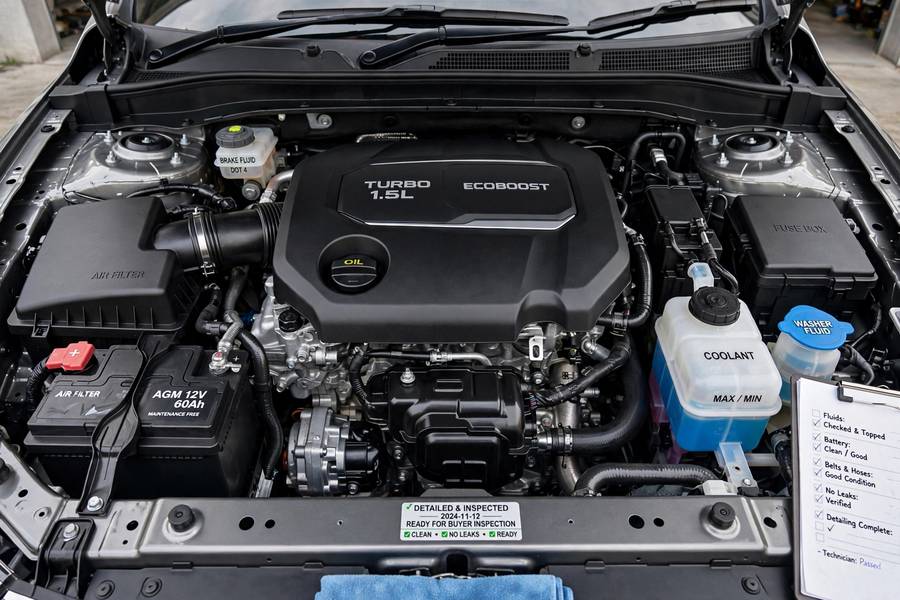
Minimum 20 shots: all four 3/4 angles, straight front and rear, both sides, wheels, lights, interior from each door, dash with mileage showing, console, seats, trunk, engine bay, and close-ups of every flaw with honest captions. Damage photos build trust — hiding damage destroys it at the viewing.
Rules: freshly washed car, phone camera is fine, horizontal shots, no filters. Turn the wheels slightly for 3/4 angles, and photograph the odometer and VIN plate.
Listings with 20+ good photos get dramatically more inquiries. This isn’t optional — it’s the price of admission.

Step 5: Write a Listing That Filters Tire-Kickers
Title: Year + Make + Model + Trim + Mileage + one standout. “2019 Honda Accord EX-L 2.0T — 58k miles, one owner, full records.” Not “NICE CAR MUST SEE!!!” — caps and exclamation marks attract exactly the wrong buyers.
Body — facts first: mileage, clean title status (say so explicitly), owner count, service summary, boring reason for selling (“bought a larger SUV”), recent work with dates (tires, brakes, battery).
Then the honest flaws: “Small scratch on rear bumper (pictured).” Disclosed flaws make everything else believable — and filter out buyers who’d walk over them anyway.
Filters that work: “no lowball offers,” “serious buyers only, no trades.” Polite but clear. General area only, never your home address. Use the platform’s masked messaging, not your personal number in the listing text.
Step 6: Safe Test Drives
A stranger wants to drive off in your $15,000 asset. Do it right:
Public place, daylight, bring a friend. Police station lots are ideal — many have designated sale spots with cameras. Tell someone where you’ll be.
Verify before they drive. Driver’s license and proof of insurance — photograph both with permission. No license, no drive. No exceptions. I’ve heard every story; the rule stands.
Ride along. Always. “Can I take it alone?” No. That’s how cars get stolen or joyridden. Legitimate buyers don’t mind — and it’s your chance to narrate the car’s virtues. Then go quiet and let them listen to the car for part of the drive.
Step 7: Negotiate and Close
Expect negotiation; don’t fear it. Know your floor (written down in Step 2) and let silence work. When they lowball, don’t get offended — counter calmly once or twice, then hold. “I can do $12,400,” said once and firmly, ends more negotiations than an hour of haggling.
Phrases that cost you money: “I need to sell this weekend,” “what’s your best offer?”, any desperation. Those that make money: “two others coming this weekend” (only if true), “the price reflects the records,” comfortable silence.
Classic tactics: “saw one cheaper” — “then go see it.” “Cash today” — a cashier’s check Monday spends the same. “My mechanic found…” — real issue, adjust fairly; invented, hold firm.
Walk away from: no ID, installment payments, over-asking-price offers with complicated stories (classic scam), pressure to decide in minutes. There are other buyers. Your car, your rules.
Step 8: Paperwork and Safe Payment
Payment: over a few thousand, meet at the buyer’s bank and watch the cashier’s check or wire get created. Cash for cheaper cars — deposit immediately at your bank so the teller verifies bills. Never personal checks. Never overpayment-plus-“refund the difference.” Never release the car before funds are verified and irreversible. Paranoia is appropriate — this is where scams live.
Title: sign exactly as your DMV requires — no cross-outs. Fill in buyer name, real sale price, odometer reading. Photograph it before handing it over.
Bill of sale: date, both parties’ details, VIN, mileage, price, “as-is” language, both signatures, two copies — even if your state doesn’t require it. Your proof the car and its liabilities are no longer yours.
Release of liability: file with the DMV immediately, same day, online if possible. Until you do, that car’s tickets and tolls can come back to you. Five-minute form. Don’t skip it.
Plates and insurance: plate rules vary by state — in some states plates stay with the vehicle (leave them on), in others they stay with you (remove and return them to the DMV). Check your state’s rule before the sale. Cancel or transfer insurance only after the title is signed and the car is gone.
Price honestly, present beautifully, meet safely, negotiate calmly, paper it properly. The premium over trading in is the easiest money in car ownership.
Frequently Asked Questions
Price using KBB plus live local listings, detail thoroughly (wash, clay, wax, deep-clean interior), take 20+ quality photos, disclose flaws honestly, gather service records, and meet buyers safely in public. A well-prepped private sale typically beats dealer offers by 10-20%.
Private sales usually bring 10-20% more but take time and effort. Trade-ins offer convenience and possible sales-tax savings on your next car. Instant cash buyers sit in the middle. If the private-sale premium is under about $1,500, the instant offer is often the smarter move.
The vehicle title (signed per your state’s rules), a bill of sale with both parties’ details, VIN, mileage, and price, and a release of liability filed with the DMV immediately after sale. Many states also require a recent smog or safety certificate from the seller.
Meet at the buyer’s bank and watch payment get created (cashier’s check or wire). Never accept personal checks or overpayment schemes, never release the car before funds are verified, meet in public in daylight with a friend present, and walk away from buyers who will not show ID.
Fix everything cheap: bulbs, wipers, fob batteries, fluids, and detailing pay for themselves many times over. Skip major repairs, you rarely recover the cost. Disclose remaining flaws honestly; disclosed flaws build trust, discovered flaws kill deals.
Spring is generally strongest (tax refunds, better shopping weather). Convertibles peak in spring and summer; 4WD trucks and SUVs peak in fall. Avoid selling right after your model gets a redesign announcement, and sell before major maintenance milestones hit.