
Somewhere out there is a bumper sticker that’s survived three owners and a decade of sun — I’ve removed hundreds of them. I’m Marcus, and here’s what I learned: getting a sticker off is easy; getting it off without damaging the paint is the skill.
Dealer badge, old parking permit, a bumper sticker with retired opinions, tape residue — here’s how to get it all off cleanly.
Table of Contents
- The Golden Rule: Heat, Patience, Chemistry
- Tools to Get and Tools to Avoid
- Paint: The Heat Method
- Glass: Easier, With One Warning
- Removing Leftover Adhesive
- Special Cases: Badges, Old Decals, Wraps
- Mistakes That Ruin Paint
- Frequently Asked Questions
The Golden Rule: Heat, Patience, Chemistry
Every removal follows three phases. Skip one and the paint pays:
1. Heat softens the adhesive. Warm glue releases with the sticker; cold glue tears, leaving half the vinyl and all of the adhesive behind.
2. Patience peels the sticker. Slow, low-angle peeling pulls adhesive off with the vinyl. Fast, high-angle yanking tears it.
3. Chemistry dissolves the residue. Adhesive remover breaks down what’s left so it wipes away instead of needing scraping.
Do all three in order and even a ten-year-old baked-on decal comes off clean. Rush it with a metal scraper and you’ll pay a detailer $200 to fix what a $15 heat gun would have prevented.
For a deeper dive, see our guide to fix a car scratch.
Tools to Get and Tools to Avoid
Get: a heat gun or hair dryer (gun is better — hotter, focused; dryer works for small stickers), plastic razor blades (an $8 pack — the single best sticker tool ever made), a paint-safe adhesive remover (Goo Gone Automotive, 3M Adhesive Remover, or WD-40 in a pinch), isopropyl alcohol, microfiber towels, car soap and wax for after.
Avoid on paint — I’m serious:
– Metal razors or putty knives. One slip = a scratch through clear coat costing real money. (On glass, fine — carefully.)
– Aggressive solvents — acetone, lacquer thinner, brake cleaner. They can dissolve clear coat. If the label doesn’t say “safe for automotive paint,” don’t use it on paint.
– Abrasive pads or steel wool on residue. You’ll haze the clear coat.
– Pressure washer at point-blank range. Lifts paint edges, forces water under trim.
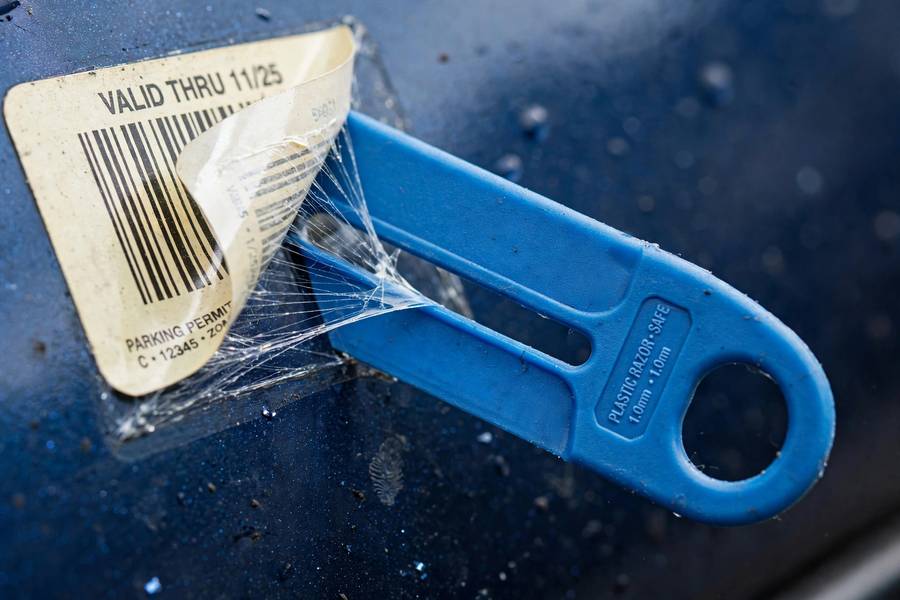
The plastic razor deserves emphasis: a sharp plastic edge that peels and scrapes without scratching clear coat. Under ten bucks. Would I spend my own money on one? I own three.
Paint: The Heat Method
Handles 90% of stickers on doors, fenders, trunk, bumpers:
1. Wash the area first. Dirt under your tools becomes sandpaper.
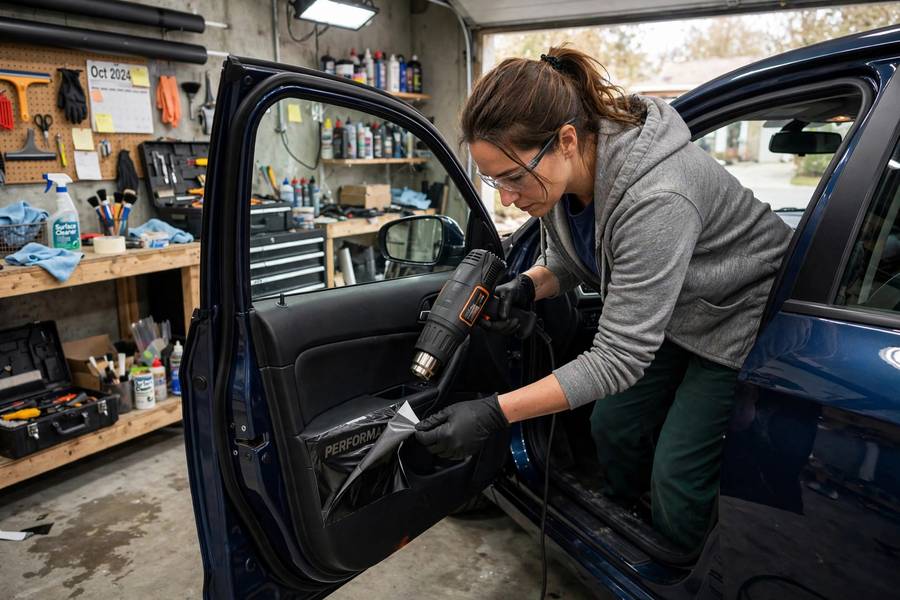
2. Heat evenly. Heat gun 6–8 inches away, moving constantly — never parked in one spot. Warm-to-hot, not scorching, 30–60 seconds. On a hot sunny day, park in direct sun for an hour and skip the gun. Too hot? If you can’t hold your hand near the panel, back off — excess heat bubbles clear coat and warps plastic trim.
3. Lift a corner with the plastic razor, just enough to grab.
4. Peel slow at a low angle — pull the sticker back over itself at ~30 degrees. Low angle keeps adhesive peeling off with the vinyl; pulling straight up tears it. Starts tearing? Stop, reheat, continue.
5. Reheat as you go. Big stickers cool while you peel — heat the leading edge every few inches.
For pinstripes and long vinyl: work in 12-inch sections, or use an eraser wheel — a rubber wheel in a drill that rubs vinyl off with friction. The pro tool for pinstripes: fast, paint-safe when kept moving, about $15. Moderate drill speed; dwelling builds heat. I removed miles of pinstripes with these in the shop.
Glass: Easier, With One Warning
Glass doesn’t scratch like clear coat — but rear defroster lines are fragile.
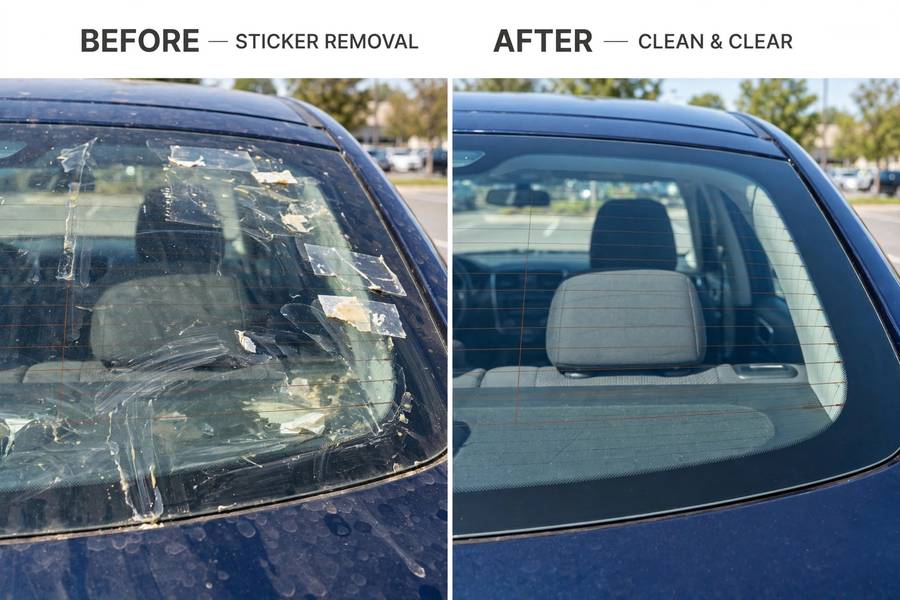
Side and front glass: heat, peel at a low angle, then use a metal razor in a holder at a shallow angle with soapy water as lubricant for residue. Metal is fine on glass (harder than the blade) — keep the angle low and the glass wet. Finish with glass cleaner.
Rear window — the defroster warning: those thin lines are conductive traces. Do NOT scrape across them — you’ll kill defroster lines. Heat, peel slowly, and remove residue with adhesive remover and microfiber, wiping along the lines, never across with a blade. Sticker over the grid? Be extra patient — let heat release it, don’t force it.
Tinted windows: tint film lives on the inside. Treat tinted glass like paint — heat and plastic only, no razor blades. Cutting tint means re-tinting the window.
Removing Leftover Adhesive
The sticker’s gone; a sticky ghost outline remains. Normal. Finish it:
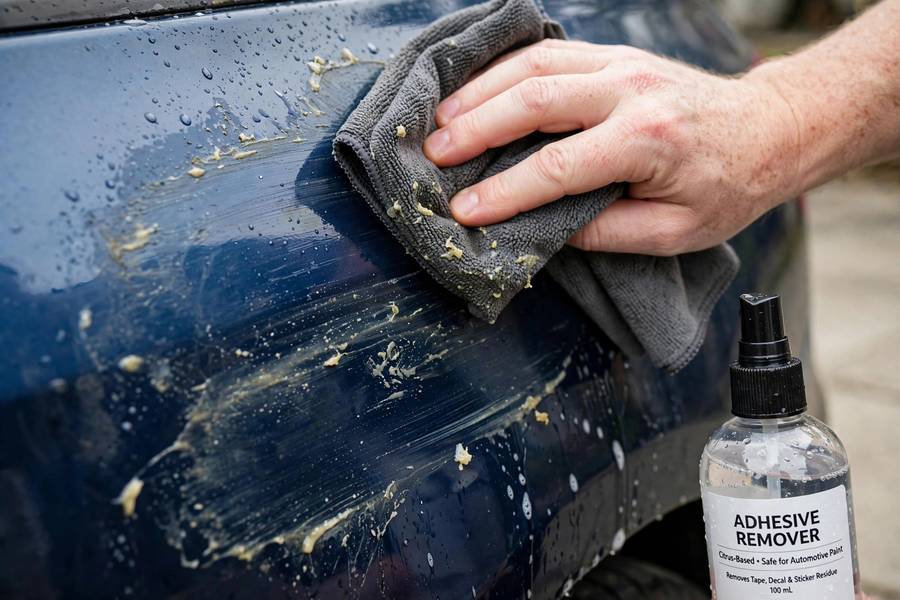
1. Soak, don’t scrub. Apply adhesive remover to a microfiber, lay it on the residue 2–3 minutes. Let chemistry work.
2. Wipe gently. The adhesive transfers to the cloth. Flip to clean sections frequently — rubbing dissolved glue around with a dirty cloth just spreads it.
3. Repeat for baked-on spots. Old residue may need two or three passes. Patience.
4. Isopropyl alcohol wipe. Removes the oily film removers leave and preps for wax.
5. Wash and wax. Removers strip wax, and paint under a long-term sticker hasn’t seen protection in years — it needs it. Slightly brighter paint under the old sticker is normal fading of the exposed area; it evens out with regular waxing.
WD-40 in a pinch: works — spray, dwell, wipe — but leaves an oily film needing full cleanup. Dedicated removers cost barely more and work better.
Special Cases: Badges, Old Decals, Wraps
Dealer badges (stuck-on): usually foam tape. Heat the badge, saw dental floss or fishing line behind it to cut the foam, clean residue with remover. (If it doesn’t move with heat and floss, check for screws or rivets before forcing it.)
Bumper stickers on plastic bumpers: same method, less heat — plastic heats faster and can warp. Check panel temperature often.
Old, baked-on, cracked decals: brittle vinyl shatters instead of peeling. Heat helps, but expect flakes — this is where the eraser wheel earns its money. Budget 45 minutes for a decade-old decal, not 10.
Ghost outlines: a faint outline after removal is usually wax buildup or differential fading. A light cleaner-wax typically blends it; stubborn cases even out over months of sun.
Wraps and matte paint: extra caution. Heat damages wraps; matte paint can’t be polished to fix mistakes. Minimal heat, plastic tools only, test remover in a hidden spot. When in doubt, let a professional detailer handle it — matte paint is unforgiving.
Mistakes That Ruin Paint
The shop hall of shame:
- Metal tools on paint. The #1 cause of removal damage. Just don’t.
- No heat, just yanking. Tears vinyl, leaves all adhesive, tempts aggressive methods.
- Wrong chemicals. Acetone, brake cleaner, lacquer thinner on clear coat.
- Scrubbing residue with abrasives. Chemistry first, always.
- Heat gun parked in one spot. Bubbles clear coat, warps trim. Keep it moving.
- Rushing. Every damage story starts with “I was in a hurry.” The sticker waited years; it can wait twenty minutes.
Related: while detailing the exterior, give the front end full attention — cloudy lenses age a car fast, and our guide on how to clean car headlights pairs naturally with a debadged, de-stickered front end. A clean car is a system, not a sticker.
Frequently Asked Questions
Heat the sticker with a heat gun or hair dryer for 30-60 seconds, lift a corner with a plastic razor blade, and peel slowly at a low 30-degree angle, reheating as you go. Remove residue with paint-safe adhesive remover, then wash and wax. Never use metal blades or harsh solvents on paint.
Goo Gone Automotive and 3M Adhesive Remover are formulated to be safe on automotive clear coat. Apply, let dwell 2-3 minutes, wipe gently with microfiber, and finish with isopropyl alcohol. Avoid acetone, brake cleaner, or lacquer thinner on paint.
Yes on side and front glass: use a metal razor in a holder at a shallow angle with soapy water as lubricant. Never scrape across rear-window defroster lines. On tinted windows, use heat and plastic blades only to avoid cutting the tint film.
Old sun-baked vinyl turns brittle and flakes instead of peeling. Soften with heat, then use an eraser wheel (rubber wheel in a drill, about $15), keeping it moving to avoid heat buildup. Finish with adhesive remover. Expect 30-45 minutes for a decade-old sticker.
Not if done correctly. Most dealer badges use foam tape: heat the badge, cut through the foam with dental floss or fishing line, and clean residue with adhesive remover. Paint underneath is often slightly brighter from less sun exposure and evens out with waxing.
Soak the residue with paint-safe adhesive remover for 2-3 minutes, wipe gently with microfiber (flipping to clean sections), and repeat for stubborn spots. Finish with isopropyl alcohol, then wash and wax since removers strip existing wax protection.