Basketball Shooting Practice Routine: A 30-Minute Daily Plan

For years my “practice routine” was showing up at the court and shooting until I got bored — usually about twenty minutes of increasingly lazy threes. Then I started timing structured sessions, and my shooting percentage in games jumped within a month. The difference wasn’t talent or some secret drill. It was just a plan: same blocks, same order, every session, with everything counted.
This is that plan — a 30-minute daily basketball shooting practice routine that covers form, mid-range, threes, and game-speed reps in a tight, repeatable structure. It assumes you know the basics; if your form needs work first, read our guide to proper shooting form alongside this.
In this guide:
- Why a Routine Beats Random Shooting
- The 30-Minute Structure
- Block 1: Warm-Up and Form (0–8 min)
- Block 2: Mid-Range Mastery (8–18 min)
- Block 3: Threes and Range (18–25 min)
- Block 4: Game-Speed Finisher (25–30 min)
- Adapting the Routine to Your Level
- Setup: What You Need
- The 5 Routine Killers
- The Weekly Schedule
Why a Routine Beats Random Shooting
Random shooting trains whatever you feel like, which means it trains your strengths and ignores your weaknesses. A routine forces balance: form work you wouldn’t choose, weak-side reps you’d skip, and conditioning you’d avoid. It also creates a feedback loop — same drills, same counts, day after day — so improvement (or slumps) show up in the numbers instead of hiding in vibes.
Thirty minutes is deliberate. It’s short enough to do daily without dreading it, long enough to get 150–250 quality reps, and it respects real life — jobs, school, weather. The best routine is the one you actually repeat, and “just 30 minutes” is psychologically undefeated.
The 30-Minute Structure
Four blocks, always in this order. The order matters: form first (fresh legs, clean mechanics), then mid-range (grooving the motion), then threes (range on a warmed-up shot), then game-speed (fatigue + pressure, like the fourth quarter). Never shuffle them — the progression from fresh to fatigued is the training.
Block 1: Warm-Up and Form (0–8 min)
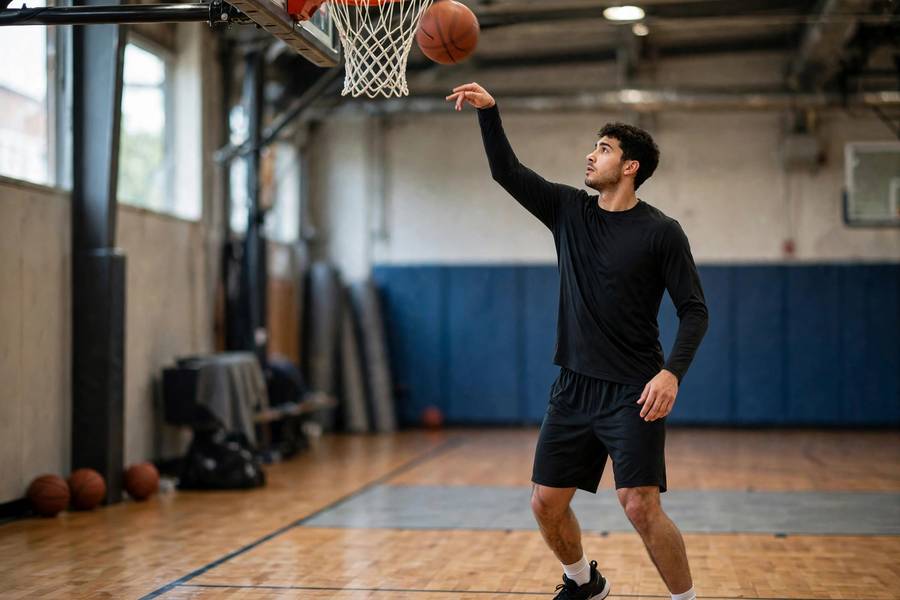
- One-hand form shooting (3 min): 3 feet from the rim, shooting hand only, 25 makes. Feel the release, watch the backspin, hold every follow-through.
- Spot form shooting (3 min): 5 feet out, both hands, 5 spots around the basket, 3 makes each. Same perfect form, slightly more distance.
- Free throws with routine (2 min): 10 free throws using your exact game routine — same dribbles, same breath, same timing. This is mental rehearsal, not just shooting.
Rule for Block 1: if your form feels off, stay here longer and steal time from Block 3. Form is the foundation; everything else is decoration. Rushing past a broken release to shoot threes is how slumps are born.
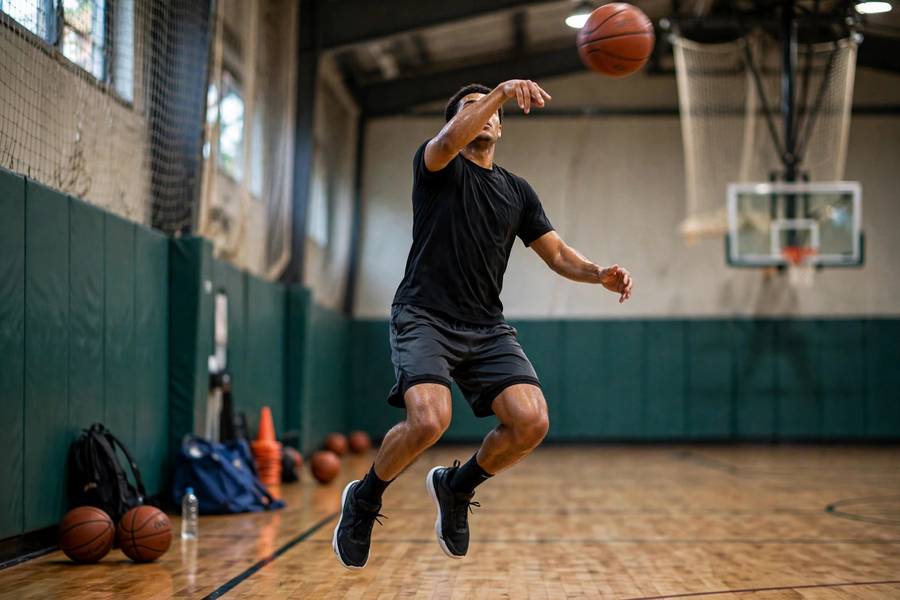
Block 2: Mid-Range Mastery (8–18 min)
The mid-range is the most undervalued zone in modern basketball — and the best teacher of pure shooting. Ten minutes here:
- 5-spot mid-range (5 min): baseline, wing, elbow, elbow, wing — 10 shots each, 50 total. Count makes. Target: 60%+ before you consider this block ‘owned.’
- One-dribble pull-ups (5 min): from each wing and the top, one hard dribble into the shot, 10 per spot. This is the bridge between standstill shooting and creating your own shot.
Shoot every rep like it matters — catch ready, quick dip, balanced finish. Lazy mid-range reps teach your body that lazy is acceptable, and your body believes what you rehearse.
Block 3: Threes and Range (18–25 min)
Seven minutes for the deep ball — but only within YOUR range. If your form breaks down at the arc, shoot long twos instead and extend gradually over weeks.
- Spot threes (4 min): 5 spots around the arc, 5 shots each. Track makes per spot — your corners-vs-top numbers reveal your real range map.
- Shot-prep threes (3 min): start under the basket, sprint to a spot, catch (real or imagined pass), shoot. 10 reps. Trains the footwork of getting set quickly — the skill that separates practice shooters from game shooters.
Key cue for threes: more legs, same arms. The most common three-point error is arming the ball — pushing harder with the upper body, which flattens the arc. Your release should feel identical to your mid-range shot; only the leg drive changes.
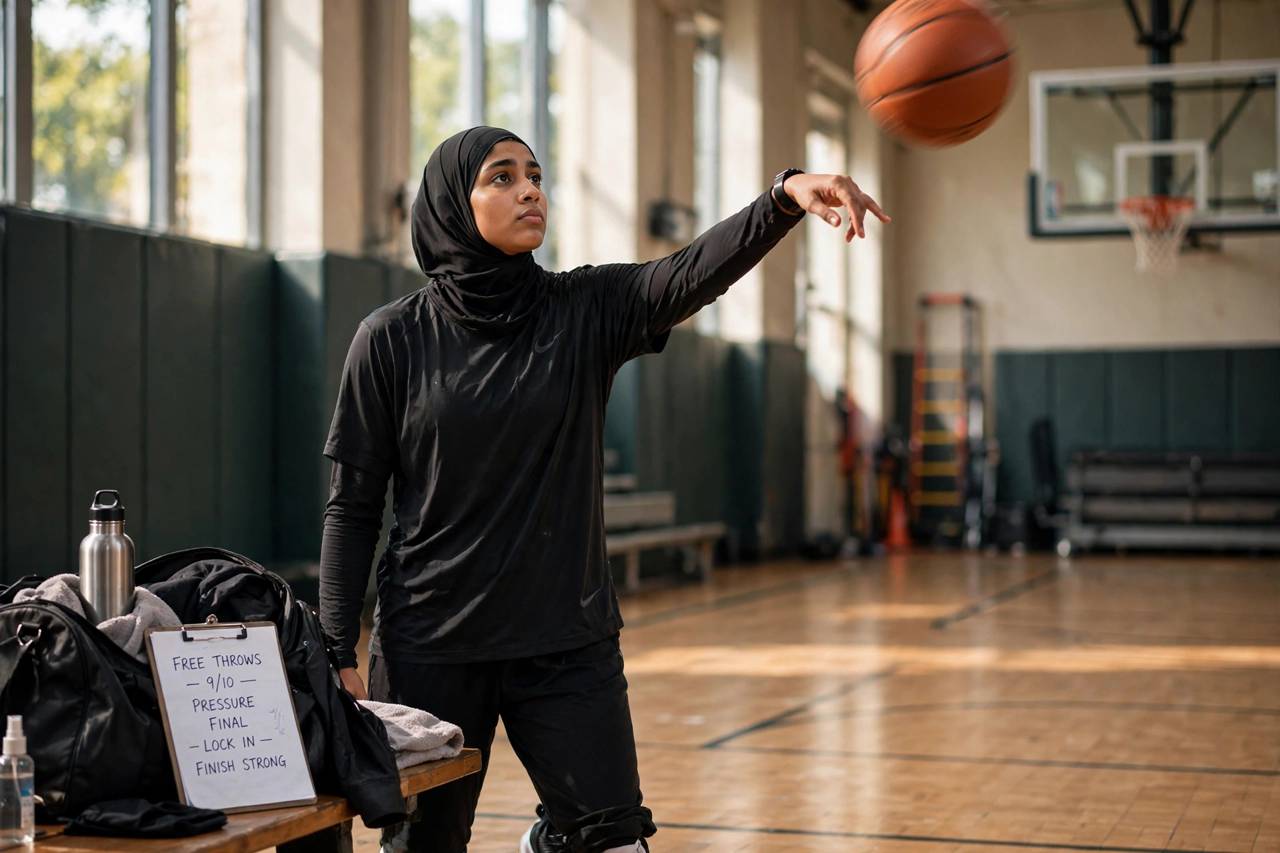
Block 4: Game-Speed Finisher (25–30 min)
The last five minutes simulate the fourth quarter: tired legs, racing clock, consequences. Pick one finisher and rotate daily:
- 3-minute shooting: 3 spots, 3 minutes, count total makes. Beat yesterday’s number.
- Free throw pressure: 10 free throws; every miss = 5 push-ups immediately. Feel the weight.
- Beat the pro: you vs imaginary pro to 11 (you get 1 per make, pro gets 2 per miss).
- 52-point drill: one shot from 5 spots, 2 points for swish, 1 for make, 0 for miss — then free throws. Classic.
Finish every session with 5 free throws using your full routine. It’s a psychological bookend: you started composed, you finish composed. Walk off the court like a shooter.
Adapting the Routine to Your Level
- True beginners: double Block 1, halve Block 3 (shoot long twos instead of threes), and keep Block 4 simple — just 3-minute shooting. Our beginner shooting drills pair well here.
- Intermediate: run it as written. When Block 2 hits 70%+, add a second ball or a partner’s closeout to raise difficulty.
- Advanced: add a conditioning element — 30 seconds of defensive slides between blocks — and turn Block 4 into full pressure (consequences for misses).
- No partner? the whole routine works solo. Use imagined passes and sprint-backs to simulate game movement.
- Only 15 minutes? do Block 1 + Block 4. Form and pressure — the two things that matter most.
Setup: What You Need
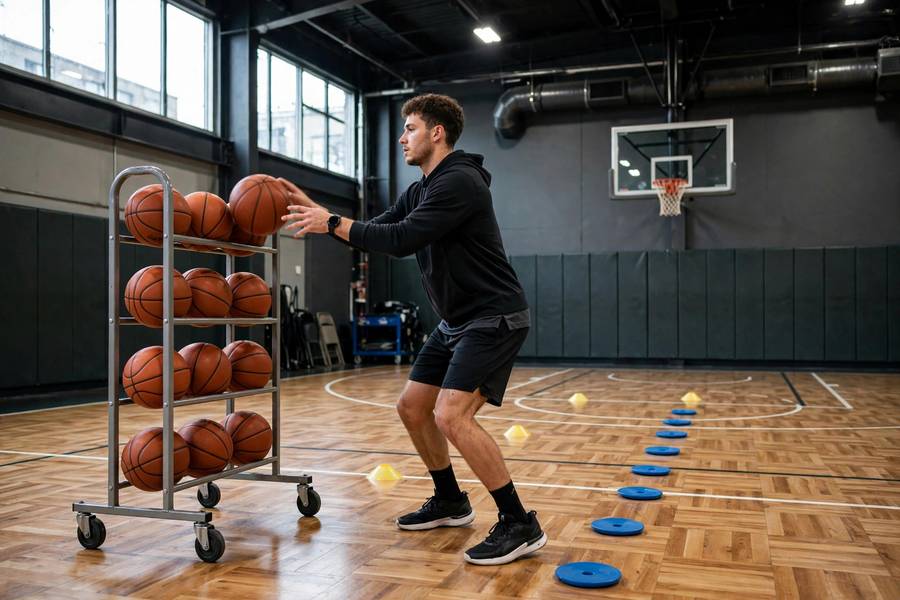
The beauty of this routine is how little it requires: a ball, a hoop, and optionally a phone and a notebook. The phone is for filming one block per session — rotate which block — so you catch mechanical drift early. The notebook (or notes app) is for your three tracked numbers. A ball rack or rebounder helps if you have one, but chasing your own makes is also free conditioning. If you train with a partner, alternate shooter/rebounder every block; you will double your reps per minute and the competitive energy sharpens Block 4.
The 5 Routine Killers
- Skipping the warm-up block. Jumping straight to threes with cold mechanics grooves cold mechanics. The first eight minutes are non-negotiable.
- Uncounted reps. The moment you stop counting makes, your brain downshifts into autopilot. Count everything — the numbers are the program.
- Range creep. Drifting back a step every few shots because it feels good to hit a deep one. Stay at your programmed spots; extend range deliberately, not accidentally.
- Phone breaks. Thirty minutes is short — one “quick check” turns it into forty-five with dead legs and a cold shot. Phone stays in your pocket except for filming.
- Skipping bad days. Everyone wants to practice when the shot feels good. The routine earns its keep on bad days, when it forces your mechanics back into line rep by rep. Show up especially when you do not feel like it.
The Weekly Schedule
Daily is ideal, but 5 days a week with 2 rest days works — shooting is skill work, and skills consolidate during rest. One day a week, swap the routine for pure competition: play 21, run a shooting game with friends, or just play pickup. The routine builds the weapon; games teach you when to fire it.
Track three numbers weekly: Block 2 make percentage, Block 3 makes per spot, and your Block 4 finisher score. When all three climb for a month straight, you’re not just practicing — you’re becoming a shooter. And remember the physical engine behind it all: durable legs shoot better in minute 30 than fresh legs shoot in minute 1. Our guide to strength training for runners covers leg-strength programming that transfers directly to late-game shooting legs.
A good routine balances form work, mid-range reps, three-point shooting, and game-speed finishers in about 30 minutes. Structure it fresh-to-fatigued: form shooting first, then mid-range, then threes, then pressure reps — the same order every session so progress is measurable.
30 minutes of focused reps (150–250 shots) beats 2 hours of casual shooting. Beginners should start with 20–30 minutes; advanced players can extend to 45–60 with conditioning elements. Consistency matters far more than session length.
Aim for 150–250 quality reps in 30 minutes. Count makes, not just attempts — and never sacrifice form for volume. 100 perfect reps teach more than 300 sloppy ones.
5–6 days a week is ideal; daily is fine for shooting since it’s skill work, not heavy loading. Take 1–2 rest days — motor patterns consolidate during rest, and you’ll often shoot better after a day off.
Always form shooting first, close to the basket, while fresh. Grooving perfect mechanics with fresh legs sets the template; everything later in the session just extends that template to more distance and more speed.