How Often to Change Engine Oil (The 3,000-Mile Myth, Busted)

“Every 3,000 miles” — you’ve heard it a thousand times. It’s printed on the little sticker in the corner of your windshield. But here’s what most drivers don’t realize: that number is a relic from an era of carburetors and conventional oil, and for most modern cars, it’s flat-out wrong. Changing your oil too often wastes money; changing it too rarely wrecks engines. So how often should you actually change your engine oil? The real answer depends on your car, your oil, and how you drive — and I’m going to help you figure out exactly what that means for you. Here’s how often to change engine oil based on your car, your oil type, and your driving habits.
How Often to Change Engine Oil: The Short Answer
Short answer: most modern cars need an oil change every 7,500 to 10,000 miles when using full synthetic oil, or roughly once a year — whichever comes first. Many manufacturers now specify intervals in that range, and some go even longer.
But the real answer is: check your owner’s manual. I know, I know — nobody reads the manual. But the engineers who designed your engine tested it extensively and published a specific interval for a reason. That number accounts for your engine’s design, the oil specification it requires, and normal driving conditions. It’s the single most trustworthy source on this question, more than any sticker, quick-lube shop, or internet article (including this one).
Why the Old 3,000-Mile Rule Is Outdated
The 3,000-mile rule made sense in the 1970s and 80s. Engines ran hotter and dirtier, conventional oil broke down faster, and tolerances were looser. A lot has changed since then:
- Oil chemistry improved dramatically. Modern full-synthetic oils resist breakdown, handle heat better, and keep engines cleaner far longer than old conventional oils.
- Engines got more precise. Tighter tolerances, better filtration, and electronic fuel injection mean less contamination of the oil.
- Manufacturers extended intervals. Most now recommend 7,500-10,000+ miles for normal driving with the specified oil.
So why does the 3,000-mile sticker persist? Partly habit, partly because quick-lube shops sell more oil changes at shorter intervals. There’s nothing wrong with changing oil more often than required — it’s just spending money for protection you don’t need. The exception: if it helps you sleep at night and you don’t mind the cost, more frequent changes won’t hurt anything. But they’re not necessary.
What Actually Determines Your Oil Change Interval
Four factors matter:
1. The type of oil you use
- Conventional oil: the old standard. Change every 3,000-5,000 miles. Fewer and fewer modern cars spec this.
- Synthetic blend: a middle ground. Typically good for 5,000-7,500 miles.
- Full synthetic: the modern standard for most cars. Typically good for 7,500-10,000 miles, sometimes more.
Always use the oil specification in your owner’s manual — the viscosity grade (like 5W-30) and any manufacturer approvals matter. Using the wrong oil can void warranty coverage and, more importantly, doesn’t protect your engine the way the specified oil does.
2. How you drive (severe vs. normal conditions)
Your manual probably lists two schedules: normal and severe. Most people assume they’re “normal” drivers. Most people are wrong. You likely qualify for the severe schedule if you regularly do any of the following:
- Mostly short trips (under 5-10 miles) where the engine doesn’t fully warm up
- Extensive idling or stop-and-go traffic
- Driving in very hot, very cold, or very dusty conditions
- Towing or carrying heavy loads
- Frequent high-speed driving
Short trips are the big one — an engine that never fully warms up accumulates moisture and fuel contamination in the oil. If your daily drive is 3 miles each way in traffic, follow the severe schedule even if it feels like gentle driving.
3. Your car’s age and condition
Older, high-mileage engines often benefit from slightly shorter intervals — they tend to consume or contaminate oil faster due to worn seals and looser tolerances. If your car is burning oil between changes (check the dipstick monthly), shorter intervals plus regular top-ups keep things safe.
4. Time, not just miles
Oil degrades with time even sitting in the engine. If you drive very little — say 3,000 miles a year — don’t wait three years to hit the mileage interval. Change it at least once a year. Moisture accumulation and additive breakdown don’t care about your odometer.
How to Check Your Oil Level Between Changes
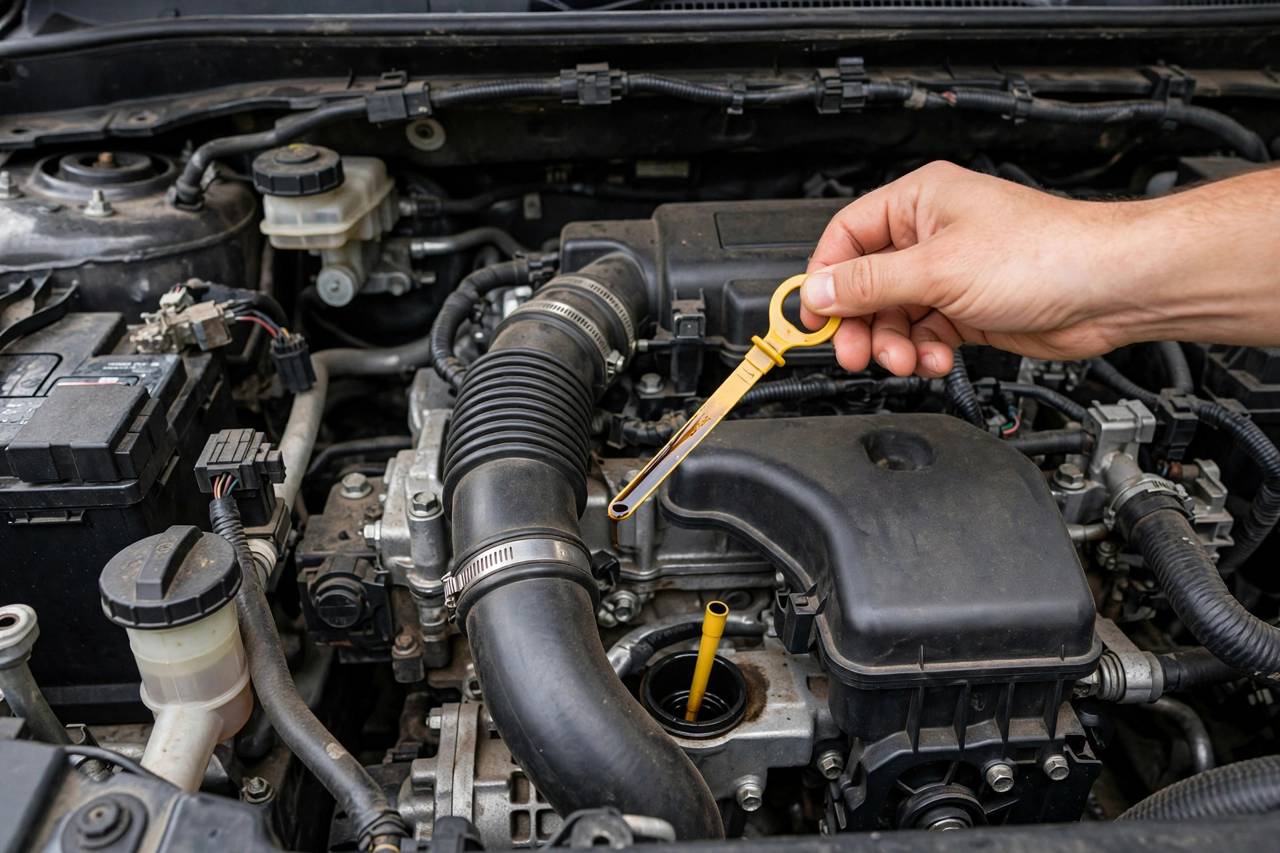
Whatever interval you follow, check the level monthly. It takes 60 seconds:
- Park on level ground with a cool or warm (not hot) engine.
- Pull the dipstick, wipe it clean with a rag.
- Reinsert it fully, then pull it out again.
- Read the level between the MIN and MAX marks. Top up if it’s low, using the correct oil.
While you’re looking, note the color. Fresh oil is amber and translucent. Oil that’s dark brown or black isn’t necessarily bad — oil darkens as it does its job suspending contaminants — but if it’s thick, gritty, or smells like fuel, the change is overdue.
Oil isn’t the only fluid that keeps your engine happy — coolant plays an equally critical role in engine health. If you’re building a maintenance routine, my guide on what coolant does in a car explains the other half of the equation.

DIY vs. Shop: What Changes the Math
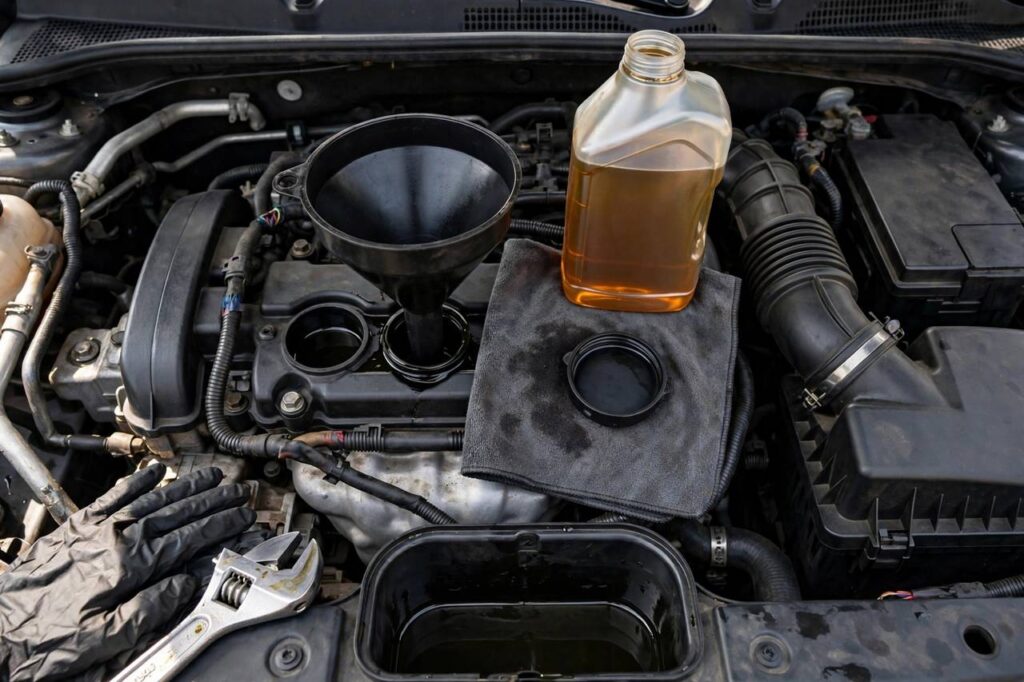
Doing it yourself costs roughly the price of oil and a filter — often half (or less) of what a shop charges. It’s a genuinely easy job: drain plug out, old oil out, filter off, filter on, plug in, new oil in. Thirty minutes once you’ve done it once.
But there are honest reasons to use a shop: proper disposal of used oil (never pour it down a drain — auto parts stores accept it free), no mess in your driveway, and the multi-point inspection many shops include. If you DIY, factor in the disposal trip. If you use a shop, ignore the upsell pressure for the 3,000-mile interval and follow your manual instead.
One tip regardless of who does it: keep records. A simple log of date, mileage, and oil type protects your warranty and helps you (or the next owner) track the car’s history. It takes ten seconds and it’s worth real money at resale time.
Special Cases Worth Knowing
- Brand-new cars: Follow the manual’s break-in guidance. Some manufacturers specify an earlier first change; most don’t anymore. Don’t overthink it — just follow the book.
- Turbocharged engines: Turbos run extremely hot and are hard on oil. Stick to the specified full synthetic and don’t stretch intervals — turbo failures from neglected oil are expensive lessons.
- Diesel engines: Diesels typically hold more oil and have different intervals — often longer in miles but with specific oil requirements. Again: the manual.
- Cars that sit unused: Change yearly regardless of miles. Consider a battery maintainer too, since sitting kills batteries faster than driving does.
- High-performance or track use: If you’re tracking the car, all bets are off — change it after every few track days. Extreme heat shears oil fast.

The Bottom Line
When it comes to how often to change engine oil, stop changing it every 3,000 miles out of habit. Read your manual, use the specified oil, be honest about whether your driving is “severe,” and check the dipstick monthly. That combination protects your engine better than any arbitrary mileage number ever will — and it’ll save you real money over the life of the car.
Engine maintenance isn’t complicated. It’s just consistent. The owners with 200,000-mile cars aren’t lucky — they’re the ones who followed the schedule.
Oil Life Monitors: Can You Trust the Dashboard?
Many modern cars have an oil life monitoring system — that percentage countdown on your dashboard. Here’s what most drivers don’t know: it doesn’t actually analyze your oil. Instead, it runs an algorithm based on your driving patterns: cold starts, trip lengths, engine temperatures, RPM ranges, and elapsed time. It’s essentially a smart estimate, and a pretty good one.
Can you trust it? Generally, yes — manufacturers calibrate these systems conservatively, and they’re based on far more data about your actual driving than a flat mileage number. When it hits 15-20%, start planning your change; don’t wait for 0%. The one caveat: the monitor assumes you’re using the specified oil. If you cheaped out with conventional oil in an engine that specs synthetic, the monitor’s math no longer applies. Garbage in, garbage out.
If your car has this system, use it as your primary reminder and the manual’s maximum interval as your backstop. The two together are more accurate than any sticker on your windshield.
Extended Intervals and High-Mileage Oils
You’ll see some synthetic oils marketed for 15,000 or even 20,000-mile intervals. Are they legit? The oil itself can often handle it — but your engine’s filtration, your driving conditions, and your manufacturer’s warranty terms might not agree. Here’s my practical take: extended-drain oils are fine if your manual allows extended intervals and you drive mostly gentle highway miles. But if you’re still under warranty, follow the manufacturer’s schedule regardless of what the bottle claims. A denied warranty claim costs infinitely more than the oil change you skipped.
High-mileage oils (marketed for cars over 75,000 miles) contain seal conditioners and extra detergents aimed at older engines. They’re a reasonable choice for aging cars with minor leaks or consumption — not miracle cures, but a sensible formulation for the job. They don’t change the interval math much; they just suit the engine’s stage of life better.
FAQ
Is it bad to change oil too often?
Not for the engine — fresh oil never hurts. It’s just unnecessary expense and waste. Changing full synthetic every 3,000 miles when your manual says 10,000 means you’re throwing away oil with most of its life left, three times over.
What happens if I wait too long between oil changes?
Oil breaks down, loses its lubricating properties, and turns to sludge. That sludge clogs passages, starves components of lubrication, and accelerates wear — eventually leading to expensive repairs like turbo failure, timing chain wear, or complete engine failure.
Does the oil change interval differ for synthetic vs. conventional oil?
Yes, significantly. Conventional oil typically needs changing every 3,000-5,000 miles, while full synthetic lasts 7,500-10,000 miles or more. Always follow the interval for the oil type you’re actually using, as specified in your manual.
Should I change oil based on time or mileage?
Whichever comes first. Mileage measures use; time measures degradation. Low-mileage drivers should change at least once a year even if they haven’t hit the mileage interval, because oil breaks down and absorbs moisture over time.
Can I switch from conventional to synthetic oil?
Yes — it’s safe in virtually all modern engines, and it’s an upgrade in protection. Just make sure the synthetic meets your manufacturer’s specification (viscosity grade and approvals). Once you switch, you can follow the longer synthetic interval.
Keep Reading
- How to Change Engine Air Filter: 10-Minute DIY Guide
- How Often Should You Change Spark Plugs? Real Intervals by Plug Type
- How Often Should You Change Transmission Fluid? Real Intervals, Not Marketing