How to Replace Windshield Wipers: A 10-Minute Job Anyone Can Do

Streaky windshield? That annoying chattering sound every time it rains? Replacing your wipers is one of the easiest car maintenance jobs there is — it takes about ten minutes, needs zero tools, and costs a fraction of what a shop charges. If you can work a simple clip, you already know how to replace windshield wipers — you just do not know it yet. Let me show you.
I have done this job hundreds of times — on my own cars, friends’ cars, family cars. It is genuinely one of those satisfying little wins: small effort, immediately noticeable result. Grab your new blades and let us get it done.
How to Tell Your Wipers Need Replacing
Wiper blades typically last 6 to 12 months depending on climate and use. Watch for these telltale signs:
- Streaking: lines of uncleared water across your field of vision
- Skipping or chattering: the blade bounces across the glass instead of gliding
- Squeaking: persistent noise even on a wet windshield
- Visible damage: cracked, split, or torn rubber edges; a bent frame
- Missed spots: sections of the windshield the blade no longer contacts
Do not wait until you can barely see in a downpour. Wipers are a safety item — if they are struggling, replace them now. It is cheap insurance.
Buying the Right Wiper Blades
This is the step people overthink. Here is what actually matters:
Get the correct size
Wiper blades come in specific lengths, and driver and passenger sides are often different sizes. Check your owner’s manual, or use the fitment guide at any auto parts store (enter your year, make, and model). Many stores also have a printed catalog hanging in the wiper aisle. When in doubt, measure your old blades — but verify against the guide, since a previous owner may have installed the wrong size.
Choose the blade type
- Conventional (frame) blades: the classic design with a metal frame. Cheapest, works fine, but the frame can clog with ice and snow.
- Beam blades: a single curved piece of spring steel with no exposed frame. Better pressure distribution, sleeker look, superior winter performance. My recommendation for most drivers.
- Hybrid blades: combine a frame design with an aerodynamic shell. A solid middle ground.
- Winter blades: heavy-duty rubber boot over the frame to prevent ice buildup. Worth it if you deal with real winters.
Match the attachment type too — most modern cars use a J-hook arm, but some use pin or bayonet styles. Quality blade packaging lists compatible arm types, and most include adapters. Buy both blades at once; they wear at the same rate.
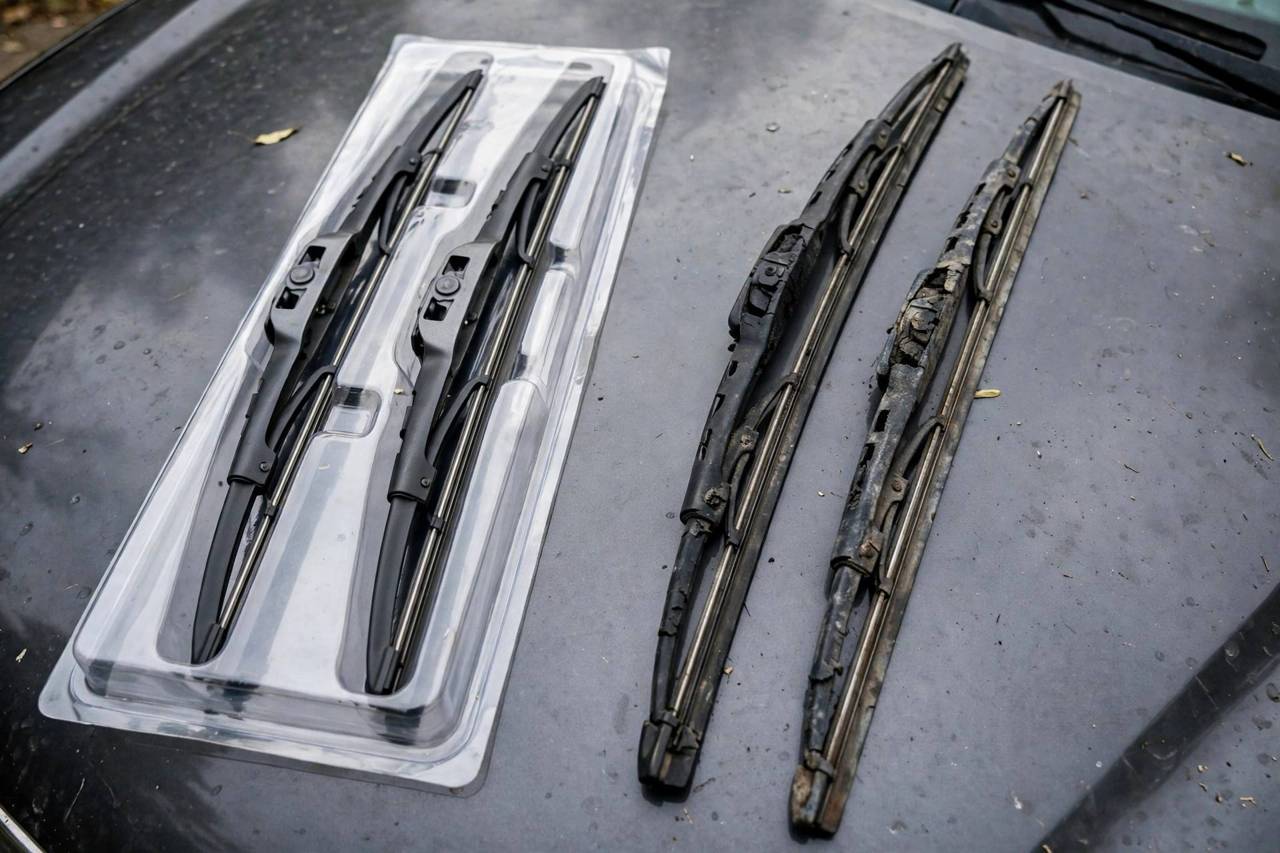
How to Replace Windshield Wipers: Step by Step
Park on level ground, and let us go one side at a time so you always have a reference for how things fit.
Step 1: Lift the wiper arm
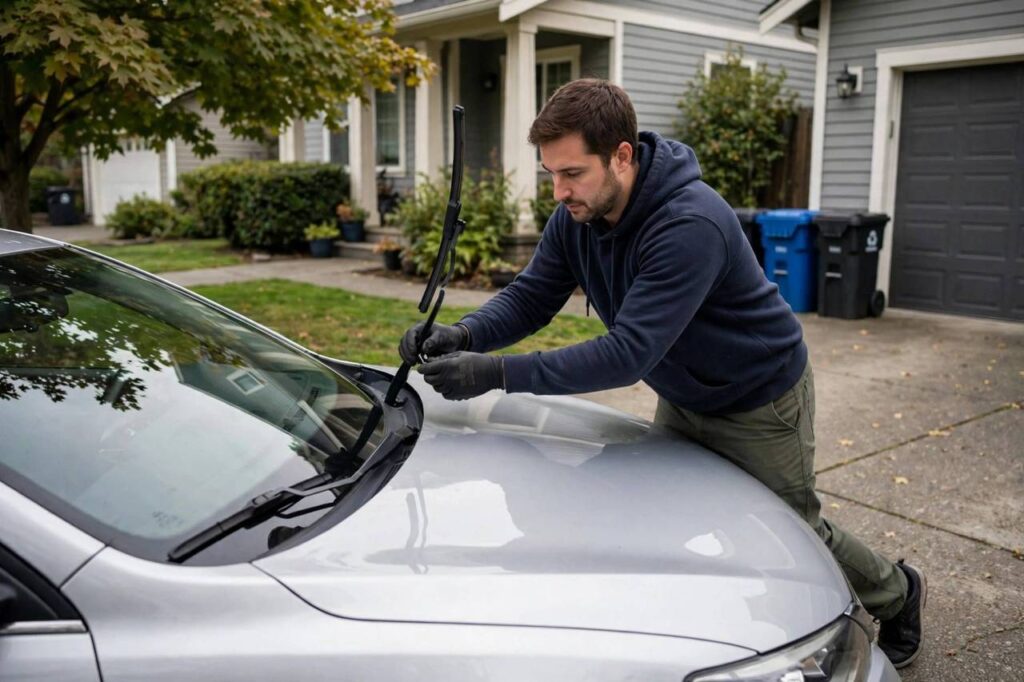
Gently pull the wiper arm away from the windshield until it locks in the raised position. Important: once the blade is removed, never let the bare metal arm snap back onto the glass — it can crack or chip your windshield. If the arm will not stay up on its own, lay a folded towel on the windshield under it as a cushion.
Step 2: Remove the old blade
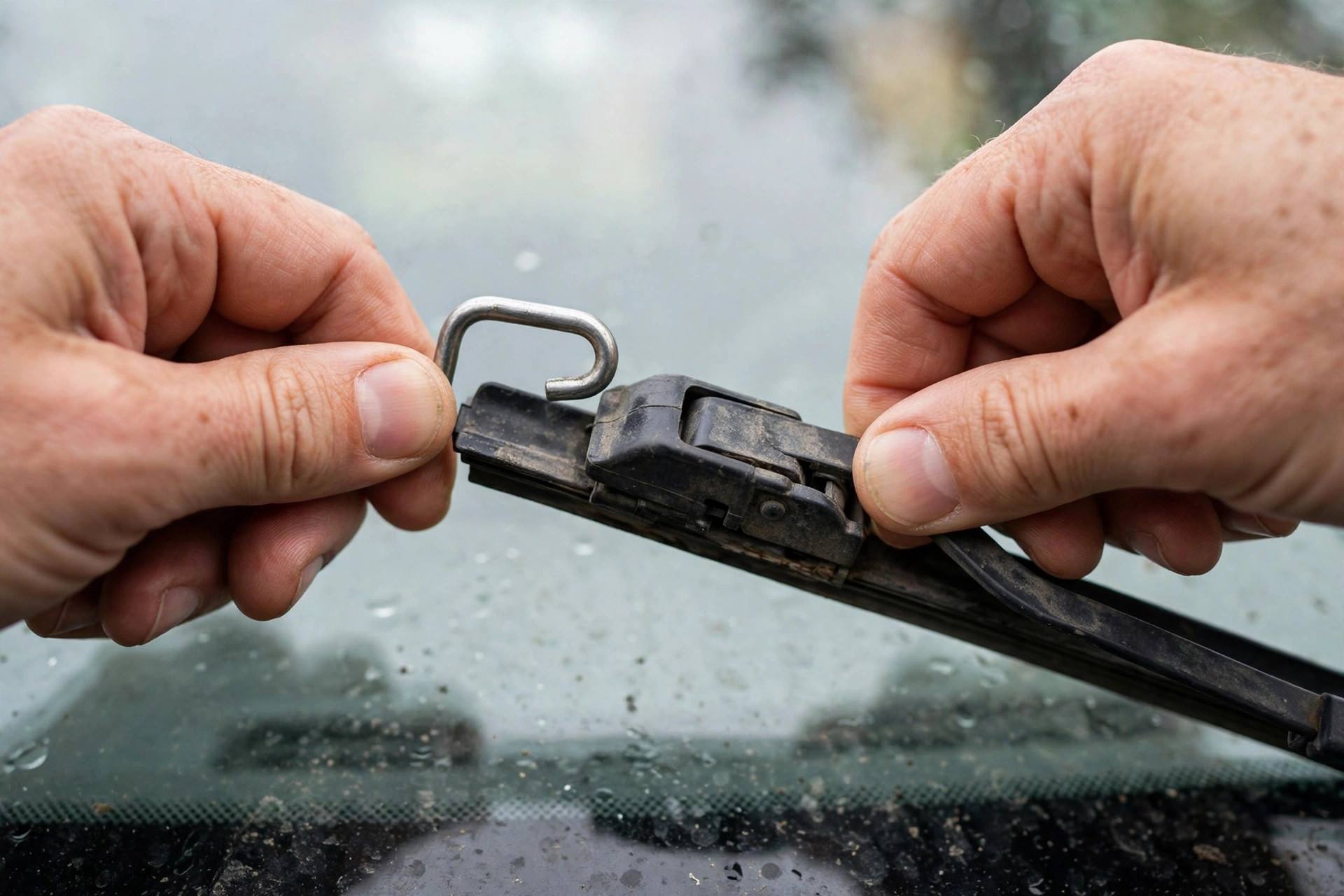
Look at where the blade meets the arm — you will see the attachment mechanism. For the common J-hook type:
- Rotate the blade so it is perpendicular to the arm (like a T shape).
- Locate the small release tab or button on the underside of the connector.
- Press the tab and slide the blade down and off the hook.
Pin-type and bayonet attachments work slightly differently — squeeze the sides or twist — but the principle is the same: find the release, press or squeeze, slide off. If it fights you, stop and look closely rather than forcing it; the mechanism is simple once you see it.
Step 3: Attach the new blade
This is the reverse of removal:
- Remove the plastic protector from the new blade’s rubber edge (do not forget this — everyone does once).
- Slide the new blade’s connector onto the arm’s hook.
- Rotate it back parallel to the arm until you hear or feel a click. That click means it is locked.
- Give it a gentle tug to confirm it is secure.
Step 4: Lower the arm and test
Carefully lower the arm back onto the windshield. Repeat on the other side. Then test with washer fluid — run the wipers and check for full, clean, streak-free sweeps across the glass.
Do Not Forget the Rear Wiper
If your vehicle has a rear wiper, it needs love too — and it is often the most neglected blade on the car. Rear wipers usually use a simpler attachment (often a direct clip or small hook) and are replaced the same way: lift, release, slide off, click the new one on. Check your manual for the specific size, since rear blades are much shorter than front ones.
Make Your New Blades Last Longer
A few habits will stretch that 6-to-12-month lifespan toward the longer end:
- Clean the rubber regularly. Wipe the blade edges with a damp cloth every few weeks — road grime is what degrades rubber fastest.
- Keep the windshield clean. A gritty windshield sands your blades down. Regular washing protects them.
- Never run wipers on a dry windshield. Always use washer fluid first. Dry friction destroys rubber.
- Clear ice manually. Do not use wipers as ice scrapers — lift them off the glass or use a scraper, and never force a frozen blade.
- Top up washer fluid. Running the reservoir dry means dry wiping, which wears blades fast.
- Park in shade when possible. UV and heat are rubber’s worst enemies over time.
Common Mistakes to Avoid
- Letting the bare arm snap onto the glass. This is the big one — a cracked windshield turns a $30 job into a $300 one. Cushion it or hold it.
- Replacing only one blade. They age together; a new blade paired with a worn one gives uneven clearing.
- Forgetting the plastic protector. That little sleeve on the new rubber must come off, or the blade will smear.
- Buying by guess instead of fitment. Wrong size means poor contact and streaking. Check the guide.
- Forcing the connector. If it will not click, you likely have the wrong adapter or angle — look, do not muscle it.

When Wipers Are Not the Problem
Sometimes new blades still streak, and the blades are not at fault. Check these culprits:
- Weak wiper arm spring: if the arm does not press firmly against the glass, blades cannot do their job. Arms can be replaced or re-tensioned.
- Contaminated windshield: road film, tree sap, or wax buildup needs a dedicated glass cleaner or clay treatment — blades cannot cut through grime.
- Worn wiper linkage: excessive play or uneven movement suggests worn linkage bushings, a shop job but an inexpensive one.
- Bad washer nozzles: clogged or misaimed nozzles starve the blades of fluid. Clean with a pin and realign.
Rule out the simple stuff first — nine times out of ten, fresh blades on a clean windshield solve everything.
Winter and Extreme Weather Wiper Care
Cold climates punish wipers. Ice is the number one killer of wiper blades, and a few winter habits make a real difference. When frost is forecast, lift your wiper arms off the windshield overnight so the rubber does not freeze to the glass – this single habit prevents most winter blade damage. In the morning, clear ice with a scraper and defroster, never with the wipers themselves.
Consider switching to dedicated winter blades before the cold season. Their rubber boot keeps the frame from packing with ice and snow, maintaining even pressure across the blade when conventional blades would be frozen stiff. They cost a bit more but the visibility difference in a snowstorm is dramatic.
Keep your washer reservoir filled with winter-rated fluid (it resists freezing to much lower temperatures than summer fluid), and run the washers briefly after clearing the windshield to flush away salty slush. Salt is corrosive to both rubber and metal wiper components, so a quick rinse pays off.
In extreme heat, the enemy flips: UV and baked-on grime. Park in shade when you can, and give the blades a quick wipe whenever you wash the car. Heat-hardened rubber loses flexibility and starts chattering – if your blades sat through a brutal summer, inspect them in fall rather than waiting for the first rain to reveal the damage. A seasonal blade check – spring and fall – takes thirty seconds and keeps you ahead of every weather surprise. Think of wipers like toothbrushes: cheap, essential, and far more effective when replaced before they are completely worn out. Your future self, driving through a midnight downpour with perfect visibility, will thank you. Ten minutes today saves a white-knuckle drive tomorrow.
FAQ
How often should windshield wipers be replaced?
Every 6 to 12 months is the standard guidance, with the shorter end for harsh climates (intense sun, ice, heavy rain). Replace sooner if you notice streaking, chattering, or visible rubber damage — do not wait for a scheduled interval when visibility is compromised.
Can I replace windshield wipers myself?
Absolutely — it is one of the simplest car maintenance tasks. No tools are required for most vehicles; the blades clip on and off the wiper arms. The whole job typically takes under 10 minutes for both front blades.
Do I need the same size wipers on both sides?
Often, no. The driver and passenger blades are frequently different lengths. Always check your vehicle’s fitment guide (owner’s manual or auto parts store catalog) rather than assuming both sides match.
Are expensive wiper blades worth it?
Mid-range beam blades offer the best value for most drivers — noticeably better performance and longevity than bargain conventional blades, without the premium price of top-tier options. Avoid the absolute cheapest blades; their rubber compounds degrade quickly.
Why do my new wipers still streak?
Common causes: the plastic protector was left on the rubber, the windshield has built-up road film (clean it thoroughly with glass cleaner), the wrong blade size was installed, or the wiper arm spring is weak. Check these in order before assuming the blades are defective.
Keep Reading
- Should You Replace All Spark Plugs at Once? My Shop Answer
- How Much Does It Cost to Replace a CVT Transmission? (2026 Prices)