How Long to Boil Eggs: Soft, Jammy & Hard Times

“How long do I boil eggs?” sounds like the simplest question in cooking. But ask five people and you’ll get five answers — because the answer depends on what you want inside: a flowing soft yolk, a jammy center, or a fully set hard yolk. Different goals, different minutes.
I’ve tested this in my kitchen until the timings are muscle memory. Here’s the minute-by-minute doneness ladder for large eggs, what each level looks like when you cut it open, the method that peels cleanly, and the adjustments for egg size, starting temperature, and altitude. One chart to rule them all.
Quick-Answer Doneness Chart (Large Eggs, Boil-Start)
For large eggs, lowered into already-boiling water:
| Doneness | Time | The yolk |
|---|---|---|
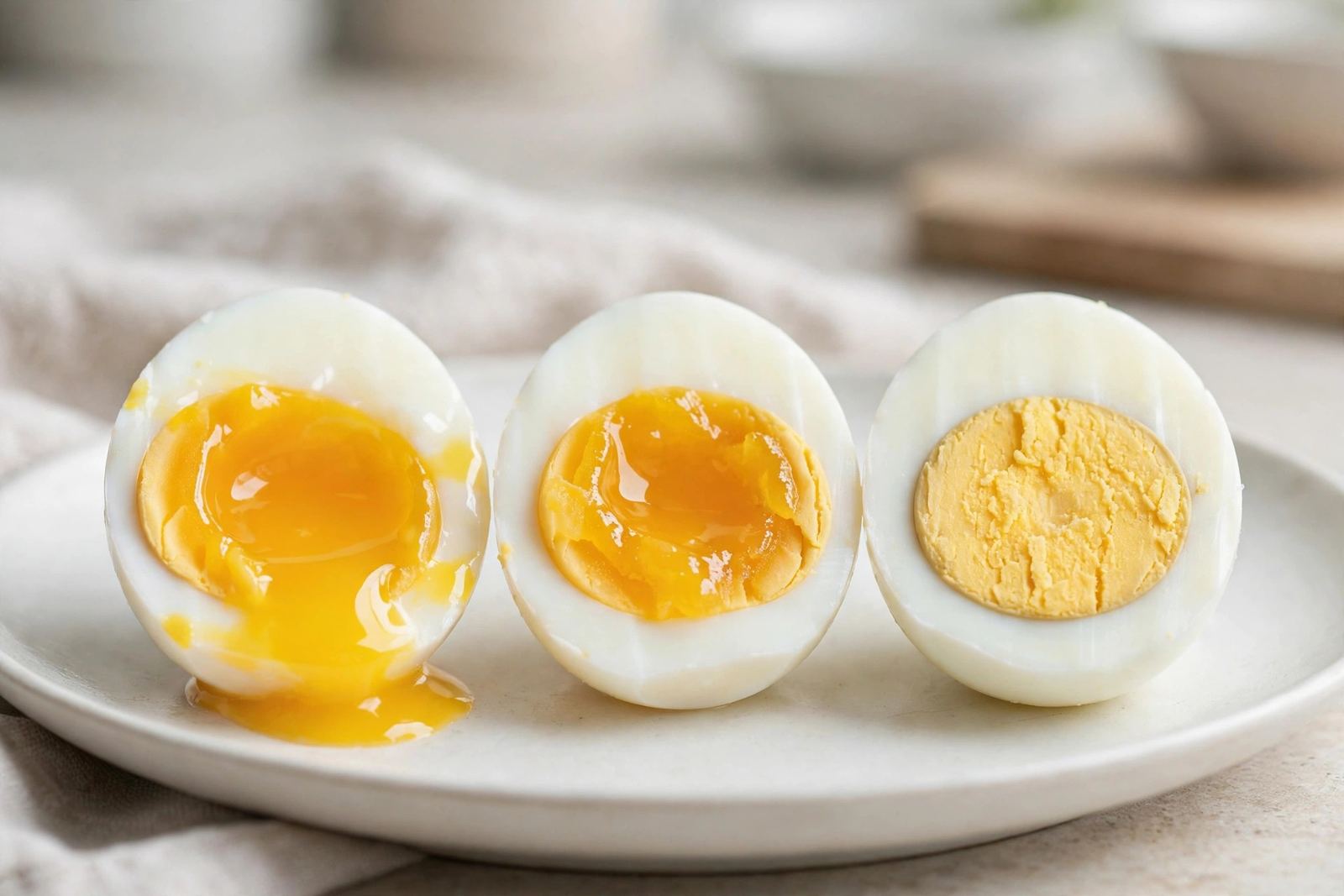
| Soft-boiled | 6–7 min | Flowing, liquid yolk; just-set white |
| Jammy | 9–10 min | Gel-like, jammy core; fully set white |
| Hard-boiled | 11–12 min | Fully set, creamy yolk; firm white |
Tape this to the inside of a cabinet door. These three ranges cover nearly everything you’ll ever want a boiled egg to be.
What Each Doneness Looks and Feels Like
Times are useless without the visual. Cut one open and check:
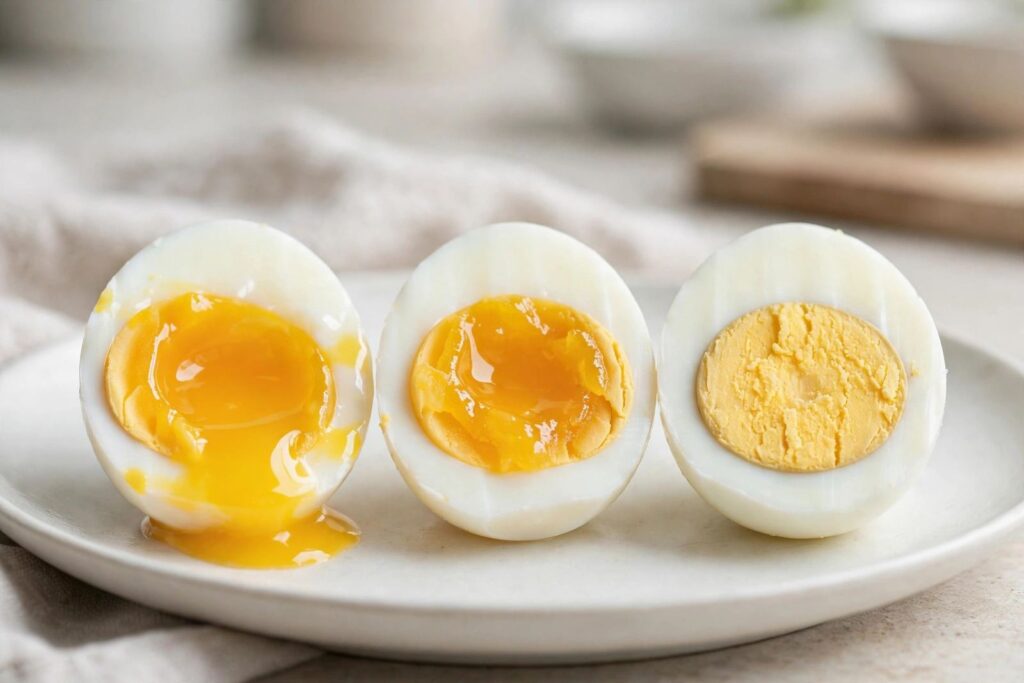
- Soft (6–7 min): the white is just set — tender, delicate — and the yolk flows when you cut in. This is the soldiers-and-toast egg, the ramen egg, the one you eat with a spoon out of an egg cup.
- Jammy (9–10 min): the white is fully set and the yolk is gel-like — not liquid, not chalky, but a rich jammy core that holds its shape and glistens. The Instagram egg. The grain-bowl egg. The one people photograph.
- Hard (11–12 min): white firm, yolk fully set but creamy — not crumbly, not green (more on the green ring below). The deviled-egg egg, the egg-salad egg, the lunchbox egg.
Best uses per level: soft for toast and ramen, jammy for salads and bowls, hard for deviled eggs and egg salad. Match the doneness to the dish and everything gets better.
Maria’s Tested Method, Step by Step
The method matters as much as the minutes. Here’s the boil-start method I use:
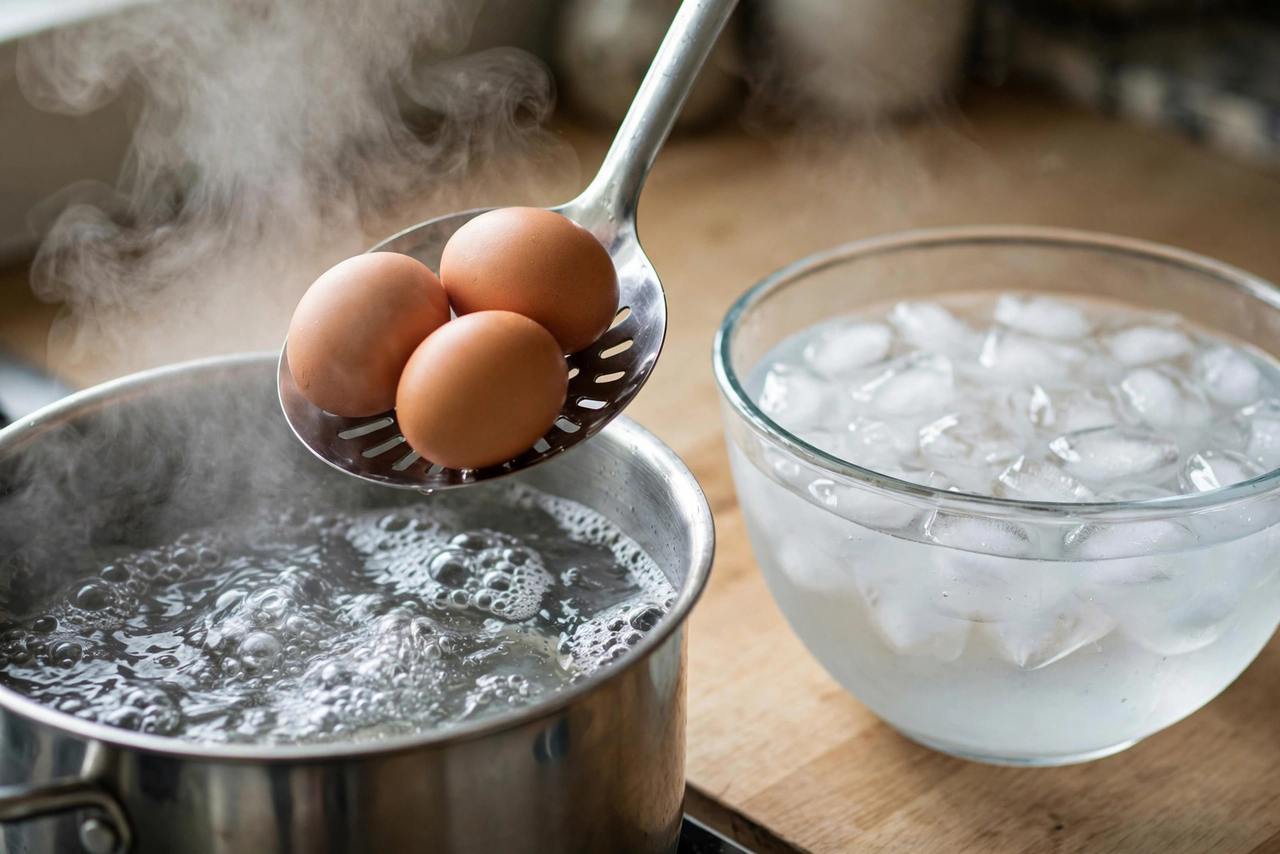
- Boil the water first. Big pot, water deep enough to cover the eggs by 1 inch.
- Lower the eggs gently. Cold eggs from the fridge go in with a slotted spoon — don’t drop them; thermal shock cracks shells.
- Start the timer. The moment the eggs are in: exactly 11 minutes for my standard hard-boiled (tender whites, creamy fully-set yolk).
- Ice bath. When the timer rings, move the eggs straight into ice water for ~10 minutes. This stops the cooking instantly (no green ring) and makes peeling dramatically easier.
Why boil-start instead of cold-start? Two reasons: the timing is precise (the clock starts when the eggs hit boiling water, not when the pot “feels ready”), and boil-start eggs peel easier. The cold-start method — cover with cold water, bring to a boil, then take off heat and stand ~17 minutes — also works, and some cooks swear by it. But for repeatability, boil-start wins.
Cold-Start vs Boil-Start — Which and Why
The honest comparison:
- Boil-start: precise timing, easier peeling. My default and my recommendation.
- Cold-start (~17-min off-heat stand): gentler on the eggs (fewer cracks from thermal shock), and it works fine — but the timing is less precise because “bring to a boil” varies by stove and pot.
If your eggs keep cracking, try cold-start. If your peeling is the problem, switch to boil-start. Most kitchens should standardize on one — and mine is boil-start.
Troubleshooting: Green Ring on the Yolk
The gray-green ring around the yolk has a name — an iron-sulfide ring — and a cause: overcooking, slow cooling, or both. When eggs cook too long or cool too slowly, iron from the yolk reacts with sulfur from the white at the boundary. The result is cosmetic, not dangerous: it’s harmless, and the egg is perfectly fine to eat.
But it’s ugly, and it’s a signal you overshot. The fix: shorten the timer slightly and always use the ice bath. The ~10-minute ice bath stops the reaction cold — literally.
Troubleshooting: Cracks and Hard-to-Peel Shells
Cracks: fridge-cold eggs hitting boiling water can crack from thermal shock. Lower them gently with the slotted spoon; don’t drop. If cracking persists, switch to the cold-start method.
Hard to peel: three fixes, in order of impact:
1. Ice bath — the rapid cooling shrinks the egg slightly inside the shell, loosening the bond.
2. Peel under running water — the water gets under the shell membrane and lifts it.
3. Use slightly older eggs — very fresh eggs are harder to peel (the membrane clings tighter). Eggs that have sat in the fridge for a week peel noticeably easier.
One Unified Altitude Adjustment Table
Water boils at a lower temperature at altitude, so eggs need more time. Using the dietium bands (sourced):
| Altitude | Adjustment |
|---|---|
| Below 2,000 ft | No change — use the standard chart |
| 2,000–5,000 ft | Add 1 minute |
| 5,000–8,000 ft | Add 2–3 minutes |
Note: one source gives the lower band as 3,000–5,000 ft; the dietium bands above (2,000–5,000 ft) are what’s used here.
Egg Size and Starting-Temperature Adjustments
The chart assumes large eggs from the fridge. Adjust:
- Medium eggs: subtract ~1 minute
- Extra-large or jumbo: add 1–2 minutes
- Room-temperature eggs (left out 30+ minutes): subtract about 30 seconds — they start warmer, so they finish faster
These are the tweaks that turn the chart from “close” to “exact” for your kitchen.
Safety and Storage
- Chill cooked eggs within 2 hours. Don’t leave boiled eggs on the counter all afternoon.
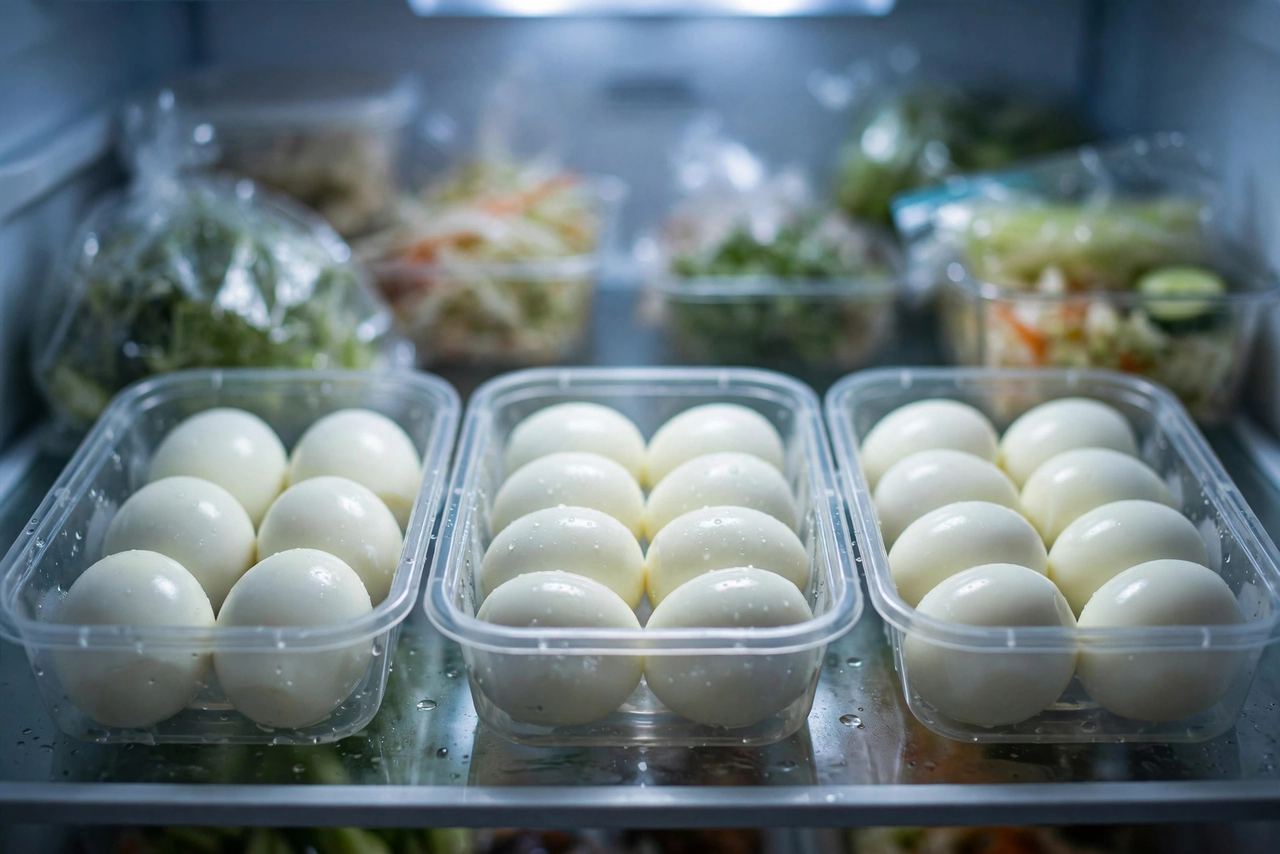
- Unpeeled, refrigerated: good for up to 1 week
- Peeled, refrigerated airtight: good for up to 3 days
- Store peeled eggs in an airtight container (a little water in the container keeps them from drying out — kitchen wisdom, widely practiced)
The 2-hour rule is the food-safety line. Everything else is quality.
What to Make With Each Doneness
- Soft (6–7 min): toast soldiers, ramen, breakfast bowls
- Jammy (9–10 min): salads, grain bowls, avocado toast
- Hard (11–12 min): deviled eggs, egg salad, lunchboxes, picnic snacks
Batch/Meal-Prep Boiling Tips
My own kitchen-tested batch routine: boil a full dozen at once using the 11-minute method; ice-bath the whole batch; store unpeeled in the fridge for the week’s lunches and snacks. Peel the night before or morning-of — peeled eggs dry out faster. And mark the boiled eggs (a pencil “B” on the shell) so nobody cracks one expecting raw.
A dozen eggs is the sweet spot for batch boiling: enough for a week of snacks and salads, few enough to fit in one pot with the 1-inch water cover. Any more and you’re crowding the pot, which means uneven cooking — the eggs in the middle lag behind. Two medium batches beat one overcrowded one, every time.
For the egg-safety companions: how-to-boil-eggs-so-they-peel-easily is the peeling deep-dive, how-to-tell-if-eggs-are-bad covers freshness, how-to-cook-perfect-scrambled-eggs is the other egg essential, and how-to-store-leftovers-safely-in-fridge keeps the rest of the fridge safe.
Frequently Asked Questions
How long do you boil eggs for jammy yolks?
9–10 minutes for large eggs in already-boiling water, followed by an ice bath. The yolk sets to a gel-like, jammy core — not liquid, not chalky.
Do you start eggs in cold or boiling water?
Boiling water (boil-start) gives more precise timing and easier peeling. Cold-start — cover with cold water, bring to a boil, then stand off-heat ~17 minutes — also works and cracks fewer eggs.
How do you stop boiled eggs from getting a green ring around the yolk?
The green ring is iron sulfide from overcooking or slow cooling — harmless but ugly. Shorten the timer slightly and always use a ~10-minute ice bath to stop the cooking instantly.
How long do hard-boiled eggs last in the fridge?
Unpeeled: up to 1 week refrigerated. Peeled: up to 3 days in an airtight container. Chill cooked eggs within 2 hours of cooking.
Why are my boiled eggs so hard to peel?
Use an ice bath (it loosens the shell’s bond), peel under running water, and use slightly older eggs — very fresh eggs cling tighter and peel worse.
Do I need to adjust boiling time at high altitude?
Yes — water boils cooler at altitude. Add 1 minute at 2,000–5,000 ft and 2–3 minutes at 5,000–8,000 ft. (One source gives the lower band as 3,000–5,000 ft; the bands here follow the sourced dietium table.)