How to Meal Prep for the Week: A Simple 90-Minute System

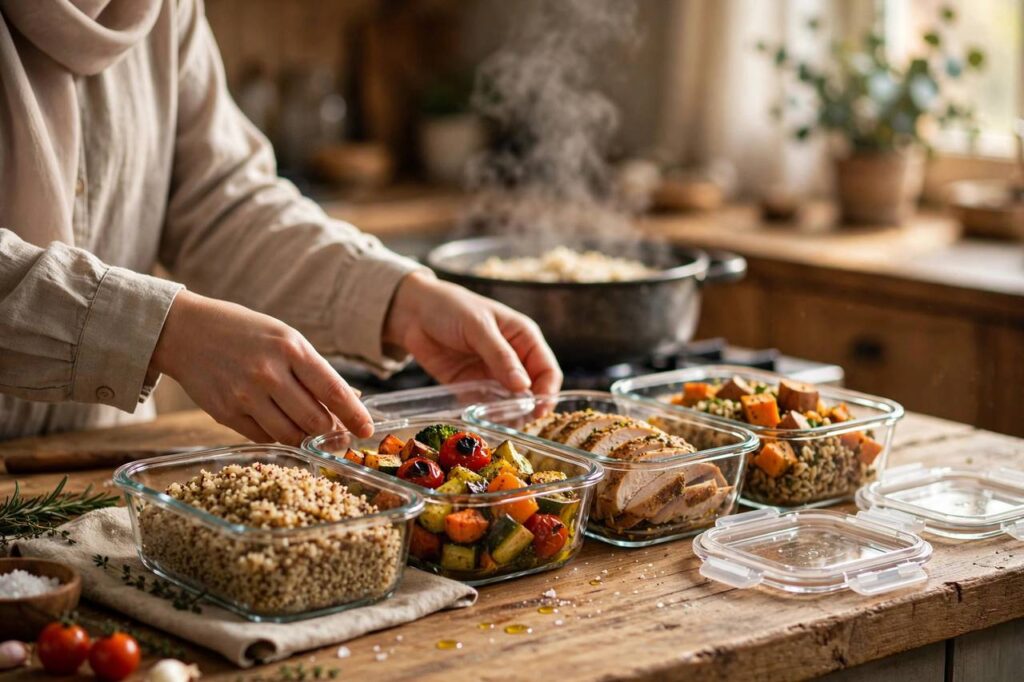
You know the feeling: Sunday evening, you stare into the fridge, realize dinner is a problem you have to solve again, and end up ordering takeout. Again. Meal prep for the week fixes exactly that — but only if you stop treating it like a punishment of twenty identical containers.
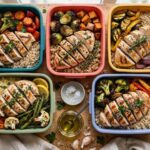
Here’s the shift that changes everything: don’t prep meals. Prep components. One good cooking session gives you cooked proteins, a grain, roasted vegetables, and a sauce, and then you mix and match all week so no two lunches taste the same.
What Meal Prep for the Week Actually Means (System, Not 20 Identical Boxes)
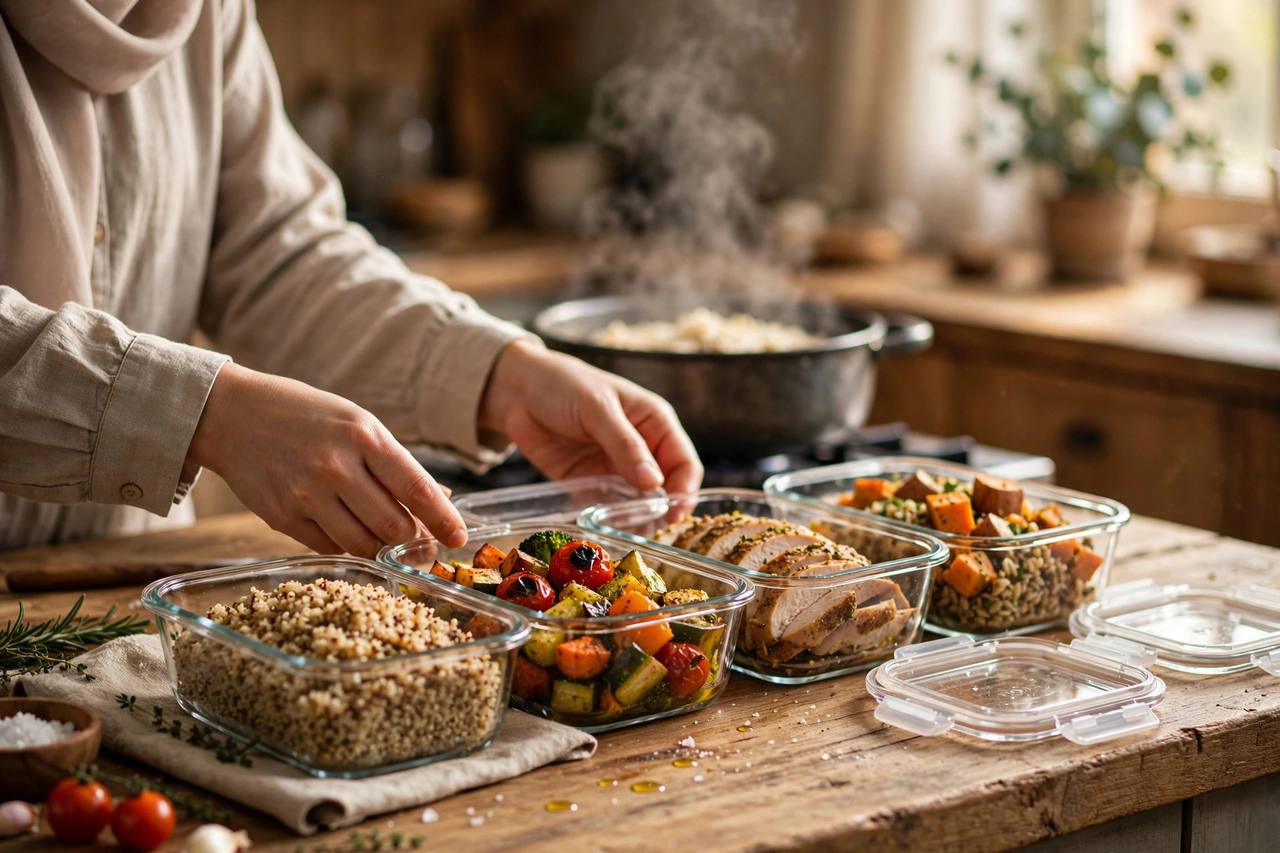
When people hear “meal prep,” they picture a fridge full of identical plastic boxes, each one a lonely portion of dry chicken and plain rice. That’s why most of us quit by Wednesday. A real weekly system works differently: you cook components once, store them separately, and assemble fresh-feeling bowls, wraps, and plates through the week. The cooking happens once; the variety happens at assembly time. If you are brand new to this, the beginner’s guide to meal prep covers the fundamentals this system builds on — this article assumes you’ve got the basics and want the full weekly execution.
The component approach solves the boredom problem at its root. Grilled chicken on Monday goes over rice with soy-ginger sauce; on Wednesday the same chicken lands in a wrap with hummus and pickled onions. Same batch of food, completely different dinner.
The Component Method: Protein + Grain + Veg + Sauce
Every successful meal-prep week is built from four buckets: a protein, a grain, vegetables, and a sauce. That quartet is the whole system. When your fridge holds two cooked proteins, one grain, a tray of roasted vegetables, and a jar of punchy sauce, you can build lunches and dinners for days without cooking again.
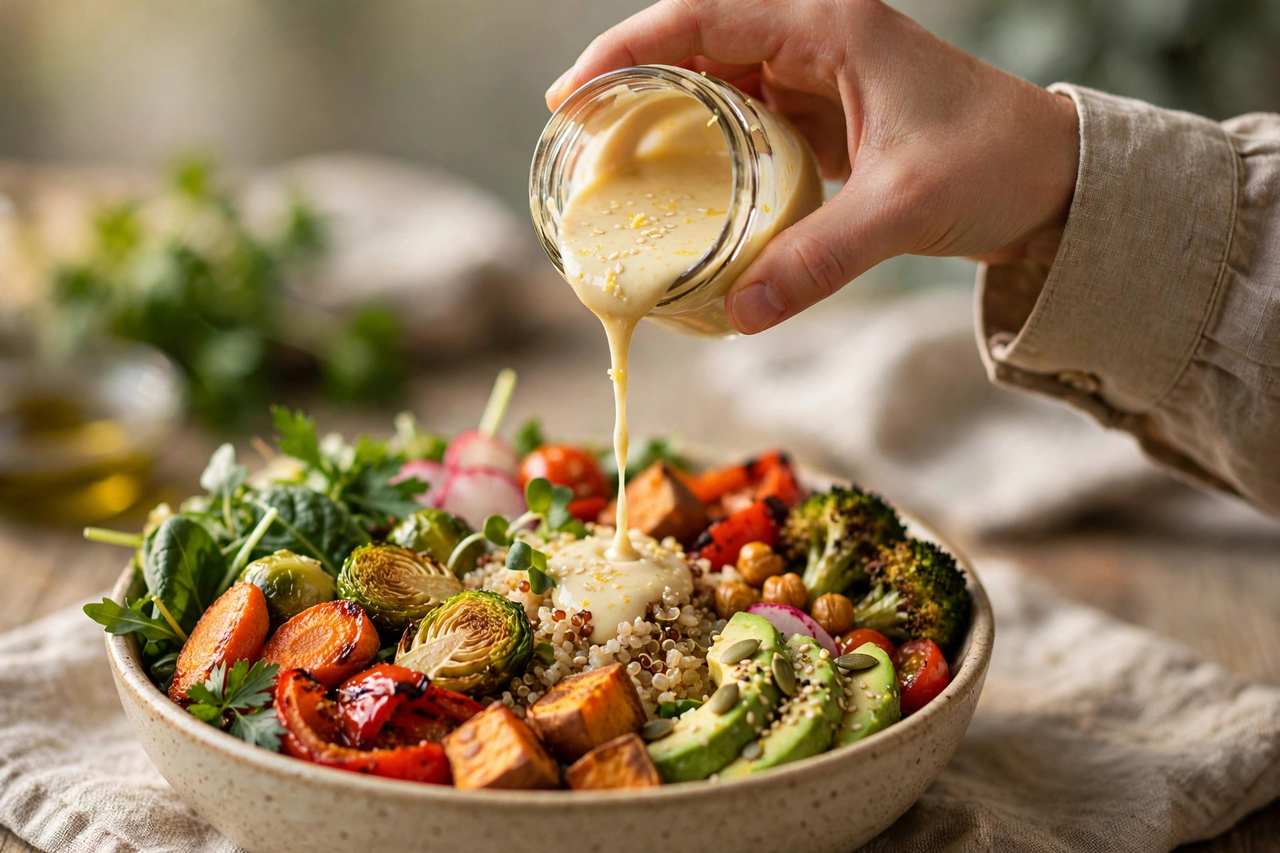
The sauce deserves special respect. Bland food is what kills meal prep by Thursday, and a bright sauce — herby chimichurri, tahini-lemon, a sharp vinaigrette — is what makes day-four chicken taste like a different dish from day-one chicken. Store sauces separately and add them at serving time; your taste buds will notice the difference.
Plan and Shop: Pick 2 Proteins, 1 Grain, 2 Veg, 1 Sauce
Before you touch a pan, decide your lineup. Two proteins (say, chicken thighs and chickpeas), one grain (brown rice or quinoa), two vegetables (broccoli and sweet potato), and one sauce (tahini-lemon). That shopping list is small enough to buy in one trip and big enough to feed you all week.
Pair this with an actual plan: if you’re deciding what the week looks like before you cook, read how to meal plan for the week alongside this guide — planning is choosing what to eat, and prep is the system that makes it happen. Write the five picks on paper, check your pantry for the grain and oil, and shop only for what’s missing. A short list is a fast trip.
The 90-Minute Session, Step by Step (Order Matters)
The whole session runs about 90 minutes, and the order is the secret. Grains take the longest unattended time, so they go first; sauce takes almost no cooking, so it goes last. Follow this sequence and everything finishes together.
First, get the grain on. Rinse your rice or quinoa, start it simmering, and set a timer — then don’t touch it. Second, while the grain cooks, season and start your proteins: chicken thighs in a hot oven or chickpeas roasting on a sheet pan. Third, chop your vegetables, toss them with oil and salt, and get them roasting at 425°F — the hot oven does the work while your proteins rest. Fourth, while everything roasts, whisk your sauce: tahini, lemon juice, garlic, water to loosen. That is it. Grain, proteins, vegetables, sauce — one oven, one pot, one bowl, about 90 minutes from knife-down to kitchen-clean.
The beginner version of this session is even shorter: start with one vegetable, one grain, and one protein for a one-hour cook. Master that hour first, then stretch it into the full 90-minute version when it feels easy.
The Food-Safety Cheat Sheet: Temps, Chill Window, Fridge Life
This is the part you don’t get to improvise. Cook poultry to 165°F internal temperature, ground meats to 160°F, and whole cuts of pork or beef — plus fish — to 145°F (whole cuts get a rest after cooking; poultry and ground meats don’t). A cheap instant-read thermometer removes all the guesswork.
Cooked food can’t sit on the counter. Get everything into the fridge within 2 hours — and within 1 hour if the room is hot. The temperature danger zone where bacteria grow fast is 40°F to 140°F, so the goal is to move food through that range quickly, not to let it linger. Once refrigerated, your cooked grains, proteins, roasted vegetables, and mixed dishes stay good for 3 to 4 days. Mark your calendar: whatever isn’t eaten by day four doesn’t get a second chance.
Storage Done Right: Cool, Portion, Label, Fridge vs Freezer
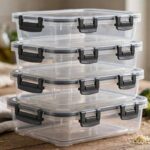
Never seal hot food in containers — let everything cool before the lids go on, or trapped steam turns your roasted vegetables soggy and your rice gummy. Portion into 4 to 6 grab-and-go boxes for the busiest days, and keep the rest in larger storage containers for dinners you’ll assemble later.
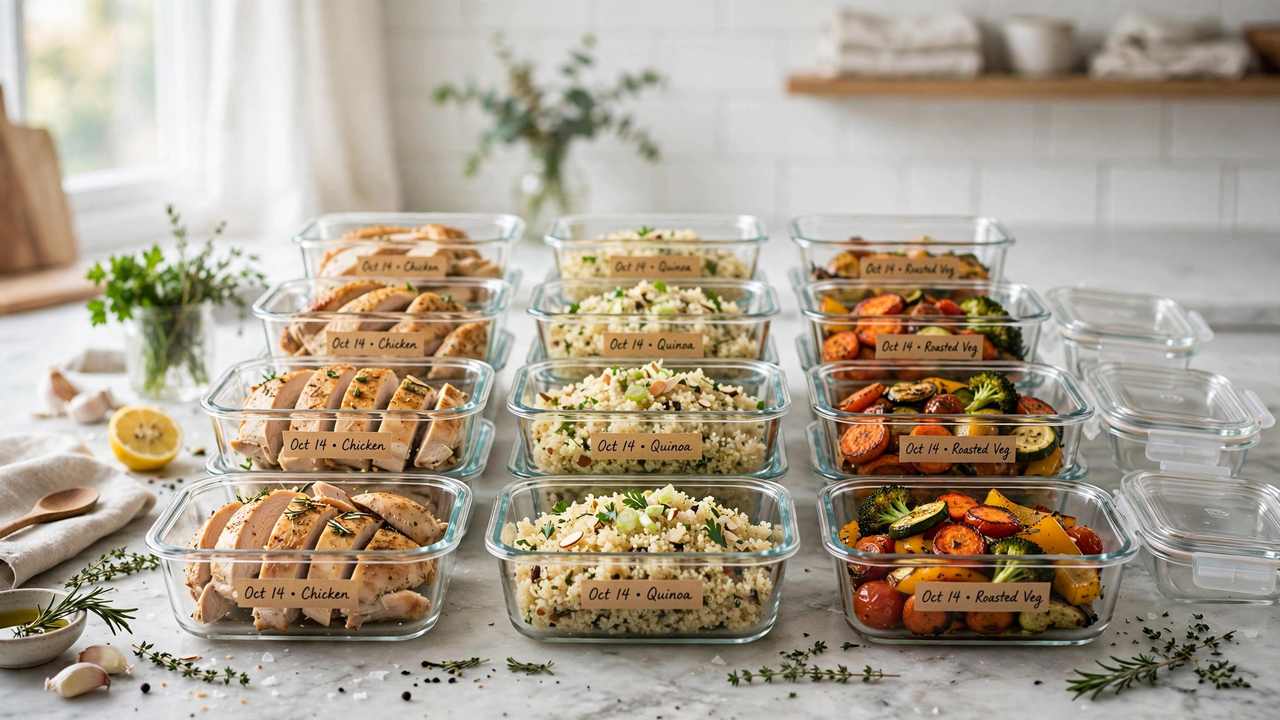
Label every container with the contents and the date. “Chicken + rice” means nothing on Thursday; “Chicken + rice — Sun” tells you exactly how long it’s been in there. Store components separately so nothing gets soggy: sauce in a jar, greens away from hot items, crispy bits apart from anything steamy. The deeper rules live in the guide to storing leftovers safely in the fridge — worth a read once. And anything you won’t eat within the 3-to-4-day window belongs in the freezer, not the back of the fridge.
The Half-Plate Formula for Balanced Boxes
When you assemble a box, think in halves, not measurements. Vegetables take up about half the container — the color and fiber of the meal. The other half splits between your protein and your grain. Then a spoonful of sauce over the top. That half-plate picture keeps boxes balanced without a scale, and it works whether you’re packing for work or plating dinner at home.
This formula is also why the component method beats fixed recipes: as long as your boxes follow the half-plate picture, you can swap any protein for any grain on any day and the meal still works nutritionally. The formula does the thinking; you do the eating.
Flavor Without Boredom
Boredom is a flavor problem, not a meal-prep problem. The same chicken tastes new when the sauce changes, and the same grain tastes new when the vegetables change. Keep two sauces in rotation if you can — one bright and acidic (lemon-tahini, salsa verde), one rich (peanut, chipotle mayo) — and alternate them.
Texture matters as much as taste. Crunch wakes up a soft bowl: toasted seeds, a handful of nuts, or pickled onions you stir in at serving time. And don’t underestimate fresh herbs — a shower of cilantro or parsley on day three makes food taste made-to-order instead of made-on-Sunday. If you have the right meal prep containers with compartments, use them: sauce in one section, crunch in another, everything else in the big one.
Reheating Right (165°F, Splash of Water, Refresh at Serving)
Reheat every leftover to 165°F — the same safe temperature as cooking poultry. Microwaves heat unevenly, so stir halfway and check that the center is steaming, not just the edges. A splash of water before reheating keeps rice and proteins from drying out; it turns to steam and rehydrates the food.
The final trick is refreshing at serving: a squeeze of lemon, a drizzle of the sauce you stored separately, a pinch of salt. Day-old food seasoned like fresh food tastes fresh. Cold grains and salads don’t need reheating, but cold proteins should have been stored cold the whole time and eaten within the same 3-to-4-day window.
Troubleshooting: Dry Chicken, Soggy Veg, Bland Bowls
Dry chicken almost always means overcooking — check with a thermometer and pull poultry at 165°F, not “a few more minutes to be safe.” Dark meat like thighs forgives more than breast, which is one reason thighs are the beginner’s friend. A splash of water at reheating also rescues slightly dry pieces.
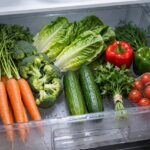
Soggy vegetables usually come from two mistakes: sealing containers while food is still steaming, and crowding the sheet pan so the vegetables steam instead of roast. Give your vegetables space at 425°F, cool them before the lids go on, and store them separately from the grain. Bland bowls are the sauce problem — if day three tastes flat, the answer is almost never “cook something else”; it’s “the sauce needs more acid or salt.” Taste and adjust before you pack.
A Sample Week, and the Habit That Keeps It Going
Here is what the components look like in practice. Monday: chicken thighs over brown rice with roasted broccoli and tahini-lemon. Tuesday: chickpea and roasted sweet potato wrap with the same tahini sauce. Wednesday: the chicken again, but now as a grain bowl with pickled onions and salsa verde from a second quick sauce you whisk on Wednesday morning. Thursday: sweet potato and chickpea curry-style bowl — the components are the same, the spices you shake on at serving change the story. Friday: clean-out night, a big plate of whatever components remain, warmed and topped with a fried egg. Five days, one session, no repeats in flavor.
The system in one breath: pick two proteins, one grain, two vegetables, one sauce. Cook them in order — grain first, proteins second, vegetables third, sauce last — in about 90 minutes. Cool everything, portion into 4 to 6 boxes, label with the date, and eat within 3 to 4 days. Reheat to 165°F, refresh at serving, and let the half-plate formula balance your boxes.
Start small if this is your first week: the one-hour beginner session (one vegetable, one grain, one protein) builds the habit without the overwhelm. Do that twice, and the full 90-minute session will feel like an easy Sunday rhythm. Within a month, you’ll wonder how you ever spent weeknights starting dinner from zero.
Frequently Asked Questions
How long does meal prepped food last in the fridge?
Cooked grains, proteins, roasted vegetables, and mixed dishes keep 3 to 4 days in the fridge. Label every container with the date you cooked, and eat anything left on day four rather than pushing it further.
What is the best way to start meal prepping as a beginner?
Start with a one-hour session: one vegetable, one grain, and one protein. That small cook builds the habit without the overwhelm, and once it feels easy, stretch it into the full 90-minute session with two proteins, two vegetables, a grain, and a sauce.
How do you meal prep without getting bored of the food?
Prep components, not finished meals, and keep two sauces in rotation — one bright and acidic, one rich. The same chicken tastes completely different with tahini-lemon on Monday and salsa verde on Wednesday, so no two days taste alike.
What temperature should I reheat meal prep to?
Reheat all leftovers to 165°F. Stir halfway through since microwaves heat unevenly, add a splash of water to keep rice and proteins from drying out, and refresh with a squeeze of lemon or a drizzle of sauce at serving.
Can you meal prep for a full 7 days?
Fridge storage covers 3 to 4 days, so a full 7-day week takes two sessions or freezer backup. One option is a Sunday cook for Monday–Thursday and a short Wednesday cook for the rest; another is freezing portions of what you won’t eat within the 4-day window.
What foods should you not meal prep?
Skip components that can’t be reheated to 165°F or that lose all texture in a container. Anything crispy should be stored separately and added at serving, sauces should stay in their own jar, and delicate items like fresh herbs go on at the table, not into the box.