How to Store Bread to Keep It Fresh: 7 Best Methods

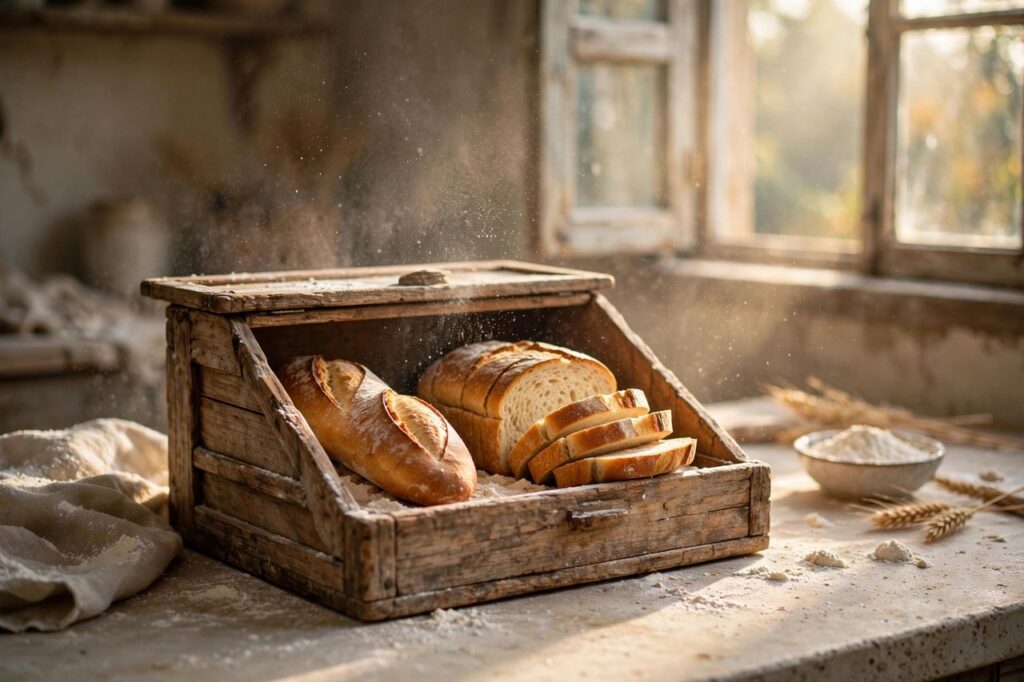
There is a special disappointment in reaching for a baguette you bought yesterday morning and finding it has turned into something you could use as a doorstop. Bread goes stale fast, but it doesn’t have to — the difference between bread that lasts two days and bread that lasts two months comes down to storage, and most of us are storing it wrong.
This guide is the full playbook: why bread stales (and why the fridge speeds it up), a decision table that tells you exactly what to do with each type of bread, how to freeze properly, and how to rescue a loaf that’s already gone stale. If freezing becomes your main strategy, the deep-dive on how to freeze bread properly covers that one topic in detail.
Why Bread Goes Stale (Starch Retrogradation, Plain English)
Bread goes stale for a reason that has almost nothing to do with drying out. When bread bakes, its starch molecules absorb water and swell into a soft, fluffy structure. As the loaf cools and sits, those starch molecules slowly reorganize themselves back into tight, rigid crystals — a process called starch retrogradation. That recrystallization is what makes stale bread firm and crumbly even when it doesn’t feel dry.
Here is the twist that matters for your kitchen: cold temperatures speed up retrogradation. A loaf stored in the fridge goes stale faster than the same loaf on the counter, even though the fridge feels like the “safe” place for food. Staling is chemistry, and the fridge is its favorite accelerator.
The Golden Rule: Don’t Refrigerate (and the One Exception)
For most bread, the refrigerator is the worst place it can live. Retrogradation runs fastest at fridge temperatures, so a loaf kept at 60–80°F on the counter stays softer longer than one chilled. That single habit — keeping bread out of the fridge — is the biggest freshness win in this whole article.
The one exception is genuinely hot, humid weather. When the kitchen runs hot and the air is damp, a soft loaf can mold before it stales. In that situation, freezing beats refrigerating: frozen bread keeps 2 to 3 months and tastes far better after thawing than bread that spent three days going stale in the fridge.
Decision Table: Bread Type × Timeline → Best Method
Use this table to pick your method in seconds. Find your bread type on the left, how long you need it on the top, and follow the cell.
| Bread type | Eat within 1–2 days | Keep up to a week | Keep 2–3 months |
|---|---|---|---|
| Crusty loaf or baguette | Paper bag or bread box at room temp | Slice and freeze | Freezer, sliced |
| Soft sandwich bread | Wrap in plastic or foil at room temp | Freeze, don’t fridge | Freezer, portioned |
| Homemade unsliced loaf | Cut side down on the board | Slice and freeze | Freezer, 4–6 slices per packet |
The pattern is simple: short timelines stay at room temperature, longer timelines go to the freezer, and the refrigerator appears nowhere. For soft breads kept a day or two, plastic or foil wrapping beats cloth at room temperature — the airtight seal slows the moisture loss that cloth can’t stop.
Room-Temp Storage: Wrap, Bread Box, Paper Sack
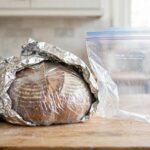
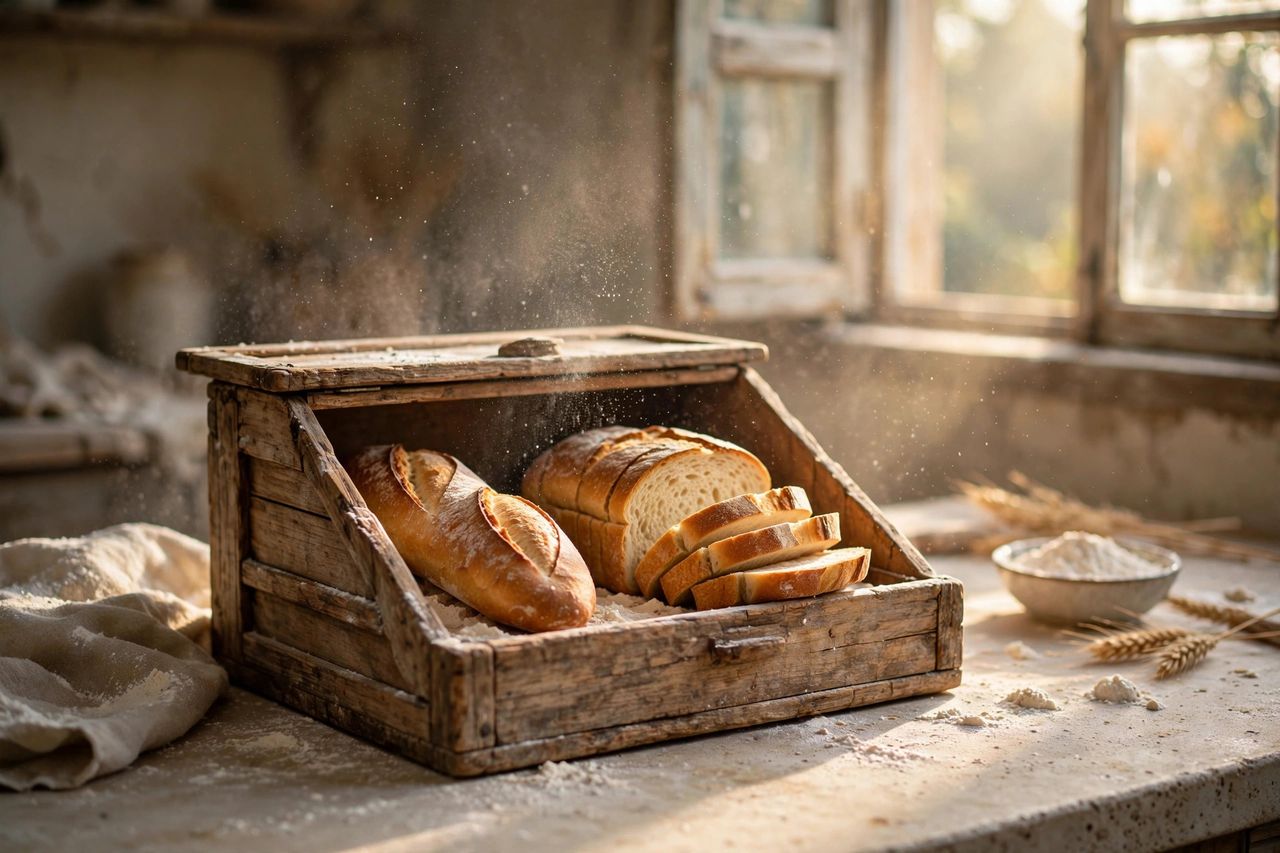
At room temperature — anywhere in the 60–80°F range — your wrapper decides how long the bread lasts. Crusty bread loves a paper bag or a bread box: both let just enough air circulate to protect the crust while keeping the crumb soft. Soft sandwich bread prefers plastic wrap or foil for that 1-to-2-day window, where the airtight wrap outperforms cloth at holding moisture in.
Match the wrapper to the bread and the timeline. A baguette in plastic turns its crust chewy overnight; a soft loaf in a paper sack dries out by morning. And never store bread near the stove or dishwasher — the heat swings age it faster. The safety side of food storage, for everything beyond bread, is covered in the guide to storing leftovers safely in the fridge.
The Slice-from-the-Center Trick
For an unsliced loaf, start cutting from the middle instead of the end. Slice the loaf in half, cut what you need from the cut faces, then push the two halves back together with the cut sides touching. The joined faces protect each other — each acts as a natural wrapper for the other — and the crust ends do the job they were born for.
Store the rejoined loaf cut side down on the cutting board. This one trick buys you an extra day of softness with zero equipment, and it works on everything from a homemade sandwich loaf to a round boule. Once a loaf is fully sliced, the trick stops working, so slice only what you’ll eat that day.
Freezing, Thawing, and Reheating Done Right
Freezing: Portion, Wrap Airtight, Label, Coldest Spot
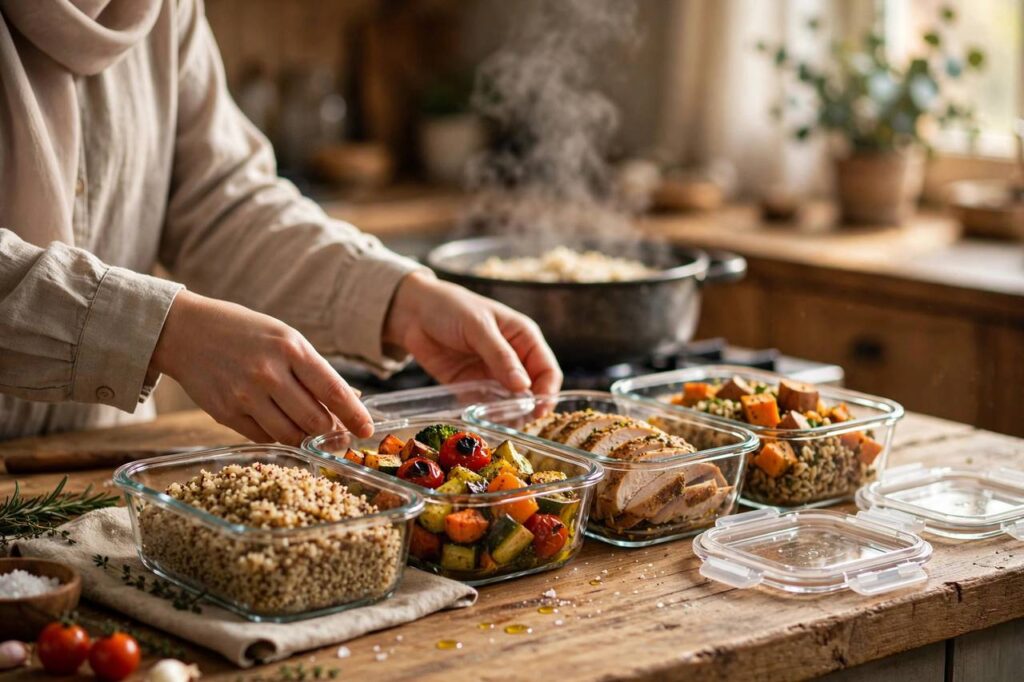
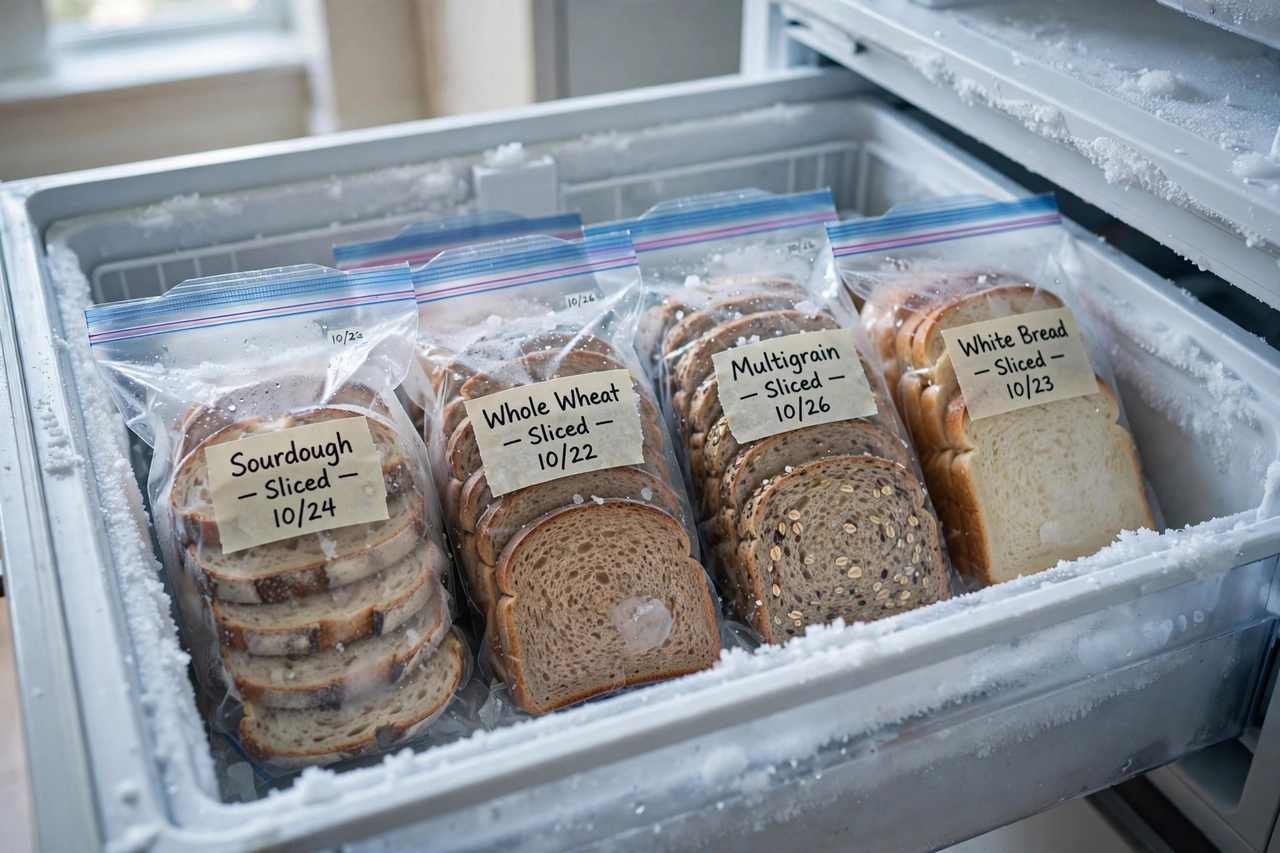
Freezing is the best long-term method by a wide margin, but only if you do it right. Slice the loaf before it goes in — frozen slices thaw in minutes and toast straight from frozen, while a whole frozen loaf takes hours. Pack 4 to 6 slices per packet, a sensible single-day amount, and squeeze out as much air as possible before sealing; air is what causes freezer burn.
Wrap airtight — freezer bags or tight foil — and label with the contents and date. Bread keeps 2 to 3 months in the freezer and tastes best within that window. Store the packets in the coldest spot of the freezer, away from the door, where the temperature stays most stable.
Thawing and Reheating for Best Texture
Thawing is where people undo good freezing. The best method is the least dramatic one: move slices to the counter or fridge and let them come to room temperature, or drop frozen slices straight into the toaster. Quick, gentle heat restores the crust and softens the crumb better than any slow method.
For a half loaf or a bigger piece, a few minutes in a moderate oven warms it through and re-crisps the crust. Avoid the microwave for thawing bread — it heats unevenly and leaves the crumb rubbery. And thaw only what you’ll eat that day: refrozen bread loses texture fast, so portion before you freeze, not after you thaw.
Crusty vs Soft Bread: Different Rules
Crusty bread and soft bread are built differently, so they age differently. A baguette or crusty boule is all about the crackling exterior, which dies the moment you wrap it in plastic. Keep crusty bread in paper or a bread box and eat it fast — crusty loaves have the shortest prime window of any bread type.
Soft sandwich bread, rolls, and enriched loaves are about a tender crumb, and they want the opposite treatment: airtight wrapping in plastic or foil that locks moisture in. They also freeze beautifully — sliced soft bread is the easiest freezer win in baking. If you’re baking your own, the homemade sourdough bread guide produces loaves with a character all their own.
Breads That Stay Fresh Longer (Sourdough, Tangzhong, Enriched)
Not all breads stale at the same speed. Sourdough keeps longer than ordinary yeast bread — its acidity slows the processes that firm up the crumb, so a good sourdough loaf can taste fresh for days when a straight-dough loaf would be tired. If you bake with a live culture, understanding what a sourdough starter is explains why that acidity is there in the first place.
Tangzhong breads — the Japanese milk-bread method that pre-cooks a flour-and-water paste — stay soft for days because the paste traps extra moisture in the dough. Enriched breads made with eggs, butter, or oil also keep longer; the fat shortens the starch structure and slows retrogradation. When you choose what to bake or buy, these three types buy you the most freshness for free.
Reviving Stale Bread: The Baguette Water+Oven Trick
A stale baguette is not a dead baguette. Run it under the tap for 10 to 15 seconds — yes, literally soak the crust with water — then put it into a 300°F oven for 10 to 20 minutes. The water turns to steam inside the loaf, the starch softens again, and the crust re-crisps as the steam escapes. What comes out is shockingly close to fresh.
This works on crusty loaves and baguettes, not on soft sliced bread (soaking a soft slice just makes mush). It only works once — a loaf revived this way should be eaten within 10 minutes, because the staling clock restarts the moment it cools. And it can’t fix mold: if the bread has gone off, no amount of oven time makes it safe.
Uses for Stale Bread: Breadcrumbs, Croutons, Strata
When revival isn’t worth it, stale bread is an ingredient. Dry breadcrumbs are the easiest win: tear stale bread into pieces and bake at 300°F for 15 minutes until completely dry, then crumble or blitz. Homemade breadcrumbs beat store-bought on flavor every time, and they freeze well.
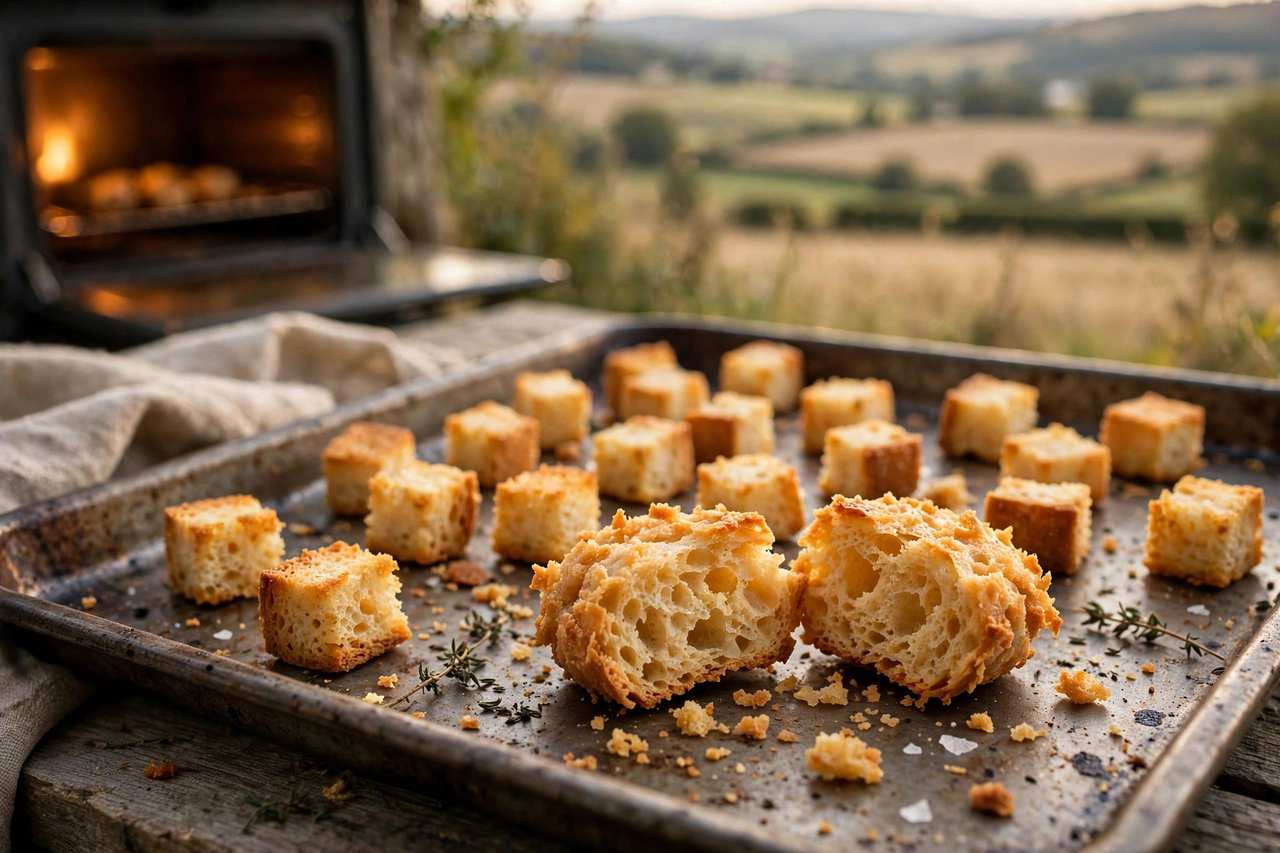
Croutons are the second win: cut stale bread into 1-inch cubes, toss with olive oil and salt, and bake at 400°F for 15 minutes until golden. They’ll be crunchier and more flavorful than anything from a bag. And don’t forget strata — stale bread cubes soaked in an egg-and-milk custard and baked make a breakfast casserole that tastes like you planned it, not like you were cleaning out the bread box.
Recap: The 4-Factor Checklist
Every bread-storage decision comes down to four factors: bread type, timeline, wrapper, and temperature. Check them in order. Crusty or soft — the type decides the wrapper (paper for crusty, plastic or foil for soft). Days or months — the timeline decides the method (room temperature for 1–2 days, freezer for anything longer). Wrapper — airtight for freezing, breathable for crusty room-temp storage. Temperature — 60–80°F on the counter, never the fridge, coldest spot in the freezer.
Get those four right and you’ll throw away less bread, buy less bread, and eat better bread. The fridge is not your bread’s friend; the freezer is.
Frequently Asked Questions
Should you store bread in the refrigerator?
No — the fridge makes bread go stale faster. Cold temperatures speed up starch retrogradation, the process that firms up the crumb. Keep bread at room temperature (60–80°F) for short storage, and freeze it for anything longer than a few days.
How long does bread last at room temperature?
About 1 to 2 days at its best, depending on the bread type. Crusty bread in a paper bag or bread box and soft bread wrapped in plastic or foil both hold well in that window at 60–80°F. Beyond two days, slice and freeze instead.
How long can you freeze bread?
Bread keeps 2 to 3 months in the freezer with best taste inside that window. Slice first, pack 4 to 6 slices per airtight packet with the air squeezed out, label with the date, and store in the coldest spot of the freezer.
What’s the best way to store crusty bread vs soft bread?
Crusty bread wants paper or a bread box so the crust stays crisp, and it should be eaten quickly. Soft bread wants airtight plastic or foil to lock moisture in. For freezing, slice both types, wrap airtight, and freeze for up to 2 to 3 months.
How do you revive stale bread?
For a crusty loaf or baguette, run it under water for 10 to 15 seconds, then bake at 300°F for 10 to 20 minutes. The steam softens the crumb and the crust re-crisps. Eat it within 10 minutes — the staling clock restarts the moment it cools.
Why does bread go stale faster in the fridge?
Because of starch retrogradation: after baking, starch molecules slowly reorganize into rigid crystals, and cold temperatures accelerate that process. The fridge speeds staling up even as it slows mold, so it’s a bad trade for anything you’ll eat within a few days.