How to Store Fresh Herbs Longer: 9 Methods That Work

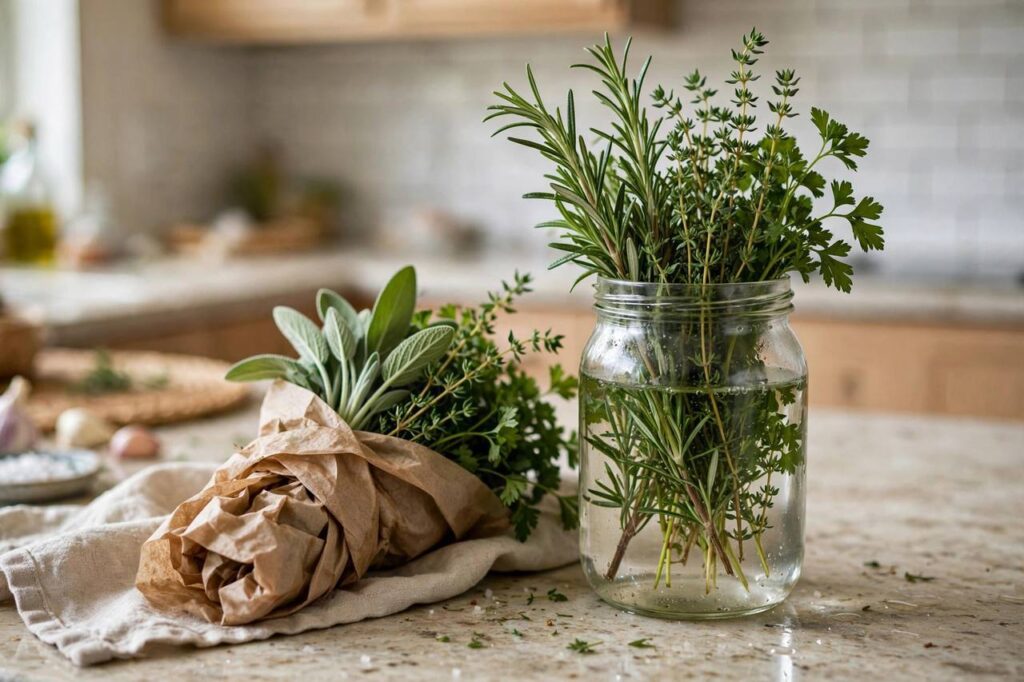
Knowing how to store fresh herbs longer can be the difference between a bunch of cilantro that dies in two days and parsley that is still perky at the end of the week. I used to watch half my herbs turn to brown slime before I ever cooked with them, and it bothered me — that is money in the trash. Over the years I’ve tested nearly every method out there, and what I learned is that not all herbs want the same treatment. The trick is knowing which herbs are which, then giving each group what it needs.
Why Herbs Die So Fast (and What You’re Doing Wrong)
Fresh herbs die quickly in most kitchens for one simple reason: they are treated like vegetables when they are actually cut flowers with a different personality. Moisture is the enemy and the friend at the same time. Too much water sitting on the leaves causes rot; too little and they wilt. The plastic produce bag they came home in traps ethylene and condensation — basically a slow-cooking death chamber.
The second mistake is refrigeration without protection. Cold dry fridge air sucks moisture out of delicate leaves, which is why uncovered basil turns black overnight. The third is washing everything the moment you get home, then sealing it wet. Washing is fine — but only if you dry thoroughly before storing.
The Big Split: Tender Herbs vs. Hardy Herbs
This is the most important thing in this whole guide. Tender and hardy herbs need opposite storage:
- Tender herbs (cilantro, parsley, basil, mint, dill, tarragon) have soft, delicate leaves. Treat them like flowers.
- Hardy herbs (rosemary, thyme, oregano, sage, marjoram, chives) have woody stems and tougher leaves. They prefer drier storage.
Get this split wrong — store cilantro the way you store rosemary — and nothing else you do will save them. Memorize the two groups and you’ve solved 80 percent of the problem.
How to Store Fresh Herbs Longer: The Jar-of-Water Method
This is my go-to for tender herbs, and it genuinely keeps cilantro, parsley, and mint fresh for up to two weeks.
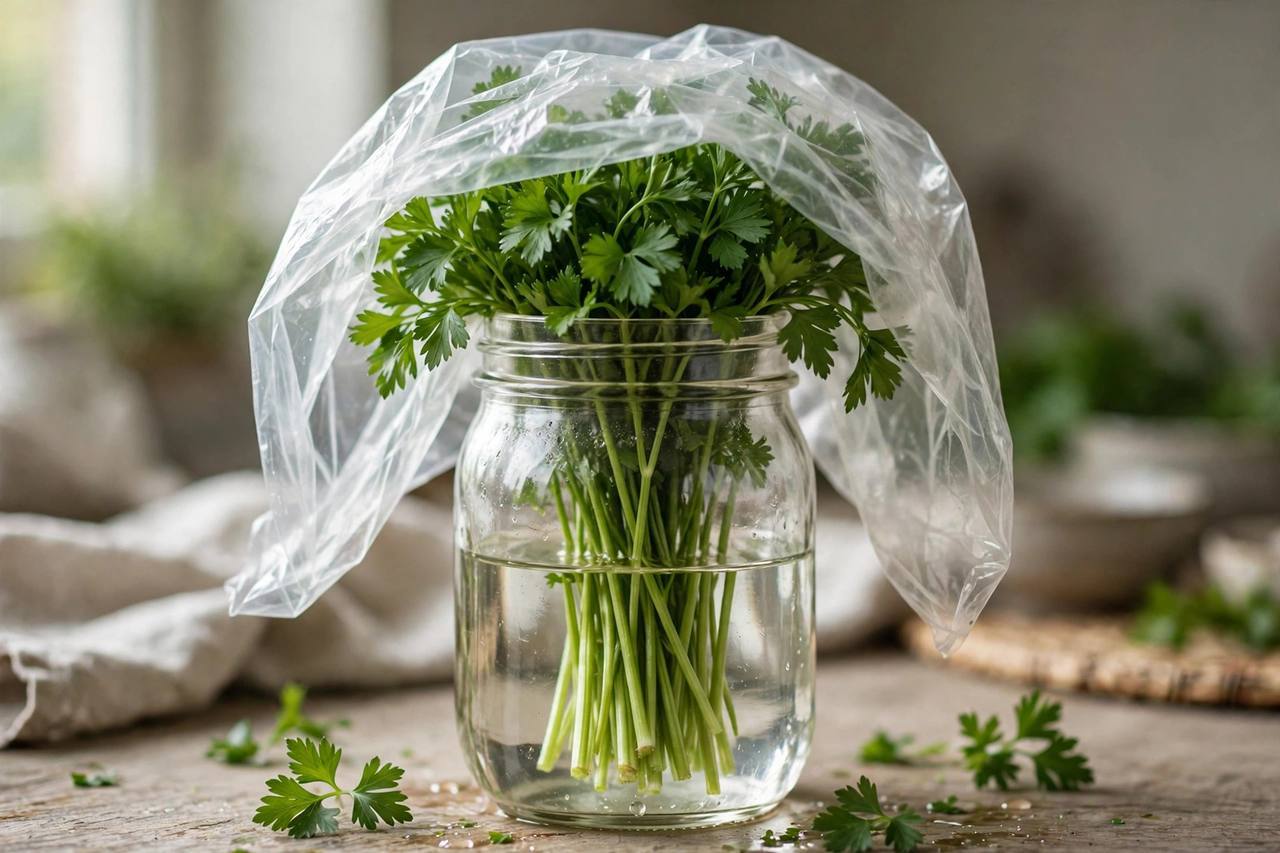
Trim about half an inch off the stems, just like you would with flowers. Stand the bunch upright in a jar or glass with an inch or two of water — enough to cover the cut ends, not the leaves. Then loosely drape a plastic produce bag over the top, letting it cover the jar loosely like a tent. This holds in humidity while letting the leaves breathe. Store in the fridge door or on a shelf.
Change the water every two to three days, and re-trim the stem ends when you do. You’ll be shocked how long they last. Parsley stored this way has survived a full two weeks in my kitchen, still green and usable for chimichurri.
One exception: basil hates the cold. Basil in the fridge turns black even in water. Keep basil in a jar of water on the counter, out of direct sun, and it will last a week. Everything else tender goes in the fridge.
The Paper Towel Method for Hardy Herbs
Hardy herbs want the opposite treatment: dry, cool, and protected from air movement. Here’s the method:
Leave them unwashed. Wrap the herbs loosely in a slightly damp — not wet — paper towel. Slide the bundle into a zip-top bag or a container, but don’t seal it completely; leave it slightly open or poke a couple of holes so excess moisture can escape. Refrigerate in the crisper drawer.
Rosemary, thyme, and sage stored this way routinely last two to three weeks in my fridge. The paper towel absorbs the condensation that would otherwise rot the leaves, while keeping enough humidity to prevent drying out. Check the towel every few days and replace it if it gets soggy.
Freezing: The Best Long-Term Fix
If you know you won’t use herbs within two weeks, freezing is better than any fridge method. The catch: frozen herbs are for cooking, not garnish. Freezing breaks cell walls, so thawed leaves go limp. But stirred into a sauce, soup, or stew, they’re nearly as good as fresh.
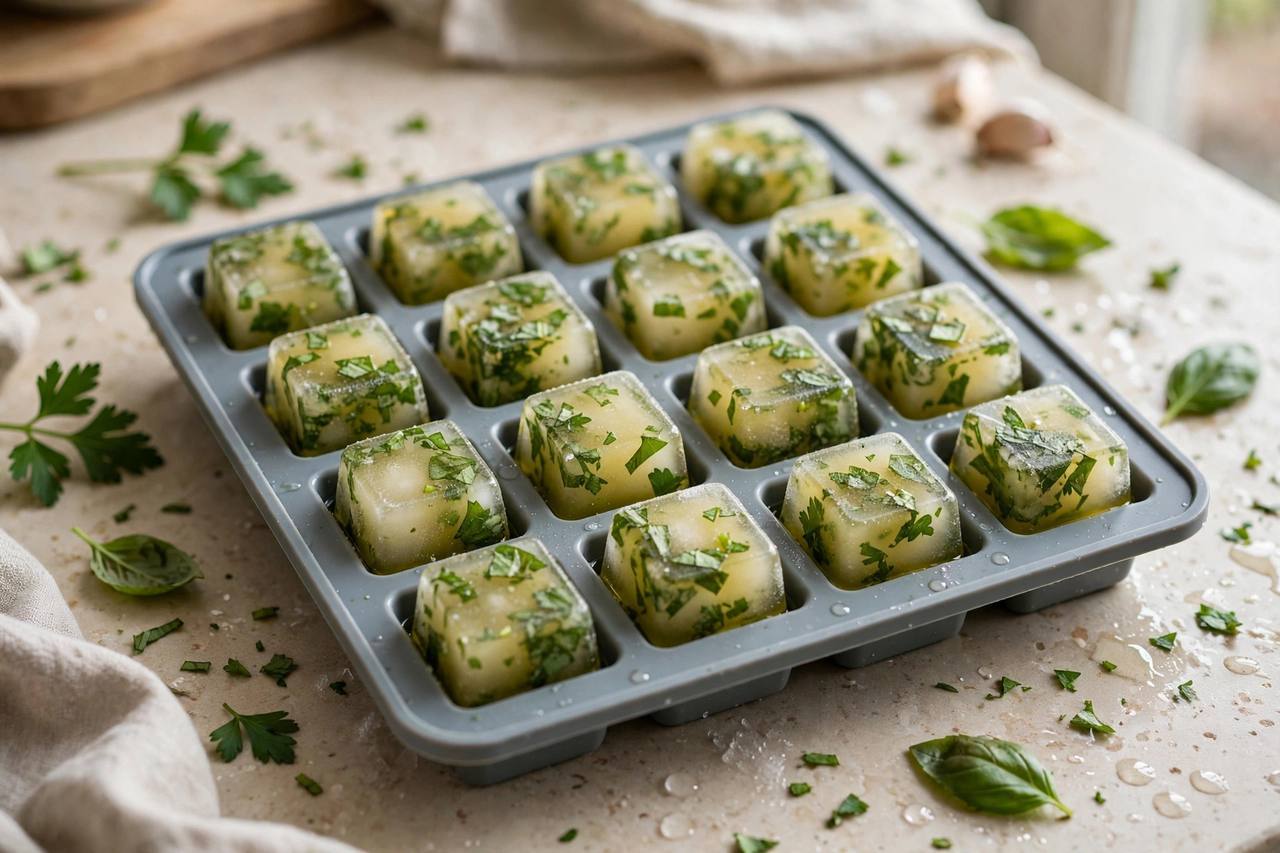
The herb-and-oil cube trick is my favorite. Chop the herbs, pack them into an ice cube tray, cover with olive oil or water, and freeze. Pop the cubes into a bag. When a recipe needs herbs, drop a cube straight into the hot pan. This works beautifully for basil, cilantro, parsley, dill, and oregano. If you already batch-cook meals ahead of time, frozen herb cubes fit perfectly into that routine — toss one into each portion.
Rosemary, thyme, and sage can be frozen whole on the stems: spread them on a tray, freeze solid, then bag them. They crumble easily off the stem right into the pot.
Drying Herbs at Home
Drying is the oldest preservation method and still excellent for hardy herbs. Tie small bundles of rosemary, thyme, oregano, or sage with string and hang them upside down in a warm, dry, dark spot with air circulation — a pantry corner works. In one to two weeks they’ll be crisp enough to crumble into jars.
Don’t bother drying tender herbs at home. Cilantro, parsley, and basil lose most of their flavor when air-dried, and the result tastes like dust compared to the frozen versions. Tender herbs: freeze them. Hardy herbs: dry them. That rule never fails.
What About Those Herb Keeper Products?
You’ve seen the gadgets — little pods and containers marketed as herb keepers. Some of them work decently; they’re essentially doing the jar-of-water method in a prettier package. But none of them does anything a mason jar, water, and a bag can’t do for free. Save your money. The technique matters, not the container.
Herb-by-Herb Quick Reference
- Basil: Jar of water on the counter, not the fridge. Lasts about a week. Freeze in oil cubes for longer storage.
- Cilantro: Jar of water in the fridge, bag tented over top. Up to two weeks. Freezes well.
- Parsley: Jar of water in the fridge. The longest-lasting tender herb — up to two weeks or more.
- Mint: Jar of water in the fridge. Very hardy once cut.
- Dill: Jar of water in the fridge. Delicate — use within a week, or freeze.
- Rosemary: Damp paper towel, zip bag, crisper. Two to three weeks. Dries or freezes beautifully.
- Thyme: Same as rosemary. Drying concentrates its flavor nicely.
- Sage: Paper towel method. Also dries very well.
- Chives: Paper towel method, or chop and freeze. They don’t dry well.
Mistakes That Kill Herbs Early
- Storing everything the same way. Basil in the fridge turns black; rosemary in water rots. Respect the split.
- Sealing wet herbs in bags. Wash before use, not before storage. If you must wash first, dry completely.
- Leaving herbs in the store packaging. Those bags are for transport, not storage. Repack them the day you buy them.
- Cramming the fridge drawer. Herbs crushed under vegetables bruise and rot faster. Give them their own corner.
Storing Herbs You Grow Yourself
If you grow your own herbs, the rules change slightly — in a good way. Harvest in the morning, after the dew has dried but before the sun gets hot. That’s when the essential oils are most concentrated, and it’s also when the plants are least stressed. Cut stems cleanly with scissors rather than tearing, which damages the plant and the cut end, shortening storage life.
Home-grown herbs are usually dirtier than store-bought, so give them a gentle rinse in cool water and then dry them thoroughly. A salad spinner is the fastest way; a few spins remove far more water than shaking by hand ever will. Then apply the same storage methods: jar of water for tender herbs, damp paper towel for hardy ones. The advantage of homegrown is that you can harvest exactly what you need, exactly when you need it — the freshest storage method of all is leaving the herb on the plant until dinnertime.
How to Revive Wilted Herbs
Not every sad-looking bunch is dead. Tender herbs that have wilted but not rotted can often be revived with an ice bath: submerge the whole bunch in ice water for 15 to 30 minutes. The cold water gets taken up through the stems and firms the cells back up. I’ve rescued limp parsley this way more times than I can count, and it comes back nearly as good as new.
There are limits. If the leaves have turned slimy, black, or smell off, they’re gone — don’t try to save those. But if they’re just floppy and dull, the ice bath is worth trying. After reviving, dry the herbs and store them properly using the methods above. Prevention beats rescue, but rescue beats the trash.
Frequently Asked Questions
How long do fresh herbs last in the fridge?
It depends on the herb and the method. Tender herbs like cilantro and parsley last 10 to 14 days in a jar of water in the fridge. Hardy herbs like rosemary and thyme last two to three weeks wrapped in a damp paper towel. Basil should stay on the counter and lasts about a week.
Should I wash fresh herbs before storing them?
No — wash them right before you use them. Moisture trapped in storage packaging is the main cause of rot. If your herbs come visibly dirty, rinse and then dry them thoroughly in a salad spinner or with towels before storing.
Can you freeze fresh herbs?
Yes, and it works very well. Chop tender herbs into an ice cube tray, cover with oil or water, and freeze; use the cubes in cooked dishes. Woody herbs like rosemary and thyme freeze well on their stems. Frozen herbs are for cooking, not fresh garnish.
Why does basil turn black in the fridge?
Basil is a warm-climate plant and its leaves are damaged by cold below about 50°F (10°C). That’s why basil turns black in the refrigerator. Store it in water on the counter instead, and it stays green and fragrant for about a week.
How do you store fresh herbs longer without any special products?
You don’t need gadgets. Tender herbs go in a jar of water in the fridge with a bag tented over the top; hardy herbs get wrapped in a damp paper towel and refrigerated. Those two methods cover every common herb and cost nothing.