How to Make Pancakes Fluffy: 7 Secrets That Work

\n
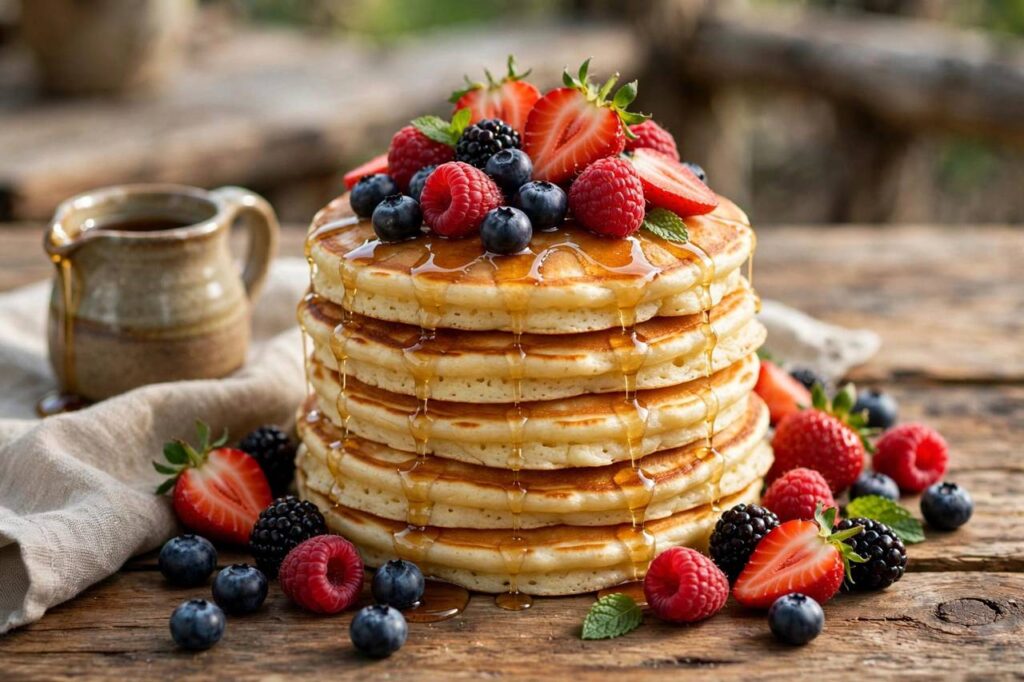
I spent years wondering how to make pancakes fluffy, and for most of those years my pancakes told on me. They came out flat, a little rubbery, the kind you chew twice and then start thinking about toast instead. Then one Sunday morning, running low on patience and working from a batter that had been sitting on the counter while the coffee brewed, I accidentally made the fluffiest stack of my life. The batter had rested. The pan was the right heat. I had barely stirred it. Three small accidents, and suddenly I was a pancake person.
\n
Since then I’ve made pancakes hundreds of times, and I’ve learned that fluffiness is not luck. It is chemistry: the right leaveners, enough acidity to wake them up, gluten kept calm, and heat that does its job without rushing. Here’s everything I know, including my go-to recipe, the seven secrets that make the biggest difference, and the mistakes that flatten even a good batter.
\n
How to Make Pancakes Fluffy Every Time: The Short Answer
\n
If you want how to make pancakes fluffy in one paragraph: whisk dry and wet ingredients separately, combine them with only a few lazy strokes (lumps are fine), let the batter rest for 10 minutes, cook on medium heat so the middle sets before the outside browns, and flip exactly once when bubbles pop on the surface. Use both baking powder and a little baking soda with an acidic liquid like buttermilk or lemon-soured milk. That’s the whole framework — everything below is the why and the fine-tuning.
\n
The Science of Fluff: Why Pancakes Rise (or Don’t)
\n
A fluffy pancake is really just a thick batter full of gas bubbles that sets before they can escape. Three things control it: leavening, gluten, and timing.
\n
Leavening does the lifting. Most home recipes rely on baking powder, which is “double-acting” — it releases a little gas when it gets wet, then a second, bigger burst when it hits the heat. That’s why a rested batter still puffs on the griddle. Adding a quarter teaspoon of baking soda plus something acidic (buttermilk, yogurt, lemon juice, or even plain white vinegar mixed into milk) gives you an extra early burst of bubbles. I use both. The powder gives the tall, reliable rise; the soda gives that airy, almost souffle-like crumb.
\n
Gluten does the structure — and the damage. The moment liquid meets flour, gluten starts forming. A little gluten is good: it builds the walls that trap gas. Too much stirring makes tough, chewy walls instead of tender ones, and flat, rubbery pancakes. This is the single most common reason home pancakes disappoint. Stir until you just barely can’t see dry flour anymore, then stop and put the spoon down.
\n
Heat controls the set. If the pan is too hot, the outside browns and sets before the bubbles have finished rising, so the middle stays dense and raw. If it’s too cool, the batter spreads wide and thin before it can set, and the leavening fizzes out slowly instead of all at once. Medium heat — where a drop of water dances rather than exploding — is the sweet spot.
\n
My Go-To Fluffy Pancake Recipe
\n
This makes about 8 medium pancakes. It is the recipe I hand out to friends, and it holds up in my kitchen every single time.
\n
Dry ingredients: 1½ cups (190g) all-purpose flour, 3½ teaspoons baking powder, ¼ teaspoon baking soda, 1 teaspoon salt, 2 tablespoons sugar.
\n
Wet ingredients: 1¼ cups buttermilk (or 1¼ cups milk plus 1 tablespoon lemon juice, rested 5 minutes), 1 large egg, 3 tablespoons melted butter plus extra for the pan, 1 teaspoon vanilla extract.
\n
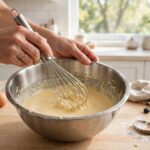
Whisk the dry ingredients in a large bowl. In a second bowl or jug, whisk the wet ingredients until smooth. Pour the wet into the dry and stir gently with a wooden spoon — no more than 10 to 12 strokes — until the streaks of flour just disappear. Small lumps are not only okay, they’re welcome. Cover the bowl and rest the batter for 10 minutes. Heat your pan over medium heat, add a thin slick of butter, and scoop ¼-cup portions of batter. Cook until bubbles form across the surface and the edges look set, about 2 to 3 minutes. Flip once, cook 1 to 2 minutes more, and serve immediately.
\n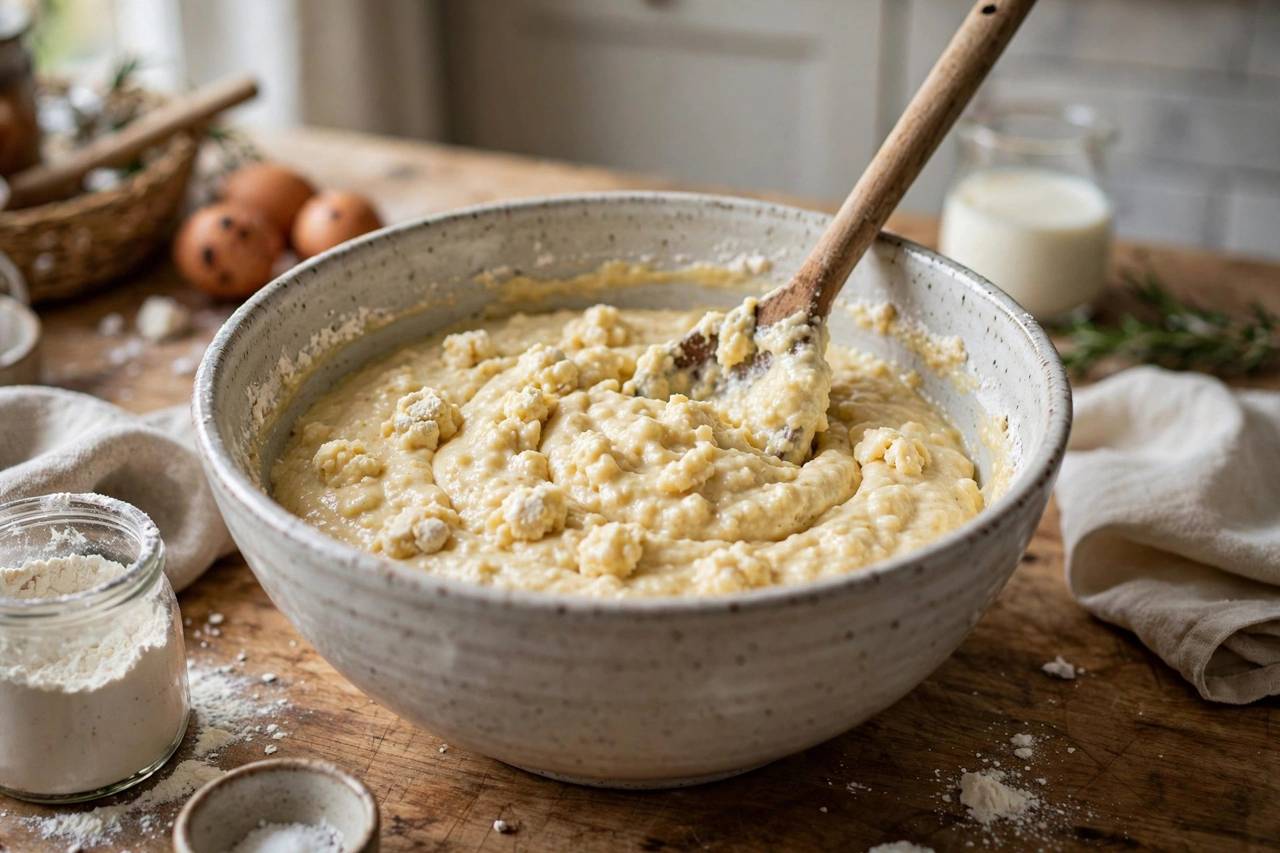 \n
\n
7 Secrets for the Fluffiest Pancakes You’ve Ever Made
\n
1. Rest the batter — always
\n
Ten minutes of rest does three quiet things: it lets the flour fully hydrate so the batter thickens, it gives the gluten you did create a chance to relax, and it lets the first reaction of the baking powder start making tiny bubbles that get suspended in the thicker batter. Skipping the rest is the fastest way to thin, flat pancakes. Don’t rest it longer than about 20 minutes at room temperature, though, or the leavening starts spending itself.
\n
2. Undermix with confidence
\n
I know lumps feel wrong. Every cooking instinct says a smooth batter is a good batter. Pancakes are the exception. Each extra stir develops more gluten and knocks out the air the leaveners are trying to make. Count your strokes — 10 to 12 — and walk away. The lumps cook out completely on the griddle. Nobody has ever bitten into a fluffy pancake and complained about a lump.
\n
3. Go acidic with your liquid
\n
Buttermilk is the classic for a reason: its acidity reacts with baking soda to create lift, and it gives a slight tang and extra tenderness. No buttermilk? Stir a tablespoon of lemon juice or plain vinegar into regular milk and let it sit for 5 minutes until it looks slightly curdled. Plain yogurt thinned with a splash of milk works beautifully too. The extra acidity also helps brown the pancakes evenly, which is a nice bonus.
\n
4. Keep the batter thick
\n
Fluffy and runny are enemies. A thick batter holds its shape on the griddle and stacks upward instead of spreading outward. If your batter pours like cream, add flour a tablespoon at a time until it drops from the spoon in thick ribbons. Hydrated flours vary, so don’t be afraid to adjust. And use room-temperature ingredients — cold milk and egg make the butter seize and the batter thinner and lumpier.
\n
5. Master medium heat
\n
Here’s my heat test: flick a few drops of water on the dry pan. They should sizzle and dance around for a second before evaporating. If they vanish instantly, the pan is too hot; if they just sit there, too cool. Medium heat gives the leavening time to work its second burst as the batter sets from the bottom up. I also let the pan recover for 20 to 30 seconds between batches — the pan gets hotter as you go, and batch three burns while batch one was perfect.
\n
6. Flip once, and only when the bubbles say so
\n
Watch the surface. When bubbles form, pop, and leave little holes that don’t fill back in, and the edges look matte and set, it’s time — usually 2 to 3 minutes. Slide a thin spatula fully under before flipping, commit to one confident motion, and never press the pancake flat with the spatula afterward. Pressing squeezes out every bit of air you worked for. And don’t flip a second time: the second side needs just a minute to finish, not to brown deeply.
\n
7. Serve immediately (or hold them right)
\n
Pancakes start deflating the moment they cool — the trapped steam condenses and the structure relaxes. If everyone is seated, serve straight off the pan. If you’re cooking for a crowd, hold finished pancakes in a single layer on a rack in a 200°F (95°C) oven for up to 20 minutes. Don’t stack them hot on a plate under a towel; the steam makes them soggy and heavy.
\n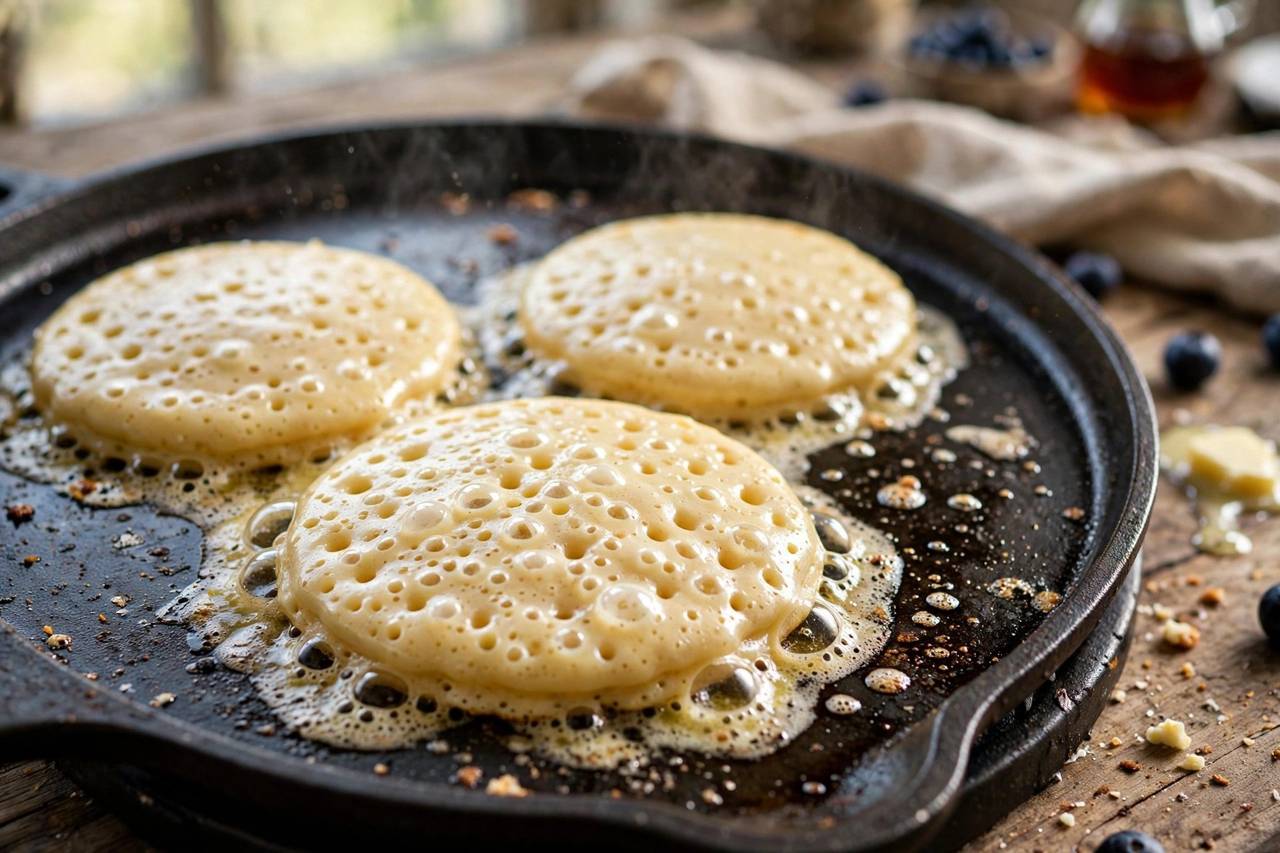 \n
\n
Mistakes That Make Pancakes Flat
\n
Every one of these has bitten me at least once:
\n
Expired baking powder. Leaveners lose strength. If your powder is older than 6 to 12 months, test it: drop half a teaspoon into hot water. It should fizz energetically. A lazy fizz means flat pancakes — no amount of technique saves a dead leavener.
\n
Overmixing. Worth repeating because it’s the number one culprit. If your batter is smooth as cake batter, you’ve gone too far.
\n
Wrong pan heat. Too hot browns before rising; too cool spreads before setting. The water-drop test takes five seconds and saves the batch.
\n
Old, flat batter. A fully mixed batter sitting for 30-plus minutes has spent its leavening. Mix, rest 10 minutes, cook. If you must prep ahead, mix only the dry ingredients and the wet ingredients separately the night before, and combine in the morning.
\n
Too much liquid or too little fat. Fat (butter in the batter) shortens gluten strands and adds tenderness. Skimping on it in the name of lightness gives you the opposite — tougher, flatter cakes.
\n
Fluffy Pancake Variations Worth Trying
\n
Once the base recipe is second nature, play with it. For extra-tall diner-style pancakes, separate the egg: whip the white to soft peaks and fold it in gently after everything else is mixed. The added air is dramatic. For a whole-grain version, swap up to half the flour for white whole wheat and add an extra splash of buttermilk — whole grains drink more liquid. For blueberry pancakes, fold a cup of berries in after the rest period so they don’t bleed color into the batter; the thick rested batter holds them suspended instead of sinking them all to the bottom.
\n
Dairy-free works fine too: use your favorite plant milk plus the lemon-juice trick, and melted coconut oil or a neutral oil in place of butter. The pancakes won’t taste quite as rich, but they’ll still puff beautifully.
\n
Make-Ahead and Freezer Tips (Batch Cooking Wins)
\n
Pancakes are one of my favorite batch-cooking foods, because they freeze far better than most breakfast items. Cook a double batch on a weekend morning, cool the pancakes completely on a rack, then freeze them in a single layer on a baking sheet before transferring to a freezer bag with parchment between the layers. They keep for up to two months.
\n
Reheat straight from frozen in the toaster — one or two cycles — and they come out nearly as fluffy as fresh, with crisp edges. The microwave works in a pinch but steams them slightly soft. If you’re new to cooking big batches on purpose, this is exactly the kind of dish that makes a batch cooking routine worth starting: twenty minutes of weekend effort becomes instant weekday breakfasts for weeks.
\n
Frequently Asked Questions
\n
Can I make fluffy pancakes without baking powder?
\n
Yes, but you need another source of lift. Whipped egg whites folded into the batter are the classic workaround — separate two eggs, whip the whites to soft peaks, and fold them in last. Self-rising flour (which already contains leavening) is another easy swap: use it in place of the flour, skip the baking powder and salt, and keep everything else the same.
\n
Why are my pancakes always flat and dense?
\n
The most common causes, in order: overmixed batter (smooth batter means too much gluten), expired baking powder (test it in hot water), batter that sat too long before cooking, and a pan that’s too hot or too cool. Fix the mixing first — it’s the culprit in most kitchens — and the rest falls into place.
\n
Should I let pancake batter rest before cooking?
\n
Yes, about 10 minutes. The rest hydrates the flour, thickens the batter, and relaxes gluten, all of which lead to taller, more tender pancakes. Don’t rest longer than about 20 minutes at room temperature, since the leavening starts losing power.
\n
Does overmixing really ruin pancakes?
\n
Honestly, yes — it’s the fastest way to ruin them. Every extra stir develops gluten (toughness) and deflates the bubbles the leavening creates. Stir 10 to 12 times max, until the dry flour just disappears. Lumps in the bowl become perfectly smooth pancakes on the griddle.
\n
Can I make pancake batter the night before?
\n
Don’t mix the full batter ahead — the leavening will be spent by morning. Instead, whisk the dry ingredients in one covered bowl and the wet ingredients in another, and refrigerate the wet mix overnight. In the morning, combine with a few lazy strokes, rest 10 minutes, and cook as usual.
\n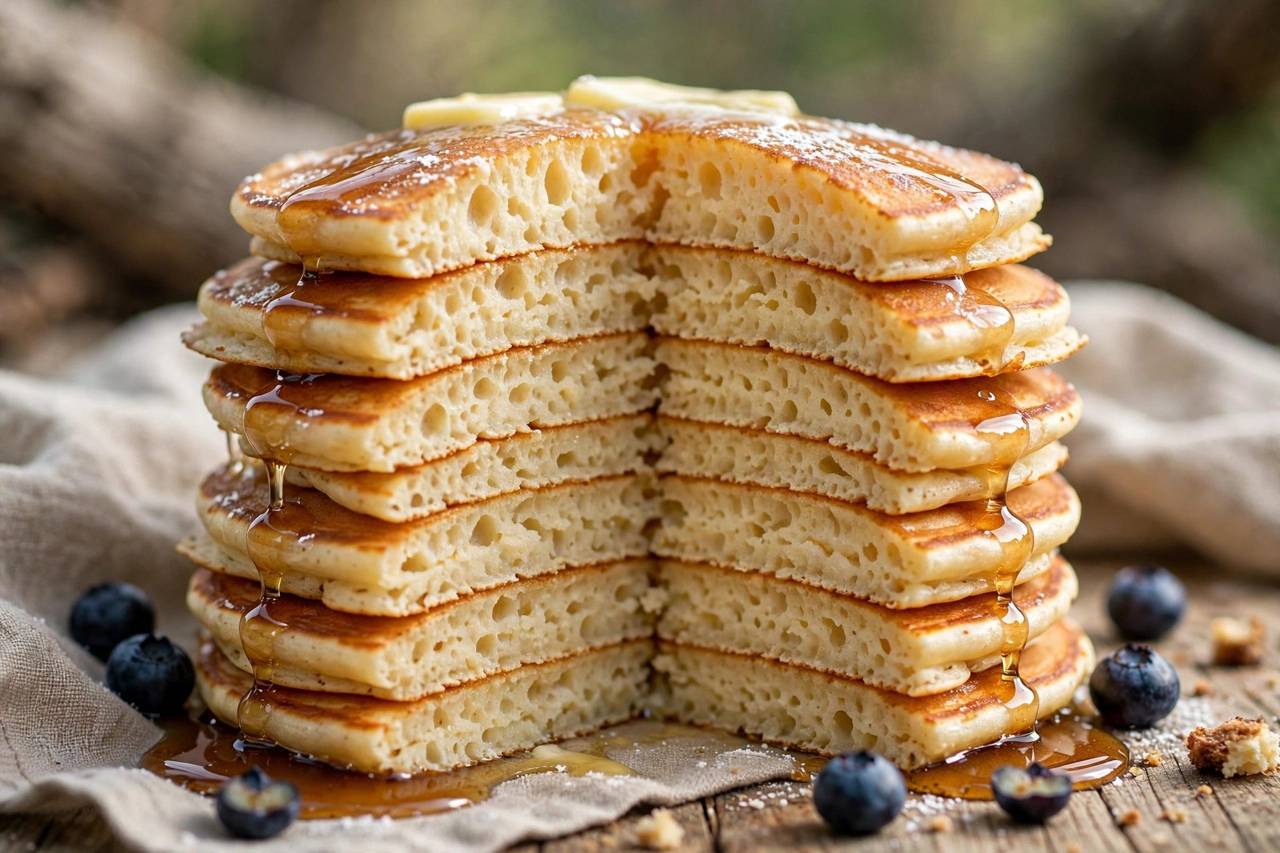 \n
\n