How to Make Pancakes Fluffy From Scratch (Troubleshooting First, Recipe Second)

If you want to know how to make pancakes fluffy from scratch, I am going to do something most recipes do not: start with why your pancakes keep coming out flat. Because the recipe is the easy part — seven ingredients, one bowl, ten minutes. The difference between diner-tall pancakes and sad frisbees is not the recipe. It is three mistakes almost everyone makes, and once you stop making them, any decent recipe works.
I have made pancakes just about every way they can be made — for my kids’ sleepovers, for brunch crowds, in tiny apartment kitchens and big ones. The troubleshooting below is the real recipe. The actual recipe comes after, and it is foolproof precisely because it is built around avoiding those mistakes.
Why Your Pancakes Go Flat: The Three Culprits
Culprit 1: Overmixing (the big one)
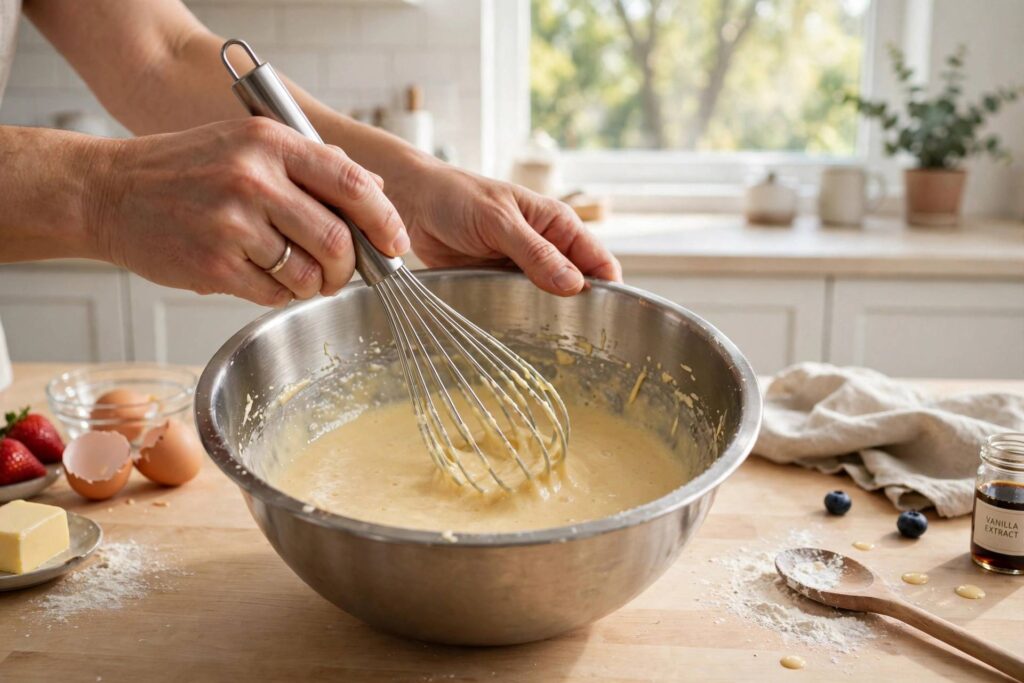
This is the number one pancake killer. When you stir batter vigorously, you develop gluten in the flour — the same protein network that makes bread chewy. In pancakes, gluten makes them dense, tough, and flat instead of tender and tall. The fix is almost comically simple: mix until the ingredients are just combined, and then stop. Lumps are not just okay — lumps are correct. A perfectly smooth batter is a warning sign. Count your strokes if you must: ten to twelve gentle folds, then walk away.
Culprit 2: Stale baking powder
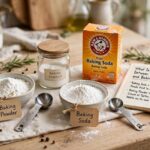
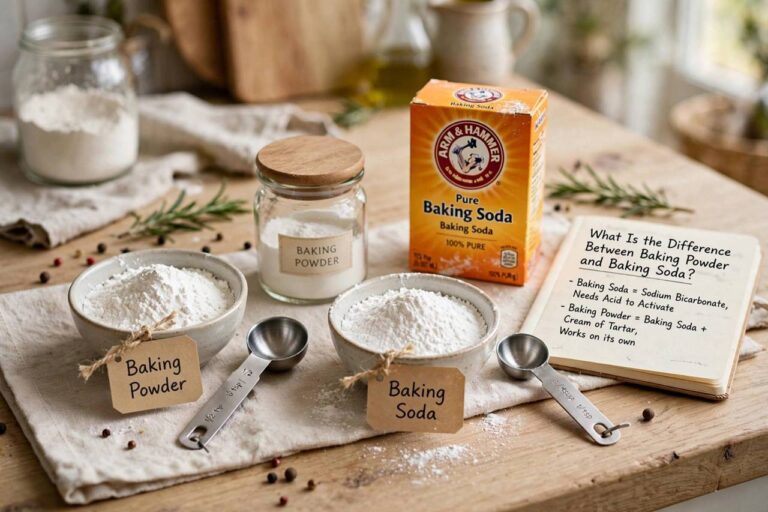
Baking powder is the engine of fluffiness — it releases carbon dioxide bubbles that lift the batter as it cooks. But it loses potency over time, especially once opened. That tin that has been in your pantry for two years? It is decoration now. Test it: drop half a teaspoon into hot water. If it fizzes vigorously, it is alive. If it barely bubbles, replace it. This single check fixes more flat pancakes than any recipe tweak. Baking powder is cheap; buy a fresh tin every six months if you bake regularly.
Culprit 3: The griddle is wrong (temperature or impatience)
Too hot, and the outside burns before the inside sets — flat, dark, raw-centered. Too cool, and the pancake spreads and steams instead of rising — pale and flabby. The sweet spot is medium heat, and you must let the pan fully preheat. Test with a drop of water: it should sizzle and dance, not sit and not vanish instantly. And the hardest rule: flip ONCE. Every extra flip presses out the air bubbles you worked to create. Wait for bubbles to form on the surface and the edges to look set — then one confident flip.
The Foolproof 7-Ingredient Recipe
Now the recipe — built to be forgiving, because it assumes you will respect the three rules above:
Dry ingredients: 2 cups all-purpose flour, 2 tablespoons sugar, 2 teaspoons baking powder (fresh — test it!), 1/2 teaspoon baking soda, 1/2 teaspoon salt.
Wet ingredients: 2 cups buttermilk (or milk with 2 tablespoons of lemon juice stirred in, rested 5 minutes), 2 large eggs, 3 tablespoons melted butter plus more for the pan, 1 teaspoon vanilla.
Method:
- Whisk the dry ingredients together in a large bowl.
- In a second bowl or large measuring cup, whisk the wet ingredients.
- Pour wet into dry. Fold gently — ten to twelve strokes — until just combined. Lumps are fine. Lumps are good.
- Rest the batter 5–10 minutes. This hydrates the flour and lets the leavening start working. Do not skip the rest — it is free fluffiness.
- Heat your griddle or skillet over medium heat. Add a little butter; it should foam, not smoke.
- Scoop 1/4 cup of batter per pancake. Cook until bubbles appear on the surface and edges look set, about 2–3 minutes. Flip once. Cook 1–2 minutes more.
- Keep finished pancakes warm in a low oven (200°F / 95°C) on a rack — not stacked, which steams them flat.
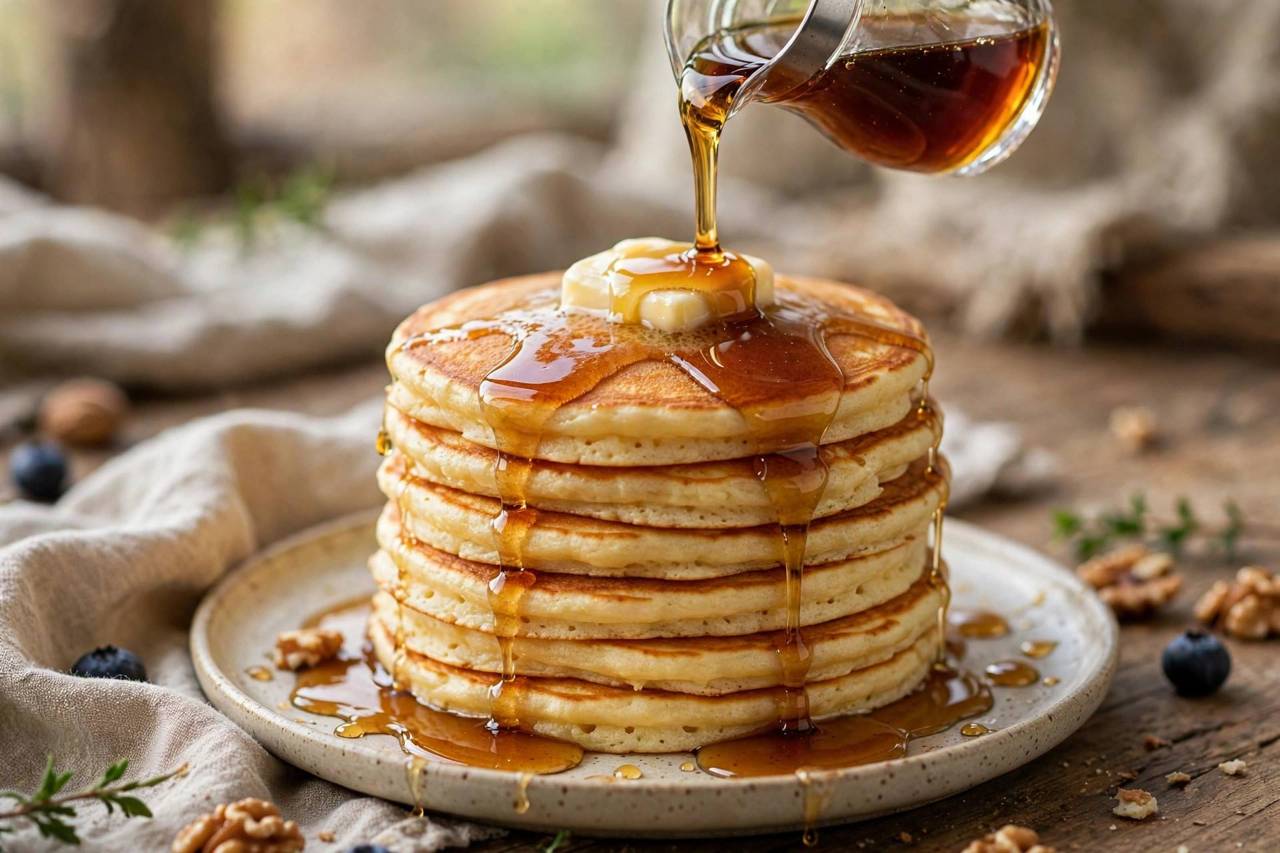
Makes about 12 pancakes. The buttermilk’s acidity reacts with the baking soda for extra lift — that is the quiet science behind diner-style height.
Troubleshooting: Diagnose Your Specific Problem
- Flat and dense: overmixed batter or dead baking powder. Fix the mixing first — it is the cause 80% of the time.
- Burnt outside, raw inside: heat too high. Lower to medium, preheat fully, and make pancakes slightly smaller so the center cooks through.
- Pale and rubbery: heat too low, or flipped too many times. Hotter pan, one flip.
- Uneven cooking / weird shapes: batter too thin (add a spoonful of flour) or pan not level. Also: stop swirling the batter in the pan — let it spread naturally.
- First pancake always fails: completely normal. The first pancake calibrates your pan temperature. Cooks call it the chef’s tax — eat it yourself and carry on.
- Good height but tough texture: overmixed. Next time, fewer strokes, more lumps.
Small Upgrades Worth Trying
Once the basics are solid, these take pancakes from good to memorable:
- Separate the eggs. Whip the whites to soft peaks and fold in last. Maximum lift, cloud-like texture. Worth it for special occasions.
- Brown the butter. Melt it until it smells nutty and turns amber. Adds a depth that makes people ask for your secret.
- Add-ins go in the pan, not the batter. Sprinkle blueberries or chocolate chips onto each pancake after scooping rather than stirring them through — they distribute evenly and do not sink or bleed.
- Rest longer for thicker batter. Up to 15 minutes of rest thickens the batter noticeably, and thicker batter means taller pancakes.
How to Make Pancakes Fluffy From Scratch for a Crowd
The recipe above serves a family. But pancakes for twelve — a brunch party, a holiday morning, a sleepover army — need logistics, not just ingredients. Here is how to scale fluffiness.
Scale smart, mix in batches. Doubling the recipe in one giant bowl is fine; tripling it gets unwieldy and tempts overmixing (the bigger the bowl, the harder you stir). For large crowds, make two separate double-batches rather than one quadruple batch. Each batch stays manageable, the leavening stays fresh, and if you mess one up, you have only lost half.
Set up a pancake station, not a stove vigil. The bottleneck in crowd pancakes is griddle space. Use two pans or a large electric griddle if you have one — an electric griddle holds temperature more evenly than a stovetop and fits six pancakes at once. Keep batter in a large measuring cup or pitcher for fast, clean pouring. Melt a big batch of butter and keep it warm in a small saucepan with a pastry brush nearby.
Hold without ruining. The wire-rack-in-a-low-oven method from the recipe scales perfectly: multiple racks, single layers, 200°F (95°C). Pancakes hold 20–30 minutes this way with minimal quality loss. What does NOT work: stacking them on a plate (steam makes the bottom ones gummy), covering with foil (same problem), or microwaving to reheat (rubbery). If you must hold longer than 30 minutes, you are better off making a second fresh batch — pancakes are fast.
Offer a topping bar. This is the crowd-pleaser secret: instead of fussing over fancy pancake variations, make one great plain fluffy pancake and set out toppings — maple syrup and butter obviously, plus berries, whipped cream, chocolate chips, Nutella, lemon and powdered sugar, crispy bacon for the sweet-salty crowd. Guests customize, you cook one thing. Everyone is happy, including you.
The make-ahead compromise: you cannot make batter ahead (the leavening dies), but you CAN pre-measure all dry ingredients into a jar or bag the night before — your own homemade “pancake mix,” better than store-bought because your baking powder is fresh. Morning-of, add the wet ingredients and you are flipping in five minutes. For the host who wants to enjoy the party, this is the move.
Frequently Asked Questions
Can I make fluffy pancakes without buttermilk?
Yes. The classic substitute is milk plus an acid: 2 tablespoons of lemon juice or white vinegar stirred into 2 cups of milk, rested 5 minutes until slightly curdled. It mimics buttermilk’s acidity, which is what matters for the baking soda reaction. Plain milk works too, but you lose a little lift.
Why are restaurant pancakes always fluffier than mine?
Three reasons: fresh leavening (restaurants cycle through baking powder fast), proper griddle temperature (commercial griddles hold steady heat), and batter rested before service. All three are replicable at home — they are technique, not equipment.
Can I make the batter the night before?
I do not recommend it. Baking powder starts reacting as soon as it hits liquid — by morning, most of the lift is spent. What you CAN do: mix the dry ingredients the night before, and the wet ingredients separately in the fridge. Combine in the morning in two minutes.
How do I keep pancakes warm for a crowd?
Single layer on a wire rack set over a baking sheet in a 200°F (95°C) oven. The rack prevents steaming underneath, which is what makes held pancakes soggy. They hold well for 20–30 minutes this way.
Are lumps in pancake batter really okay?
Really. Small lumps hydrate and disappear during cooking. Chasing a smooth batter is the fastest route to overmixing, which is the fastest route to flat pancakes. Embrace the lumps — they are the sign you stopped in time.
Can I make fluffy pancakes from a mix?
Yes — the same three rules apply to mixes, and they fix most mix pancakes too. Do not overmix (lumps are still correct), check that the mix is not expired (the leavening in the mix dies just like standalone baking powder — check the date), and control your heat with a single flip. Two upgrades that elevate any mix: replace the water with buttermilk and add a teaspoon of vanilla. You will get 80% of the from-scratch result with 20% of the effort, which is a completely respectable trade on a busy morning.
Fluffy Is a Technique, Not a Recipe
That is the whole secret of how to make pancakes fluffy from scratch: gentle mixing, fresh baking powder, the right heat, one flip, and a short rest. The seven ingredients are just the vehicle. Master the technique and you will never need another pancake recipe — though you might want this one anyway, because it is a good one. Now go make the first pancake, eat the chef’s tax, and enjoy the tall ones that follow.