How to Defrost a Freezer Quickly: The Fastest Safe Method

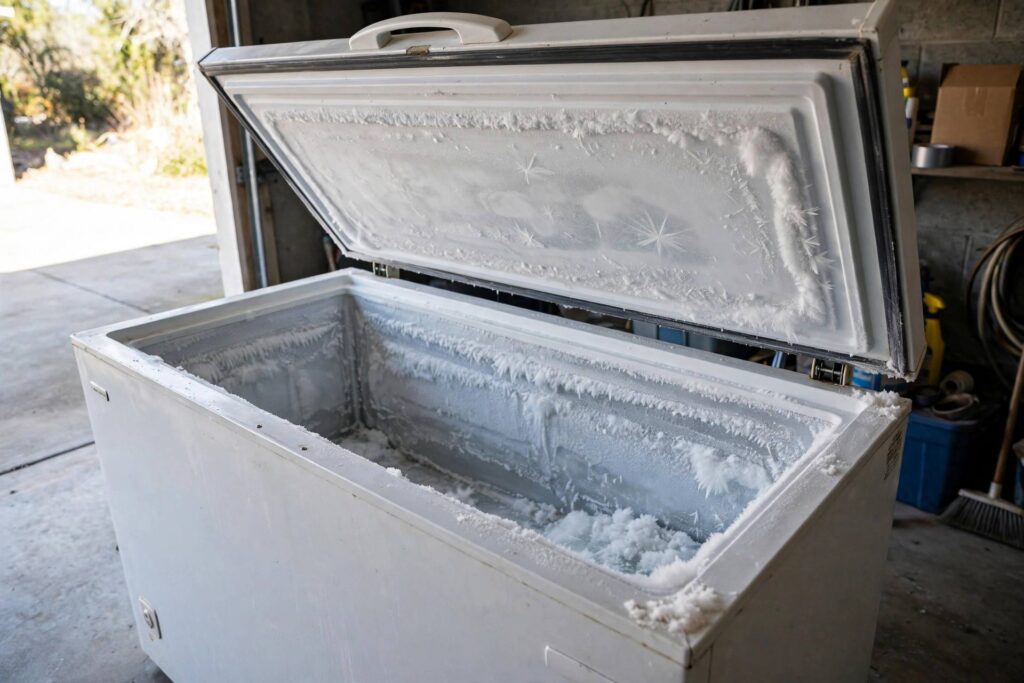
Learning how to defrost a freezer quickly is one of those household skills nobody teaches you until you are staring at three inches of ice, a puddle forming on the kitchen floor, and a freezer door that barely closes. I have been there — twice, actually, because the first time I did it wrong and had to do it all over again six months later. The good news: you can defrost a freezer in about an hour if you use the right method, and you can avoid the mistakes that turn a simple chore into a flooded kitchen or a broken appliance.
Here is the honest truth up front: there is no magic trick that melts a glacier of frost in ten minutes without risk. The fastest safe method takes roughly 45 to 90 minutes depending on how thick the ice is. Anyone promising faster is either selling you something or about to suggest something dangerous. Let me walk you through the methods ranked by speed, the safety mistakes to avoid, and the one habit that will keep you from doing this again anytime soon.
Before You Start: The 10-Minute Prep That Saves an Hour
Every fast defrost starts with the same prep, and skipping it is why people end up with water everywhere. First, unplug the freezer — not just turn it down, unplug it. You are about to introduce heat and water near an electrical appliance, and you want zero current running through it. Second, empty everything into coolers or insulated bags with ice packs. Frozen food stays safe for about 2 to 4 hours if you keep it packed tight and the cooler closed; group items together because a full cooler holds cold far longer than a half-empty one.
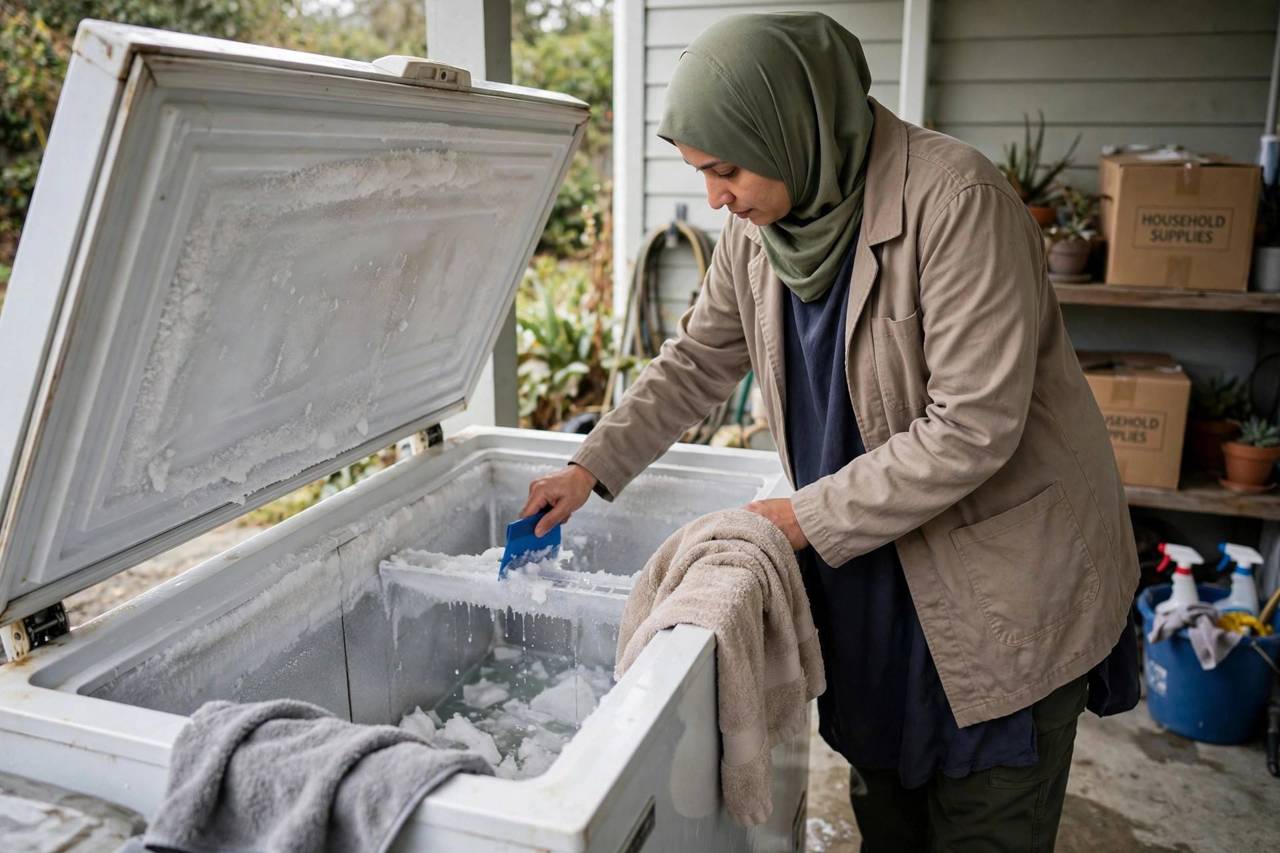
Third, protect your floor. Lay old towels around the base of the freezer and put a shallow baking tray or roasting pan on the bottom shelf to catch meltwater. If you have a chest freezer, the drain plug at the bottom is your friend — put a bucket or a hose leading to a bucket under it. Fourth, remove all shelves, drawers and baskets so you can reach every frosty surface. That is it. Ten minutes of prep, and the actual defrosting goes twice as fast.
How to Defrost a Freezer Quickly: Methods Ranked From Fastest to Slowest
1. The steam bowl method (fastest safe option)
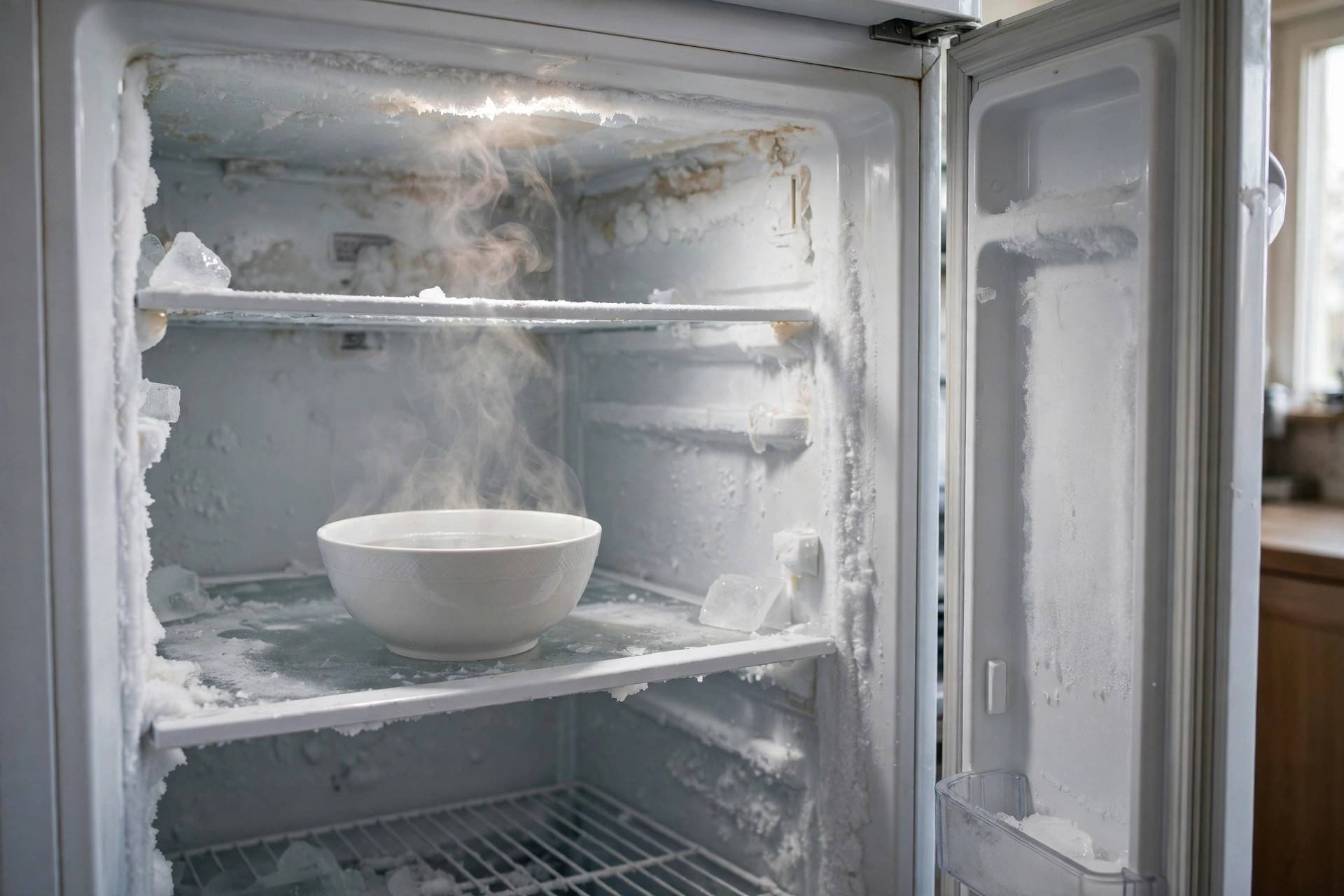
This is my go-to and the method I recommend to anyone asking how to defrost a freezer quickly. Boil a large pot of water, set it on a trivet or folded towel on one of the freezer shelves, and close the door (or lid). The trapped steam loosens the frost fast. Every 10 to 15 minutes, open up, wipe away the loosened ice with a cloth, and replace the water with a fresh boiling pot. A moderately frosted freezer surrenders in about 45 minutes this way. The steam does the work; you just clear the debris.
2. The fan method
Point a regular room fan at the open freezer so it blows room-temperature air inside. Moving air melts frost noticeably faster than still air — this is basic physics, and it works. It is slower than steam (expect 60 to 90 minutes) but it is completely hands-off once set up, which makes it great if you want to clean the kitchen while you wait. Keep towels in place because the melt is steady rather than dramatic.
3. Hot wet towels
Soak towels in hot (not boiling) water, wring them out, and press them against thick ice patches. This is a good supplement to the steam or fan method for stubborn spots, especially the thick buildup around the door seal. As a standalone method it is tedious — you will be reheating towels every few minutes — but for targeted attack on the worst patches, nothing beats it.
4. The hairdryer method (fast but risky)
A hairdryer on a warm (not hot) setting, held at least six inches from the ice and kept moving, melts frost quickly. But I list it fourth for a reason: you are pointing an electrical device at melting ice inside an appliance, with water pooling at your feet. If you use this method, the freezer must be unplugged, you must keep the dryer away from standing water and the appliance walls, and you must never leave it unattended. Honestly? The steam bowl is nearly as fast and far safer. I only mention the hairdryer because people ask.
5. The do-nothing method (slowest, safest)
Unplug, open the door, walk away. The frost melts on its own in 3 to 6 hours. If you have nowhere to be and a well-toweled floor, this is perfectly fine. It is not fast, but it is foolproof.
Safety Mistakes That Ruin Freezers (Avoid These)
I learned some of these the hard way so you do not have to. Never use a knife, screwdriver or ice pick to chip ice. This is the number one freezer-killer. One slip punctures the refrigerant line or the interior wall, and a punctured refrigerant line can mean a dead freezer or an expensive repair. Use a plastic spatula or a dedicated plastic scraper only, and only on ice that is already loosening.
Never pour boiling water directly onto the freezer walls or shelves. Extreme, sudden temperature change can crack plastic liners and glass shelves. The steam bowl works because the heat is indirect. Direct boiling water is a different, harsher thing.
Never use a heat gun, and be cautious with space heaters. Heat guns get far hotter than hairdryers and will warp plastic liners. If a space heater is your only option, keep it well back from the freezer and never leave the room.
Do not refreeze thawed food blindly. Food that stayed at 40°F (4°C) or below is fine to refreeze, though quality may dip. Anything that sat above 40°F for more than two hours should be cooked or discarded — when in doubt, throw it out. Your stomach will thank you.
One more: do not plug the freezer back in while surfaces are still wet. Dry everything thoroughly with clean towels first. Standing water refreezes into the exact frost problem you just solved, and moisture near electrical components is never welcome.
After the Defrost: Clean, Dry, Restart
Once the last of the ice is gone, do not just plug it back in. Wipe every surface with a solution of warm water and baking soda (about a tablespoon per quart) — this cleans without harsh chemicals and absorbs odors. Dry everything completely with fresh towels. Replace the shelves and drawers, plug the freezer in, and let it run empty for 30 to 60 minutes to get back down to temperature (0°F / -18°C) before reloading your food. Your food will thank you for the cold welcome, and the thermometer does not lie: check that it actually reaches 0°F before you consider the job done.
How to Stop Doing This So Often
Here is the part nobody told me the first time: frost builds up because warm, moist air gets in. Every fix is about keeping it out. Check the door seal — close the door on a dollar bill; if it slides out easily, the gasket is worn and leaking humid air. Keep the freezer reasonably full (frozen water bottles fill dead space in an emptier freezer). Let hot food cool before freezing. And do not leave the door hanging open while you “just grab one thing” for five minutes.
Most modern freezers are frost-free and handle this automatically. If yours is a manual-defrost model and you are defrosting more than twice a year, the seal is the prime suspect. Fix the cause and the chore nearly disappears — I went from twice a year to once every eighteen months just by replacing a tired gasket.
When Defrosting Is Not Enough: Signs of a Bigger Problem
Sometimes rapid frost buildup is a symptom, not a chore. If your manual-defrost freezer ices up within weeks of a thorough defrost, suspect the door gasket (the dollar-bill test from the prevention section), a thermostat stuck in overdrive, or — in older units — failing insulation letting warm air condense inside the walls. Frost concentrated in one spot often means a localized seal failure or a crack in the liner. And if you are shopping for a replacement, this is the honest case for frost-free models: they cost more upfront and use slightly more energy, but they eliminate this chore entirely. For a household that resents the ritual, that trade is usually worth it.
Frequently Asked Questions
How long does it take to defrost a freezer quickly?
With the steam bowl method, 45 to 90 minutes for most household freezers, depending on ice thickness. Very thick buildup (over 2 inches) can take up to 2 hours. The passive method takes 3 to 6 hours.
Can I use a knife to remove ice from the freezer?
No — never. Sharp metal tools can puncture refrigerant lines or crack the interior lining, which can permanently damage the freezer. Use a plastic spatula or scraper, and only on ice that is already loosening on its own.
Is it safe to use a hairdryer to defrost a freezer?
It can be done but it carries real risk: electricity plus melting ice plus water on the floor. If you do it, unplug the freezer first, use a warm (not hot) setting, keep the dryer moving and away from water, and never leave it unattended. The steam bowl method is nearly as fast and much safer.
Will my food stay frozen while I defrost?
Packed tightly in coolers with ice packs and kept closed, frozen food stays safe for 2 to 4 hours — comfortably longer than a fast defrost takes. Work efficiently and keep cooler lids shut.
How often should I defrost a manual-defrost freezer?
When the frost reaches about a quarter inch thick — typically once or twice a year for most households. If you are doing it far more often, check the door seal for leaks.
The Bottom Line
Knowing how to defrost a freezer quickly comes down to this: prep properly, use the steam bowl method, never attack ice with sharp tools, and fix the door seal so you do it less often. An hour of work, done right, buys you a freezer that runs cheaper, holds temperature better, and actually closes. Not bad for a Saturday chore.