How to Get Rid of Static Cling on Clothes: Instant Fixes That Work


If you want to know how to get rid of static cling on clothes, you have probably lived the moment: you stand up from the car seat and your skirt is wrapped around your legs like shrink wrap, or you pull a shirt from the dryer and it crackles like a campfire. Static cling is one of those small miseries that feels silly to complain about and genuinely annoying to live with. I have tested just about every fix — the folk remedies, the dryer products, the “natural” hacks — and I can tell you which ones actually work, which ones are myths, and how to stop the problem at its source.
First, the thirty-second science, because it makes every fix make sense. Static cling happens when fabrics rub together and swap electrons, leaving some items positively charged and others negatively charged. Opposites attract, so the clothes stick. Dry winter air makes it worse because moisture in the air normally lets charges dissipate — take the humidity away and the charges have nowhere to go. Synthetics (polyester, nylon, acrylic) are the worst offenders; natural fibers like cotton and wool barely cling at all. Every fix below is just a different way to either prevent the charge buildup or neutralize it after the fact.
How to Get Rid of Static Cling on Clothes: Instant Fixes That Work Now
Sometimes you discover the static at the worst possible moment — in the office, at an event, walking out the door. These fixes work in seconds with whatever is at hand.
Rub the fabric with a dryer sheet. The old standby works because dryer sheets are coated with positively charged surfactants that neutralize the negative charge on your clothes. Keep one in your bag during winter. One sheet rubbed over the clinging area fixes it in about ten seconds.
Lightly mist with water. A spray bottle with plain water, misted lightly over the garment, adds the moisture the dry air stole. You do not want the clothes damp — just a whisper of mist. In a pinch, run damp hands over the fabric. This is the fastest truly chemical-free fix there is.
Run a metal hanger over the fabric. Metal conducts the charge away. Slide a wire or metal hanger between the clinging layers or rub it over the outside of the garment. It sounds like folklore; it works because of basic conductivity. A metal thimble or even a key works in a pinch.
Touch something grounded. If your whole outfit is crackling, touch a metal doorframe or faucet. It will not fix the clothes, but it discharges you, which is half the problem — your body is carrying charge too.
Hairspray in an emergency. A light mist of hairspray on the inside of a clinging skirt neutralizes static fast. I mention it because it works, not because I love it — it can spot some fabrics, so test somewhere hidden first and treat it as a last resort, not a daily habit.

Laundry-Day Fixes: Stop Static Before It Starts
Instant fixes are triage. The real win is laundry day, because that is where most static is born — in the dryer, where hot tumbling fabrics generate charge with industrial efficiency.
Do not over-dry. This is the single biggest cause of static, and the single easiest fix. Clothes that tumble past dry keep rubbing and building charge with no moisture left to dissipate it. Pull clothes out when they are just dry, or use the dryer’s moisture sensor setting instead of a timed cycle. I cut my static problem roughly in half with this one change.
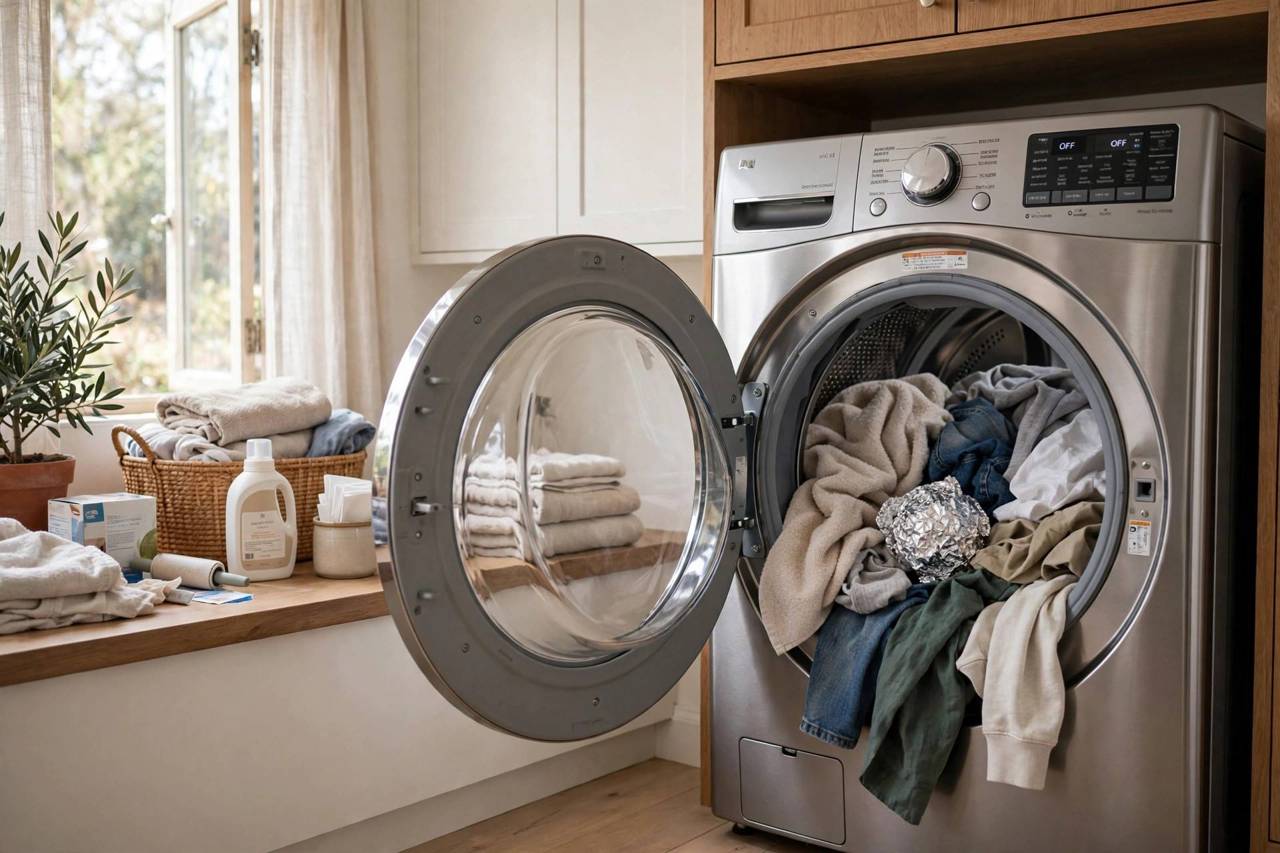
Toss in aluminum foil balls. Crumple aluminum foil into two or three tight balls, about the size of a tennis ball, and throw them in the dryer. They discharge static as clothes tumble, and unlike dryer sheets they last for months. This is my favorite chemical-free option — free, reusable, and genuinely effective.
Use wool dryer balls. Three or four wool dryer balls separate clothes as they tumble, reducing the rubbing that creates charge, and they cut drying time too. For extra anti-static power, add a few drops of white vinegar to a damp washcloth and toss it in for the last ten minutes — the vinegar smell burns off in the heat.
Add vinegar to the rinse cycle. Half a cup of white vinegar in the fabric-softener dispenser softens clothes and reduces static without coating fibers in chemicals. Your clothes will not smell like vinegar, I promise — the scent rinses out completely. This is the natural option I recommend most often.
Sort your laundry. Drying synthetics separately from natural fibers reduces the charge transfer between them. It is an extra step, but if you live in static-prone polyester work clothes, it makes a visible difference.
Long-Term Prevention: Change the Conditions
If you fight static all winter, the problem is not your clothes — it is your air. A humidifier in the bedroom or living room raises indoor humidity, and charges dissipate the way nature intended. You do not need tropical levels; even moving from 20% to 35% relative humidity transforms the static situation. Your skin and sinuses will thank you too.
Consider your fabric choices for the worst months. You do not have to overhaul your wardrobe, but knowing that a polyester blouse under a wool coat is a static bomb lets you plan: a cotton slip or lining between synthetic layers breaks the charge chain. Natural-fiber underlayers are the unsung heroes of static-free winter dressing.
And moisturize your skin. Dry skin holds charge; lotioned skin does not. It sounds unrelated, but the number of people whose “static clothes” problem is really a dry-skin problem is higher than you would think. Morning lotion, especially on legs under skirts and dresses, quietly solves a surprising amount of cling.
What Does Not Work (Myths Worth Retiring)
Safety pins pinned inside a hem are supposed to “attract” the charge. In practice the effect is negligible — a pin is too small to meaningfully discharge a garment. Skip it.
Rubbing a balloon on your head is a fun party trick that demonstrates static; it does nothing for your clothes.
Expensive “anti-static sprays” mostly contain the same surfactants as a dryer sheet at ten times the price. A dryer sheet or water mist does the same job.
The pattern in the myths: they treat static as something to redirect rather than neutralize or prevent. The fixes that work either add moisture, add conductivity, or stop the charge from building in the first place.
Static Cling by Garment: Targeted Fixes
Different clothes cling differently, and the fixes can be tuned. Skirts and dresses: the classic car-seat-to-standing disaster. A cotton or anti-static slip between layers breaks the charge chain — this single addition solves most dress cling. In a pinch, lightly mist the inside of the skirt with water. Suit trousers and blazers: wool suits generate less static than synthetics, but the lining can still cling. A dryer sheet rubbed inside the trouser legs before dressing handles it; for all-day wear, the vinegar rinse on wash day does more than any morning fix. Bedding: sheets that crackle and cling at night are miserable. Wash with vinegar in the rinse, do not over-dry, and consider a humidifier in the bedroom — the same humidity fix that helps your clothes transforms bedding. Workout clothes: synthetic activewear is among the worst offenders. Wash inside-out with vinegar, skip the dryer entirely (hang-dry activewear — heat also degrades the elastic), and the problem mostly vanishes. The pattern across all of these: match the fix to where the charge builds, and prefer the laundry-day prevention over the morning-of rescue.
A note on dryer sheets vs. the alternatives: dryer sheets work, but they coat fabrics with a waxy layer that builds up over time — reducing towel absorbency and athletic fabric breathability, and irritating sensitive skin. That is why I lean on the foil balls and vinegar rinse for everyday laundry and keep dryer sheets as the travel and emergency option. If you love the scent of dryer sheets, a few drops of essential oil on a wool dryer ball gives you fragrance without the coating. Your clothes, your skin and your towels will all be better for the switch — and the static control is just as good once the routine is established.
Finally, ground yourself, literally: if you work at a desk all day, touching a grounded metal object periodically discharges the charge your body accumulates from rolling around in an office chair. Much of what people experience as “static clothes” at work is really static bodies re-charging the clothes all day. Discharge yourself and the clothes stay calmer.
Frequently Asked Questions
How do you get rid of static cling on clothes fast?
Rub the clinging area with a dryer sheet, lightly mist the fabric with water, or run a metal hanger over it. All three work in seconds and use things most people already have.
Does aluminum foil in the dryer really stop static?
Yes. Two or three tight balls of aluminum foil tumbling with the load discharge static effectively, and they last for months. It is one of the best chemical-free options available.
Why do my clothes have more static in winter?
Cold air holds less moisture, and indoor heating dries it further. Without ambient humidity to dissipate electrical charges, they build up on fabrics — especially synthetics — and have nowhere to go.
Is fabric softener or vinegar better for static?
Both reduce static. Fabric softener coats fibers with anti-static chemicals and adds fragrance; white vinegar in the rinse cycle achieves a similar effect naturally without residue buildup. Vinegar is cheaper and better for sensitive skin.
Which fabrics cause the most static cling?
Synthetics: polyester, nylon, acrylic and rayon. Natural fibers like cotton, linen, wool and silk generate far less static. Blends fall somewhere in between depending on the synthetic content.
The Bottom Line
Getting rid of static cling on clothes is a two-layer game: instant fixes (dryer sheet, water mist, metal hanger) for the moment of crisis, and laundry-day habits (don’t over-dry, foil balls, vinegar rinse) plus a little humidity to stop it happening at all. Do the prevention and you will rarely need the rescue.