How to Dress Business Casual for an Interview: Formulas That Work


Here is the question I hear constantly from styling clients: how to dress business casual for an interview without looking underdressed, overdressed, or like you Googled “business casual” five minutes ago. It is a genuinely tricky dress code, because “business casual” means something different at a tech startup, a bank, and a design agency — and an interview is the one occasion where getting it wrong actually costs you something. After years of dressing people for career-defining meetings, I have a simple philosophy: dress one step above what the employees wear, and let fit do the talking.
The stakes deserve respect. Interviewers form impressions in seconds, and while your clothes will not get you the job, the wrong clothes can absolutely lose it. An outfit that is clean, intentional and appropriate tells the interviewer you take the opportunity seriously — before you say a word. Let me give you the formulas that work, broken down by industry, for both men and women, plus the grooming and fit checklist I run through with every client.
How to Dress Business Casual for an Interview: The One-Step-Up Rule
Forget memorizing dress codes. Learn this instead: find out what employees at the company wear day to day, and dress one step above that. If the office is jeans and t-shirts, you wear chinos and a blazer. If the office is business casual, you wear business casual at its sharpest — or edge toward business formal. If the office is suits, you wear a suit and this article is not for you.
How do you find out what employees wear? Check the company’s careers page and social media — team photos do not lie. Ask the recruiter or your contact outright; “what is the office dress code?” is a completely normal question and nobody judges you for asking. When in doubt between two options, choose the sharper one. Being slightly overdressed reads as respectful. Being underdressed reads as careless. That asymmetry is the whole game.
For Women: Outfit Formulas That Always Work
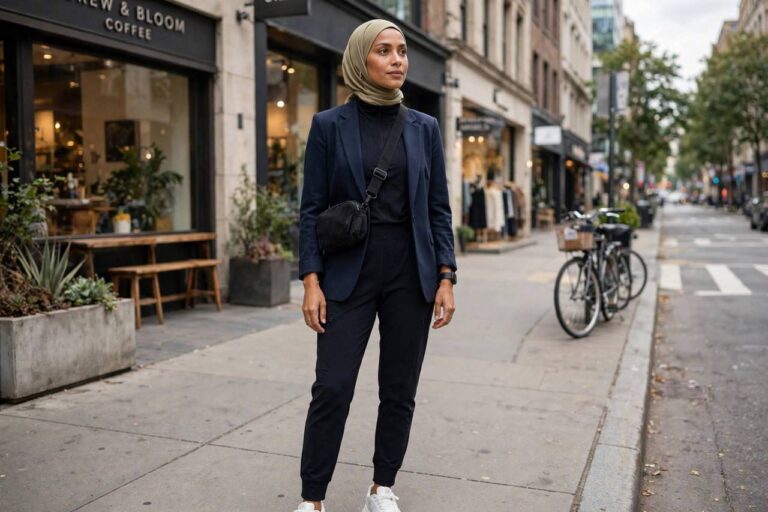
The universal formula: tailored blazer + blouse or knit top + dark trousers or a knee-length skirt + closed-toe shoes. This works in finance, consulting, tech, nonprofits — everywhere business casual interviews happen. Navy, charcoal or black blazer; a blouse in white, cream or a muted color; trousers that skim rather than cling. It is not exciting, and that is the point: the interviewer should remember your answers, not your outfit.
By industry: For corporate/finance/law-adjacent roles, lean formal — a matching blazer and trousers (not quite a suit, but close), a silk or silk-look blouse, pointed flats or low heels. For tech and startups, you can soften it: a knit blazer or structured cardigan, dark jeans only if you are certain the culture allows (otherwise chinos), clean minimal sneakers are a risk — choose loafers or ankle boots instead. For creative industries (design, media, marketing), show a little personality: an interesting texture, one statement accessory, a color that is not navy — but keep the silhouette polished. Creativity in one element, discipline everywhere else.
What to avoid: anything too tight, too short, too sheer or too casual. No leggings as trousers, no athleisure, no flip-flops or sneakers, no heavy perfume. And please — no brand-new shoes you have never walked in. Blisters have ended more interview confidence than bad answers ever have.
For Men: Outfit Formulas That Always Work
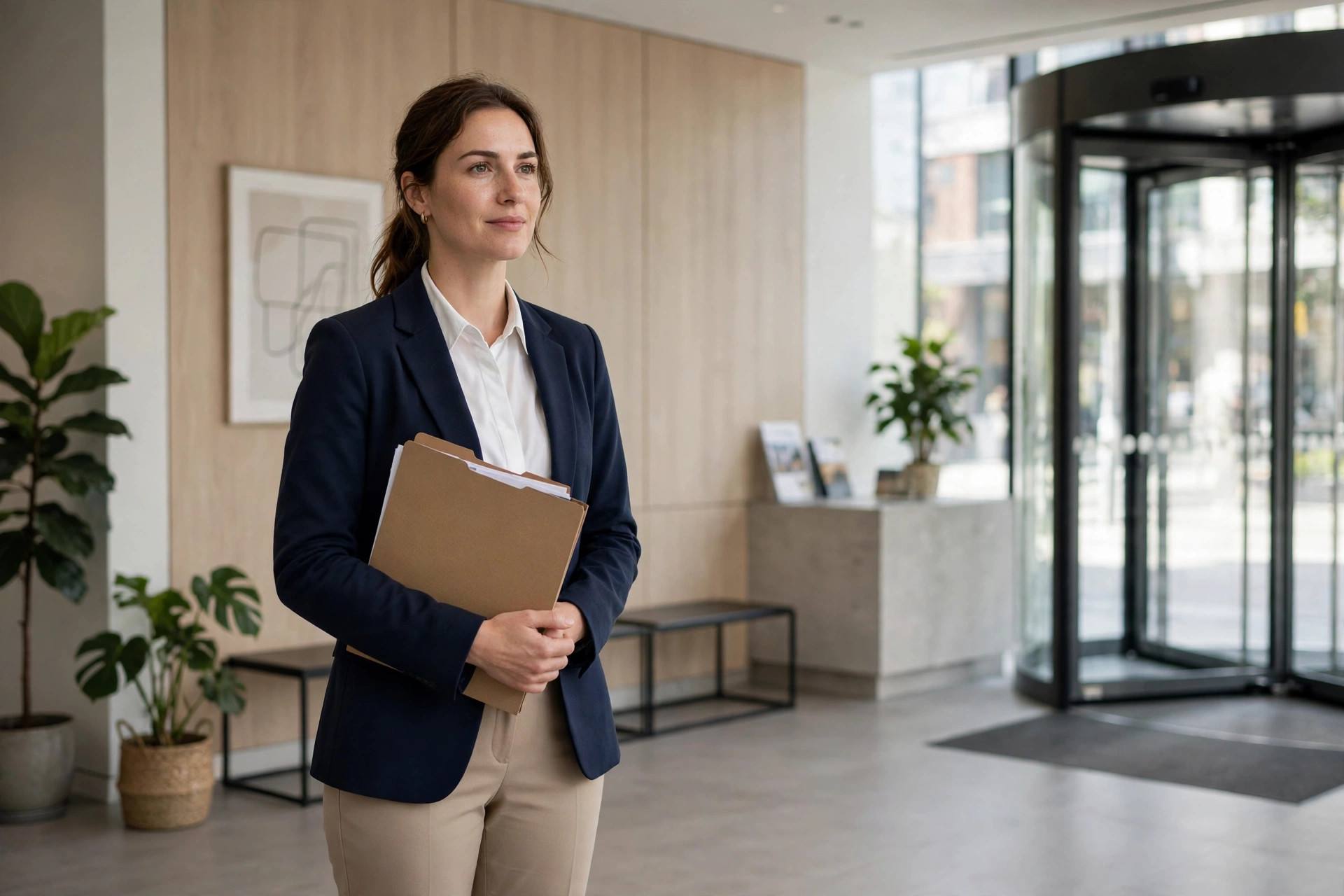
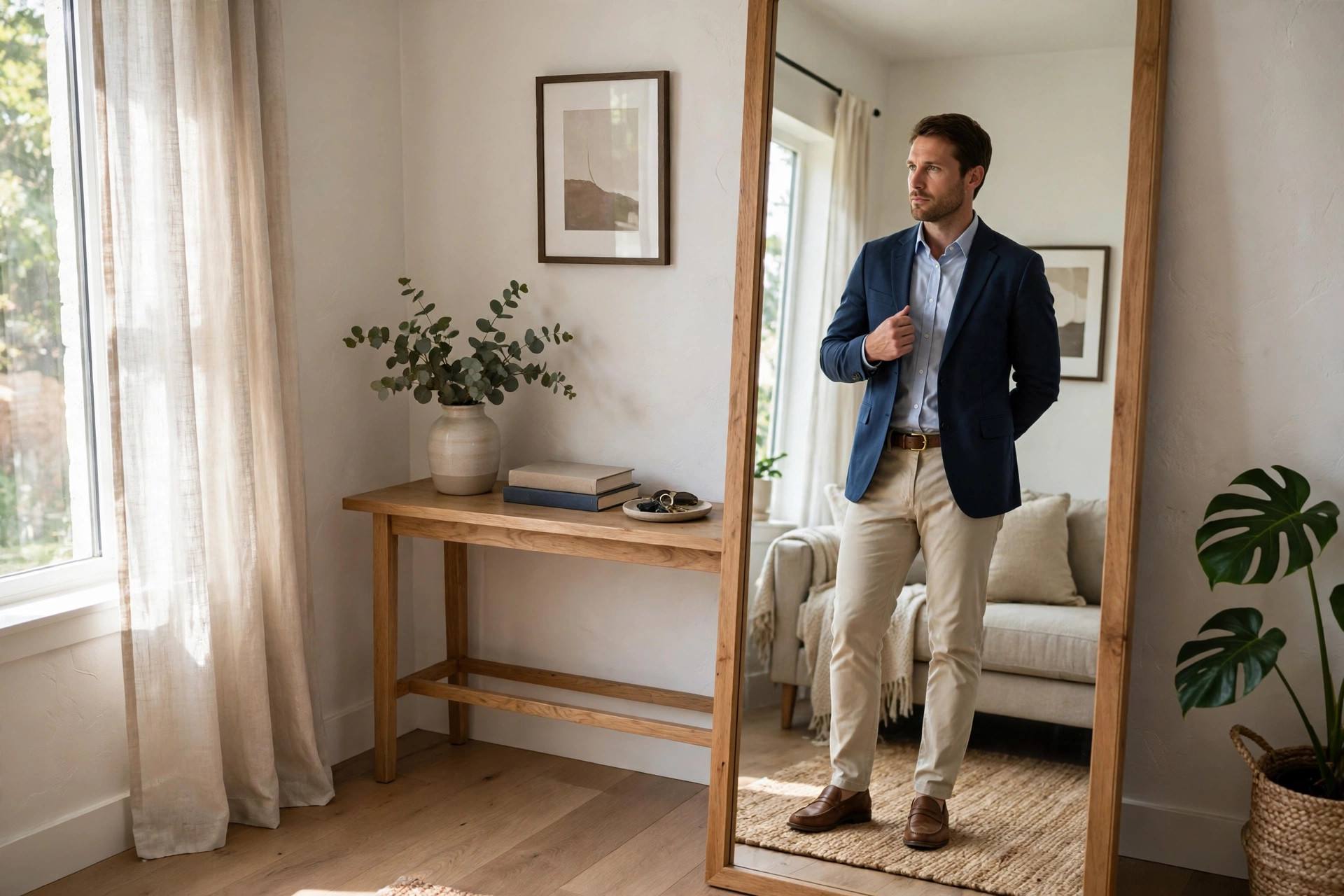
The universal formula: blazer or sport coat + collared shirt + chinos or dress trousers + leather shoes (or clean minimal dress shoes). No tie required for business casual — and wearing one when nobody else does can read as stiff — but have one in your bag if the industry is traditional. Navy blazer, light blue or white shirt, khaki or charcoal chinos, brown or black leather shoes. Done. You look like someone who gets promoted.
By industry: For corporate/finance, go darker and more structured: charcoal trousers, a proper sport coat, an Oxford shirt, and consider the tie. For tech/startups, you can drop the blazer for a sharp overshirt or knit polo under a casual blazer, with dark chinos — but keep the shoes real shoes. For creative fields, texture and fit matter more than formality: a well-cut blazer in an interesting fabric, a shirt with some character, boots instead of Oxfords. Same rule as for women: one element of personality, everything else disciplined.
What to avoid: polo shirts (too casual for interviews, even business casual ones), jeans unless you have verified the culture twice, sneakers, untucked shirts with a blazer, and short sleeves with a jacket — the proportions fight each other. Socks should match the trousers, not the shoes, and they should exist. I should not have to say that, but here we are.
The Fit and Grooming Checklist
I will be blunt: a $200 outfit that fits beats a $1,000 outfit that does not. Fit is the entire difference between “business casual” and “I own business casual clothes.” Run this checklist the night before.
Fit: Jacket shoulders end at your shoulder bones. Sleeves show a quarter to half inch of shirt cuff. Trousers break once over the shoe — no pooling, no flooding. Nothing pulls, gaps or strains. If it needs tailoring, a basic hem and waist adjustment costs little and transforms everything.
Condition: Everything pressed or steamed. No wrinkles, no pet hair (lint roller, twice), no missing buttons, no scuffed shoes — ten minutes with polish or a damp cloth. Interviewers notice shoes; it is practically a law of nature.
Grooming: Hair clean and controlled. Nails clean and trimmed. Minimal fragrance — one spray or none; interview rooms are small. For men: facial hair either clean-shaven or deliberately groomed, not the in-between. For women: makeup at your normal level or slightly polished, not experimental. You want to look like the best version of your everyday self, not a different person.
The bag and the details: Bring a structured bag or portfolio, not a gym bag or a plastic folder. Phone on silent — not vibrate, silent. A pen that works. These details are invisible when right and memorable when wrong.
Weather, Culture and Edge Cases
Summer heat: linen blazers, breathable cotton shirts, and lighter colors are your friends. Nobody expects a wool suit in August; they expect you to look composed despite the heat. Arrive early enough to cool down before you walk in.
Video interviews: dress fully, not just the top half — you might need to stand. Solid colors read better on camera than patterns; avoid thin stripes, which shimmer on video. Check your background and lighting with the same care you give the outfit.
When they say “casual” for the interview: do not believe them literally. “Casual” from an interviewer means “don’t wear a suit,” not “wear what you wore to brunch.” Dark jeans, a blazer and proper shoes is the floor, not the ceiling.
The Night-Before and Morning-Of Checklist
The interview outfit is decided the night before — never the morning of, when stress makes every choice worse. Night before: lay out the complete outfit, shoes included, and inspect everything in good light: buttons, hems, lint, wrinkles. Steam or press whatever needs it. Polish or wipe the shoes. Pack your bag: portfolio or notebook, pen, phone charger, a copy of your resume, mints (not gum), and — my clients laugh until they need it — a small stain-removal wipe and a sewing kit. Check the weather and the route; plan to arrive fifteen minutes early, which means planning for traffic, parking and getting lost in the building.
Morning of: shower, groom, dress in the planned outfit — no last-minute substitutions. Eat something; low blood sugar makes everyone perform worse. Do a final mirror check: front, back, teeth, lint. Leave early enough that a delay does not spike your cortisol. And one psychological trick I give every client: dress, then do something normal for ten minutes — make tea, read headlines. It settles the clothes onto you and settles you into the day, so you walk in feeling like yourself instead of like someone wearing a costume. The outfit did its job the night before. The morning is for becoming the person who wears it well.
The post-interview habit nobody mentions: when you get home, note what worked. Which shoes stayed comfortable all day? Did the blazer restrict your shoulders? Was the fabric too warm for the walk from the parking lot? Interview dressing is a skill that compounds — the second interview is easier than the first, but only if you debrief the first. Keep a simple note on your phone: what you wore, what worked, what to change. Within three interviews you will have a personal uniform dialed in, and the whole question of how to dress business casual for an interview stops being stressful and starts being automatic. That is the real goal — not one perfect outfit, but a system that makes every future “what do I wear” a non-decision.
Frequently Asked Questions
Can I wear jeans to a business casual interview?
Only dark, well-fitting jeans, and only if you have confirmed the company culture is genuinely casual. When uncertain, chinos or trousers are always the safer choice. Jeans are the most common way candidates accidentally underdress.
Do I need a tie for a business casual interview?
Usually not — that is what makes it business casual rather than business formal. In traditional industries like finance or law, carrying one as backup is smart. In tech and creative fields, skip it.
What colors are safest for an interview outfit?
Navy, charcoal, black, white, cream and light blue. They read as competent and calm across industries. Save bold colors for one accent piece at most.
Is it better to be overdressed or underdressed for an interview?
Slightly overdressed, every time. It signals respect for the opportunity. Underdressing signals you did not think it mattered — and interviewers notice.
What should I avoid wearing to any interview?
Athleisure, flip-flops, sneakers, anything wrinkled or stained, heavy fragrance, and brand-new untested shoes. Also: anything you have to adjust constantly. Fidgeting with your clothes reads as nervousness.
The Bottom Line
How to dress business casual for an interview comes down to three things: one step above the office norm, a fit that looks intentional, and grooming that shows you prepared. Get those right and your clothes disappear — leaving the interviewer free to notice the only thing that matters: you.