How to Fold Clothes to Save Closet Space: File Fold vs Roll vs KonMari

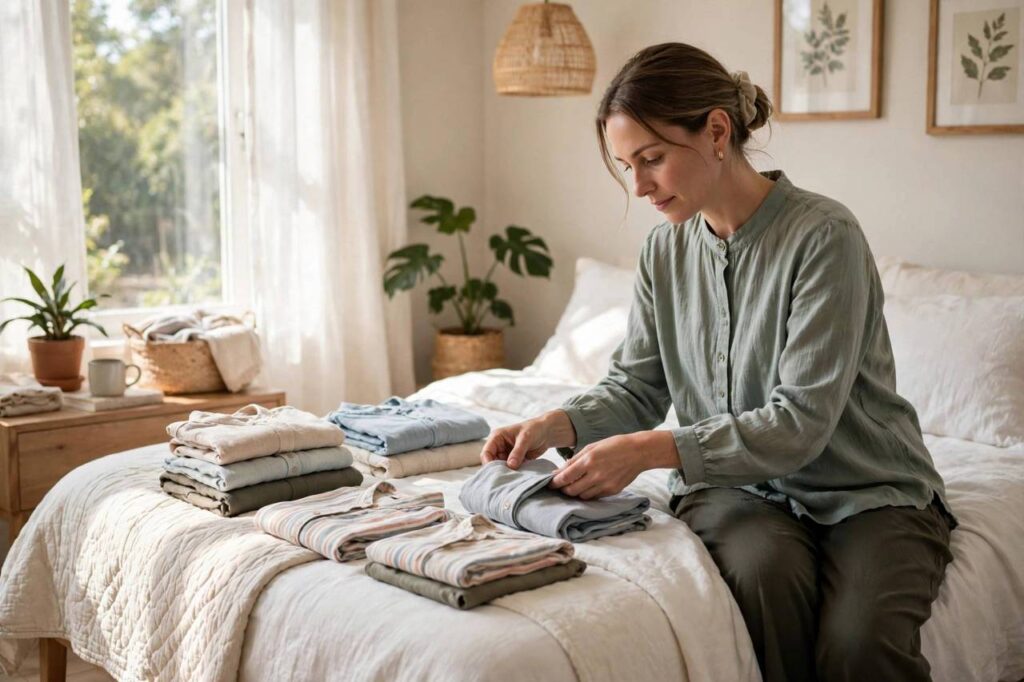
If you want to know how to fold clothes to save closet space, forget the idea that there is one magic technique. I have organized closets for a decade, and the truth is annoyingly specific: the best folding method depends on the garment. Rolling wins for t-shirts. File folding wins for jeans. And half the “space-saving hacks” on the internet waste your time on clothes that should never have been folded in the first place.
So instead of another breathless ode to one method, here is what actually works — a garment-by-garment comparison of the three serious techniques, with honest estimates of how much space each one saves. Because a folded sweater that saves 40% of its drawer space matters; a “perfectly folded” sock collection does not.
The Three Methods, Honestly Compared
Before the garment table, a quick primer on the contenders:
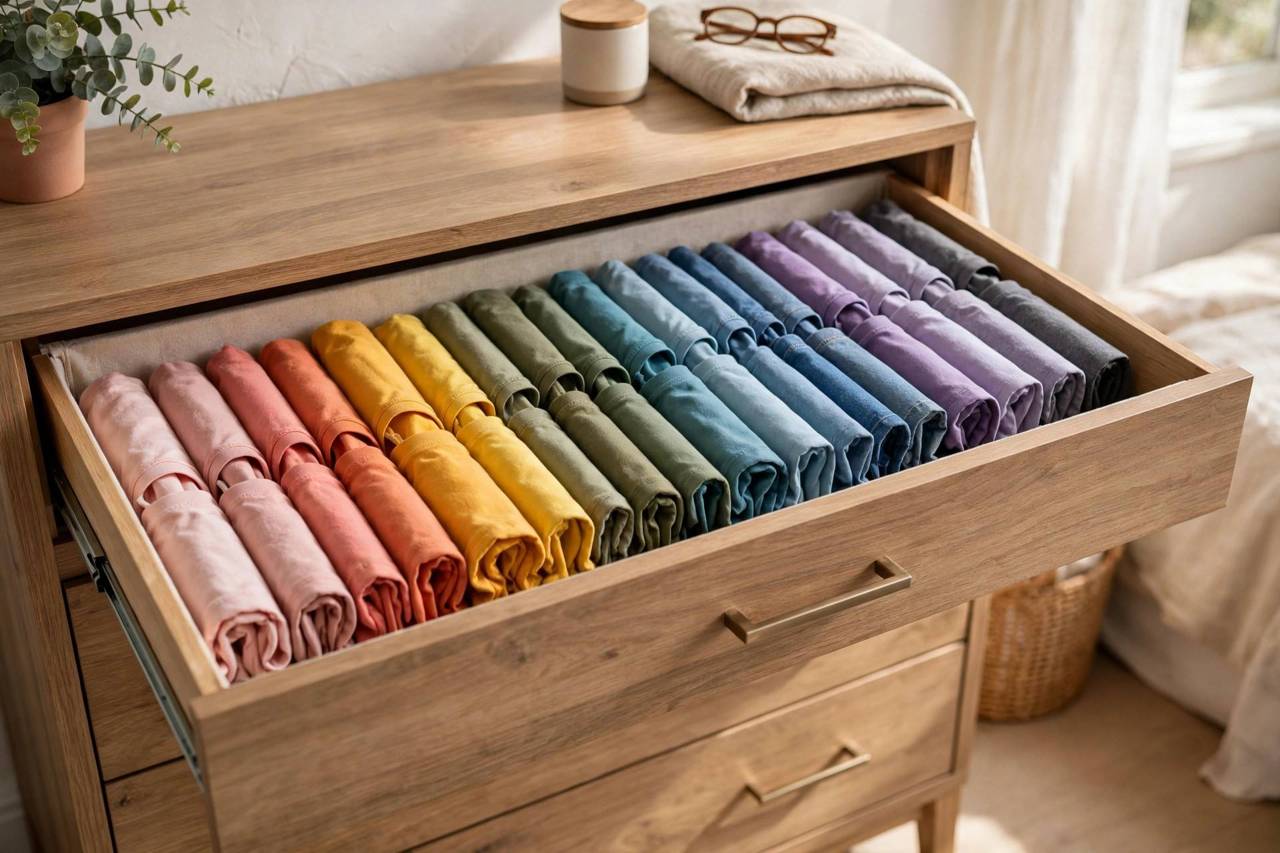
- File folding (the KonMari fold): fold garments into compact rectangles that stand upright in the drawer like files. Everything visible at a glance, nothing buried. Best for: jeans, sweaters, t-shirts in deep drawers. Space saved: roughly 30–50% versus a sloppy stack.
- Rolling (the military/travel roll): fold once lengthwise, then roll tightly. Best for: t-shirts, casual tops, leggings, packing suitcases. Space saved: roughly 25–40%, plus it resists wrinkles decently. Weakness: rolls collapse into a jumble in deep drawers without dividers.
- Flat stacking: traditional neat rectangles stacked on a shelf. Best for: sweaters on open shelves, items you rarely wear. Space saved: basically zero versus other neat methods — its advantage is visibility on shelves, not compression. The bottom-of-the-stack problem is real: you will never wear what is buried.
Notice what is missing: no “folding boards,” no gadgets. A flat surface and your hands are the entire toolkit.
Method by Garment: What to Use for Everything You Own
| Garment | Best method | Why | Space saved vs sloppy |
|---|---|---|---|
| T-shirts | Roll or file fold | Roll for travel; file fold for drawers so you can see every shirt | ~35% |
| Jeans | File fold | Denim is heavy and holds a fold; standing files keep pairs visible | ~40% |
| Sweaters | Flat stack on shelves | Knit stretches on hangers and unravels in rolls; shelves win | ~20% |
| Hoodies | File fold | Tuck the hood in first, then fold — the bulk compresses surprisingly well | ~35% |
| Leggings / athletic wear | Roll | Stretchy fabric rolls tight and springs back; file folds slide apart | ~30% |
| Dress shirts | Hang them | Do not fold what should hang — buttoned shirts wrinkle in drawers | — |
| Underwear / socks | Small file fold or roll | Use drawer dividers; the method matters less than the container | ~25% |
| Shorts | File fold | Same logic as jeans, smaller package | ~35% |
The pattern: structured, heavy fabrics file-fold beautifully. Stretchy, light fabrics roll best. Knits live on shelves. And anything with a collar or that wrinkles if you look at it wrong belongs on a hanger — folding it “to save space” is a false economy when you spend the savings on ironing.
How to File Fold: The 60-Second Technique
Since file folding is the highest-impact skill here, the actual technique: lay the garment face-down. Fold one side in toward the center, sleeve folded back. Fold the other side in the same way — you now have a long rectangle. Fold that rectangle in halves or thirds until it forms a compact packet that stands upright on its own. The test: it should stand up in the drawer without leaning on its neighbors. If it flops, fold it smaller.
For jeans: fold in half lengthwise, then fold the crotch flap in, then fold into thirds. For t-shirts: the classic rectangle, folded into thirds. It takes about thirty seconds per item once your hands learn it, which they will within a week.
The Drawer Setup That Makes It Stick
Folding technique is half the battle; the container is the other half. File-folded clothes in a deep, divider-less drawer will eventually slump into a pile. Three fixes:
- Drawer dividers or small boxes. Even shoeboxes work. Compartments keep files standing and categories separated.
- One category per drawer. All t-shirts in one drawer, all workout clothes in another. Mixed drawers become junk drawers.
- The one-in-one-out rule. A perfectly folded drawer that is stuffed to bursting will explode the first time you pull something out. Leave 10% breathing room.
And the unglamorous truth behind every “I folded my whole closet” transformation video: decluttering your closet first. Folding cannot save space that does not exist. If you have not worn it in a year, no folding method will make it fit gracefully. Edit first, fold second.
How to Fold Clothes to Save Closet Space in a Tiny Closet
Everything above assumes a reasonable closet. But what if your closet is genuinely tiny — a single rod, one shelf, a dorm wardrobe, a studio apartment where the “closet” is a curtain? The folding methods still apply, but the strategy changes: when space is truly scarce, you stop organizing and start engineering.
Go vertical — all the way up. Most closets waste the top two feet and the floor. Add a second hanging rod below the first (tension rods work in rentals) to double hanging capacity instantly. Stack labeled boxes or bins on the top shelf for off-season clothes. Put a shoe rack or low bins on the floor. The file-folded drawers handle the middle zone. You have just tripled a tiny closet without changing its footprint.
Vacuum bags for the seasonal swap. The single highest-impact move for small closets: vacuum-seal off-season clothes and store them under the bed, on top of wardrobes, or in suitcases. Winter coats and heavy sweaters consume absurd closet volume for six months of the year while contributing nothing. Bag them, suck the air out, reclaim 50–70% of that space. When the seasons change, swap. This is not folding — it is time-sharing your closet, and it works.
Decant ruthlessly by frequency. In a tiny closet, every item must earn its place by wear frequency. Daily and weekly clothes get prime real estate — eye-level, easy grab. Monthly clothes go high or low. “Someday” clothes leave the closet entirely (storage) or leave your life (donation). The one-year rule becomes the six-month rule when space is tight. A small closet with 30 loved items beats a stuffed closet with 100 forgotten ones, every time.
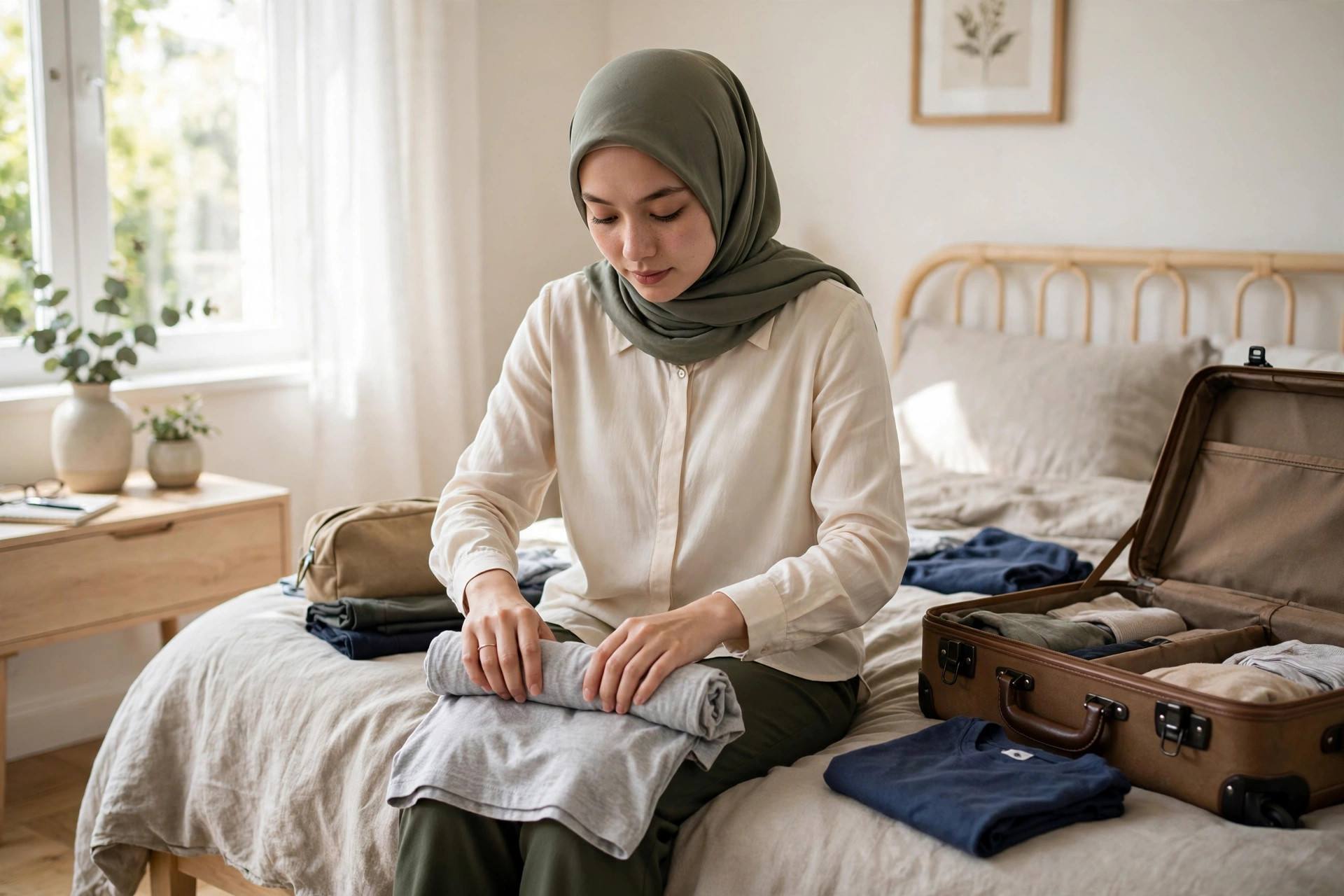
Fold smaller than you think. Standard file folds assume standard drawers. In shallow drawers, narrow shelves, or packing cubes, fold garments one size smaller — into tighter packets. It takes ten extra seconds per item and the space savings compound across a whole wardrobe. And use every container: packing cubes inside drawers, small boxes inside shelves. Containers are what turn folded clothes from “neat pile” into “system.”
The mindset shift: a tiny closet is not a storage problem, it is a curation problem. Fold well, store seasonally, keep only what you wear — and the smallest closet becomes enough. I have seen 3-foot wardrobes hold complete wardrobes this way. The space was never the problem; the system was.
Frequently Asked Questions
Does rolling clothes really save space?
Yes, moderately — about 25–40% versus tossing things in loosely, and it is the best method for suitcases because rolls fill irregular gaps. But rolling is not magic: a neatly file-folded drawer holds roughly the same as a rolled one. Rolling’s real advantage is wrinkle resistance and packing flexibility, not raw compression.
What is the KonMari folding method exactly?
It is file folding with a philosophy: fold each item into a small rectangle that stands upright, store items vertically so everything is visible, and keep only what “sparks joy.” The folding technique itself is the practical takeaway — the standing-file drawer genuinely works. The philosophy is optional.
How do you fold a fitted sheet?
The eternal question. Tuck the corners into each other to make a rough rectangle, then fold into thirds. It will never look perfect and it does not need to — it lives in a linen closet. If fitted sheets defeat you entirely, our step-by-step fitted sheet guide walks through it slowly.
Should I fold or hang my sweaters?
Fold. Hangers stretch knit shoulders into sad little points over time. Fold sweaters and store them on shelves or in drawers. If you must hang a heavy knit, drape it over the hanger bar rather than using the shoulder points.
How often should I refold everything?
Never, if the system works. A good file-folded drawer maintains itself through normal use — you pull one item, the rest stay standing. If you find yourself refolding weekly, the problem is overstuffing or missing dividers, not your technique.
How do you fold clothes so they do not wrinkle in a drawer?
File folding is already the low-wrinkle champion because garments are folded along their natural lines and stored without pressure from above — unlike stacking, where the bottom items get crushed. Two refinements: fold immediately after laundry (warm fabric settles into folds better than cold), and do not overstuff the drawer, since compression causes the creasing you are trying to avoid. For wrinkle-prone fabrics like linen, rolling actually beats folding — the cylindrical shape distributes stress evenly instead of creating sharp crease lines.
Does the KonMari method really save that much space?
The folding technique itself — yes, measurably, roughly 30–50% versus loose storage, because standing files eliminate dead air and let you use the full drawer depth. But be honest about where the famous before-and-after photos come from: most of the transformation is the decluttering, not the folding. Someone who discards half their wardrobe and file-folds the rest has a miraculous closet because of the discarding. Fold well, but do not expect folding alone to fix a wardrobe that is simply too large for its space.
Fold Smarter, Not More
The real lesson of how to fold clothes to save closet space: match the method to the garment, give everything a proper container, and stop folding things that should be hung or donated. Do that and a single weekend of folding buys you a closet that stays organized for months. The space was always there — it was just hiding under the piles.