How to Plan a Small Backyard Wedding: The Logistics-First Guide

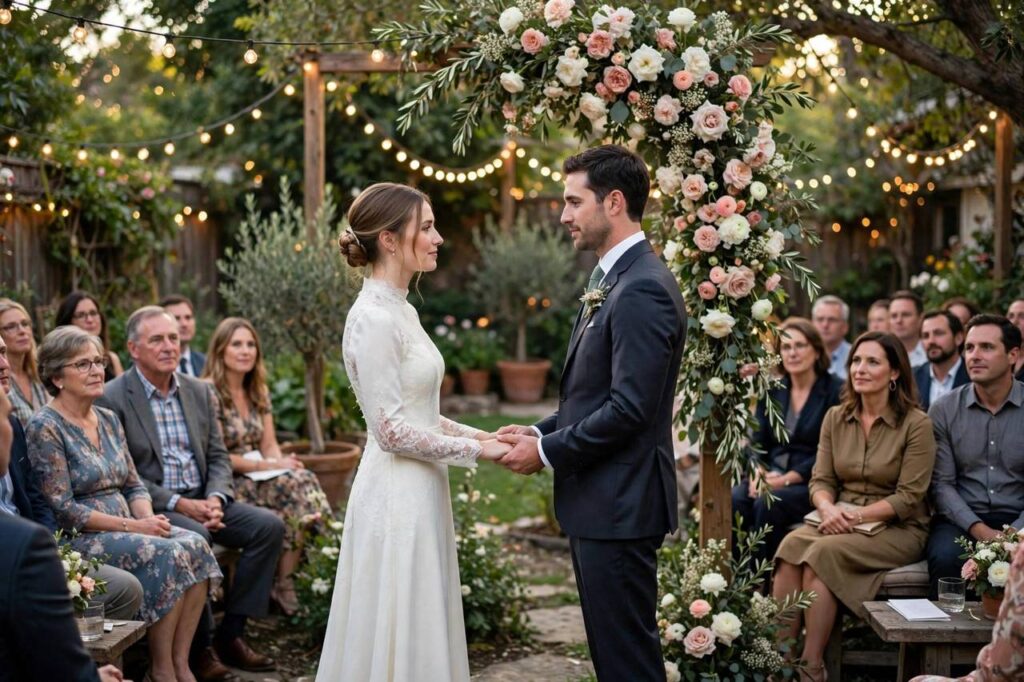
Learning how to plan a small backyard wedding is really learning how to think like an event producer — because a backyard is not a venue, it is a blank canvas that happens to have grass. The romance is real (I have coordinated dozens of them, and they are consistently the most personal weddings I see), but so are the logistics: power, bathrooms, parking, permits, weather, and the unglamorous math of how many people actually fit. This guide is logistics-first, because the flowers can wait — the portable toilets cannot.
A note on “small”: I am defining this as roughly 20–75 guests. Below 20, you can mostly wing the infrastructure. Above 75, you are essentially building a temporary venue and should budget accordingly. The 20–75 range is the sweet spot where a backyard wedding is intimate, manageable, and genuinely cost-effective — if you plan the bones properly.
First: Is Your Backyard (or the Backyard You’re Borrowing) Suitable?
Before anything else, walk the space with a critical eye:
- Flat, usable area. You need roughly 10 square feet per guest for a seated dinner, 6–8 for cocktail-style. A 50-guest seated dinner needs about 500 sq ft of flat ground — plus ceremony space, dance area, buffet, and circulation. Measure it; eyeballing lies.
- Access. Can vendors get in? A caterer needs to park near the kitchen; a rental truck needs driveway or street access. Narrow gates and steep slopes complicate everything.
- Noise and neighbors. Amplified music, 60 people talking, a dance floor — sound carries. Check local noise ordinances (many areas cut off amplified sound at 10 p.m.) and warn the neighbors early with an invitation to stop by for dessert. Goodwill is infrastructure.
- HOA and municipal rules. Some HOAs ban events outright; some municipalities require event permits above certain guest counts. Check before you fall in love with the plan.
Permits, Power, Bathrooms: The Unsexy Trinity
Permits
Call your city or county clerk and ask about temporary event permits, tent permits (many jurisdictions require them for tents over a certain size), and fire marshal requirements. Also confirm: can you have amplified music, until what hour, and are open flames (candles, fire pits) allowed? Getting this wrong risks a shutdown mid-reception — the nightmare scenario. Permits are usually inexpensive; the peace of mind is priceless.
Power
A residential home’s outdoor outlets will not run a wedding. Caterers need power for warmers, DJs need power for speakers and lights, and string lights across a yard add up fast. Rent a quiet generator (inverter generators are dramatically quieter — your guests will thank you) and have your vendors tell you their power needs in advance. One generator, one distribution plan, zero blown breakers during the first dance.
Bathrooms
The rule of thumb: one toilet per 25–35 guests for a 4–5 hour event. A house with two bathrooms technically covers 50 guests — but do you want 50 people traipsing through your home all evening? Most backyard weddings rent at least one luxury restroom trailer (they are genuinely nice now — flushing toilets, mirrors, climate control). Place it discreetly but accessibly, on flat ground, with lighting for the path after dark.
Weather Backup: Non-Negotiable
Every backyard wedding needs a rain plan, full stop — not a hope, a plan. Options:
- Tent the key areas. A frame tent over the dining area (and ideally the ceremony space) is the standard. Book it early — tent companies sell out in wedding season. Get sidewalls too; rain rarely falls straight down.
- The 72-hour decision rule. Decide by 72 hours out whether the tent goes up, based on the forecast. Tent companies need lead time, and last-minute tent panic is expensive.
- Heat and sun plans. Rain is not the only enemy. August sun at 4 p.m. is brutal — shade sails, tent coverage, cold drinks on arrival, and ceremony timing (late afternoon, not midday) matter enormously.
- Ground conditions. A day of rain before the wedding turns a lawn into mud. Have a plan: straw, wood chips on paths, or plywood walkways in the worst spots. Ask the tent company — they deal with this weekly.
Guest-Count Space Planning
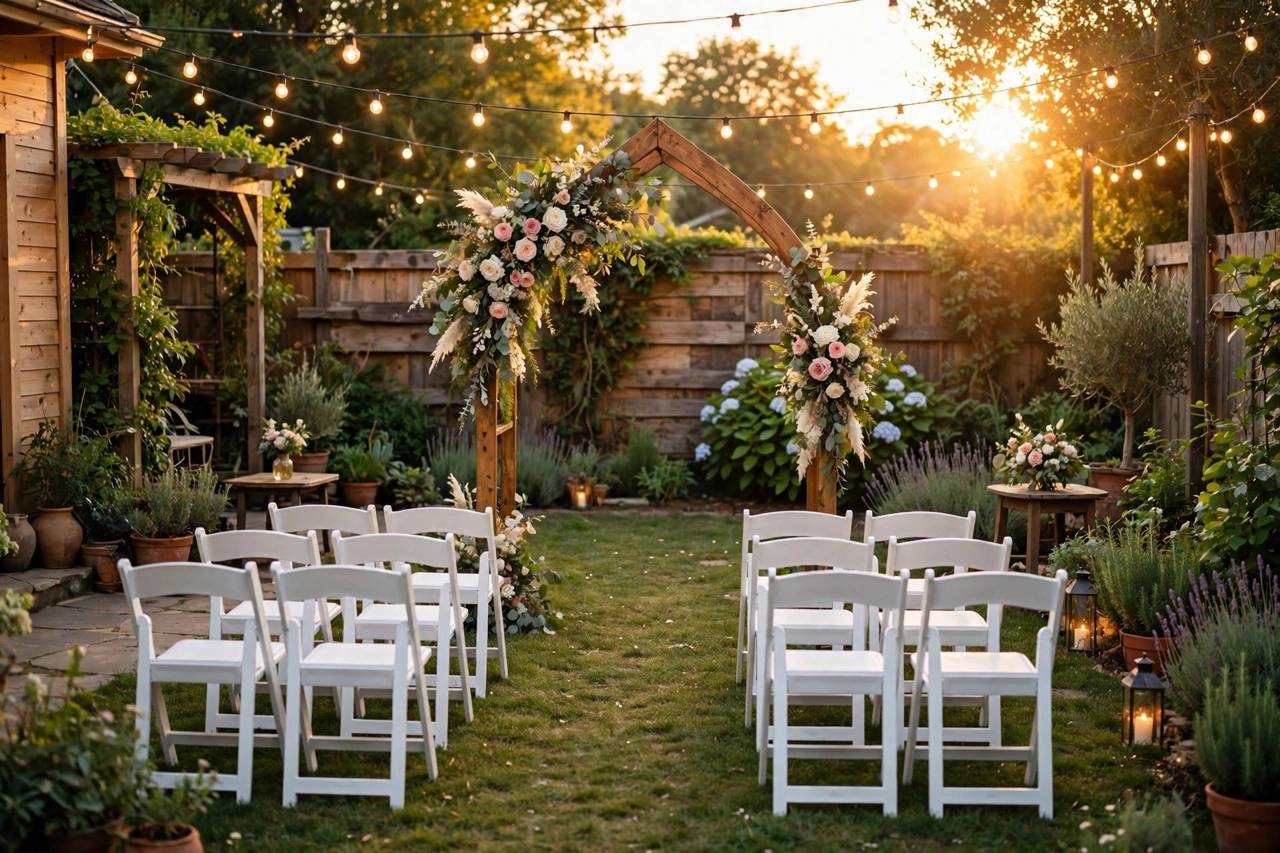
Space math prevents the most common backyard wedding failure: too many people in too little yard. Rough planning figures:
- Ceremony seating: ~8 sq ft per guest (chairs in rows).
- Seated dinner: ~10–12 sq ft per guest (round tables need more than long banquet tables).
- Cocktail/mingling: ~6 sq ft per guest.
- Dance floor: ~3 sq ft per guest (not everyone dances at once) — a 12×12 ft floor handles 50 guests.
- Buffet and bar: 100+ sq ft each, plus queue space.
- Circulation: add 20–30% on top of everything for walkways. People need to move.
Sketch it on paper to scale — even roughly. You will immediately see whether the dance floor fits or the buffet blocks the bathroom path. Every professional planner does this; you should too. And keep the ceremony and reception in the same general zone if possible — guest migration across a big property kills momentum.
DIY vs Vendor: The Decision List
Backyard weddings tempt DIY everything. Some of it is smart; some of it ruins your week. My rule: DIY what is low-stakes and enjoyable; hire what is high-stakes or invisible-when-done-right.
- DIY-friendly: decorations, signage, favors, playlists (with a rented sound system), dessert tables (supplemented by a bakery for the cake), flowers for tables (not bridal bouquets — leave those to a florist).
- Hire a professional: catering (food safety for 50 people is not a group project), photography, tent installation, power/electrical, restroom trailers, and day-of coordination.
- The day-of coordinator question: for a backyard wedding, this is the highest-ROI hire. Someone who is not in the wedding party, whose entire job is managing vendors, timing, and crises while you get married. Even “month-of” coordination transforms the experience. You cannot coordinate your own wedding — you will be busy getting married.
Budget honestly: backyard weddings are often cheaper than venues, but they are not free. Tent, restrooms, rentals (tables, chairs, linens, lighting, sound), catering, and power typically run $8,000–$20,000 for 50 guests depending on your market — versus $15,000–$40,000+ for a traditional venue wedding. The savings are real but smaller than people expect, because you are building the venue from scratch. Our affordable wedding ideas guide has more ways to keep costs in check, and if you are still deciding on the overall shape of the day, start with how to plan a wedding for the big-picture timeline.
The Timeline: When to Book What
- 9–12 months out: set the date, book the tent company, caterer, and photographer — the vendors with limited inventory.
- 6–9 months out: permits, restroom trailer, rentals (tables/chairs/linen), day-of coordinator, DJ or sound.
- 3–6 months out: invitations, attire, flowers, cake/desserts, lighting design.
- 1–3 months out: final headcount, seating plan, vendor confirmations, weather-plan decision framework.
- 1 week out: confirm every vendor in writing, walk the yard, mow and tidy, set up what can be set early.
- Day before: tent and rentals installed, restroom trailer delivered, rehearsal, early bedtime.
How to Plan a Small Backyard Wedding on a Tight Budget
The logistics above are non-negotiable regardless of budget — but within them, there is enormous room to spend wisely. Here is how to keep a 50-guest backyard wedding genuinely affordable without it looking or feeling cheap.
The realistic budget breakdown (50 guests, budget-conscious):
- Tent + tables + chairs + linens (rented): $2,000–$4,000 — the biggest line item; shop rental companies competitively and consider a Friday or Sunday date for discounts.
- Restroom trailer: $800–$1,500 — non-negotiable, but one trailer suffices at this size.
- Catering: $2,500–$5,000 — the highest-variance item (see below).
- Photography: $1,000–$2,500 — hire a talented newer photographer rather than a cheap veteran; portfolios matter more than years.
- Power (generator rental): $200–$400.
- Decor, flowers, lighting: $500–$1,500 — DIY territory.
- Day-of coordinator: $500–$1,200 — the best money you will spend.
- Permits, misc, buffer: $500–$1,000.
Total realistic range: $8,000–$15,000. Anyone promising $3,000 is omitting the tent, the toilets, or the food — usually all three.
Catering is where budgets are won or lost. Full-service plated dinner is the most expensive option; the smart budget moves are: buffet or food stations (30–40% cheaper than plated), a beloved local restaurant catering drop-off rather than a wedding caterer (dramatically cheaper, often better food), brunch or lunch timing (daytime menus cost less), and a dessert table with a small cutting cake instead of a grand wedding cake. The food still needs to be good — guests remember bad food forever — but “good” does not require “wedding-industry priced.”
Cut ruthlessly, spend selectively. The budget wedding mantra: guests do not remember centerpieces, favors, or chair covers. They remember food, music, and whether the couple looked happy. So: skip favors entirely (no one keeps them), use in-season local flowers or greenery (baby’s breath and eucalyptus look expensive and cost little), borrow or rent the sound system and make your own playlists, and put the savings into the photographer and the food — the two things that actually shape memories.
The free and cheap wins: a friend with a good camera for candid shots alongside the pro, family recipes for the rehearsal dinner, digital invitations (save $300+ on paper), a morning-after brunch at home instead of a venue farewell. And the ultimate budget lever: the guest list itself. Every ten guests removed saves roughly $1,000–$2,000 across food, rentals, and everything else. A 40-guest wedding is not a compromise — it is the reason backyard weddings exist.
Frequently Asked Questions
Do I need a permit for a backyard wedding?
Often yes, depending on your location and guest count. Many municipalities require temporary event permits, tent permits for large tents, and compliance with noise ordinances. Call your city or county clerk early — permits are usually cheap, but violations can shut down your reception.
How many guests is too many for a backyard wedding?
It depends on the yard, but the practical ceiling for most residential properties is 75–100 guests before infrastructure costs (tents, restrooms, parking, power) start rivaling venue prices. Above 100, a venue is usually simpler and often cheaper. Measure your flat usable space and do the square-footage math before inviting.
What do I do about parking?
Plan it explicitly: a residential street cannot absorb 30 cars gracefully. Options include asking a nearby church or business for lot use (with permission), hiring a shuttle from a central parking point, encouraging carpooling on the invitation, or hiring a valet/parking attendant for the evening. Tell neighbors in advance regardless.
How do I keep bugs away at an outdoor wedding?
Professional-grade fans around the dining area (mosquitoes are weak fliers), citronella torches or candles as decoration-plus-defense, and scheduling the ceremony to avoid dusk — peak mosquito hour. Avoid bug zappers near the food (they shower insect parts). For serious bug pressure, a licensed applicator can treat the yard a day or two before.
Is a backyard wedding actually cheaper?
Usually, but less than people expect. You save the venue fee ($5,000–$15,000+) but add tent, restrooms, rentals, power, and coordination. Typical 50-guest backyard weddings run $8,000–$20,000 all-in. The real savings come from guest count control and DIY-friendly elements — not from the grass being free.
The Backyard Advantage
Here is what I tell every couple considering this: a backyard wedding trades convenience for meaning. It is more work than a venue — genuinely, undeniably more work. But the weddings I remember most, years later, are the backyard ones: the vows under the old oak tree, dinner at long tables on the lawn, dancing under string lights while the neighbors watch from their porch. Plan the logistics like a producer — permits, power, bathrooms, weather, space — and the magic takes care of itself. That is how to plan a small backyard wedding: build the bones, then let the place you love do the rest.