What Is Jury Duty and How Are Jurors Selected? The Full Walkthrough

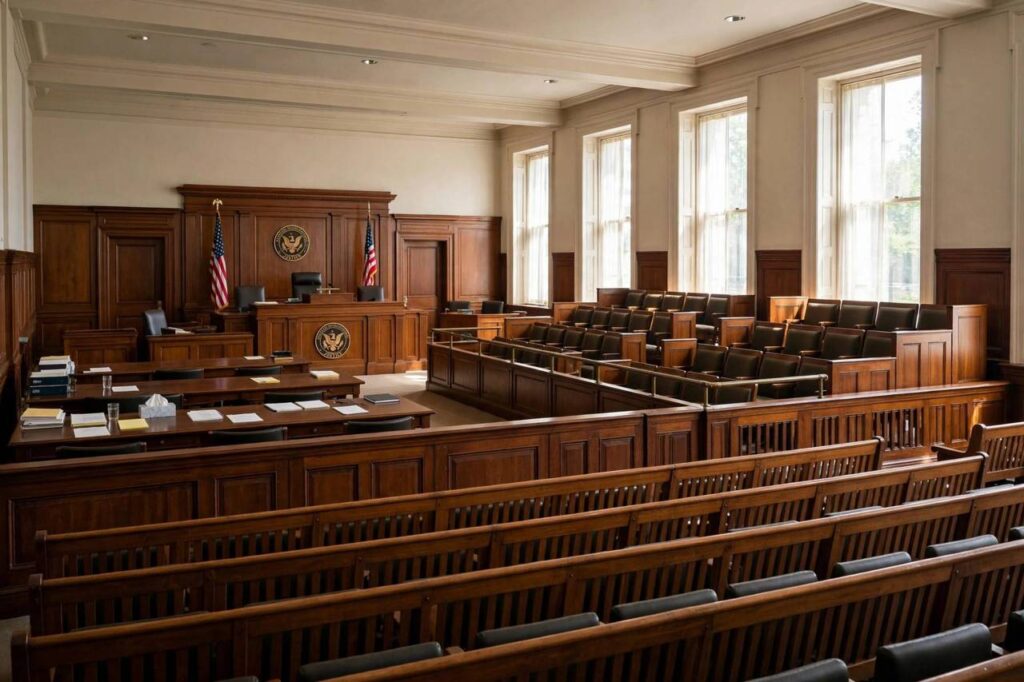
Understanding what is jury duty and how are jurors selected is one of those civic basics that most Americans never get taught — and then a summons arrives in the mail and suddenly everyone has questions. I have walked friends, family members and more than a few nervous first-timers through this process, and the same pattern always emerges: the system is far more ordinary, and far more thoughtfully designed, than people expect. Let me take you through it step by step, from the summons in your mailbox to deliberation behind a closed door.
A quick framing note: jury procedures vary by state and between state and federal courts, so I am describing the standard American process — the shape of it is consistent nearly everywhere, even where the details differ. This is general information to help you understand the system, not legal advice.
What Jury Duty Actually Is
Jury duty is the obligation of eligible citizens to serve as jurors — the people who decide facts in a trial. In the American system, the judge decides questions of law (what the rules are, what evidence is allowed), and the jury decides questions of fact (what happened, who is telling the truth, whether the evidence proves the case). That division is the heart of the jury trial, and it is why jurors matter so much: twelve ordinary people, not legal professionals, are entrusted with the final factual judgment.
There are two main kinds of juries. A trial jury (also called a petit jury) — usually 6 to 12 people — hears a single case and delivers a verdict. A grand jury — typically 16 to 23 people — does not decide guilt at all; it reviews prosecutors’ evidence in secret and decides whether there is enough to bring criminal charges (an indictment). When your summons arrives, it is almost always for a trial jury. Grand jury service is longer, rarer, and handled separately.
The constitutional roots run deep: the right to a jury trial in criminal cases is in the Sixth Amendment, and in federal civil cases in the Seventh. But you do not need the history to grasp the idea. The jury is the system’s way of saying that the community itself — not the state, not a single judge — renders the final judgment on the facts.
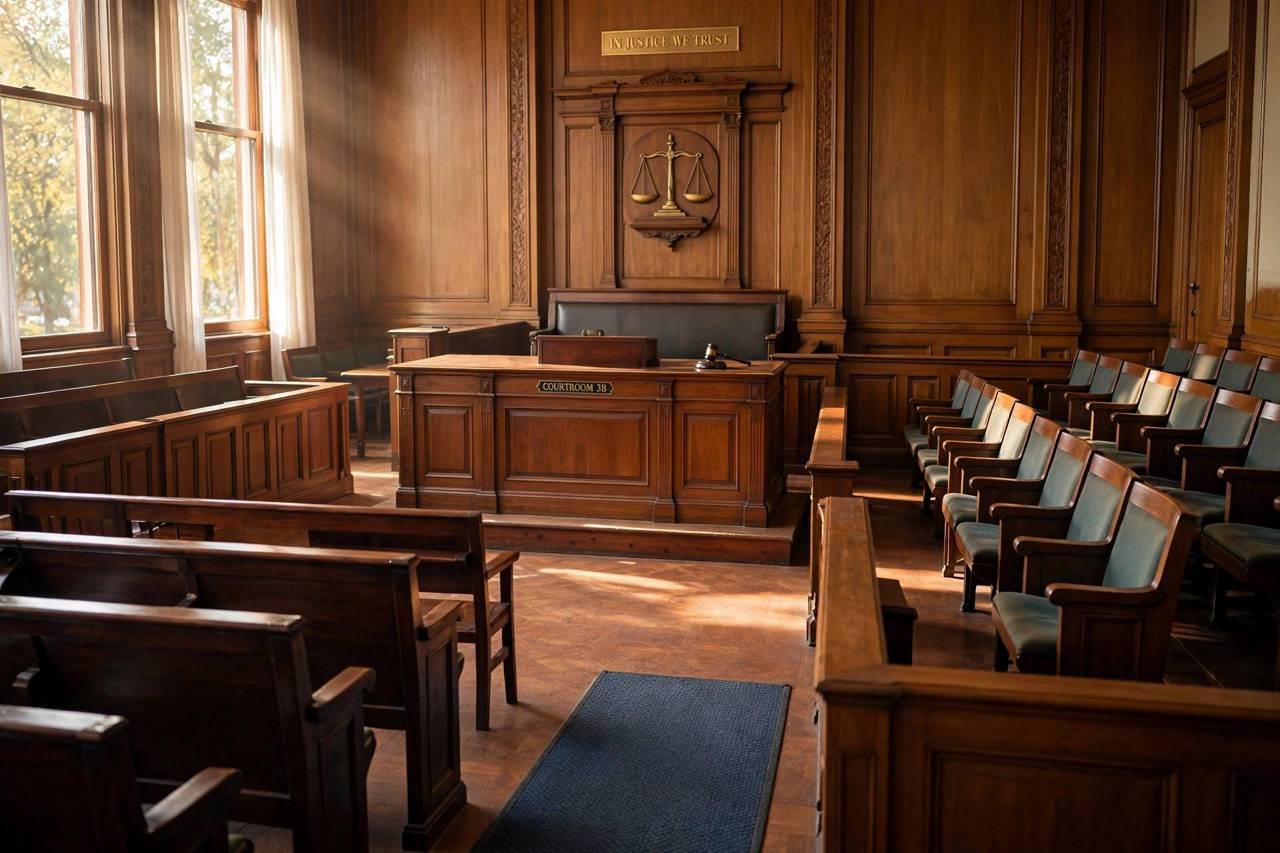
What Is Jury Duty and How Are Jurors Selected? The Full Process
Juror selection is a funnel, and most people experience only the wide end of it. Here is the whole path.
Step 1: The master list and the summons
Courts build their jury pools from broad source lists — voter registration rolls, driver’s license and ID records, and sometimes tax or utility lists. The goal is a fair cross-section of the community, which is why multiple lists are combined: relying on voter rolls alone would skew the pool. A computer randomly selects names, and summonses go out by mail. Getting one is not a sign you did anything; it is arithmetic. In most jurisdictions you can expect to be called every few years at most, and many people go a decade between summonses.
Step 2: Qualification
The summons usually comes with a questionnaire. To serve, you generally must be a U.S. citizen, at least 18, a resident of the jurisdiction, able to understand English, and free of disqualifying felony convictions (the exact rules on felonies vary widely by state — some restore eligibility automatically, others require a process). Certain conditions — a severe medical issue, for example — can support a deferral or excuse, but “I’m busy” is not one. Courts hear hardship requests individually, and they are stricter than people hope.
Step 3: Reporting and the waiting room
On the reporting day, prospective jurors gather — often dozens or hundreds — and wait. Much of jury duty is waiting, and I say that as someone who respects the system: bring a book. Groups are called to courtrooms as trials need jurors. Many people are dismissed without ever entering a courtroom, their service complete. Being sent home early is the most common jury duty outcome there is.
Step 4: Voir dire — the selection itself
Voir dire (from Old French, roughly “to speak the truth”) is the questioning process by which the actual trial jury is chosen from the group. The judge and the attorneys ask about your background, experiences, opinions and potential biases — not to pry, but to seat a jury that can be fair in this specific case. A prospective juror in a car-accident case will be asked about accidents; in a criminal case, about attitudes toward law enforcement.
Attorneys can remove prospective jurors two ways. Challenges for cause are unlimited: if someone demonstrates they cannot be impartial (“I could never believe a police officer’s testimony”), the judge excuses them. Peremptory challenges are limited in number and need no stated reason — each side can strike a few jurors they simply do not want. There is one hard limit: peremptory strikes cannot be used to discriminate by race or sex, a rule the Supreme Court has enforced for decades. When the strikes are done, the remaining group is sworn in as the jury.
Here is what voir dire is not: it is not a search for jurors with no opinions. Everyone has opinions. It is a search for jurors who can set opinions aside and decide on the evidence. The most valuable thing you can do in voir dire is answer honestly — including admitting a bias. Judges would far rather excuse you than seat a juror pretending at neutrality.
What to Expect on the Day: Trial and Deliberation
Once sworn in, the pattern of a trial is steadier than television suggests. Opening statements — each side previews its case; these are not evidence. Presentation of evidence — witnesses testify and are cross-examined, documents and exhibits are introduced. The plaintiff or prosecution goes first and carries the burden of proof. Closing arguments — each side ties its evidence together. Jury instructions — the judge explains the law you must apply, including the burden of proof: “beyond a reasonable doubt” in criminal cases, “preponderance of the evidence” (more likely than not) in most civil cases.
Then comes deliberation: the jury retires to a private room, elects a foreperson, and works through the evidence toward a verdict. Deliberations must be unanimous in federal criminal trials and in most states; a few jurisdictions allow non-unanimous verdicts in some civil cases. Nobody rushes you. Jurors can send written questions to the judge, review exhibits, and take as long as the case requires — hours or, in complex cases, days. If the jury genuinely cannot agree, the judge may declare a hung jury, and the case can be retried.
Two practical notes from people who have served: you cannot discuss the case with anyone — not family, not social media — until deliberations conclude, and you cannot research anything about the case independently. The verdict must come from the evidence presented in court, not from your own investigation. Violating this can cause a mistrial.
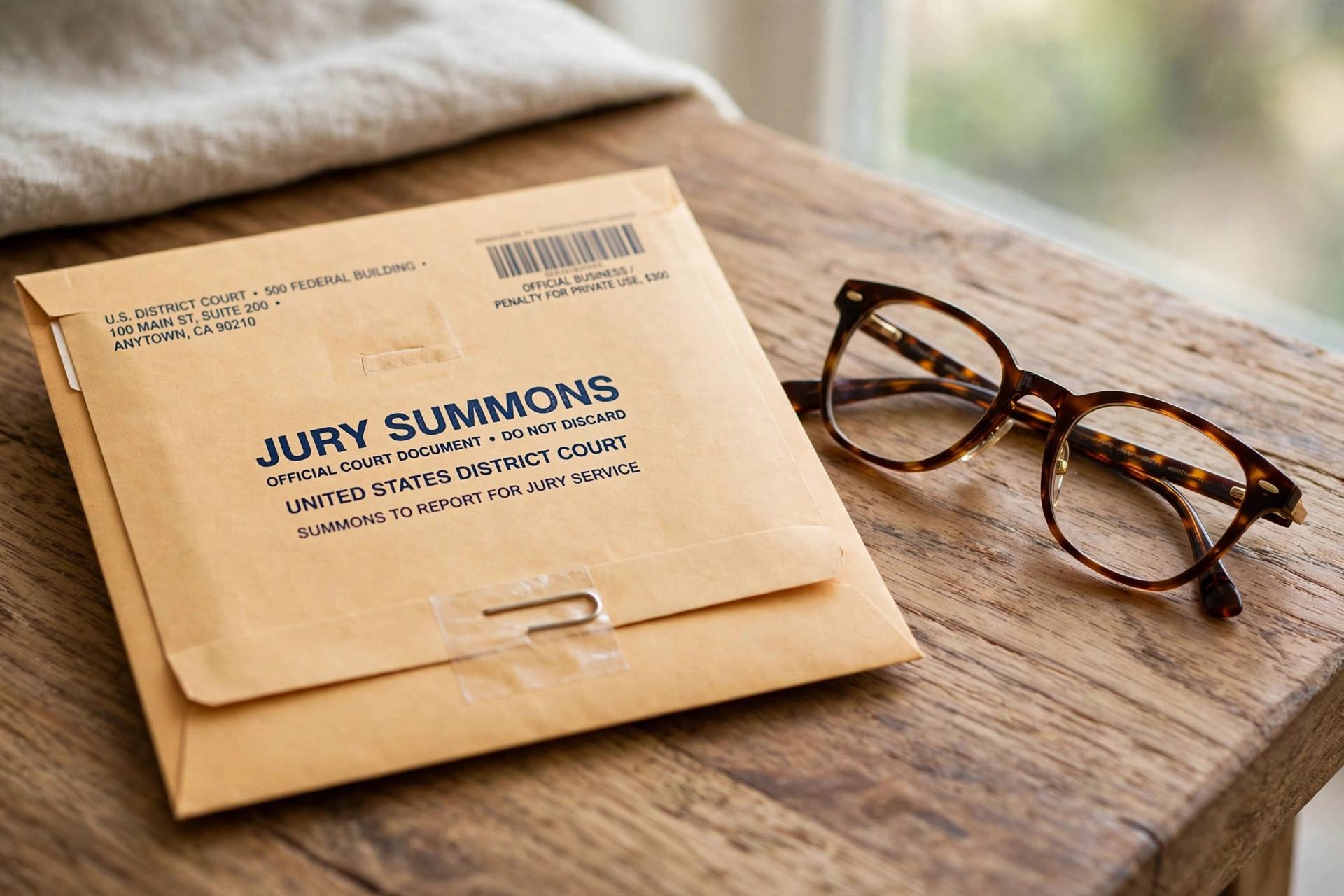
Two practical comforts worth knowing before you serve: most judges allow jurors to take notes during testimony — ask, and bring nothing that makes noise — and in many jurisdictions jurors can submit written questions for witnesses through the judge. You are not a passive audience; the system gives you tools. Use them. And pace yourself: trials run on the court’s schedule, not yours, so the book you brought for the waiting room earns its place during recesses too.
Getting Out of It: What Actually Works (and What Does Not)
Let us be honest about the question everyone asks. Legitimate paths: deferral (most courts let you postpone once to a better date — use it strategically, not reflexively), hardship excuse (documented medical issues, sole-caregiver situations, extreme financial hardship — decided case by case), and statutory exemptions (active military, some elected officials, and in some states specific professions or age-based excuses, often 70+). What does not work: ignoring the summons (it is a court order — penalties range from fines to, rarely, contempt proceedings), showing up dressed to offend (judges have seen it all, and it insults the process), or lying in voir dire (perjury, and it undermines the fairness you would want if you were on trial).
My honest advice: serve if you can. It is inconvenient, occasionally boring, and one of the few places where ordinary citizens directly exercise governing power. Most people who serve describe it as unexpectedly meaningful — not despite the inconvenience, but alongside it.
Frequently Asked Questions
How are jurors selected for a trial?
Names are drawn randomly from broad lists (voter rolls, driver’s licenses), qualified via questionnaire, and then narrowed through voir dire — courtroom questioning where the judge and attorneys excuse those who cannot be fair and each side uses limited peremptory strikes. The survivors are sworn in.
What happens if you ignore a jury summons?
A summons is a court order. Consequences vary by jurisdiction but can include fines and, in rare cases, contempt proceedings. The far better move is to request a deferral or explain a genuine hardship to the court.
Do jurors get paid?
Yes, but modestly — typically a small daily fee plus mileage, set by the jurisdiction. Federal courts pay more than most state courts. Employers’ policies on paid leave for jury duty vary; many large employers continue salary, but it is not universal.
Can you be excused from jury duty for work?
Being busy is generally not enough, but genuine hardship — like being the sole earner with no paid leave, or a critical work obligation with documentation — can support a deferral or excuse at the judge’s discretion. Ask; courts are more reasonable than their reputation.
What is the difference between a grand jury and a trial jury?
A trial jury hears one case and delivers a verdict of guilty/not guilty or liable/not liable. A grand jury meets in secret over weeks or months to decide whether prosecutors have enough evidence to bring criminal charges. Different jobs, different procedures.
The Bottom Line
What jury duty is: citizens deciding facts, the community’s check on state power. How jurors are selected: random draw, qualification, and the careful winnowing of voir dire. It is slower and more ordinary than television suggests — and more important than its reputation for boredom implies. If the summons comes, open it, show up, and answer honestly. The system only works if people do.