How to Plan a Wedding on a Small Budget: 30 Smart Ways to Save

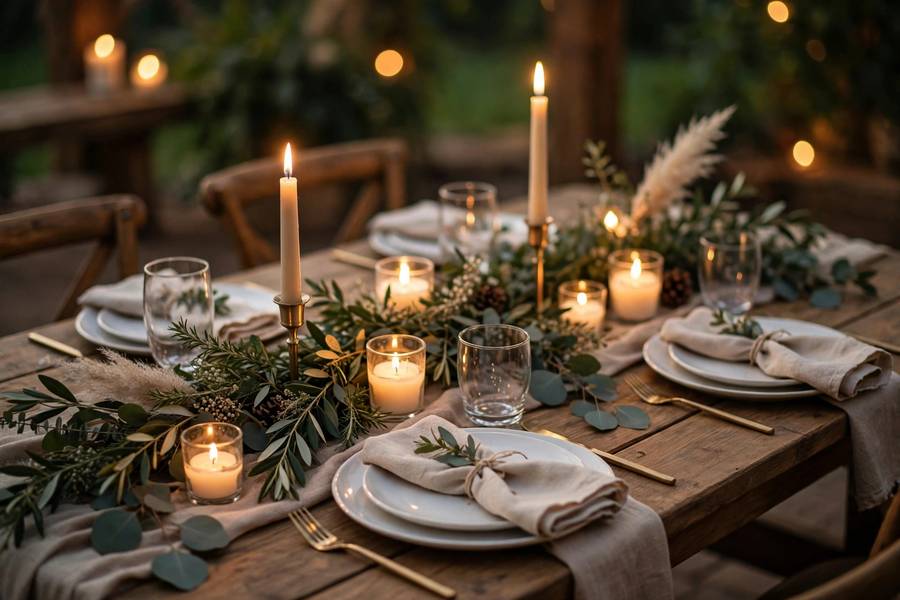
Here’s what the wedding industry doesn’t want you to know: the $30,000 average wedding is a choice, not a requirement. I’ve planned beautiful, joyful weddings for under $10,000 — and guests couldn’t tell the difference. The secret isn’t cutting joy. It’s cutting the things nobody notices.
Table of Contents
- The Budget Mindset
- The Big Three: Venue, Food, Photography
- Flowers and Decor
- Attire
- Music and Entertainment
- The Guest List Lever
- What Never to Cut
- The $5,000 Wedding: A Real Breakdown
- Negotiation Scripts That Work
- The Free Things People Forget
- The $10,000 Wedding: Where to Splurge and Save
- Free Wedding Upgrades Nobody Tells You About
- The Budget Wedding Timeline: When to Book What
The Budget Mindset
Start with a number, not a Pinterest board. Decide your total budget first, then allocate: roughly 40% venue + food, 10% photography, 10% attire, 10% flowers/decor, 10% music, 20% everything else. Every decision gets measured against the number — not against what weddings “should” cost.
And track everything in one spreadsheet from day one. Budget creep happens in $200 increments you don’t notice until you’re $5,000 over.
The Big Three: Venue, Food, Photography
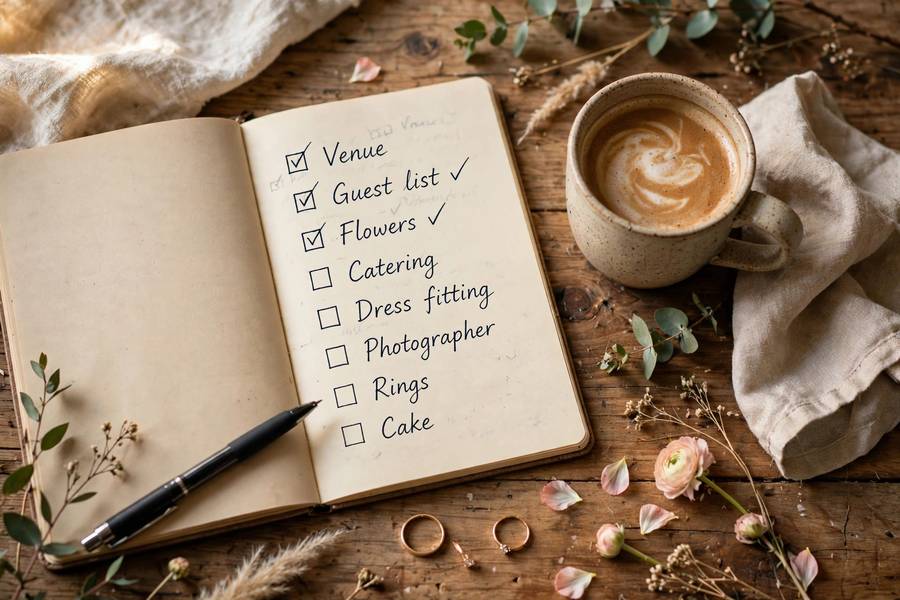
Venue: This is your biggest lever. Non-traditional venues — parks, restaurants with private rooms, family backyards, community halls — cost a fraction of wedding venues. Friday or Sunday weddings often save 20–30%. Off-season (January–March) even more. wedding planning checklist
Food: Buffet or food stations instead of plated dinner saves thousands. Brunch weddings are dramatically cheaper than dinner. And here’s the real talk: nobody remembers the chicken vs. fish choice, but everyone remembers if the food was late or cold.
Photography: Don’t cut this entirely — but you can cut hours. Book 6 hours instead of 10 (getting ready through first dance covers 90% of what matters). Newer photographers with strong portfolios charge half the veterans’ rates.
Flowers and Decor
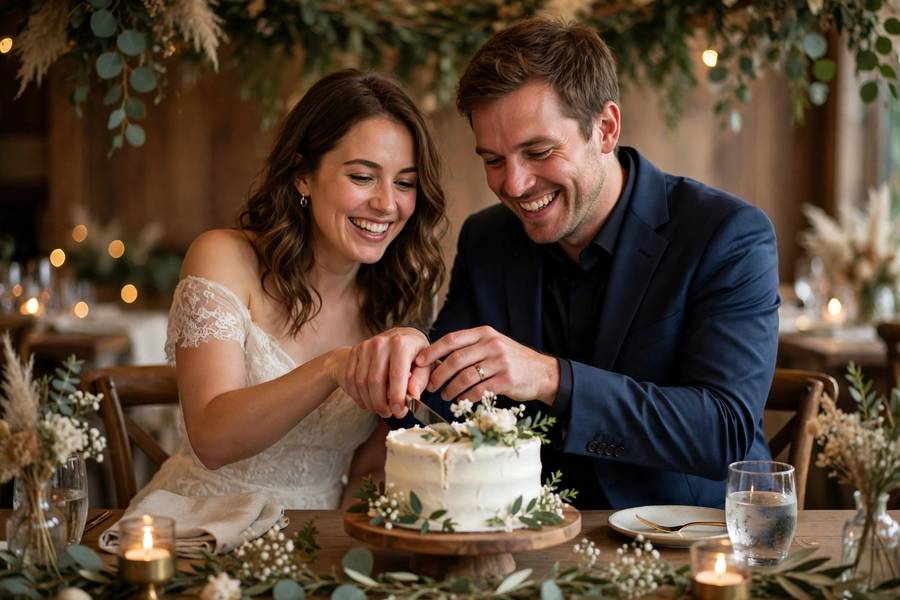
Flowers are the easiest place to overspend and the hardest for guests to value. Use greenery-heavy arrangements (eucalyptus is cheap and gorgeous), repurpose ceremony flowers at the reception, and skip the $800 arch — a simple draped fabric backdrop photographs just as well.
Candles are the budget decorator’s superpower. A $200 candle order transforms a plain room more than $2,000 of flowers. Buy in bulk, use varied heights, and let the glow do the work.
Attire
Sample sales, off-the-rack, pre-owned (Stillwhite, Nearly Newlywed) — beautiful dresses exist for under $1,000, often under $500. Suits: rent, or buy a suit he’ll wear again instead of a tuxedo he’ll wear once. Bridesmaid dresses from Azazie or Birdy Grey run $100–150 and girls actually rewear them.
Music and Entertainment
A great DJ ($800–1,200) beats a mediocre band ($3,000+) for dance-floor energy per dollar. For the ceremony, a solo guitarist or a well-curated playlist through a rented speaker system works beautifully. Skip the photo booth — set up a DIY polaroid station for $150 instead.
The Guest List Lever
Every guest costs $100–200 in food, drinks, rentals, and favors. Cutting 30 guests saves $3,000–6,000 — more than any vendor negotiation. This is the hardest cut emotionally and the most powerful financially. Be ruthless: if you haven’t spoken in a year, they’re not coming.
For the full planning framework, see how to plan a wedding step by step, and browse affordable wedding ideas for more inspiration.
What Never to Cut
Food quantity. Running out of food is the one thing guests never forgive. Photography entirely — cut hours, not the photographer. Your own comfort — comfortable shoes, a meal on the wedding day, a coordinator or trusted friend running logistics so you’re not working your own wedding.
The $5,000 Wedding: A Real Breakdown
Is $5,000 actually possible? Yes — here’s one real breakdown: venue (public park + permit): $300. Food (food truck for 50): $1,500. Photography (talented student, 4 hours): $800. Dress (off-the-rack + alterations): $400. Flowers (wholesale DIY): $300. Music (curated playlist + rented speakers): $200. Attire for partner: $200. Cake (grocery bakery): $150. Decor (thrifted + DIY): $300. Invitations (digital): $50. Miscellaneous buffer: $800. Total: $5,000.
The non-negotiables in this budget: good food and good photos. Everything else flexes. The weddings guests remember aren’t the expensive ones — they’re the ones with great energy, good food, and a couple who was actually present instead of stressed.
Negotiation Scripts That Work
Vendors expect negotiation — especially off-season. Scripts that work: “We love your work. Our budget is $X — is there a package or off-season date that could work?” “We’re flexible on [day/time/services] — what would that change on price?” “We’re deciding between you and one other vendor — what can you include to win our business?”
What gets discounts: Friday/Sunday weddings, off-season dates (January–March), shorter coverage hours, simplified packages, paying in cash, booking multiple services with one vendor. What doesn’t: asking for “exposure,” haggling aggressively, or expecting premium service at budget prices. Be kind, be honest about budget, be flexible — vendors reward all three.
The Free Things People Forget
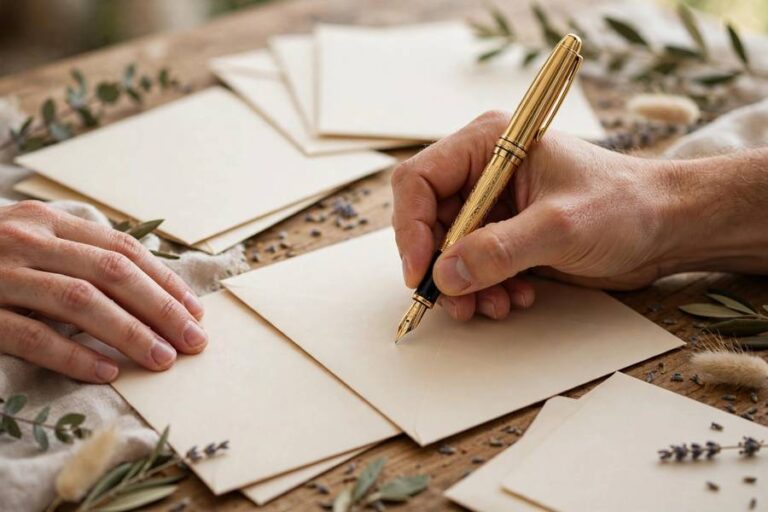
Free wedding upgrades hiding in plain sight: golden hour photos (timing, not money), a friend with beautiful handwriting for signage, your venue’s natural beauty (choose venues that don’t need decor), Spotify playlists instead of a DJ for small weddings, wildflowers or greenery instead of formal arrangements, digital invitations, a friend officiating (free in most states after online ordination), and — biggest of all — a short guest list. Every 10 guests you cut saves $500–1,500. The guest list is the most powerful budget tool you have.
The $10,000 Wedding: Where to Splurge and Save
At $10,000, you have real choices. Here’s where the money goes furthest:
SPLURGE: Photography ($2,000–2,500). It’s the only thing that lasts beyond the day. A great photographer at a budget wedding produces better memories than a mediocre photographer at a luxury wedding. SPLURGE: Food ($3,000–4,000). Guests remember food. A food truck, family-style catering, or brunch wedding — whatever fits, make it delicious.
SAVE: Venue ($500–1,500). Parks, restaurants, family property, off-season venues. The venue is the backdrop, not the event. SAVE: Flowers ($300–600). Greenery-heavy, in-season, DIY-assisted. SAVE: Music ($200–500). Curated playlist + good speakers for under 100 guests; a DJ for larger.
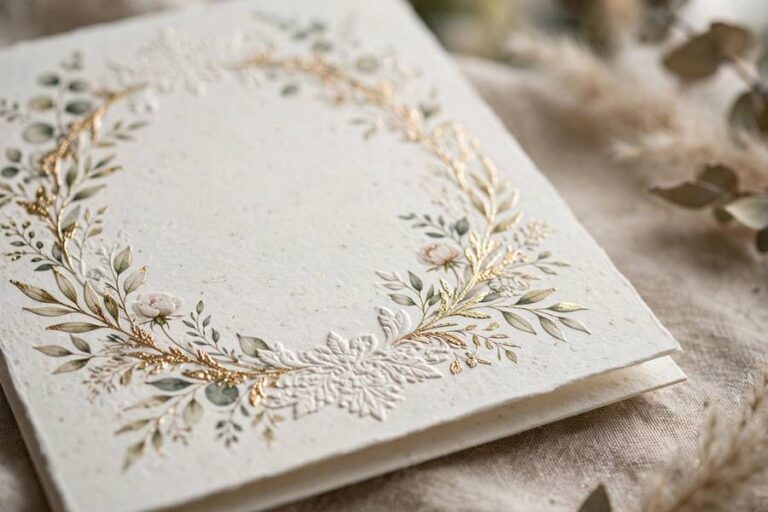
SAVE: Attire ($300–600). Off-the-rack, preowned, sample sales. SAVE: Decor ($200–400). Candles, greenery, thrifted finds. SAVE: Invitations ($50–100). Digital or simple printed.
The $10K philosophy: spend on what guests EXPERIENCE (food, music, atmosphere) and what LASTS (photos). Save on what they won’t remember (favors, programs, chair covers, elaborate invitations). Every dollar should either create a memory or prevent a disaster.
Free Wedding Upgrades Nobody Tells You About
Zero dollars, maximum impact:
Golden hour timing. Schedule portraits 1 hour before sunset. The light is free and it’s the most flattering light on earth. This single decision improves your photos more than any decor. A great playlist. Spend 10 hours crafting the perfect playlist (or have a music-obsessed friend do it). Good music is free; a bad DJ is expensive. Handwritten notes. To your partner (morning of), to your parents (at the reception), to your wedding party. Free. Unforgettable.
Ask talented friends. The friend who’s a great photographer? Ask them to shoot getting-ready photos (not the whole wedding — that’s too much to ask). The friend with beautiful handwriting? Signage. The friend who’s a great cook? Rehearsal dinner. People LOVE contributing — it makes them feel part of the wedding, not just attendees. (Pay them if you can, even a little. Or give an amazing gift.)
Choose a naturally beautiful venue. A garden, a park, a beach, a family backyard in bloom — venues that don’t need decor save you thousands. The venue IS the decor. Keep the guest list tight. Every 10 guests cut saves $500–1,500 AND makes the wedding more intimate. It’s the most powerful budget tool and the most powerful atmosphere tool. Small weddings feel special in a way big ones can’t replicate.
The Budget Wedding Timeline: When to Book What
Budget weddings need smarter timing, not just cheaper vendors:
12 months out: Set the budget (the REAL number, with 10% buffer). Start the guest list (it determines everything). Research venues (off-season and off-peak dates are 20–40% cheaper — a Friday in February vs Saturday in October).
9–10 months: Book venue + caterer (the two biggest expenses — lock them early for the best prices). Book photographer (good budget photographers book up; the $800 talented student won’t be available at 3 months).
6–8 months: Book remaining vendors. Start dress shopping (off-the-rack and preowned need less lead time — use this to your advantage). Order invitations (digital = free and instant).
3–4 months: Finalize details. This is when budget weddings shine — fewer decisions mean less temptation to upgrade. 1 month: Confirm everything. Don’t add anything new (every addition costs money you don’t have).
The budget timing principle: book the expensive things early (prices only go up), and leave the cheap things late (no rush on DIY decor). And NEVER book a vendor before setting the budget — that’s how $5,000 weddings become $15,000 weddings. The budget is the boss. Every decision bows to it.
Many couples plan beautiful weddings for $10,000–15,000 by choosing non-traditional venues, limiting the guest list, and prioritizing food and photography. Under $10,000 is very doable with creativity.
The guest list (each guest costs $100–200), the venue (non-traditional spaces save thousands), and the season/day (Fridays, Sundays, and off-season are 20–30% cheaper).
Go greenery-heavy, repurpose ceremony arrangements at the reception, use candles as your main decor, and skip large installations. A $200 candle order transforms a room.
Not at all. Guests remember joy, good food, and feeling welcomed — not price tags. The weddings guests love most are the ones where the couple is relaxed and present, which budget weddings often enable.
Enough food (running out is unforgivable), photography entirely (cut hours instead), and day-of coordination — even a trusted friend running logistics so you’re not working your own wedding.