What Is the Difference Between Baking Powder and Baking Soda?

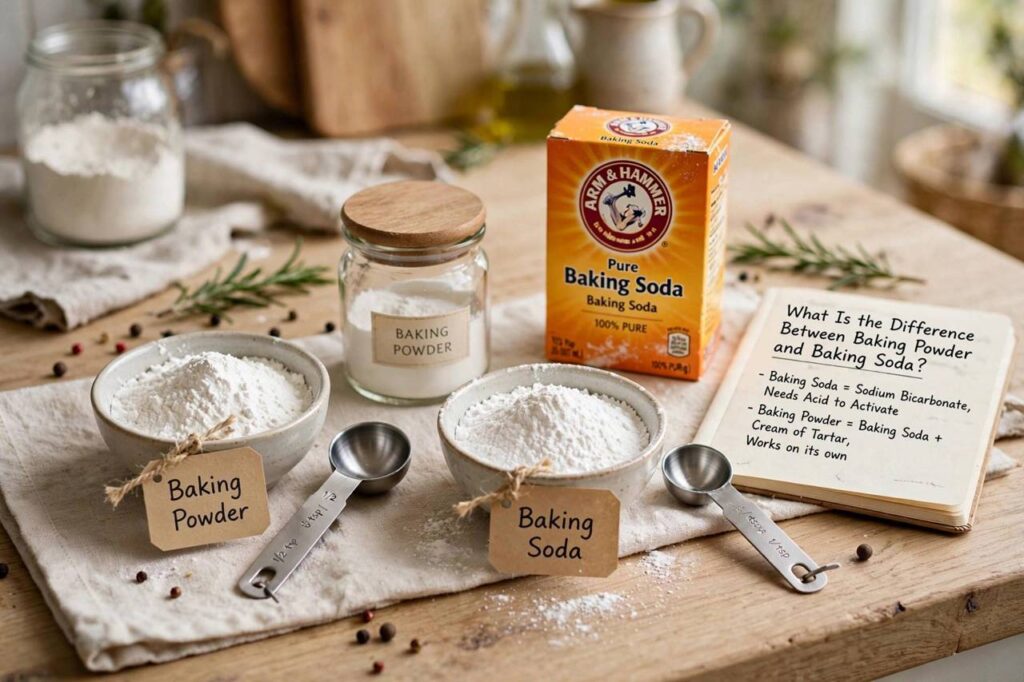
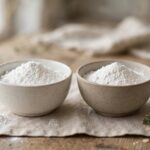
Open any baking aisle and you will find two small boxes sitting side by side, both promising to make your cakes rise. They look almost identical, they live in nearly every pantry, and they are absolutely not interchangeable. So what is the difference between baking powder and baking soda? Baking soda is pure sodium bicarbonate that needs an acid to activate, while baking powder contains sodium bicarbonate plus its own acid, so it only needs liquid and heat.
I learned this the hard way years ago, standing over a batch of pancakes that tasted faintly of soap. I had grabbed the wrong box in a hurry, and the whole stack went in the trash. Once you understand the chemistry, which takes about three minutes, you will never make that mistake again.
What Is the Difference Between Baking Powder and Baking Soda? The Chemistry
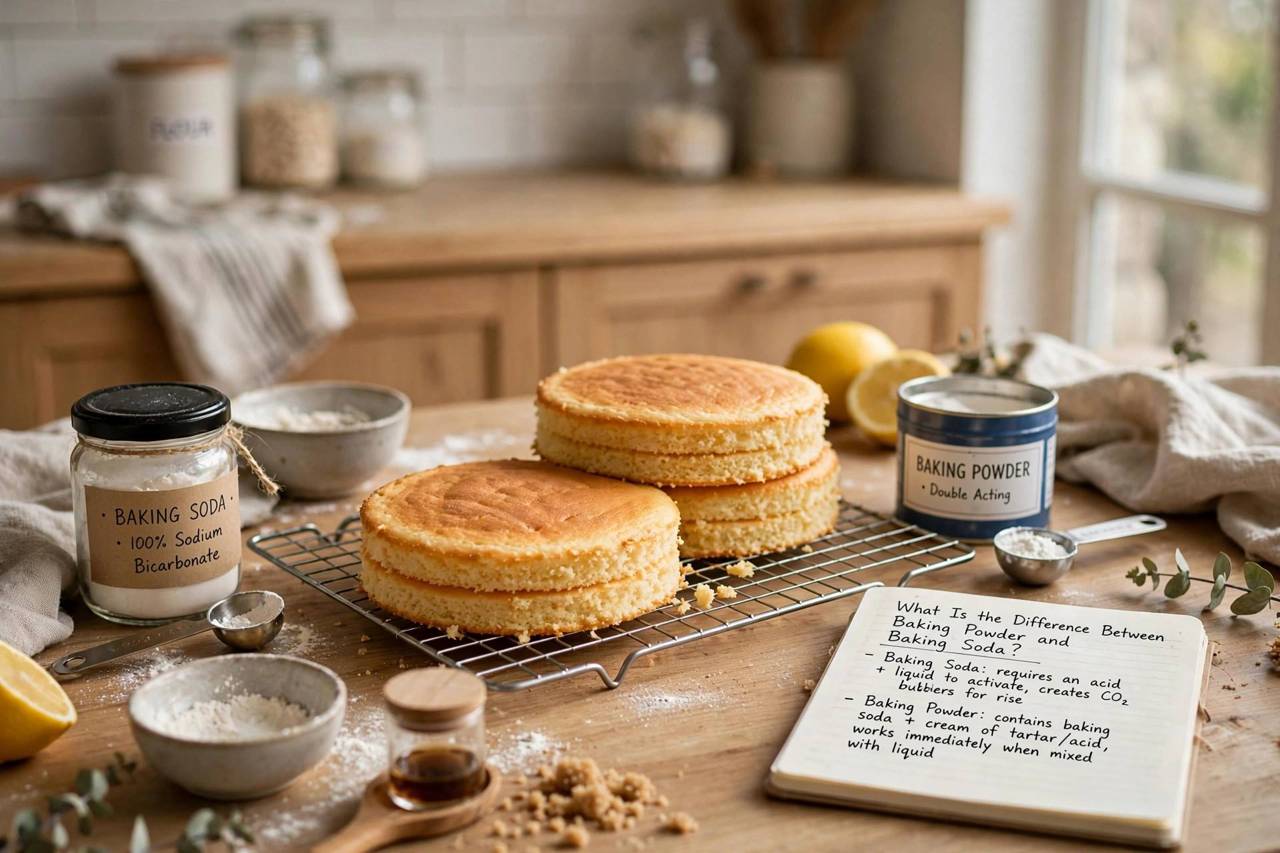
Both are leaveners: they produce carbon dioxide gas bubbles that make dough and batter rise. Baking soda (sodium bicarbonate) is a base. On its own, mixed with liquid, it does very little. But the moment it meets an acid, like lemon juice, vinegar, buttermilk, yogurt, honey, or even natural cocoa powder, it reacts immediately and starts releasing gas.
Baking powder is baking soda with the acid built in, plus a little starch to keep it stable on the shelf. Most baking powder sold today is “double-acting,” which means it reacts twice: once when it gets wet, and again when it gets hot in the oven. That second reaction is a gift to home bakers, because it means your batter keeps rising even if you were slow getting the pan into the oven.
This is the whole difference in one sentence: baking soda needs you to provide the acid; baking powder brings its own.
Why Recipes Call for One and Not the Other
A recipe is a balanced chemical equation, and the leavener is chosen to match the other ingredients. Buttermilk pancakes call for baking soda because buttermilk is acidic; the soda neutralizes that tang while producing lift. A vanilla cake made with regular milk has no acid to speak of, so it needs baking powder to do the job alone.
Some recipes use both, and there is always a reason. The baking soda handles the acid in the batter and adds tenderness and browning, while the baking powder provides extra lift the soda alone cannot deliver. Chocolate cake with natural cocoa is a classic example: the cocoa’s acidity gets the soda going, and the powder adds insurance.
Using the wrong one throws off more than the rise. Too much baking soda without enough acid leaves a bitter, soapy taste and a yellowish crumb. Too much baking powder can make baked goods taste metallic and cause them to rise fast and then collapse. Precision matters here more than in almost any other part of baking.
Can You Substitute One for the Other?
Sometimes, with adjustments. To replace baking powder with baking soda, you need to add an acid. The rough rule: for every teaspoon of baking powder, use a quarter teaspoon of baking soda plus half a teaspoon of cream of tartar (a dry acid). This works in a pinch, though the texture may differ slightly from the original recipe.
Going the other direction is trickier. You can replace baking soda with baking powder, but you need about three times as much, and you should reduce or eliminate any acidic ingredient and salt adjustments get complicated. The result often tastes slightly off and may not brown the same way.
My honest advice: keep both in the pantry. They cost almost nothing, they last for months when stored properly, and no substitution is ever quite as good as the right leavener used as the recipe intended.
How to Tell If Yours Is Still Good
Both lose strength over time, and dead leavener is one of the most common reasons baked goods come out flat. Baking soda lasts about six months once opened; baking powder about the same. Write the opening date on the box with a marker and you will never have to guess.
Test baking soda by dropping half a teaspoon into a splash of vinegar. If it fizzes vigorously, it is alive. Test baking powder by stirring half a teaspoon into hot water. Bubbles mean it is still working. No reaction means it is time for a fresh box, and your cakes will thank you.
Store both in a cool, dry place, not above the stove where steam and heat degrade them faster. And never measure with a damp spoon: introducing moisture starts the reaction in the box instead of in your batter.
Common Mistakes That Ruin the Rise
The biggest one is letting batter sit too long. With single-acting leaveners and with baking soda, the gas starts forming the moment wet meets dry. Get the pan into the preheated oven promptly. Double-acting powder forgives some delay, but not forever.
Overmixing is the second culprit. Stirring develops gluten, which is great for bread and terrible for cake, and it also knocks out the air bubbles your leavener just created. Mix until the flour disappears and stop.
Finally, measure properly. Leaveners are one place where “a little extra for luck” backfires. Level off your measuring spoons. Baking is chemistry wearing an apron, and chemistry rewards precision.
Kitchen Experiments That Prove the Chemistry
You can watch the difference with your own eyes in thirty seconds. Put a teaspoon of baking soda in one glass and a teaspoon of baking powder in another. Add a splash of plain water to both. The soda glass barely reacts; the powder glass fizzes immediately, because the powder brought its own acid to the party.
Now add a squeeze of lemon juice to the soda glass. It erupts. That eruption is exactly what happens inside your pancake batter when soda meets buttermilk, and it is why the reaction starts the moment wet ingredients hit dry ones. Try the same lemon test on the powder and you will get fizz too, but you already saw it fizz in plain water, which is the whole point.
These little experiments are worth doing once, especially if you bake with kids. They turn an abstract rule into something you have seen, and “seen” beats “memorized” every time you are staring at two identical boxes.
Leaveners Around the World
Not every baking tradition uses these two. Many European recipes rely on whipped eggs for lift, which is why a proper genoise sponge contains no chemical leavener at all. Baker’s ammonia, an old-fashioned leavener still used in Scandinavian and German cookies, produces an exceptionally crisp texture but smells alarming while baking.
In parts of the Middle East and South Asia, yogurt and natural fermentation do the lifting in flatbreads. Sourdough, the oldest leavener of all, is just wild yeast and bacteria doing slowly what baking powder does quickly. Each tradition found its own answer to the same problem: how do we put air where there was none?
Knowing the alternatives also explains why substitutions sometimes fail across cuisines. A recipe developed around whipped eggs will not forgive a swap to chemical leaveners, because the entire structure was engineered differently. Respect the tradition behind the recipe.
Storage Mistakes That Kill Your Leaveners
The box of baking soda at the back of the fridge, absorbing odors, is doing a fine job as a deodorizer and a terrible job as a future leavener. Once opened, baking soda absorbs moisture and odors from the air, which is exactly what you do not want. Keep a separate, sealed box for baking, away from strong smells.
Baking powder’s enemy is humidity. The starch in it is there to keep the acid and base apart, but in a damp environment they find each other anyway, and the box quietly dies. If you live somewhere humid, consider transferring powder to an airtight jar and tossing in a food-safe desiccant packet.
And date everything. “About six months” is easy to forget, so write the opening date on the box in marker the day you open it. Future you, pulling out a reliable box for a birthday cake, will be grateful.
When Recipes Fail: A Troubleshooting Guide
Flat cake? The leavener was likely dead, the batter sat too long, or the oven was not fully preheated. Check freshness first; it is the most common culprit and the easiest to fix.
Bitter or soapy taste? Too much baking soda for the acid available. Next time, measure precisely and make sure the recipe’s acidic ingredients are actually present. If you reduced the buttermilk or swapped lemon for milk, you changed the chemistry.
Big tunnels and holes in the crumb? Overmixing, usually, or an oven running hot, which sets the outside before the inside finishes rising. An oven thermometer is a cheap fix for a common problem.
Collapsed center? Too much leavener, underbaking, or opening the oven door early. The structure needs time to set; peeking lets heat escape at the worst moment. Trust the timer, then verify with a toothpick.
Frequently Asked Questions
What is the main difference between baking powder and baking soda?
Baking soda is pure sodium bicarbonate and needs an acidic ingredient to activate. Baking powder contains sodium bicarbonate plus its own acid, so it works with just liquid and heat.
Can I use baking powder instead of baking soda?
You can in a pinch, using about three times the amount, but the flavor and browning may suffer. It is better to use the leavener the recipe calls for.
What happens if I mix them up?
Using baking soda where powder was needed usually means a flat bake with a soapy taste. Using powder where soda was needed can cause over-rising followed by collapse and a metallic flavor.
How long do baking powder and baking soda last?
About six months after opening. Test them before important bakes: soda should fizz in vinegar, powder should bubble in hot water.
Why do some recipes use both?
The baking soda neutralizes acids in the batter and aids browning, while the baking powder provides additional lift. Together they balance flavor, texture, and rise.
Does it matter whether I use natural or Dutch-process cocoa with baking soda?
Yes, and this trips up a lot of bakers. Natural cocoa is acidic and reacts with baking soda, which is why many classic chocolate cake recipes pair them. Dutch-process cocoa has been neutralized, so it will not activate baking soda properly; recipes using it usually call for baking powder instead. Check which cocoa your recipe was developed with before substituting.