How to Choose the Right Luggage: Size & Material Guide

I’ve bought the wrong suitcase more than once. The giant one I couldn’t lift into the overhead bin. The cheap soft-sided bag that soaked through in a rainstorm. The “bargain” with a wheel that died on cobblestones in the first hour. Every mistake taught me the same lesson: the bag has to fit the trip, not the other way around. Buy the wrong bag and the trip pays for it.
Here’s the decision framework I wish someone had given me: start with your trip length, learn the airline limits before you spend a dollar, pick hard vs soft shell honestly, choose your wheels for your terrain, and don’t ignore the unglamorous details (locks, weight, zippers). Real numbers, real tradeoffs, no sponsored picks.
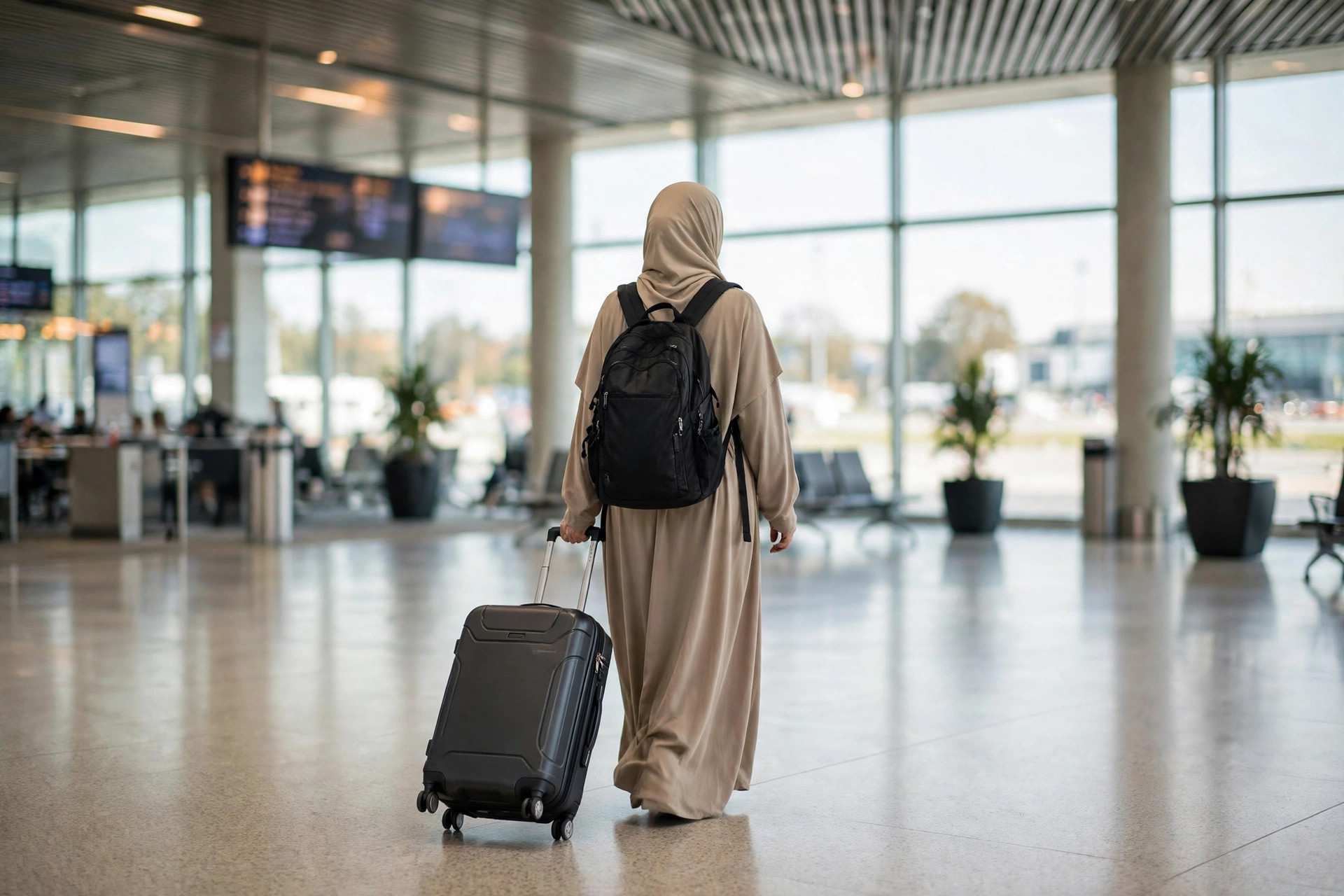
Start With Your Trip, Not the Bag
The #1 mistake is shopping first and planning later. Flip it: match the luggage to the trip length and type.
- A few days, city trip, traveling light → smaller carry-on
- A week or more, family travel, bulky gear (ski boots, camera equipment) → medium or large checked bag, or multiple bags
The bag fits the journey. A carry-on for a two-week trip means laundry stress; a massive checked bag for a weekend means hauling dead weight. Decide the trip first, and half the buying decision makes itself.
Carry-On vs Checked
The practical split:
- Carry-on works for about 3–5 days with smart packing. You skip baggage claim, you can’t lose the bag, and you’re forced to pack light (which is a feature, not a bug).
- Checked is for longer than a week, bulky gear, or family travel where one bag per person isn’t realistic.
Neither is “better” — they’re tools for different trips. The frequent traveler’s move is defaulting to carry-on and only checking when the trip genuinely demands it.
Know the Airline Limits Before You Buy
This is the step everyone skips and everyone regrets. Learn the size and weight limits before you buy the bag, because an oversized “carry-on” that doesn’t fit is just an expensive checked bag.
The standard numbers for most US airlines:
- Carry-on: about 22″ × 14″ × 9″, or 45 linear inches total (length + width + height)
- Checked: up to 62 linear inches total, 50 lbs weight cap
- Overweight fees: often $100+ per bag, each way
Measure twice. That “22-inch” bag with the wheels and handle sticking out might actually be 24 inches — and gate agents measure the whole thing. A $100 fee each way turns a bargain bag into the most expensive bag you own.
Size by Trip Length
In liters (the honest capacity measure):
- Short trips (a few days): carry-on sized, roughly 30–50 liters
- A week or more: roughly 50–100+ liters
And the golden rule: don’t buy bigger than you need. Empty space in a suitcase isn’t flexibility — it’s an invitation to overpack. A bag that’s exactly right forces the discipline that makes travel pleasant. (Your back, your arms, and the person behind you in the security line all agree.)
Hard-Shell vs Soft-Sided
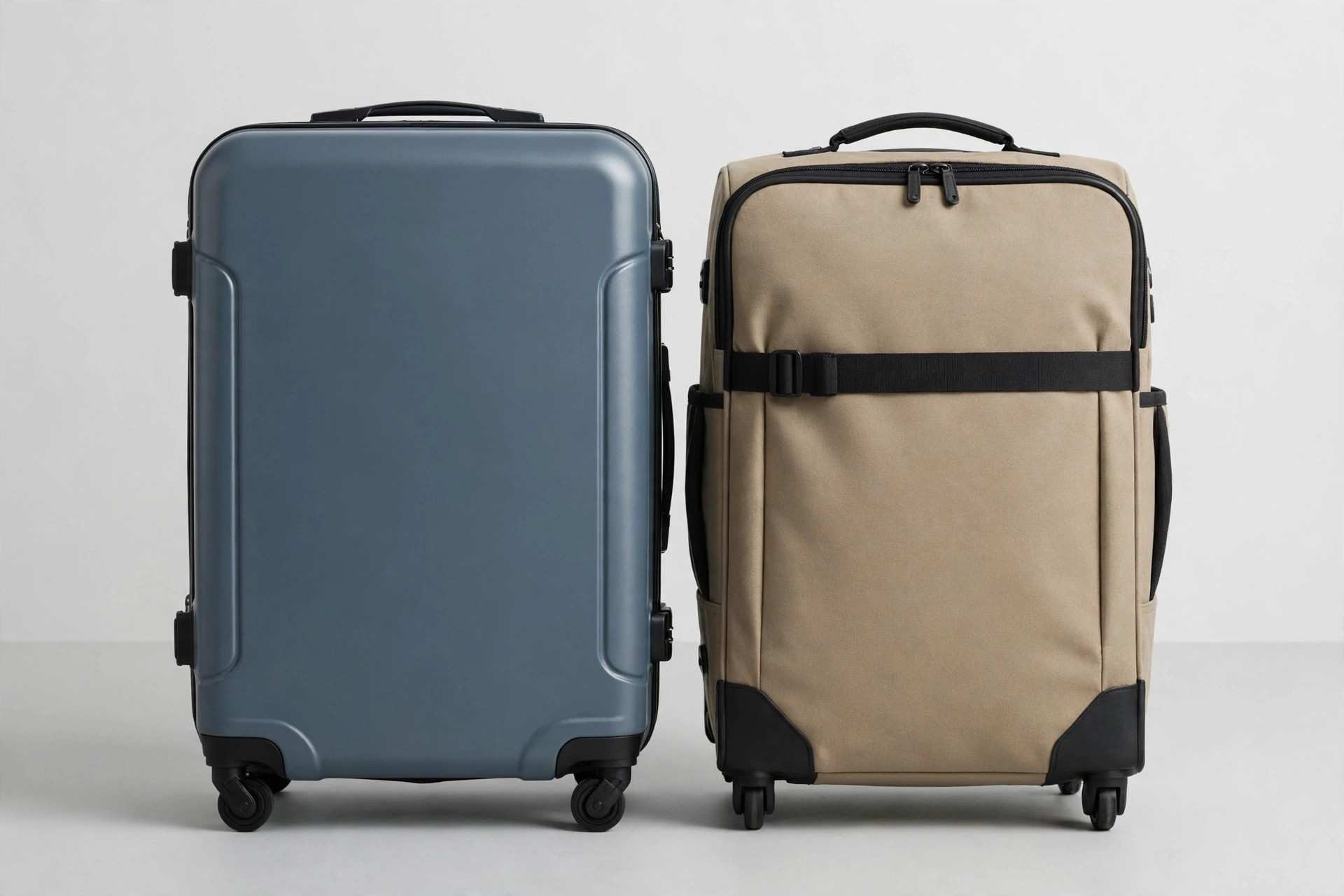
The big fork in the road. Honest tradeoffs, no winner — just the right pick for your trips:
Hard-shell (polycarbonate, aluminum):
– More protection for fragile contents
– Better in rain — water beads off instead of soaking in
– Wipes clean
– Downsides: less flexible (no squeezing in “one more thing”), and cheap hard-shells are heavier than they look
Soft-sided (nylon, polyester, ballistic fabric):
– Cheaper, lighter, more flexible
– Front pockets — the underrated killer feature for documents, chargers, and the things you need mid-journey
– Downsides: tears more easily, soaks in rain, less structure (your bag’s shape is a suggestion)
My rule of thumb: hard-shell if you check bags often (baggage handlers are not gentle) or travel in wet climates; soft-sided if you live out of a carry-on and value the front pocket more than anything. There’s no wrong answer — only a wrong answer for your trips.
Wheels: Spinner vs Two Wheels
4-wheel spinners: glide upright beside you, spin 360 degrees, and navigate narrow airplane aisles beautifully. On smooth floors — airports, hotels, stations — they’re effortless. The tradeoff: the wheels stick out (vulnerable to breakage) and they’re miserable on rough surfaces.
Two-wheel (roller) bags: tougher, with recessed wheels that don’t snap off. They tilt and roll behind you — less elegant in the terminal, far better on cobblestones, gravel, and broken sidewalks.
The decision: go 4-wheel spinner unless rough terrain is a constant in your travel life. If your trips regularly involve old European streets, rural roads, or anywhere the pavement is theoretical — two wheels will outlast three spinners.
Opening Style and Organization
- Clamshell (opens flat in two halves) vs top-opening (lid lifts off the top). Clamshells pack like drawers — great for organized packers. Top-openers are better for living out of the bag without unpacking.
- Zippers vs latches. Zippers are lighter and more common; latches (usually on aluminum hard-shells) are tougher and more secure, but heavier and pricier.
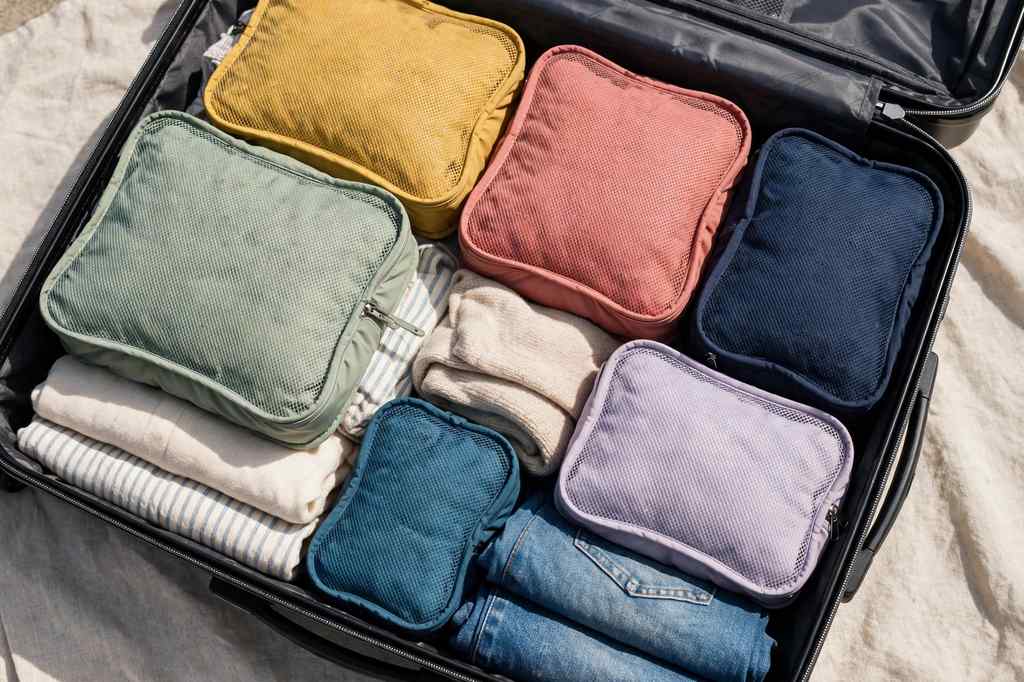
- Packing cubes. Not a bag feature, but the single best organization upgrade for any bag. They turn a suitcase interior from a jumble into compartments. Buy the cubes before you upgrade the bag.
Locks and Security
TSA locks are the standard for checked bags flying through the US: agents can open them with a master key instead of cutting your lock off. Understand what they are and aren’t: they deter casual tampering, not determined thieves. A zipper is a zipper — a pen through the coil opens most of them in seconds, lock or no lock.
The real security rule: valuables go in your personal item (the bag that never leaves your side), not in checked luggage. No lock fixes a bag that’s out of your sight in a sorting facility.
Weight of the Bag Itself
The forgotten spec: the bag’s own weight eats your allowance. A 12-pound empty suitcase on a 50-pound limit leaves you 38 pounds of actual stuff. A 7-pound bag leaves you 43. That five-pound difference is a pair of shoes and a jacket.
Weigh the bag before you leave — a small digital luggage scale costs almost nothing and has saved me from overweight fees more times than I can count. Weigh it packed, at home, where repacking is free. The airport scale is where repacking costs $100.
Duffels and Backpacks as Alternatives
Suitcases aren’t the only answer:
- Duffels: flexible, light, and swallow odd-shaped gear. The weakness: wheels jam in sand and snow, and carrying a heavy duffel on your shoulder gets old fast. Great as a second bag, rarely as the only bag.
- Backpacks (30–70L): the mobility king — stairs, crowds, and rough ground are no problem. Look for stowable straps (they tuck away so they don’t snag in baggage systems). The tradeoff is organization: one big compartment vs a suitcase’s structure.
For the one-bag traveler, a 40L backpack is the classic pick. For everyone else, these are supplements, not replacements.
What to Avoid
The short don’t-buy list — from my own mistakes above, so trust me on these:
- Soft-sided bags with low-denier fabric — thin fabric tears, and a torn bag mid-trip is a crisis
- Exposed single spinner wheels — one good curb-strike from a dead wheel
- Checked bags without a TSA-approved lock — you’re inviting the cut-off
For the companions to this guide: carry-on-luggage-size-limits-by-airline has the airline-by-airline numbers, carry-on-vs-checked-baggage is the deep dive on the tradeoff, how-to-pack-a-suitcase-efficiently teaches the packing that makes any bag work, and how-to-travel-with-only-a-carry-on is the minimalist’s playbook.
Frequently Asked Questions
What size luggage do I need for a week-long trip?
For a week or more, look at roughly 50–100+ liters — typically a medium or large checked bag. A carry-on (30–50 liters) covers about 3–5 days with smart packing.
Is hard-shell or soft-sided luggage better?
Neither — it depends on your trips. Hard-shell protects better, handles rain, and wipes clean; soft-sided is cheaper, lighter, more flexible, and has front pockets. Check bags often or wet climates: hard-shell. Carry-on life: soft-sided.
Are spinner wheels or two wheels better?
Four-wheel spinners glide effortlessly on smooth floors and rotate 360°; two-wheel bags are tougher with recessed wheels that survive cobblestones. Go spinner unless rough terrain is a constant in your travels.
What are the standard carry-on size limits?
For most US airlines: about 22″ × 14″ × 9″ (45 linear inches total). Checked bags: up to 62 linear inches and 50 lbs, with overweight fees often $100+.
Should I buy a luggage set?
Only if the sizes match trips you actually take. A set with a giant bag you’ll never fill is wasted money and wasted closet space — buy the bag for the trip, not the bundle discount. (General advice, not a sourced claim.)
How do I avoid overweight baggage fees?
Weigh your packed bag at home with a small digital scale — the bag’s own weight eats your 50-lb allowance, so factor it in. Repacking at home is free; repacking at the airport costs $100+.