How to Pack a Suitcase Efficiently: The Smart Traveler’s Guide

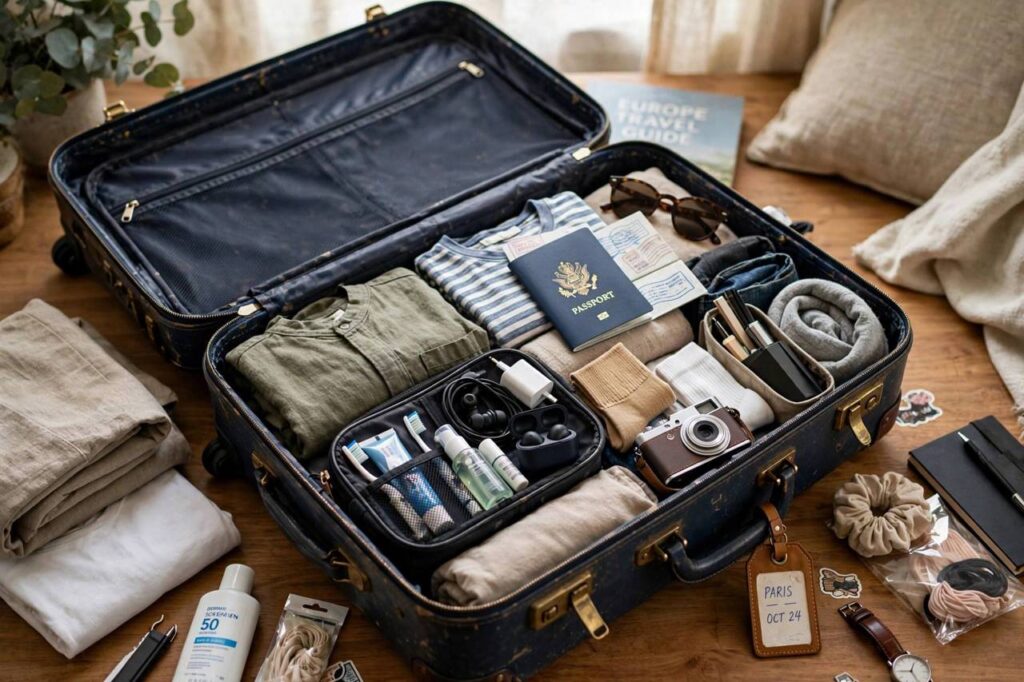
I have packed for two-week trips in a carry-on and lived to tell the tale, and I have also overpacked for a weekend away and regretted every extra pound at the airport. The difference was never the suitcase. It was the system. Learning how to pack a suitcase efficiently is one of those travel skills that pays off on every single trip: less weight, less stress, no baggage fees, and everything you need right where you expect it. Here is the complete method.
How to Pack a Suitcase Efficiently: The Golden Rule
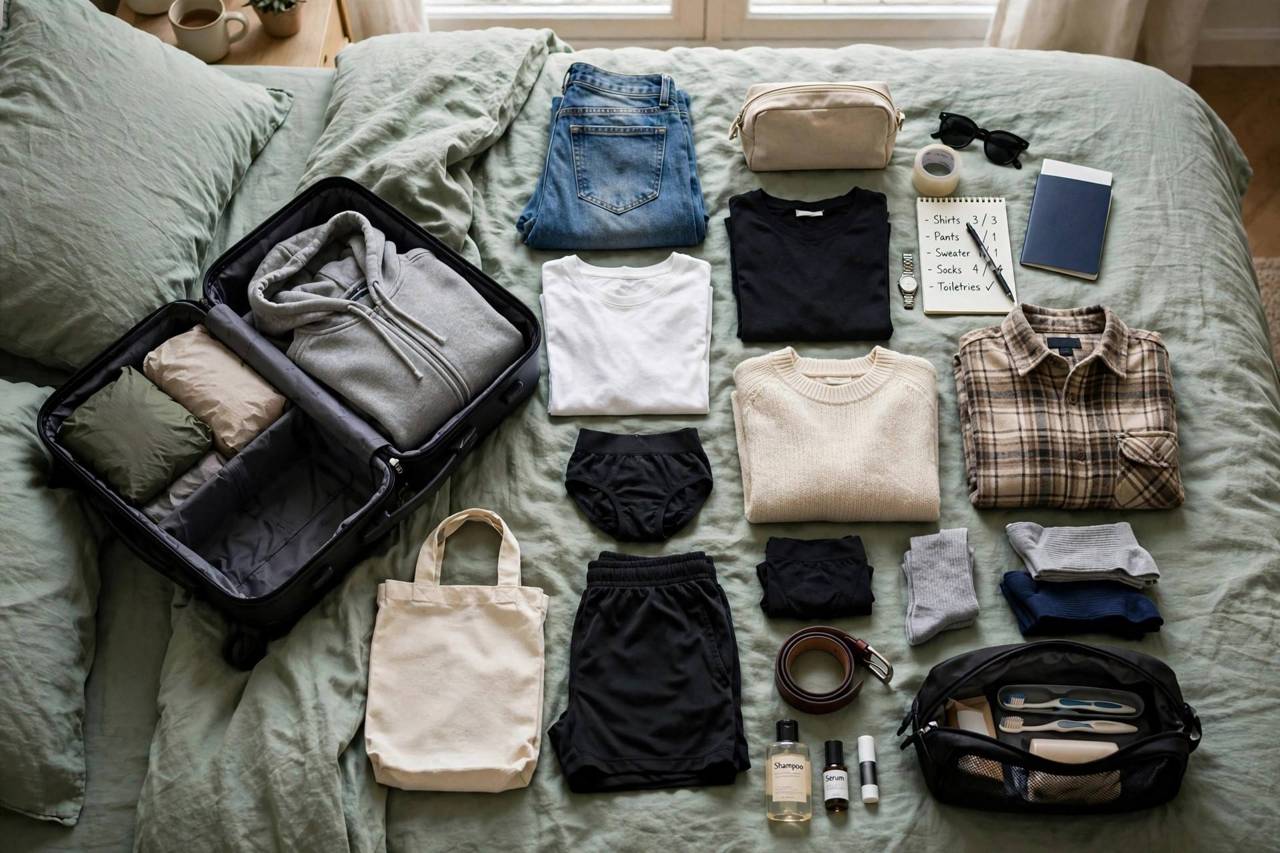
The number one packing mistake is throwing in “options.” Options are heavy. Instead, plan complete outfits for each day, then ruthlessly cut. Lay everything on the bed first; this visual audit is non-negotiable. You will immediately see duplicates and “maybe” items that felt essential in the closet and look absurd on the bed.
Build around a color palette: choose 2-3 neutral base colors plus one accent. When everything coordinates, every top works with every bottom, and five pieces create a dozen outfits. This single trick does more for efficient packing than any gadget.
Then apply the 5-4-3-2-1 rule for a week-long trip: 5 tops, 4 bottoms, 3 pairs of shoes (worn + 2 packed, max), 2 layers (a jacket and a sweater), 1 hat. Adjust counts for trip length, but keep the ratio. Shoes are the budget-killers; wear your bulkiest pair on the plane.
Rolling vs. Folding: The Honest Answer
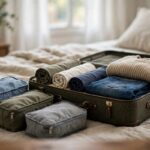
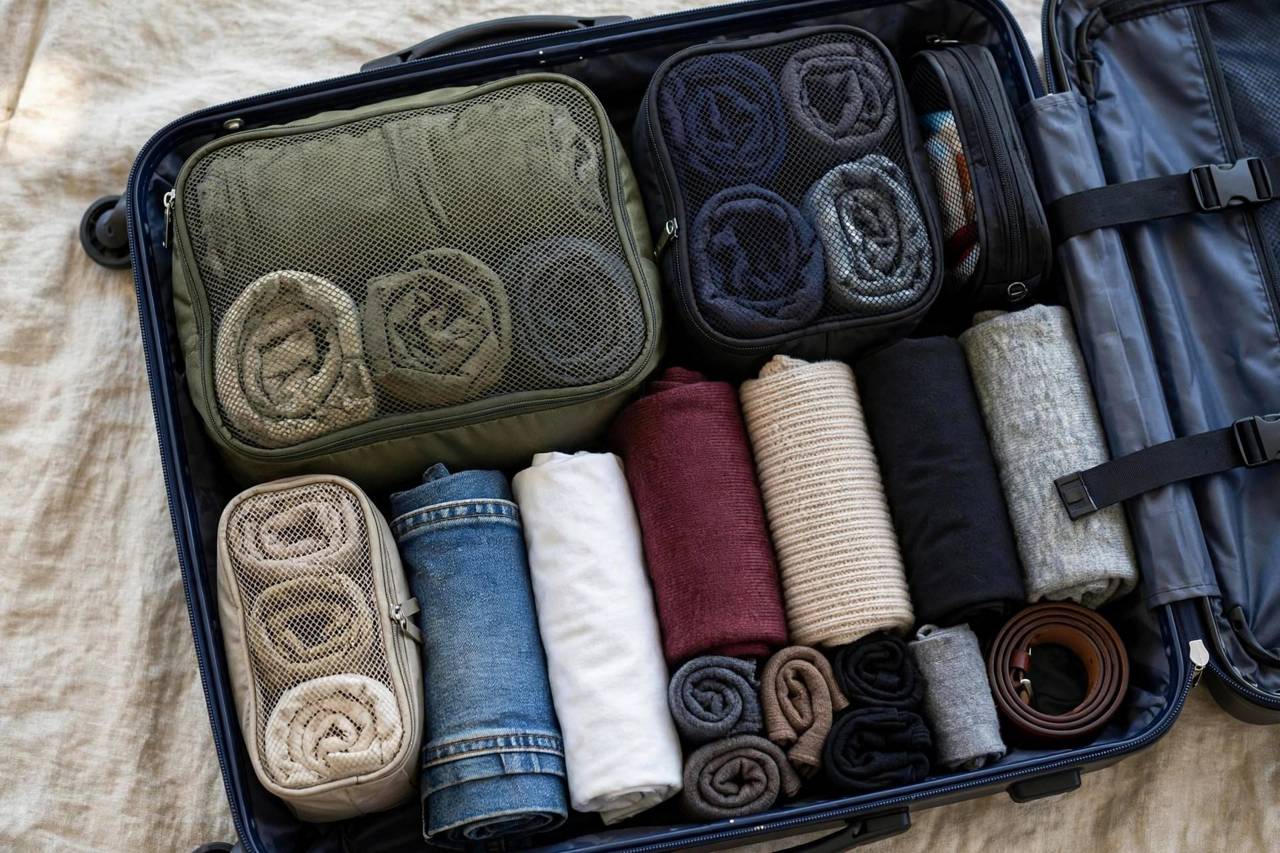
Let us settle this. Rolling wins for casual clothes: t-shirts, jeans, knitwear. It compresses well, resists wrinkles reasonably, and lets you see everything at a glance. Folding wins for structured items: blazers, button-downs, anything that must look crisp. The bundle method, wrapping clothes around a central core, minimizes wrinkles best but makes accessing one item annoying.
My actual system: roll the casual stuff, fold the structured stuff along the suitcase’s flat surfaces, and stuff socks and underwear into shoes and gaps. Hybrid packing beats ideological packing. For the deep dive on traveling light, our guide on how to pack light covers the minimalist philosophy behind all of this.
Packing Cubes: Worth It?
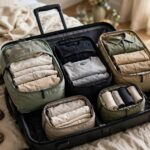
Yes, with one caveat. Packing cubes do not magically create space; they create organization, which feels like space. Categorize by type (tops, bottoms, underwear) or by outfit day. Compression cubes squeeze out air for real volume savings on bulky items.
The caveat: cubes add a little weight and work best in rectangular suitcases. If you are a chaotic packer, cubes impose order. If you are already disciplined, they are a nice-to-have. Either way, they make living out of a suitcase dramatically more pleasant; no more excavating the entire bag for one shirt.
The Layering Order: What Goes Where
Pack your suitcase like a layered cake. Bottom layer (against the wheels): heavy items, shoes (soles facing the walls, stuffed with socks), jeans, and bulky knits. Middle layer: rolled casual clothes in cubes. Top layer: items you will need first: a fresh outfit, toiletries, documents. Lid compartment: flat items like a tablet, travel documents, and anything fragile wrapped in soft clothes.
Keep essentials accessible: medications, a change of clothes, chargers, and valuables belong in your personal item, not the checked bag. If luggage goes astray, you can survive 24 hours comfortably.
Toiletries and Liquids: The Smart Way
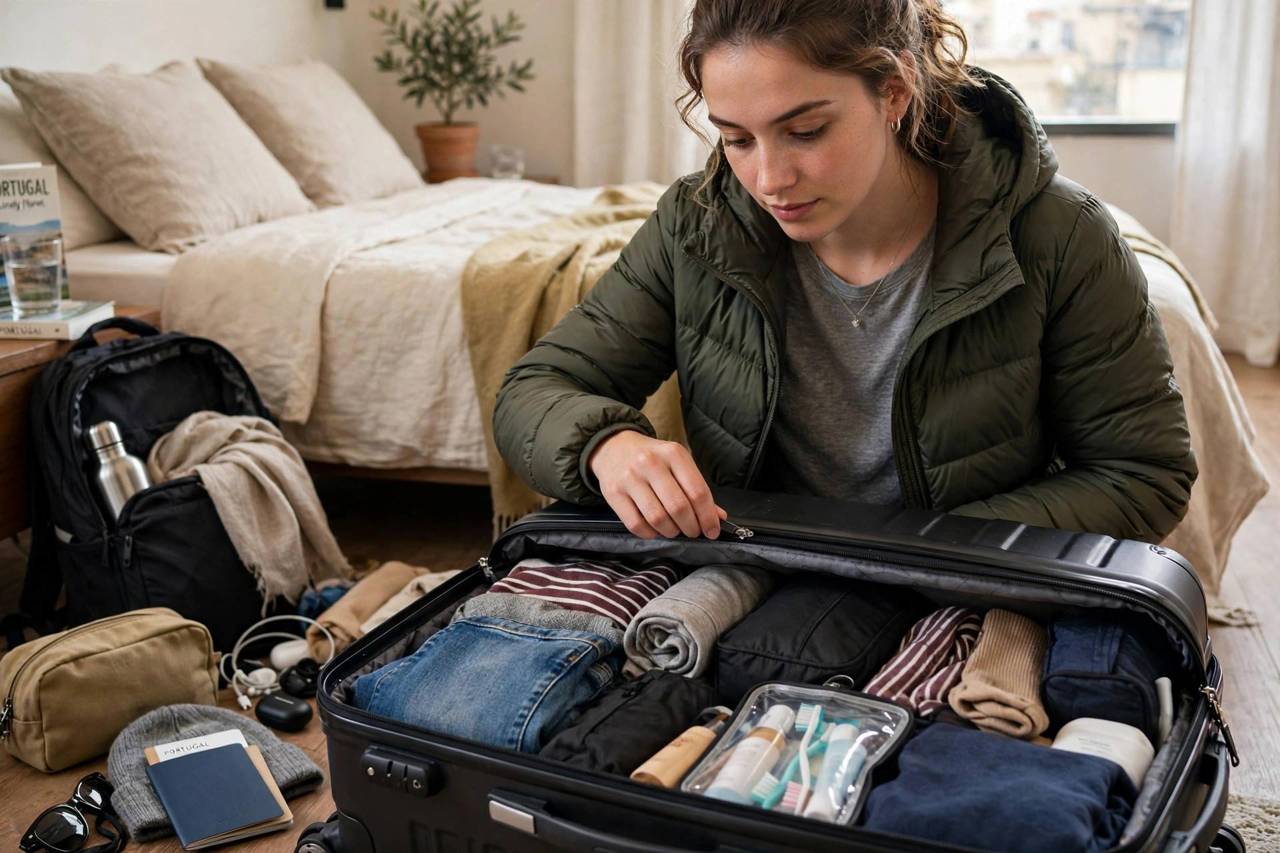
Decant everything. Those full-size bottles are dead weight; travel containers or contact-lens cases for serums and creams cut volume by 80 percent. Solid alternatives, shampoo bars, conditioner bars, solid perfume, eliminate leak risk and liquid limits entirely.
For carry-ons, remember the 3-1-1 rule: 3.4oz (100ml) containers, 1 quart bag, 1 per passenger. Put the quart bag on top for security. And pack a few extras people forget: stain remover wipes, a mini sewing kit, blister plasters, and any prescription meds in original packaging with a copy of the prescription.
Space-Saving Tricks the Pros Use
Wear your bulkiest items. Boots, heavy jacket, sweater: on your body, not in your bag. Planes are cold anyway.
Stuff every cavity. Shoes hold socks, underwear, chargers, sunglasses. Hats get stuffed to hold their shape. Dead space is wasted space.
Choose fabrics wisely. Merino wool and technical synthetics resist odor and dry fast, meaning fewer changes. One merino shirt can do the work of three cotton ones.
Do laundry mid-trip. For trips over a week, packing for 7 days and washing once beats packing for 14. A sink wash with travel detergent takes 15 minutes.
Skip “just in case” items. The iron, the third book, the fancy shoes for an event that does not exist. If you have not used it on the last three trips, leave it. Most destinations have stores; almost anything is replaceable.
Packing for Different Trip Types
Business trips: wrinkle-resistant fabrics, one versatile blazer, shoes that work day to evening. Garment folders keep shirts crisp. Keep the palette dark and coordinated.
Beach vacations: less is more. Swimwear, cover-ups, sandals, one nice dinner outfit. Reef-safe sunscreen (often required by destinations now). Our one-bag travel packing list is perfect for these trips.
Cold weather: layers beat bulk. Thermal base, mid-layer fleece, packable down, waterproof shell. Bulky items get worn on travel days. Multi-destination: cubes organized by stop, laundry plan built in, and the carry-on-only packing tips to keep you nimble between stops.
For a two-week specific plan, see how to pack light for 2 weeks.
Common Packing Mistakes to Avoid
Packing the night before in a panic (pack 48 hours ahead; the audit needs daylight). Folding everything with no system. Bringing full-size toiletries. Forgetting that laundry exists. Packing for your fantasy self instead of your itinerary. And the classic: a half-empty personal item while the suitcase bursts. Distribute weight; your shoulders will thank you.
Carry-On vs. Checked: Making the Call
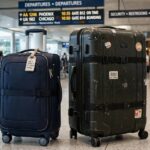
Go carry-on when: the trip is a week or less, you have connections (lost luggage risk multiplies), you hate baggage claim, or you want to stay nimble across multiple stops. Modern carry-ons plus a personal item hold a surprising amount with the systems in this guide. The freedom of walking past baggage claim while everyone else waits is genuinely life-improving.
Check a bag when: the trip exceeds 10 days without laundry access, you need bulky gear (ski boots, formal wear, equipment), you are traveling with kids (their stuff multiplies), or liquids and tools exceed carry-on limits. There is no shame in checking; the goal is traveling well, not traveling light as ideology.
The hybrid: carry-on plus checking one bag on the return only, for souvenirs. Many experienced travelers fly out light and buy a cheap duffel at the destination for the trip home. Best of both worlds.
The Ultimate Efficient Packing Checklist
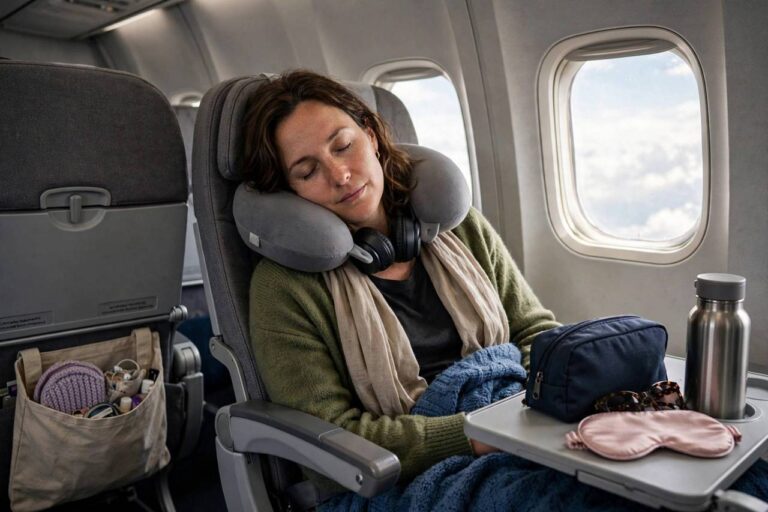
Copy, adapt, and reuse this master list. Documents: passport/ID, bookings, insurance, prescriptions. Tech: phone, charger, power bank, adapters, headphones. Clothing (7-day base): 5 tops, 4 bottoms, underwear plus two, 2-3 socks pairs, sleepwear, 1 jacket, 1 sweater, 3 shoes max (wear bulkiest). Toiletries: decanted essentials, medications, sunscreen, stain wipes. Comfort: travel pillow, eye mask, earplugs, snacks, water bottle. Day bag: packable tote or daypack for outings.
Before zipping, run the audit: lay everything out, remove three “maybe” items, confirm every piece matches the color palette, and verify documents and meds are in the personal item. This final pass takes five minutes and catches 90 percent of packing regrets. Then zip with confidence and go enjoy the trip; the packing is done, and done well.
Packing With Kids: Staying Efficient as a Family
Kids multiply packing complexity, but the same principles apply with adjustments. Give each child a packing cube set in their color. It keeps their clothes findable and gives them ownership. Pack outfits as complete bundles (shirt, bottoms, underwear rolled together per day) so mornings require zero decisions. Double the stain wipes and add a full change of clothes in the personal item; spills are not a possibility but a certainty.
Entertainment is essential cargo: coloring supplies, a tablet loaded with shows, favorite small toys, and snacks, so many snacks. A hungry bored child in an airport is a packing failure, not a behavior problem. Ship or rent bulky gear at the destination when possible: car seats, strollers, and cribs can often be rented, saving enormous luggage space. And build in buffer time everywhere; family travel runs 30 percent slower than solo travel, and fighting that reality helps no one. Pack patience alongside the cubes. And remember that kids’ packing gets easier every trip as the system becomes a family ritual rather than a parental chore.
Key Takeaways
To pack a suitcase efficiently: plan outfits not items, build around a 2-3 color palette, use the 5-4-3-2-1 rule, roll casual clothes and fold structured ones, use packing cubes for organization, layer heavy items at the bottom, decant toiletries, wear your bulkiest items, stuff every cavity, and do laundry on longer trips. Cut the “just in case” items ruthlessly. Efficient packing is a system, and systems beat willpower every trip. Build yours once, refine it each journey, and soon packing will be the easiest part of traveling, leaving you free to focus on the adventure ahead.
FAQ
What is the most efficient way to pack a suitcase?
Plan outfits in advance around a coordinated color palette, roll casual clothes, fold structured items, use packing cubes, place heavy items near the wheels, and fill every gap (shoes with socks, etc.). Wear your bulkiest items on travel day.
Should I roll or fold clothes for packing?
Roll casual clothes (t-shirts, jeans, knits) for compression and visibility; fold structured items (blazers, button-downs) to keep them crisp. A hybrid approach works best.
How do I fit two weeks of clothes in a carry-on?
Pack for 7 days and do laundry mid-trip. Choose odor-resistant fabrics like merino wool, follow the 5-4-3-2-1 rule, wear bulky items, and use compression packing cubes.
What should I pack in my personal item vs. suitcase?
Personal item: medications, valuables, chargers, travel documents, a change of clothes, and entertainment. Everything you need to survive 24 hours if checked luggage is delayed.
How do I avoid wrinkles when packing?
Use the bundle method for dress clothes, place tissue between folds, pack structured items flat on top, unpack and hang immediately on arrival, and choose wrinkle-resistant fabrics for travel.