Carry On Luggage Size Limits by Airline (2026 Reference Table)

Nothing sours a trip faster than a gate agent telling you your “carry-on” is getting gate-checked, with a fee attached. I fly constantly for work and I have learned that carry on luggage size limits by airline are not suggestions; they are enforced inconsistently, which is worse, because you never know when your luck runs out. This guide gives you a 2026 reference table for the major airlines, explains the fine print most travelers miss, and shares my packing-to-the-limit system for fitting everything without triggering the sizers.
One caveat up front: airlines update baggage policies, so treat this table as a planning reference and always verify on the airline’s website before you fly, especially with budget carriers, which change rules most often.
Carry On Luggage Size Limits by Airline: The 2026 Reference Table
Dimensions below are the standard maximum for one carry-on bag (length x width x height), including wheels and handles unless noted. Weight limits apply mainly on international and budget carriers.
American Airlines: 22 x 14 x 9 in (56 x 36 x 23 cm). No weight limit on domestic. One carry-on plus one personal item.
Delta Air Lines: 22 x 14 x 9 in (56 x 36 x 23 cm). No weight limit. One carry-on plus one personal item.
United Airlines: 22 x 14 x 9 in (56 x 35 x 22 cm). No weight limit on most fares; Basic Economy may restrict carry-on to a personal item only, check your fare.
Southwest Airlines: 24 x 16 x 10 in (61 x 40 x 25 cm), more generous than the big three. No weight limit. One carry-on plus one personal item.
JetBlue: 22 x 14 x 9 in (56 x 36 x 23 cm). Blue Basic fares restrict to personal item only.
Alaska Airlines: 22 x 14 x 9 in (56 x 36 x 23 cm). No weight limit.
Spirit Airlines: 22 x 18 x 10 in (56 x 46 x 25 cm), but carry-ons cost extra, often $40-70+ each way depending on when you pay. Personal item (18 x 14 x 8 in) is free. Pay for bags during booking, not at the gate, where it is most expensive.
Frontier Airlines: 24 x 16 x 10 in (61 x 41 x 25 cm) for paid carry-ons; personal item (18 x 14 x 8 in) free. Like Spirit, prepay online for the lowest price.
British Airways: 22 x 18 x 10 in (56 x 45 x 25 cm), up to 23 kg (51 lbs). Generous by international standards.
Lufthansa: 21.7 x 15.7 x 9 in (55 x 40 x 23 cm), up to 8 kg (17.6 lbs). Weight limits are enforced more often in Europe.
Emirates: 21.7 x 14.9 x 7.9 in (55 x 38 x 20 cm), up to 7 kg (15.4 lbs). Note the slimmer depth; bulky bags get flagged.
Air France: 21.7 x 13.8 x 9.8 in (55 x 35 x 25 cm), up to 12 kg (26.5 lbs) combined for carry-on plus personal item.
Ryanair: Priority boarding passengers: 21.7 x 15.7 x 7.9 in (55 x 40 x 20 cm), up to 10 kg. Non-priority: small bag only (15.7 x 9.8 x 7.9 in) that fits under the seat. Ryanair enforces with sizers at the gate; assume you will be checked.
easyJet: 21.7 x 17.7 x 9.8 in (55 x 45 x 25 cm) for Up Front / Extra Legroom fares; standard fares get an under-seat bag only (17.7 x 13.8 x 9.8 in).
The pattern: US legacy carriers cluster around 22 x 14 x 9 inches with no weight limit; European and Asian carriers are slightly smaller and often enforce weight (7-10 kg is common). If you fly internationally, pack to the stricter standard.
The Fine Print Travelers Miss
Wheels and handles count. When airlines say 22 inches, they mean total including wheels and handles. A bag marketed as “22-inch” sometimes measures 23+ with wheels extended. Measure your actual bag, fully packed, before trusting the label.
Personal item vs carry-on. You almost always get both: one overhead-bin bag plus one smaller personal item (purse, backpack, laptop bag) that fits under the seat. Personal item limits are typically around 18 x 14 x 8 inches. Budget carriers are strictest here; legacy carriers rarely measure personal items unless egregious.
Basic economy restrictions. The cheapest fares on United, JetBlue, and others may limit you to a personal item only, with full-size carry-ons banned or fee-triggering. Read your fare’s baggage terms, not just the airline’s general policy.
Enforcement is inconsistent by design. Full flights get strict gate enforcement; empty flights get waved through. Small regional jets cannot fit standard carry-ons in their bins at all, expect a free gate-check (not a fee) on those. Budget carriers enforce most aggressively because bag fees are revenue.
Codeshares follow the operating carrier. Booked through Delta but flying on a partner airline? The operating carrier’s rules apply. Check whose metal you are actually flying on.
Packing to the Limit: Fit More Without Fees
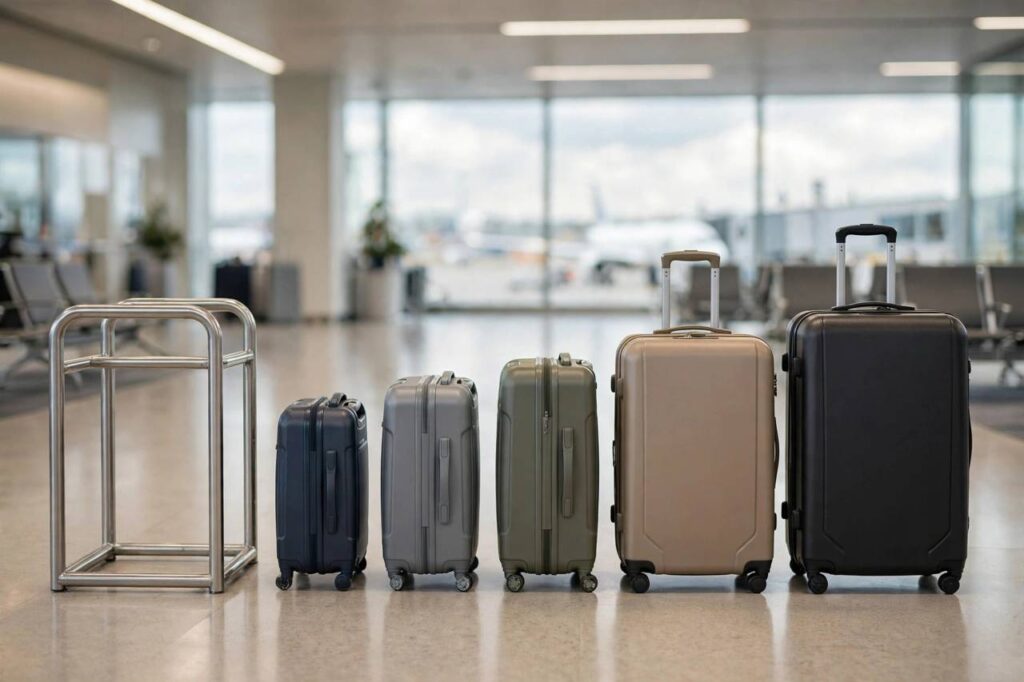
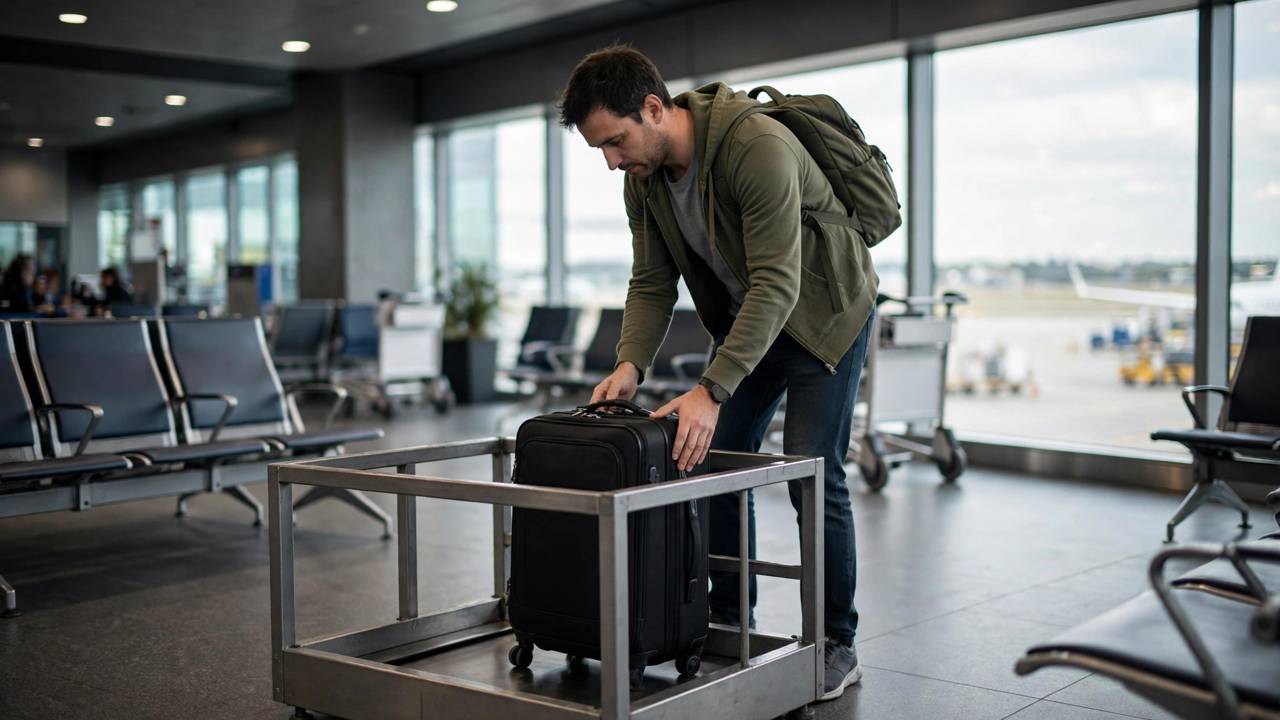
Choose a truly compliant bag. The most common failure is a bag that was compliant empty and non-compliant packed. Soft-sided bags that bulge when overstuffed fail sizers; a structured bag that holds its dimensions packed is worth the investment. When in doubt, size down rather than up.
Wear the bulky stuff. Coats, boots, heavy sweaters: wear them on the plane, not in the bag. This single trick frees enormous bag space and airlines cannot weigh what you are wearing (within reason).
Use the personal item strategically. A well-packed backpack as your personal item effectively doubles your carry capacity. Heaviest dense items (books, tech, toiletries) go in the personal item; it is rarely weighed.
Compression packing cubes. They do not just organize; the compression versions genuinely reduce volume by squeezing air out of clothes. Roll clothes inside them for maximum effect.
Decant toiletries. Full-size bottles waste space and weight. Travel-size containers, solid toiletries (shampoo bars, solid deodorant), and buying basics at your destination for long trips all help.
For full packing systems, our one-bag travel packing list and carry-on-only packing tips go deeper, and the carry-on vs checked baggage comparison helps you decide when checking is actually smarter.
What Happens When Your Bag Does Not Fit
At the gate, an oversized bag gets gate-checked: tagged, taken at the jet bridge, and returned at the jet bridge (regional jets) or at baggage claim (mainline). On legacy carriers this is usually free; on budget carriers it triggers the highest bag fee of all, the gate rate, which is why prepaying online matters. To minimize risk: board early (overhead space fills up and late boarders get involuntarily gate-checked even with compliant bags), keep valuables and essentials in your personal item, and never argue with the gate agent; the sizer is the final judge.
Carry-On Rules for Children, Instruments, and Special Items
Standard size tables cover standard bags, but special situations have their own rules. Children under two traveling as lap infants typically do not get a carry-on allowance on most airlines, though collapsible strollers and car seats can usually be gate-checked free; verify with your carrier, as budget airlines differ. Child car seats that are FAA-approved can be used onboard if you purchased a seat, and they do not count against your carry-on limit.
Musical instruments are a common edge case: small instruments (violins, guitars in soft cases) generally count as your carry-on or personal item, while larger instruments may require purchasing a seat. US law requires airlines to allow small instruments in the cabin when space permits. Medical devices, including CPAP machines and necessary medications, do not count against carry-on limits on most airlines, but carry documentation and keep medications in your personal item, never in checked luggage. When in doubt about any special item, call the airline before travel day; gate agents have discretion, but phone agents can add notes to your booking that smooth the way. And photograph your bag’s measurements alongside a tape measure before disputed trips; it will not win every argument, but it wins more than you would expect.
Frequently Asked Questions
What is the standard carry-on size for most airlines?
22 x 14 x 9 inches (56 x 36 x 23 cm) is the standard for most US airlines. European and Asian carriers trend slightly smaller (around 55 x 40 x 20-23 cm) and often add weight limits of 7-10 kg.
Do wheels count in carry-on dimensions?
Yes. Airline limits include wheels, handles, and any protrusions. Measure your bag fully packed, not the manufacturer’s nominal size, which sometimes excludes wheels.
Can I bring a carry-on and a personal item?
On most fares, yes: one overhead-bin carry-on plus one smaller personal item that fits under the seat. Budget carriers and basic economy fares may restrict you to the personal item only.
What is the weight limit for carry-on luggage?
US domestic flights typically have no weight limit (you must be able to lift it into the bin yourself). International carriers commonly limit carry-ons to 7-12 kg, and enforcement is stricter in Europe and Asia.
What happens if my carry-on is too big?
It gets gate-checked. On legacy airlines this is usually free; on budget airlines it incurs the highest bag fee. Oversized bags may also be refused at the sizer during strict enforcement.
Are carry-on sizes the same for international flights?
No. International carriers often have slightly smaller dimension limits and enforce weight limits (typically 7-10 kg). When flying internationally, pack to the stricter of your airlines’ rules.
Final Thoughts
Carry-on rules reward the prepared: measure your packed bag, know your fare’s terms, wear the bulky layers, and maximize the personal item. Do that and the sizer becomes a formality instead of a gamble. Verify the table against your airline’s site before you fly, pack smart, and board early.