How to Get Through Airport Security Faster

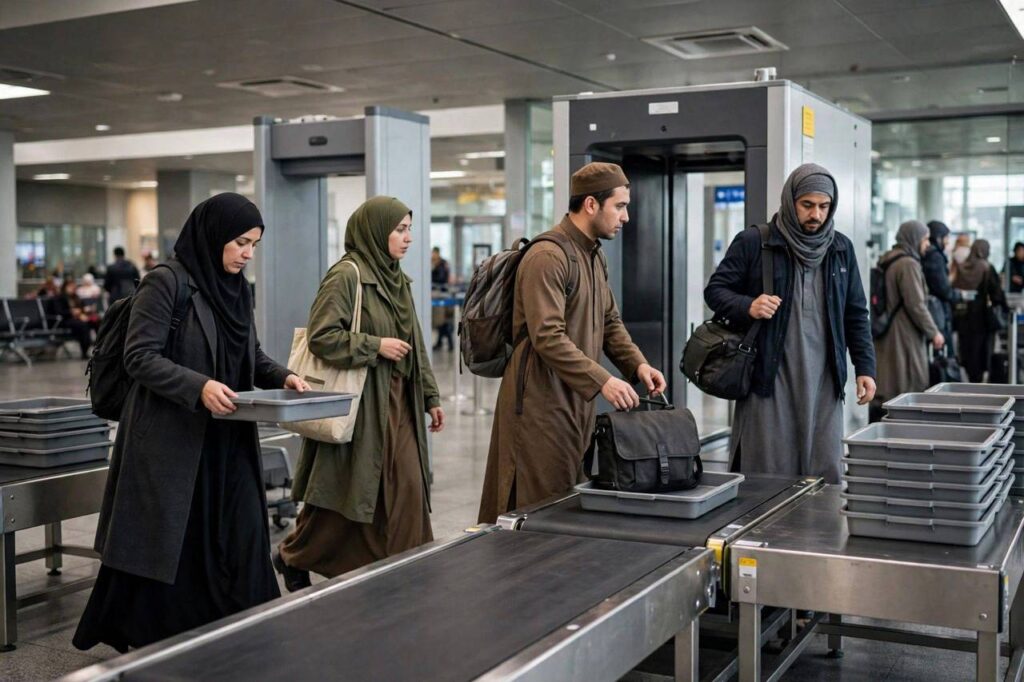
Learning how to get through airport security faster is one of those travel skills that pays off on literally every trip you take. I fly a lot — for work assignments, for family visits, for the occasional trip I take just because the fare was too good to refuse — and I have stood in every kind of security line there is, from the eerily empty 5 a.m. shuffle to the holiday-weekend snake that wraps around the terminal. The difference between a 10-minute screening and a 45-minute one is rarely luck. It is preparation, timing, and a handful of small decisions you make before you ever reach the checkpoint.
This guide covers all of it: the trusted traveler programs that genuinely change the game, how to pack and dress so you sail through the scanner, the best times to fly, and the mistakes I see travelers make every single week. Nothing here requires special status or a first-class ticket — just a little planning.
Enroll in a Trusted Traveler Program — the Single Biggest Upgrade
If you fly even a few times a year, this is the move. The U.S. government runs programs that let pre-vetted travelers use expedited security lanes, and the time savings are dramatic.
TSA PreCheck is the one most domestic travelers want. For a fee that covers five years, you go through an application with an in-person appointment (it takes about ten minutes), pass a background check, and then get a Known Traveler Number to add to your flight bookings. At the airport, you use a dedicated lane where you generally do not have to remove your shoes, belt, or light jacket, and your laptop and liquids can stay in your bag. The enrollment fee is modest when you spread it over five years, and many travel credit cards reimburse it entirely — check your card benefits before you pay out of pocket.
Global Entry includes TSA PreCheck benefits plus expedited U.S. customs screening when you return from international trips. It costs a bit more, requires an interview, and the wait for interview appointments can be long — but if you travel internationally even once a year, it is the better value. There is also a clever workaround frequent travelers use: completing the interview on arrival at certain airports when returning from an international trip, which skips the appointment backlog.
CLEAR is a private program, separate from the government ones, that uses biometrics to verify your identity so you can skip to the front of the ID-check portion of the line. It is the most expensive option and works best when paired with PreCheck — CLEAR gets you past the document checker, PreCheck gets you through the faster screening lane. Whether it is worth it depends on how often you fly through the airports where it operates and how much you value those saved minutes.
A practical note: PreCheck only helps if your boarding pass actually shows the PreCheck indicator. That means your Known Traveler Number must be in the reservation, and the name on your booking must match your PreCheck enrollment exactly — middle names included. I have watched travelers fume at the PreCheck lane entrance because of a booking-name mismatch. Double-check it when you book.
Pack Your Carry-On in Screening Order
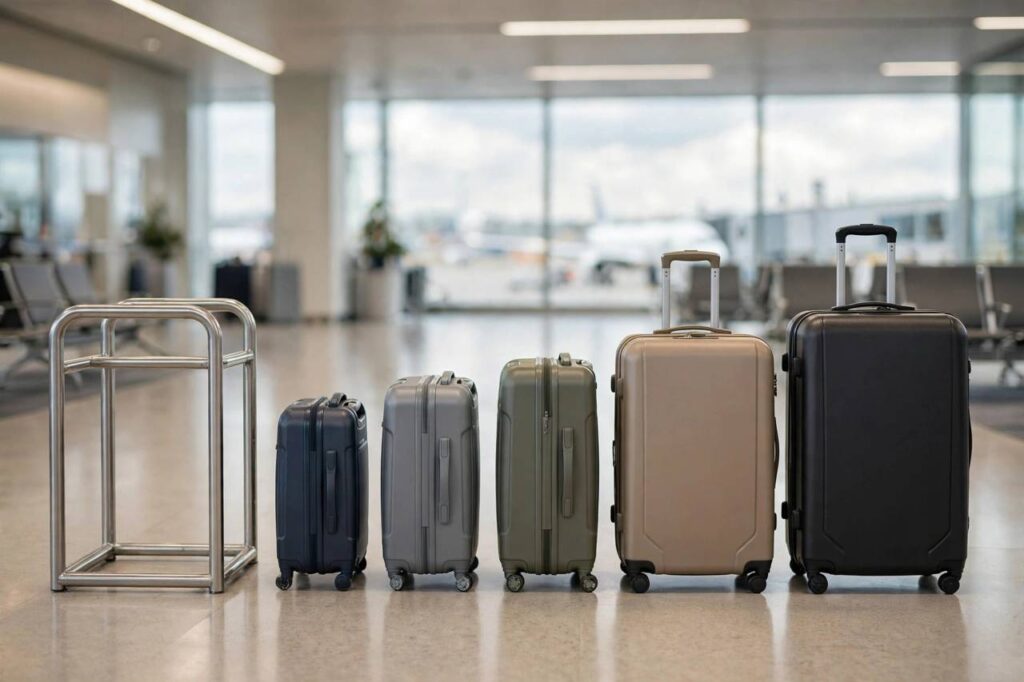
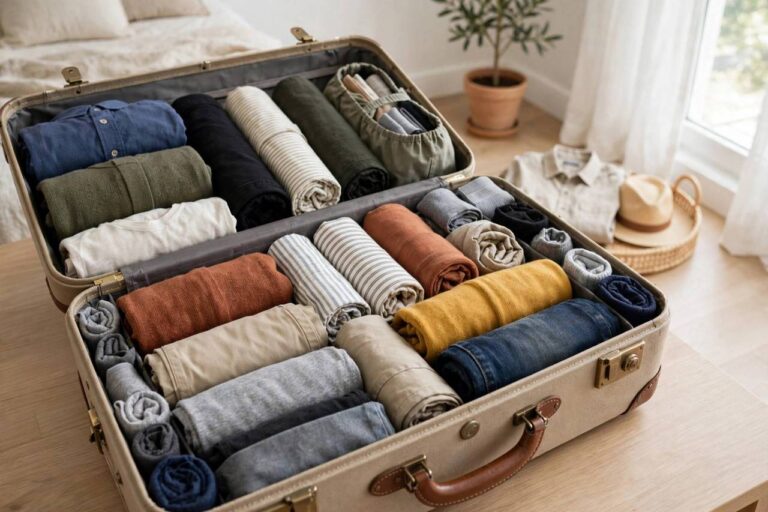
Even with PreCheck, smart packing saves time — and without it, packing is everything. The principle is simple: arrange your bag so that everything the screener needs to see is instantly accessible.
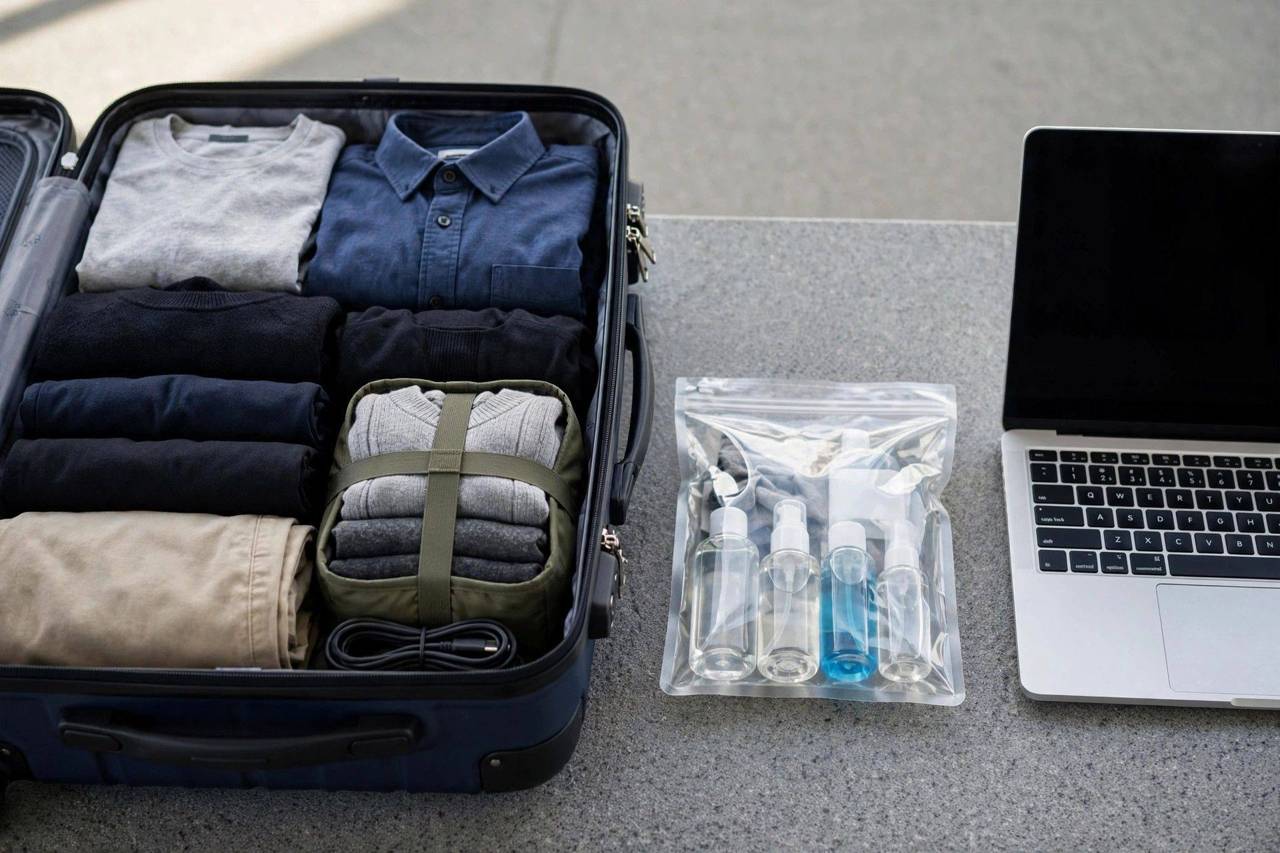
- Liquids bag on top. Your quart-sized bag of liquids and gels should be the first thing you can grab. Use a clear, dedicated pouch — not a random zip-lock buried under your sweaters — and keep it near the top or in an outside pocket.
- Laptop in its own easy slot. If you do not have PreCheck, your laptop comes out into its own bin. Pack it in an outer compartment or a sleeve you can slide out one-handed. The same goes for large tablets.
- Nothing loose on top. Keys, coins, phones, and chargers scattered across the top of your bag slow everyone down. Consolidate small metal items into one pouch inside your bag before you reach the line.
- Know the exceptions. Medically necessary liquids, baby formula, and breast milk have exemptions beyond the standard liquid limits, but you must declare them to the officer. Snacks are fine; soups and dips count as liquids and get flagged constantly.
- Empty your water bottle. This is the single most common holdup I see. Drink it, dump it, and refill past security. Every full bottle means a bag search.
One more packing habit that pays off: keep your boarding pass and ID in the same easy-access spot every time — a jacket pocket, a specific pouch — so you are never the person digging through a backpack at the podium while the line waits.
How to Get Through Airport Security Faster by Dressing Smart
What you wear to the airport genuinely affects your screening time. Metal is the enemy: big belt buckles, heavy jewelry, watches, and boots with metal shanks all trigger additional screening. I am not suggesting you fly in pajamas, but a few choices make a real difference.
Wear slip-on shoes if you do not have PreCheck — you will be taking them off, and laced boots turn a 30-second step into a two-minute ordeal at the bench. Minimize jewelry or put it in your bag before the line. Choose pants without a heavy belt buckle, or a belt you can slide off quickly. Empty every pocket before you reach the bins: phone, wallet, keys, coins, even crumpled receipts with foil. The body scanner is extremely sensitive, and every forgotten item means a pat-down or a re-scan.
Jackets and hoodies come off for the X-ray in standard screening, so wear layers you can shed and reclaim easily. And if you are traveling with kids, dress them the same way — children’s shoes come off too in standard lanes, and a prepared kid keeps the family bin area moving.
Time Your Arrival Like a Frequent Flyer
The busiest security periods at most U.S. airports are predictable: early morning (roughly 5 to 8 a.m.) when the first bank of flights departs, and late afternoon into early evening (4 to 7 p.m.) for the second wave. Midday — roughly 10 a.m. to 2 p.m. — is often the quietest, and late-night departures after 8 p.m. can be ghost towns.
Day of the week matters too. Monday mornings and Friday afternoons skew busy with business travel; Sunday evenings are heavy with returning weekend travelers. If your schedule is flexible, a Tuesday or Wednesday midday flight is the closest thing to a guaranteed short line.
As for how early to arrive: the old “two hours domestic, three hours international” rule is a decent baseline, but adjust it. Big hub airports during peak holiday periods deserve more buffer; small regional airports with one checkpoint can be fine with less. What you want to avoid is the worst of both worlds — arriving so early you wait around for an hour, or cutting it so close that a 20-minute line becomes a sprint. Check your airport’s website or app for current wait times before you leave; many airports now publish them in real time.
My personal rule: I aim to be at the checkpoint with enough time that a 25-minute line still leaves me comfortable. Stress is the real enemy — a calm traveler who packed well moves faster than a panicked one, every time.
Common Mistakes That Slow Everyone Down
After hundreds of trips, I have a mental catalog of the errors that clog security lines. Avoid these and you are already faster than most of the line:
- Waiting until the bins to start preparing. Start the process in line: ID and boarding pass in hand, pockets emptied, laptop unzipped, liquids bag out. The bin area is for loading, not for thinking.
- Overloading bins. One bin per logical group — bag in one, laptop in another, shoes and jacket together. Cramming everything into a single overflowing bin guarantees a re-scan.
- Forgetting about food and gifts. Wrapped gifts may be unwrapped by officers — ship them or use gift bags. Dense foods like cheese wheels and chocolate bars look suspicious on X-ray and get pulled aside regularly.
- Arguing about the rules. The officer at the checkpoint is not going to change policy because you make a good point. Comply, get through, and file feedback later if you feel strongly.
- Not checking PreCheck on your boarding pass. Already covered, but it bears repeating: verify the indicator before you leave for the airport.
- Bringing prohibited items “just in case.” Multi-tools, large scissors, and full-size toiletries get confiscated daily. When in doubt, check the prohibited items list before you pack — or just leave it home.
Traveling With Kids, Seniors, or Special Situations
Families get some accommodations worth knowing about. Children 12 and under can generally go through expedited screening with a parent who has PreCheck. Strollers collapse and go through the X-ray; car seats too. Baby formula and breast milk are exempt from liquid limits in reasonable quantities — declare them, and they will get additional screening, so budget a few extra minutes.
Travelers with medical devices, implants, or prosthetics should know they can request a private screening and can ask to speak with a supervisor. You are never required to remove a prosthetic, and officers are trained on alternatives. If you have a condition that makes standard screening difficult, the TSA Cares helpline can arrange assistance in advance — call at least 72 hours before your flight.
Seniors 75 and older generally receive modified screening in standard lanes — they may keep shoes and light jackets on — which is a small but real kindness built into the system.
Frequently Asked Questions
Is TSA PreCheck worth it if I only fly twice a year?
Honestly, it depends on which airports you use. At smaller airports with short lines, the savings are modest. But the fee breaks down to a small amount per year over its five-year term, and if your credit card reimburses it, the math becomes easy. Even two trips a year through a busy hub can make it worthwhile — skipping one 40-minute holiday line pays for a lot of peace of mind.
Why didn’t I get PreCheck on my boarding pass this time?
The usual culprits: your Known Traveler Number is missing from the reservation, the name on your ticket does not exactly match your enrollment, or you booked through a third party that dropped the number. Less commonly, PreCheck can be randomly excluded from a boarding pass even for enrolled members. Check your reservation details first — that solves it nine times out of ten.
Can I bring food through airport security?
Yes — solid foods are fine in both carry-on and checked bags. Sandwiches, fruit, granola bars, and empty reusable containers all pass without issue. The exceptions are spreadable or liquid-like foods (peanut butter, hummus, yogurt, soups), which fall under the liquids rule. Dense items like chocolate or cheese sometimes trigger extra screening but are allowed.
What is the 3-1-1 liquids rule exactly?
Each liquid container must be 3.4 ounces (100 milliliters) or less; all containers must fit in one quart-sized clear bag; one bag per passenger. The rule covers gels, creams, and aerosols too — toothpaste, sunscreen, hair gel, and shaving cream all count. Medically necessary liquids and baby formula are exempt but must be declared.
Do I need to take off my shoes at security?
In standard screening lanes, yes — shoes go in a bin for X-ray, with limited exceptions for children under 12 and adults 75 and older. In TSA PreCheck lanes, you keep your shoes on. This is one of the biggest practical differences between the lanes, and a good reason to wear slip-ons if you are in the standard line.
How early should I really get to the airport?
Two hours before a domestic flight and three before international is the standard guidance, and it is reasonable for most travelers at most airports. Add time for large hubs, holiday periods, checked bags, or unfamiliar airports; you can trim it for small airports at off-peak hours. The goal is to arrive at the checkpoint calm, not sprinting.
The Short Version
Getting through airport security faster comes down to three things: enroll in PreCheck (or Global Entry) if you fly more than occasionally, pack and dress so screening is frictionless, and time your arrival to dodge the peaks. Do those three things and the security line becomes what it should be — a brief, boring interlude on the way to somewhere better. Safe travels.