How to Ripen Avocados Quickly

If you need to know how to ripen avocados quickly, you probably have the same problem I have every week: rock-hard avocados today, guacamole plans tomorrow. I test recipes in my own kitchen constantly, and avocados are the ingredient with the worst timing in the produce aisle — they go from inedible to overripe with almost no warning, and the window of perfection is cruelly short. The good news is that ripening is not magic. It is chemistry — specifically, a plant hormone called ethylene — and once you understand it, you can control the timeline instead of hoping for the best.
This guide covers the science in plain terms, the reliable methods ranked by timeframe (from “I need it tonight” to “this weekend”), the famous microwave trick honestly evaluated, and how to store avocados at every stage so none of that perfect flesh goes to waste.
The Ethylene Science: Why Avocados Ripen
Avocados are climacteric fruits, which means they continue ripening after harvest — unlike, say, grapes, which are done the moment they are picked. The trigger is ethylene gas, a natural plant hormone that avocados produce themselves and that many other fruits emit too. Ethylene kickstarts the enzymes that convert starches to sugars, soften cell walls, and develop flavor. More ethylene exposure means faster ripening; it is that simple.
This single fact explains every ripening method ever invented. The paper bag trick works because it traps the avocado’s own ethylene in a small space instead of letting it dissipate into the room. Adding a banana or apple works because those fruits are heavy ethylene producers — they donate extra gas to the cause. Warmth accelerates the enzymatic reactions, which is why avocados ripen faster on a sunny counter than in a cold kitchen. And refrigeration slows everything down, which is why the fridge is your pause button, not your ripening tool.
It also explains the microwave “hack” and why I am skeptical of it — but we will get there.
How to Ripen Avocados Quickly: Methods by Timeframe
Need it in 1–2 days: The Paper Bag (with a Banana)
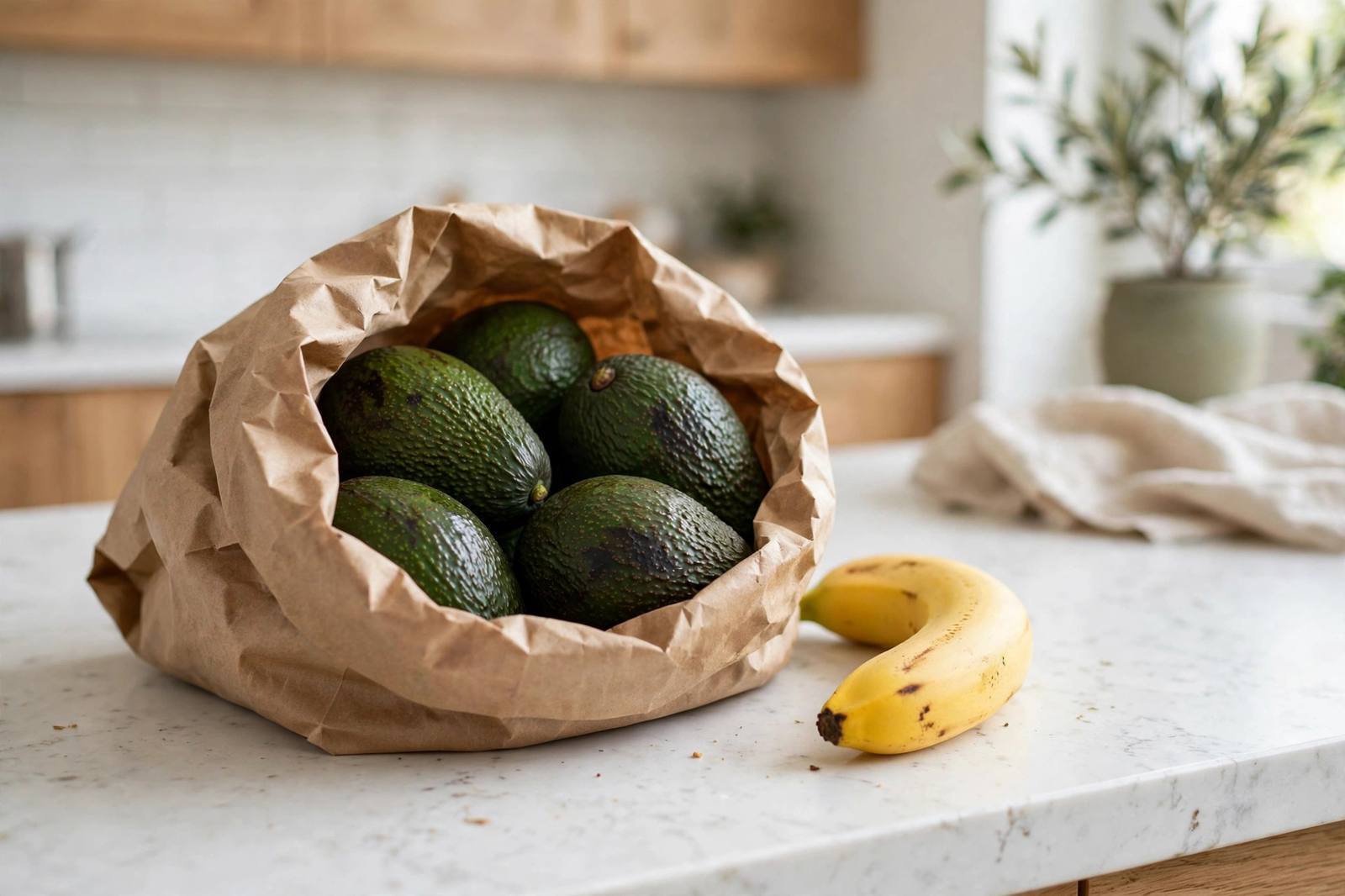
This is the most reliable fast method. Place the avocado in a paper bag — brown paper lunch bag is perfect — and add a banana or an apple. Fold the bag closed and leave it at room temperature. The bag concentrates ethylene; the banana contributes extra. Check daily by gently pressing the stem end (more on the ripeness test below). Most rock-hard avocados reach usable ripeness in one to two days this way, sometimes faster in a warm kitchen. Do not use plastic — it traps moisture and encourages mold rather than ripening.
Need it in 2–4 days: The Paper Bag Alone
Same method, no banana. The avocado’s own ethylene does the work, just more slowly. This is my default when I am planning a few days out — buy hard avocados on the weekend shop, bag them Sunday night, and they are ready midweek. Rice or flour buried around the avocado in a container works on the same principle (trapping ethylene), a traditional method in many cuisines, though the paper bag is simpler and less messy.
Need it in 4–7 days: The Counter, Patiently
Just leave them on the counter at room temperature, out of direct sunlight. They will ripen on their own schedule — usually four to seven days from rock-hard, depending on how mature they were at harvest. This is the method for when you bought a bag of hard avocados and want them ready across the week rather than all at once. To stagger ripeness, bag one or two for speed and leave the rest out.
Need it in 10 minutes: The Microwave — Honestly Evaluated
You have seen the trick: poke the avocado, microwave it in short bursts, and it “ripens.” Here is the honest truth — microwaving does not ripen an avocado. It softens it. The heat breaks down cell walls and makes the flesh yield to pressure, mimicking ripeness texturally, but the enzymatic changes that create actual avocado flavor have not happened. The result tastes flat, sometimes slightly bitter, and the texture turns oddly steamy rather than creamy.
My verdict: the microwave is acceptable in exactly one scenario — you need soft avocado for a cooked application where flavor nuance does not matter much, like blending into a smoothie or baking into brownies. For guacamole, toast, or salads, where the avocado is the star, a microwaved avocado is a disappointment. The oven method (wrapping in foil and baking low) has the same fundamental problem — heat is not ripening. When the avocado matters, give it the bag and the time.
How to Tell When an Avocado Is Perfectly Ripe
Forget color — it varies by variety, and some ripe avocados stay green. Use this sequence:
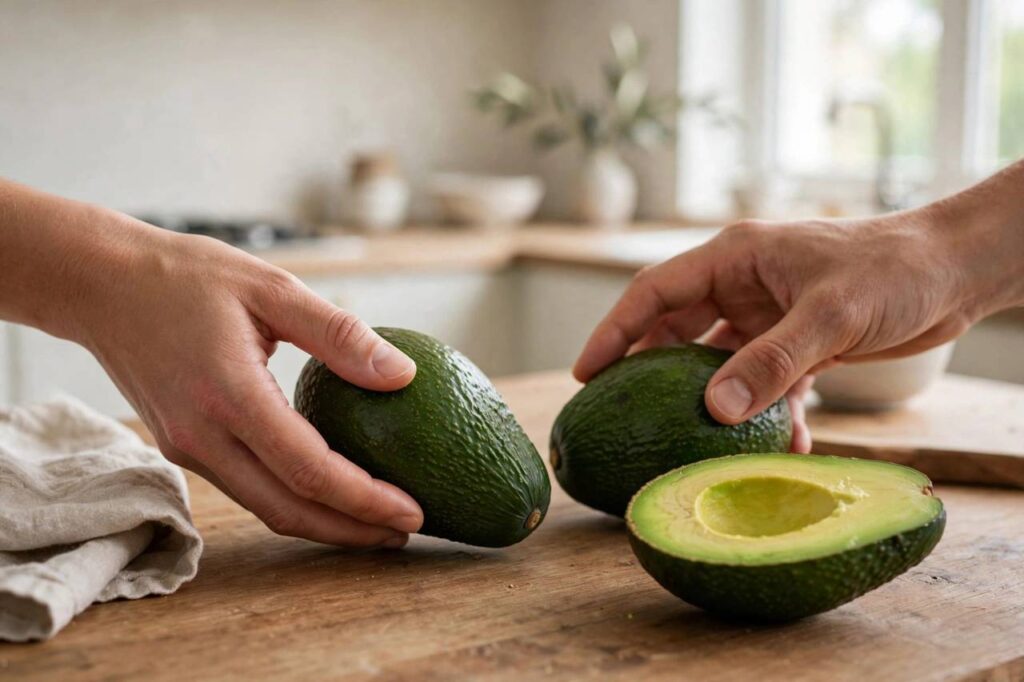
- The gentle press. Hold the avocado in your palm (not your fingertips, which bruise it) and squeeze gently. Ripe yields to light pressure like the fleshy base of your thumb. Rock-hard needs days; mushy is overripe.
- The stem test. Flick off the small stem cap at the narrow end. Green underneath means not ready; brown means overripe; a yellowish-green means go time. This is the most reliable single indicator I know.
- The weight. A ripe avocado feels heavy for its size — dense with flesh and oil. Light, hollow-feeling avocados are often disappointing inside.
- The skin. For Hass avocados, ripe skin darkens and develops a slightly bumpy texture. But confirm with the press and stem test — appearance alone misleads.
Buy strategically: for this week’s plans, buy a mix — one or two yielding avocados for immediate use, the rest hard for later. Squeezing every avocado in the bin at the store bruises them for everyone; test gently and buy the mix.
Storing Avocados at Every Stage
Unripe: room temperature
Keep hard avocados on the counter. Never refrigerate unripe avocados expecting them to ripen there — cold suppresses the ethylene response, and they may never ripen properly afterward. Room temperature, patience, paper bag if you are in a hurry.
Ripe and ready: the refrigerator
Once ripe, the whole avocado goes in the fridge — this dramatically slows further ripening and buys you three to five days of perfect texture. This is the pause button. A ripe avocado forgotten on the counter has about a day before it tips over; in the fridge, nearly a week.
Cut avocado: acid and airtight
Browning is oxidation — harmless but unappetizing. Squeeze lemon or lime juice over the cut surface (the acid slows the enzyme responsible), press plastic wrap directly against the flesh to exclude air, and refrigerate. Leaving the pit in the unused half helps only where the pit physically blocks air — the exposed flesh around it still browns, so the wrap matters more than the pit. A cut avocado stored this way keeps well for a day or two.
Freezing: yes, with a caveat
Avocado freezes surprisingly well as a puree. Mash ripe flesh with a squeeze of lemon juice, pack into portions (ice cube trays are perfect), and freeze. Thawed avocado will not win any texture awards for toast, but it is excellent blended into smoothies, dressings, and yes — brownies. Do not freeze whole avocados; the texture suffers badly.
Using Avocados at Peak Ripeness
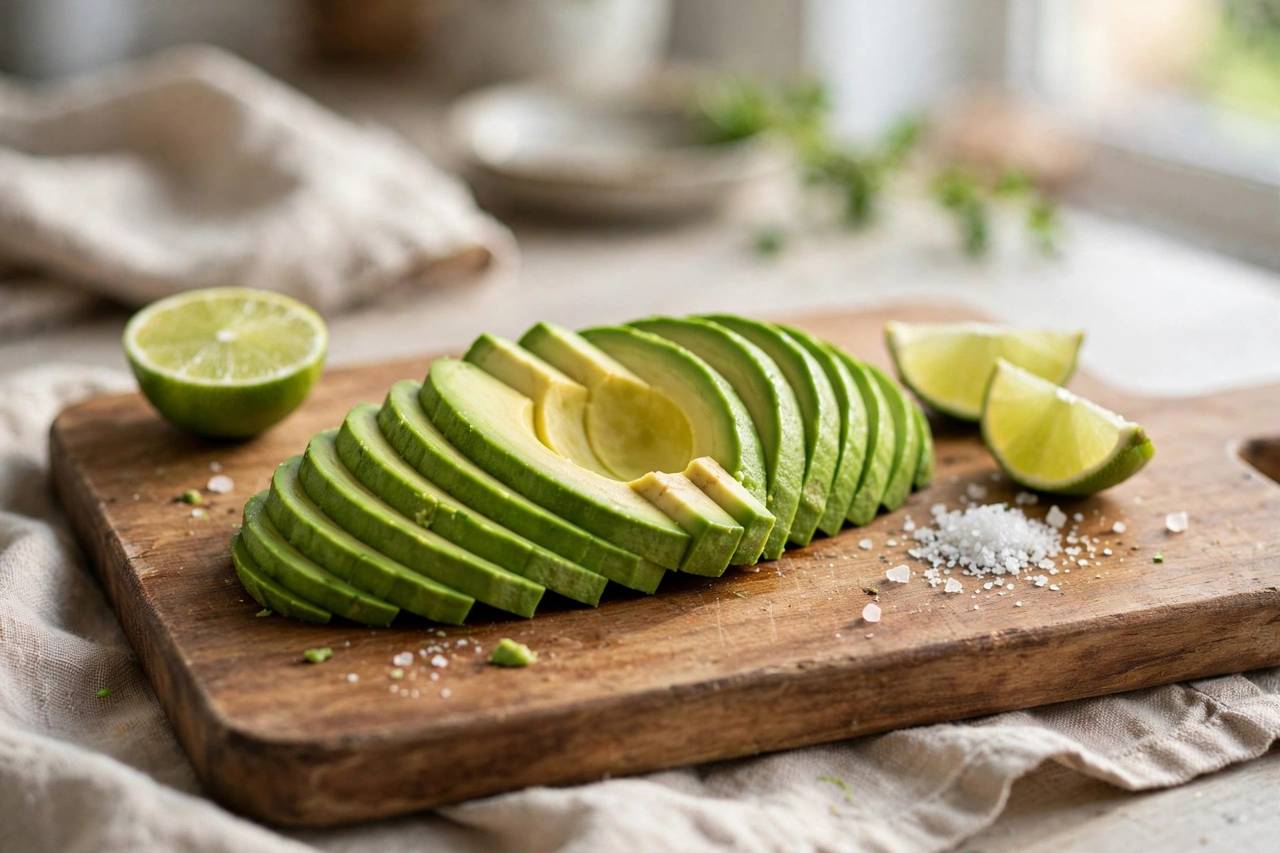
All this effort deserves a payoff. A perfectly ripe avocado needs almost nothing: flaky salt, lime, good olive oil, eaten with a spoon straight from the skin. For guacamole, mash coarsely — never puree — with lime juice, salt, diced onion, and cilantro, and serve immediately. On toast, thick slices over something with crunch and acid hold up best. And if you somehow end up with more ripe avocados than you can eat, that is what the freezer puree method is for — future you will be grateful.
One more kitchen truth: slightly underripe avocado is salvageable (give it a day), but overripe avocado — brown, stringy, fermented-smelling — is compost. Learn the stem test, check daily during the bag phase, and move ripe ones to the fridge promptly. The perfect window is short, but it is entirely manageable once you are watching for it.
Frequently Asked Questions
How long does it take to ripen an avocado?
On the counter at room temperature, a rock-hard avocado typically takes four to seven days. In a paper bag with a banana, one to two days. Refrigeration pauses ripening rather than advancing it, so only refrigerate once the avocado is ripe. Timing varies with the fruit’s maturity at purchase and your kitchen’s temperature.
Does putting an avocado in the microwave really ripen it?
No — it softens without ripening. Microwaving breaks down cell walls with heat, mimicking ripe texture, but the enzymatic changes that develop real avocado flavor do not occur. The result tastes flat compared to a naturally ripened avocado. Use it only when texture matters more than flavor, such as in smoothies.
Why do my avocados go from hard to brown with no ripe stage?
Usually one of three causes: they were picked too immature to ripen properly (common with out-of-season fruit), they were refrigerated while unripe (which damages the ripening process), or you missed the window — the ripe stage can be as short as a day at warm room temperature. Buy a ripeness mix, check daily, and refrigerate promptly at peak.
Can you ripen an avocado in rice?
Yes — burying an avocado in rice or flour works on the same principle as the paper bag: it traps ethylene gas around the fruit. It is a traditional method in many cultures and genuinely effective. The paper bag is simply cleaner and easier, but if you have rice handy, it does the job.
How do you keep a cut avocado from turning brown?
Acid plus air exclusion: squeeze lemon or lime juice over the cut surface, press plastic wrap directly onto the flesh, and refrigerate. The pit-in-the-half trick only protects the flesh it physically covers. Properly stored, a cut avocado keeps for a day or two.
Can you freeze avocados?
As a puree, yes — mash ripe avocado with lemon juice, freeze in portions, and use thawed for smoothies, dressings, or baking. Whole or sliced avocado freezes poorly; the texture becomes watery and unpleasant when thawed. Freeze at peak ripeness for best results.
The Ripening Rhythm
Here is my weekly system, refined over years of avocado emergencies: buy a mix of ripeness levels, bag what you need soon with a banana, leave the rest on the counter, check daily with the stem test, and refrigerate at peak. It takes about thirty seconds a day. Do that, and the days of rock-hard avocados on taco night are over — the chemistry is on your side now.