How to Make Your Home Smell Good Naturally (15 Ways)


Walk into someone’s home and within seconds you know: this place smells like home. Not like a candle store exploded, not like a chemical “mountain breeze,” but warm, clean, alive. If you have ever wondered how to make your home smell good naturally — without the synthetic fragrances, the plug-in cartridges, and the headache-inducing sprays — the answer is both simpler and more satisfying than the fragrance aisle suggests. Natural home scent is not about masking odors. It is about removing the bad ones at the source and layering in the good ones from real ingredients: citrus, herbs, spices, coffee, vanilla, and fresh air.
I am a firm believer in the source-first philosophy: find what is making the smell before you cover it. Nine times out of ten, a “stale house” is a specific, fixable thing — a trash can, a damp towel, a forgotten potato. Fix the source, and then the lovely stuff (simmer pots, fresh herbs, open windows) actually gets a chance to shine. Let us do this room by room, method by method.
How to Make Your Home Smell Good Naturally: The Golden Rules
Before the fun part, three principles that make everything else work:
- Find the source first. Sniff around like a detective. Check the trash, the fridge, the laundry hamper, under the sink, pet areas, and drains. No amount of simmer pot can outcompete a forgotten science experiment in the crisper drawer.
- Ventilate before you scent. Open windows for even fifteen minutes a day. Stale indoor air is the base note of every bad house smell, and fresh air is free.
- Layer, do not blast. Natural scents work best in gentle layers — a simmer pot in the kitchen, dried lavender in the bedroom, fresh herbs on the counter. One overpowering scent is just the natural version of the plug-in problem.
The Simmer Pot: Your Secret Weapon
If you only adopt one method from this guide, make it the simmer pot. Fill a saucepan with water, add fragrant ingredients, bring to a gentle simmer, and let it perfume the whole house for hours. It costs almost nothing, uses scraps you would throw away, and smells like you have been baking all day. My go-to combinations:
- Classic cozy: sliced orange, a handful of cranberries (fresh or frozen), two cinnamon sticks, a few whole cloves, and a sprig of rosemary. This is autumn in a pot.
- Fresh and clean: sliced lemon, fresh rosemary sprigs, and a teaspoon of vanilla extract. Bright, herbal, and wonderful after cooking fish.
- Warm spice: apple peels or slices, cinnamon sticks, star anise, and a few slices of fresh ginger. Smells like a farmhouse kitchen.
- Herb garden: leftover thyme, basil stems, and lemon slices — perfect for using up herbs before they wilt.
Keep the heat low, top up the water every hour or so, and never leave it unattended — treat it like a candle. When you are done, let it cool and compost the contents. One pot easily scents an entire floor of a house.
Baking Soda: The Odor Absorber That Actually Works
Baking soda does not add scent; it removes the molecules that cause bad smells, which is arguably more valuable. Keep an open box in the fridge and freezer, and replace it every month or two. But do not stop there:
- Carpets and rugs: sprinkle generously, leave for 30 minutes (or overnight for strong odors), then vacuum thoroughly. This is transformative for pet smells.
- Trash cans: a layer in the bottom of the can under the bag absorbs the funk between cleanings.
- Shoes and closets: a small open container or a sachet of baking soda in a sock (clean, obviously) tucked into shoes or on a closet shelf.
- Mattresses: sprinkle, wait an hour, vacuum. You will be surprised.
- Drains: half a cup of baking soda followed by hot water (and a splash of vinegar if you like the fizz) freshens sink and shower drains.
Essential Oils: Use Them Right
Essential oils are powerful, which means a little goes a long way — and means you should respect them. A few drops in a diffuser with water is the standard setup, and it genuinely works for ambient scent. My favorite single oils for home: sweet orange (cheerful, universally liked), lavender (calming, great for bedrooms), eucalyptus (clean, spa-like, excellent in bathrooms), and cedarwood (warm, grounding).
A few honest cautions. Do not apply undiluted oils to skin, and keep diffusers away from direct contact with pets — some oils, particularly tea tree and eucalyptus, can be harmful to cats and dogs, so check before diffusing around animals. Buy from reputable brands, because the market is full of “fragrance oils” (synthetic) masquerading as essential oils. And if you are sensitive to scents, start with half the recommended drops — you can always add more.
Beyond the diffuser: a few drops on a cotton ball tucked behind a radiator, in the vacuum bag, or inside a closet; a drop or two on wool dryer balls instead of scented dryer sheets; or a simple room spray (water + a little witch hazel + 15-20 drops of oil in a spray bottle, shaken before each use).

Coffee, Vanilla, and Citrus: The Kitchen Trio
Some of the best natural scents are things you already own. A bowl of whole coffee beans on the counter smells wonderful and absorbs surrounding odors. Vanilla extract dabbed on a cotton ball and tucked behind furniture gives off a warm, bakery-like sweetness for days. And citrus is the hardest-working scent in the house: simmer lemon peels after juicing, rub a cut lemon inside a smelly microwave (then run it for a minute), or toss citrus peels down the garbage disposal with ice cubes to clean and freshen it in one go.
After cooking strong-smelling food, the fastest reset I know: simmer a pot of water with lemon slices and a splash of vinegar for twenty minutes, then open a window. It neutralizes cooking odors instead of layering perfume over them.
Fresh Herbs and Plants: Living Air Fresheners
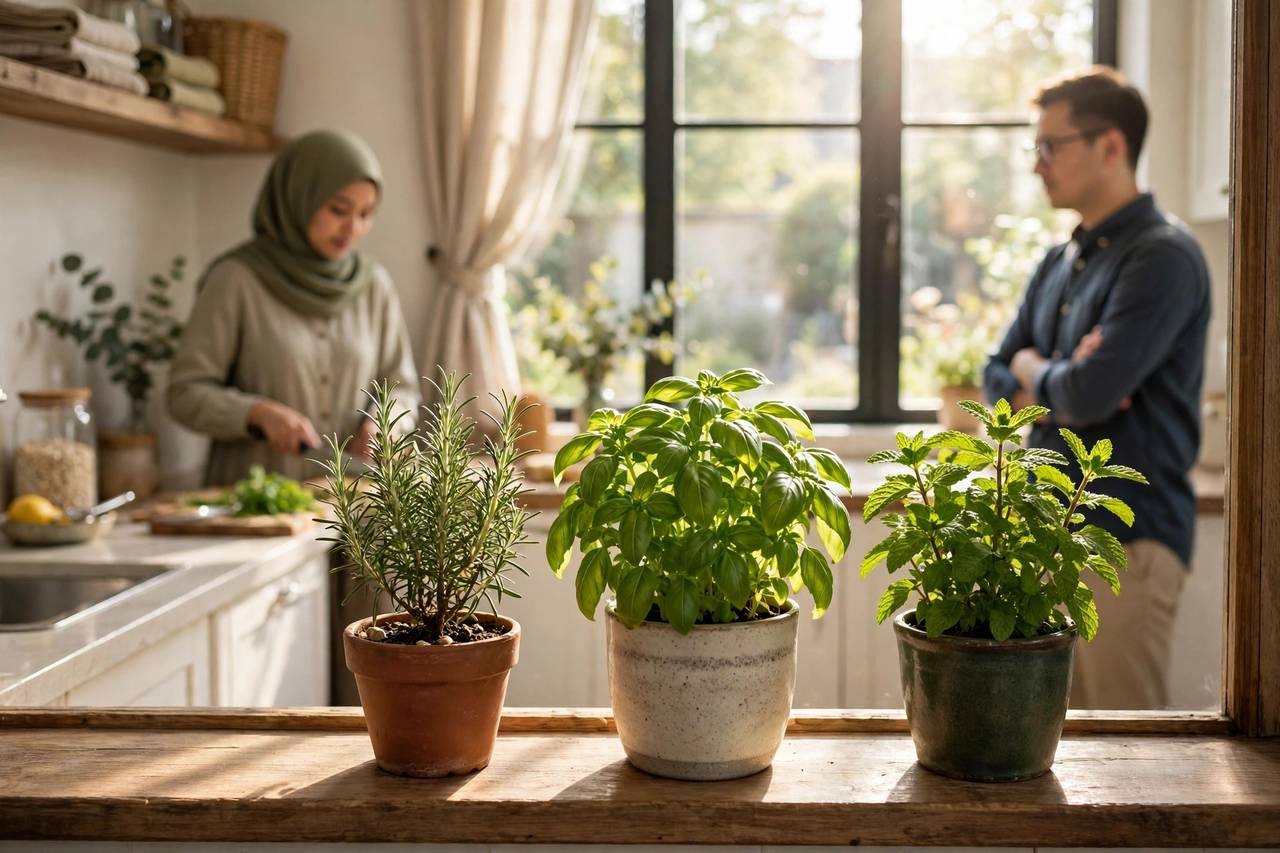
A pot of rosemary, basil, or mint on the windowsill does double duty — cooking ingredient and constant gentle fragrance. Brush the leaves as you walk past to release the scent. Dried herb bundles (lavender, eucalyptus, rosemary) hung in the bathroom or bedroom look beautiful and scent the air for months; eucalyptus in the shower is a particular joy, as the steam releases its oils every time you bathe.
Houseplants contribute in a subtler way: they do not perfume a room dramatically, but a home full of healthy green plants simply smells alive — fresh soil, green leaves, clean air. Jasmine, gardenia, and scented geraniums are the show-offs if you want actual floral fragrance from a living plant.
Room-by-Room Quick Fixes
Kitchen: simmer pot after cooking, baking soda in the trash can, citrus in the disposal, coffee beans in a bowl. Wipe down the stove hood filter occasionally — old cooking grease is a stealth smell source.
Bathroom: eucalyptus bundle in the shower, a small diffuser or essential-oil cotton ball, baking soda in the trash can. Wash bath mats and shower curtains regularly — damp fabric is the number-one bathroom offender.
Bedroom: lavender sachets in drawers and under pillows, wash bedding weekly (pillowcases especially — they absorb oils from skin and hair), and air out the mattress when you change the sheets.
Living room: open windows daily, baking soda on upholstery before vacuuming, a bowl of dried citrus slices and cinnamon sticks as decor that happens to smell wonderful.
Entryway: this is the first impression — a small dish of coffee beans, a simmer pot when guests are coming, and a strict shoes-off policy if footwear odor is an issue.
Laundry area: leave the washer door open between loads to prevent mildew (the classic sour-laundry culprit), wipe the gasket on front-loaders, and run a hot empty cycle with vinegar monthly.
What to Avoid
A quick word on what not to do. Plug-in air fresheners and aerosol sprays mostly mask odors with synthetic fragrance rather than removing them, and the strong ones can trigger headaches and irritate sensitive airways — which defeats the purpose of a fresh-smelling home. Scented candles are lovely in moderation, but cheap paraffin candles with heavy synthetic fragrance can leave soot and that cloying artificial smell; if you love candles, choose beeswax or soy with essential-oil scenting and trim the wick. And never, ever mix cleaning chemicals (especially anything with bleach and anything with ammonia or acids) in an attempt to “deep clean” a smell — that is dangerous, not fresh.
Frequently Asked Questions
How to make your home smell good naturally without candles?
Simmer pots are the best candle-free option — water, citrus, herbs, and spices gently heated on the stove scent the whole house. Other strong choices: essential oil diffusers, bowls of coffee beans, fresh herb plants, baking soda for odor absorption, and simply opening windows daily for fresh air.
What is the best natural odor absorber for a house?
Baking soda is the most effective and cheapest: it neutralizes odor molecules rather than masking them. Use it on carpets before vacuuming, in trash cans, in shoes and closets, and in the fridge. Activated charcoal is another excellent absorber for enclosed spaces like closets and refrigerators.
How can I make my house smell good all the time?
Consistency beats intensity. Build small habits: ventilate daily, take out trash before it smells, wash soft furnishings regularly, keep a simmer pot or diffuser going in the main living area, and address odor sources (drains, laundry, pets) on a schedule. A home that is genuinely clean at the source needs very little added scent.
Are essential oils safe to use around pets?
Some are, some are not — and the unsafe list matters. Tea tree, eucalyptus, pine, and several others can be harmful to cats and dogs, especially in concentrated or diffused form in enclosed spaces. Always check a reliable veterinary source for the specific oil, ensure good ventilation, and let pets leave the room if they want to.
Why does my house smell musty even when it’s clean?
Mustiness usually means moisture somewhere: check for damp spots under sinks, in basements, behind appliances, and in bathrooms with poor ventilation. Wash anything fabric that may have stayed damp (bath mats, curtains, stored linens). A dehumidifier helps in persistently damp climates. If the musty smell persists after all that, it is worth checking for hidden mold.
How to make your home smell good naturally is really a two-part practice: hunt down the sources, then layer in the lovely stuff. Start with the detective work — the trash, the drains, the forgotten laundry — and then put on a simmer pot and open a window. A home that smells like real ingredients and fresh air is one of life’s quiet luxuries, and it costs less than a single fancy candle.